Japan

Shōgun will be your new favorite show

Since the vast success of Game of Thrones, every streaming service has tried its best to come up with an epic series that will be held in the same estimation as the earlier seasons of Thrones. (The HBO flagship drama's rise was rivaled only by the rightful contempt in which the final series is still held, which one day will be the subject of a genuinely jaw-dropping long read or book.) There have been some close calls (House of the Dragon, Outlander), some misses (Lord of the Rings) and a couple of outright horrors; I doubt that you could pay me, or anyone else, to sit through the diabolical Wheel of Time again. But now Hulu has finally joined the action, with an apparently unlimited budget, to adapt James Clavell’s much-beloved bestselling 1975 novel Shōgun over ten episodes.

shōgun

War hero, bon viveur, Japanese spy: Frederick Rutland wore many masks

It is early in the morning on the “day of infamy,” Sunday, December 7, 1941. Two hundred and fifty miles north of Hawaii, six Japanese aircraft carriers are preparing to launch more than 350 aircraft in a surprise attack on the United States Pacific Fleet at Pearl Harbor. The fleet’s commander-in-chief, Admiral Husband E. Kimmel, had told a reporter the day before that the Japanese would be “damned fools” to attack the United States, ignoring the warnings that war was imminent. Around 7:30 a.m., the lead Japanese pilot fires a single flare, giving the pilots the “final go” signal. “Within an hour... the US Pacific Fleet was in ruins.” The American public, writes espionage historian Ronald Drabkin in Beverly Hills Spy, quite rightly demanded: “Whose fault was it?

rutland

Justin Trudeau is tanking Canada’s economy

In September the leaders of the world’s most powerful nations met in New Delhi for the annual G20 Summit to address such heady matters as the war between Russia and Ukraine, the future of energy production and the criticality of food security. Everyone smiled for the cameras, shook hands politely and agreed to do their best to do something about everything, just so long as they weren’t asked to make any enforceable commitments. At the end of the weekend, all the great men and women of the world put their shoes back on, took one more group photo and bid adieu to their friends (and enemies). Then they all headed for home. All, that is, except one.

trudeau

Japan deserves to see Oppenheimer

As millions of people across the world rush into cinemas this week to see Christopher Nolan’s latest epic thriller Oppenheimer, one notable country will not be part of the film’s initial release window despite the relevant subject matter — Japan. For reasons that are still unclear, Universal Pictures has not announced a Japanese release date. Yet if any place deserves to see a film based on the life of the theoretical physicist who played an essential role in developing the atomic bombs which ended World War Two, it should be the country that was most affected by them. Hollywood films being delayed for release in Japan is a very common occurrence, and it rarely ever has anything to do with politics.

japan oppenheimer

Washington’s yes-men in Japan

It was nighttime in Davos, 8:31 on January 18 to be exact. Japanese journalist Ganaha Masako had been standing out in the cold for three hours near the entrance to a building which, she had heard, was being used as a venue for a World Economic Forum event that evening. Ganaha had picked up on some additional chatter. Klaus Schwab, the head of the WEF, was rumored to be inside. It was a long shot, but Ganaha wanted to ask Schwab some questions about globalism. And then, suddenly, Schwab appeared. Fleshy cheeks jiggling slightly as he shuffled along the snow-dusted sidewalk, he stepped cautiously out of the WEF event forum with a few handlers. Ganaha pointed her camera at Schwab and asked him for an interview. He ignored her and kept shuffling along.

Japanese food is overrated

After twenty-three years in Japan, I have concluded that the much-lauded, worshipped even, cuisine is overrated. And I am getting a little tired of being told how awe-inspiringly wonderful Japanese food is, often by people whose only experience is high-end sushi or designer tempura in a showpiece Tribeca eatery, a world away from the standard fare available on the backstreets of Shibuya. Part of the problem is that much of what delights the Japanese about their food is unrelated to its actual taste.

Japanese

Japan’s defense revolution

You don’t need to be an Asia specialist to recognize that China is undergoing a significant military modernization campaign. China’s leader, Xi Jinping, and the Chinese Communist Party are seeking to transform the People’s Liberation Army (PLA) into a world-class military by 2049, and complete the development of the military platforms, capabilities, enablers, and amphibious weapons systems necessary for a potential Taiwan contingency by 2027. Beijing’s defense budget rose by 139 percent between 2010 and 2020.

The myth that Hiroshima was necessary

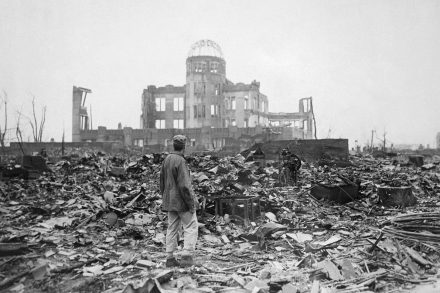
If you think the falsehoods spilling out of Ukraine about casualties and atrocities are shocking, meet the greatest lie of modern history. August 6 marks the seventy-seventh anniversary of the nuclear destruction of Hiroshima and death of some 140,000 non-combatants. Yet the only nation in history to employ a weapon of mass destruction on an epic scale, against an undefended civilian population, shrugs off the significance of an act of immorality. Beyond the destruction lies the myth of the atomic bombings, the post-war creation of a mass memory of things that did not happen. This myth has become the underpinning of American policy ever since, and carries forward the horrors of Hiroshima as generations pass.

Is Biden giving Brittney Griner special treatment?

The rule is simple: abroad, Americans are subject to the host country's laws and legal system, whether that be Great Britain or Russia. The Bill of Rights does not follow Americans to foreign countries, nor will the US government intervene with the host country on their behalf. Try and bring some weed into Japan, and if you're caught, you're looking at years behind bars. No matter if it's a small amount for personal use back home. In Japan, anything over about an ounce means you intended to sell it, and the punishment is accordingly lengthy. I should know: I spent seven years in Japan visiting American prisoners as part of my State Department job. The top three reasons for their arrests were drugs, drugs, and drugs. Just like Brittney Griner.

Shinzo Abe was Japan’s indispensable conservative

Shinzo Abe, who was assassinated today while electioneering, was his country's indispensable man. Prime minister of Japan for much of this century, from 2006 to 2007 and 2012 to 2020, Abe's stature on the world stage eclipsed that of other post-war Japanese leaders, just as his time in office surpassed them all. For a taste of the shock of his murder, look back to the surprise and incredulity which met his resignation from office in the pandemic's worst days. Plagued by a debilitating health condition which had earlier caused him to leave office in 2007, Abe concluded he did not have the stamina left to rule.

Enough with the 1970s comparisons

The media are abuzz these days about a purported “return to the 1970s.” Generally speaking, such chatter is not intended kindly, for many today would likely agree with the sardonic assessment of the Seventies made by the editors of New West magazine as that decade wound down: “It was the worst of times, it was the worst of times.” And not just because of the popularity of bell-bottom pants, platform shoes, and disco music. In the Seventies, we had problems far more troubling — more troubling even than the pop group ABBA. For starters, we saw a quadrupling of real oil prices between 1973 and 1979. We suffered high rates of both inflation and unemployment, which hitherto varied inversely, leading to the creation of the portmanteau “stagflation.

1970s

Watch out for Ukrainian social media propaganda

Stop me if you’ve heard the one about the Ukrainian beauty queen who volunteered to fight the invading Russian forces. If you’ve been on social media these past few weeks, you’ve probably seen the striking photo of the woman clad in tactical gear and holding a rifle. “We are living in a materiel world, and I’m a materiel girl,” the stunner says to the viewer through her steely glare. Or the one about the Japanese ambassador to Ukraine kitted out in his ancestor’s samurai gear and ready to defend his adopted homeland? You’ve surely heard about the “Ghost of Kyiv,” a Ukrainian fighter pilot who has been terrorizing his Russian counterparts, accomplishing the feat — uncommon in contemporary air combat — of becoming an ace.

propaganda

Maybe Hawaii should be independent

When you’re a writer, there’s no such thing as a vacation — there’s just visiting a new place with the potential to gather more material. Lucky for me, my most recent destination happened to be Hawaii. It’s a fascinating place, and if you didn’t already know it was a US state, it would be easy to mistake it for a distinct English-speaking country, albeit one with obvious and deep American influences. Oahu, the most urbanized island and home of the capital city of Honolulu, is shaped by an idiosyncratic mix of native Hawaiian, East Asian and midcentury American culture. Hawaii resembles a Pacific Island nation at least as much as it does the American mainland.

Samurai nights in Aizu

I started my visit to Japan’s north country deep in the mountains, in hot water in a bath the size of a swimming pool. Quietly simmering, I was intrigued to notice that the glass which formed the outside wall was not misted up, though the water was steaming. Through the darkness I could make out trees, bushes and the glint of the lake below. I waded over and reached out my hand, only to discover that there was no wall. One side of the bath was entirely open to the air. For the Japanese no journey, particularly to the north, is complete without soaking in as many hot springs as possible. The mineral-rich waters are the upside of the geological turbulence that brought about the devastating tsunami of March 2011. Today everyone knows the name ‘Fukushima’.

aizu

Kamala in charge

Who is the head of state? As president, Joe Biden has the sole and unlimited authority to determine US foreign policy. He's flexed this power in pulling troops from Afghanistan and negotiating behind-the-scenes for a ceasefire between Israel and Hamas. Interestingly, though, Vice President Kamala Harris has taken an outsized role in handling much of the administration's diplomacy. Take Friday morning, for example. Harris was the first administration official to greet South Korean president Moon Jae-in on his official working visit to the White House. The pair sat down for a bilateral meeting. The South Korean entourage included the foreign minister and director of national security — but the US side featured no similarly ranked diplomats.

Vice President Kamala Harris speaks to the media prior to a meeting with Korean President Moon Jae-in (Photo by Drew Angerer/Getty Images)

I’m turning Japanese

The history of late-20th-century Japanese pop music can seem like an impenetrable forest to western minds. But stare past the trees and there is light from a parallel universe. The Japanese Group Sounds records of the mid-Sixties (the Spiders, the Tempters and er, the Mops) were heavily influenced by the original moptops’ Budokan Temple show of 1966 and surf bands such as the Ventures. The university campus hard rock of Tokyo’s late-Sixties freak scene — Les Rallizes Dénudés, Flower Travellin’ Band, Speed, Glue and Shinki — and the lysergic rock soundtracks to Shuji Terayama’s revolutionary theater plays by the great J.A.

japanese

What Yoshihide Suga wants from Joe Biden

Age matters in Japan, so when Prime Minister Yoshihide Suga (73) sat down for talks with President Biden (78), deference to his ‘senpai’ (senior) colleague would have been his default setting. But from the looks of the joint statement following their summit, he seems to have held his own. The main issue, it seems, was China. Japan wanted assurances from the US that their claim to the Senkaku Islands would be respected. The islands’ status is covered by the US/Japan security treaty, but as China routinely sends its own fishing boats to menace Japanese vessels, Suga was looking for a reaffirmation of American support.

suga

An unquiet life

Kikuko Tsumura is a multi-prizewinning Japanese author whose mischievously deceptive new novel takes us into what purports to be the office world of Tokyo. The routine at first seems familiar, but intriguing disparities emerge: the present is also a foreign country. There’s No Such Thing as an Easy Job gives us the minutiae of everyday working life — but not as we know it. Think Nicholson Baker’s Mezzanine, freed from lunchtime restrictions. A burnt-out young woman wants a job without responsibility — no stress, no demands. First up: a surveillance assignment observing a novelist suspected of receiving contraband goods.

tsumura

Strawberry yields forever

Looking to impress your girl in NYC? Order her some Omakase berries from Oishii. Although they’ll probably be the most expensive strawberries you’ll ever buy in the States, a pack of eight, hand-delivered to you at a secret rendezvous in the Oculus at the World Trade Center, will still only set you back $50. That, as you’ll know if you’re inclined towards thrift in courtship, is significantly less than a dinner date within the same city precincts. Word on the street is that these berries are so good (a subtle hint is provided in the company name, Oishii, which means ‘delicious’ in Japanese) that you can be served a single one as dessert at a Michelin-starred joint in Manhattan and not feel gypped.

strawberry

A brief history of selling bath water

Instagram model Belle Delphine made waves in the news this month after she decided to sell tubs of her own bath water for $30 a pop. The ‘product’ sold out in just three days, and led to a bountiful trove of online content, including my own review for Spectator USA. But Delphine isn’t the first person to sell bath water to her followers. Shoko Asahara, founder of the Japanese doomsday cult Aum Shinrikyo and the man behind the Tokyo subway sarin gas terrorist attack in 1995, which killed 12 people and injured over 1,000 more, also sold his own bath water to devotees who drank it during rituals.

belle delphine bath water