Japan

Poor little rich girl: the extraordinary life of Yoko Ono

From our UK edition

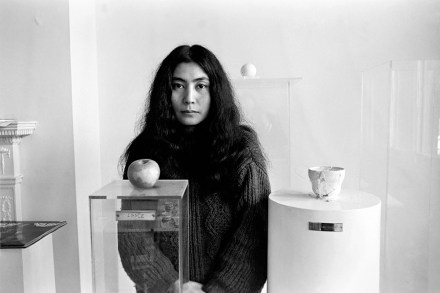
David Sheff first met Yoko Ono in 1980 when Playboy commissioned him, then aged 24, to interview her and John Lennon. She asked him to send her his astrological and numerological charts before summoning him to the Dakota, where she and John occupied six apartments. (Elton John, a friend of theirs, wrote an excellent spoof: ‘Imagine six apartments/ It isn’t hard to do./ One is full of fur coats/ Another’s full of shoes.’) Yoko told him that his charts were good – ‘these are strong numbers’ – and that he would get on well with John. So they fixed a time to meet the next day. The interview lasted three weeks, during which Sheff went everywhere with the Lennons and got to know them and baby Sean well.

Masa Son: the world’s most reckless investor

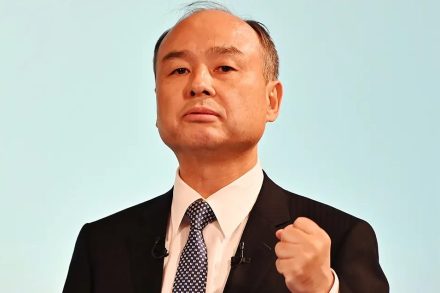
For a few days in February 2000, Masayoshi Son was the richest person in the world. A risk-taker and showman, universally known as Masa, he had long been disdainful of Japan’s staid "salaryman" business culture and was riding the wave of dot-com mania. His company SoftBank, founded in 1981, had bet big on the growth of online shopping. The bullish mood didn’t last, and Masa slunk away from the limelight — but only for a while. A techno-optimist, the now sixty-seven-year-old has repeatedly reinvented himself, urging doubters to see beyond the immediate: "You’re limiting your field of vision to thirty years… Start bold and think 300 years ahead.

Masa

Trump announces steel tariffs

President Trump said that steel tariffs would be announced Monday — and that reciprocal tariffs against, among others, the European Union, were coming early this week. Yet questions remain whether these tariffs will go into effect, or if their announcement is being used as a bartering chip, as with other tariff threats last week.The threat of tariffs reemerged after Trump met with Japanese prime minister Shigeru Ishiba last week to discuss Japanese investment in US Steel. This 25 percent tariff on imported steel and aluminum appears to be an attempt to protect US and Japanese shared interests. This tariff is set to be placed on all nations equally and is not a bargaining tool, unlike those with which Trump threatened Canada and Mexico last week.

The best way to approach sake 

From our UK edition

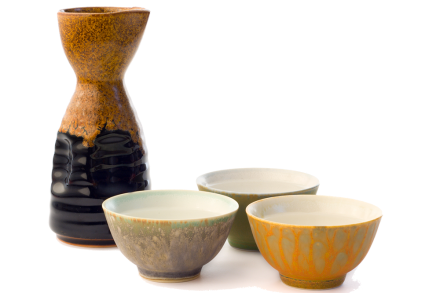
We were discussing civilisation, as one does, and its relationship with cuisine. Pasta in Italy, paella in Spain, the roast beef of Old England; wurst in Germany, burgers in the States –though with those latter examples we are moving away from the concept. What about Japan, a complex society which is full of paradoxes? For three-quarters of a century, the Meiji Restoration was the most successful revolution since the Glorious Revolution itself. It was part of a process which opened Japan to western influences and vice versa. Rather as in the UK, ancient forms were preserved, which helped to ensure social stability during a period of rapid change. Japan often bewilders westerners.

Why Japan is best at whisky, tailoring, cheese, pastries… I could go on

From our UK edition

Many people visit Japan because of its food but few, surely, have pastries in mind. In fact, Japan has no discernible tradition in this culinary realm at all. But that didn’t stop a trio of Japanese bakers from winning the biannual pastry world cup, pushing the fancied host nation France into a chastening second place. Japan won last time too and thus became the first country ever to retain the title, which you might suppose would make this big news here in Tokyo. But the media has hardly mentioned it, probably because this kind of national stereotype-busting triumph is becoming quite normal. For example, Japan, believe it or not, is now one of the best countries in the world for pizza, especially the Neapolitan version.

Skiing Hokkaido’s powder triangle

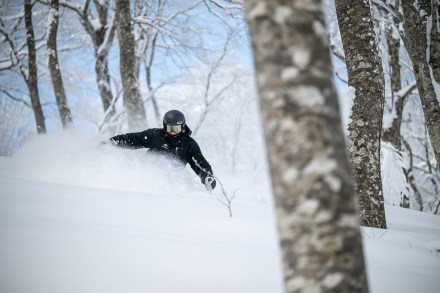
"Insane, isn’t it?!” Kyle yelled from thirty feet below, leaning back on his snowboard to watch me struggle. I summoned every ounce of strength in my jet-lagged body to prize my legs, still attached to skis, from several feet of fresh snow. Wedged sideways, I pulled myself up by a tree root, alternating between hysterical laughter and acute panic as little progress was made in five minutes. I’d come to Japan for the powder — and I’d sure found it on my first morning in Furano, Hokkaidō. Fighting to stand up, I steeled myself to tackle the impossibly light powder reaching my armpits, on the widest skis I’d ever clipped into. It really did feel different to snow in the US or Europe. This would take some getting used to. “You said you wanted ‘Japow’!

Hokkaido
Tokyo

Tokyo drift: Japan’s once-pricey capital is now cost-effective… for Americans

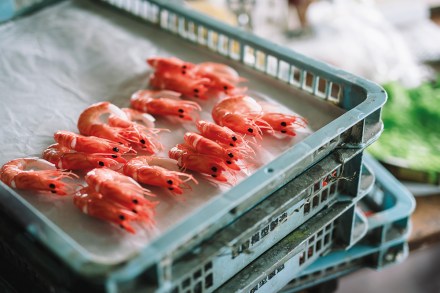
I spent my last afternoon in Tokyo stocking up on snacks and feasting on cheap and delicious conveyor belt sushi, in anticipation of characteristically criminal airport concession prices. But when I made my way past Haneda Airport’s Rodeo Drive-esque esplanade of luxury shops — does anyone really buy a $10,000 Omega watch on their way to their gate? — I was in for a surprise. Bottles of water, iced tea and other soft drinks were less than $1 in airport vending machines, just like everywhere else in the country. I wasn’t hungry, but when I realized that I could buy a plate of yakisoba with shrimp, pork and squid for the yen equivalent of $6 and six takoyaki (essentially balls of fried octopus) for $4.75, I ordered both.

The strange, beautiful Christmas I spent alone

From our UK edition

My parents gave up on Christmas altogether once I left home for university. They had never been people for celebrations and we were a household like Belfast in the religious sense – my father, the Catholic, went to midnight mass; my mother, Anglican, to the parish church at 8 a.m. I alternated, year by year, for the sake of fairness. It was a strained time. As an adult, living in my own place the moment I could afford rent, I never returned home for Christmas Day, but went to various generous friends – the sort of normal friends who had proper festivities, puddings lit with brandy and paper crowns, the works – and I learned how things ought to be done. Once I was married with children, so they were.

With Julian Metcalfe, founder of Itsu

From our UK edition

28 min listen

Julian Metcalfe is a British entrepreneur and one of the most influential individuals on the London high street. He revolutionised the grab-and-go lunchtime food industry in 1986 by co-founding Pret and did the same again in 1997 when he commercialised Japanese cuisine with the first Itsu. On the podcast, he tells Liv and Lara about the influence of his Ukrainian mother; why he decided to start Itsu, in many ways a competitor to Pret; what he thinks is the future of the grab-and-go industry; and why uni is the ultimate comfort food.

Why Britain needs Shinto

From our UK edition

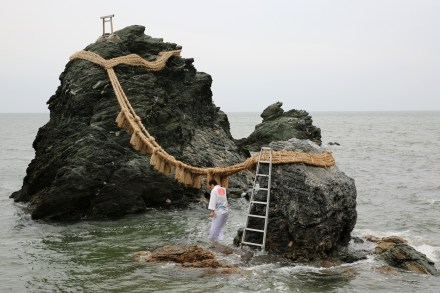
Ise, Japan They say of Japan that if you come here for a week, you want to write a novel about Japan. After a year, maybe a few essays. After a decade, a page. It is one of those countries which seems to get simultaneously more fascinating and opaque. Possessing an ancient monarchy is like having a Gothic cathedral in your back garden So it is for me, on this, my first trip to Japan in 30 years (I lived in Kyoto in the mid-1990s). This time around I have been doing prep by reading the early history of Shinto, the ‘state religion’ of Japan, an animist creed which sees the divine in everything – trees, rocks, lakes, rugby balls (really) – all in the form of kami – which can be spirits of place, mood or idea.

My glimpse into a childless world

From our UK edition

If you are looking for a pointer for the future of the world, the free-diving fisherwomen on the matriarchal, shamanistic South Korean island of Jeju are not an obvious example of where we’re heading. Because the haenyeo are famously unique. And famously hardy. But what is happening to them should concern us all. In simple wetsuits they spend hours in the cold, clear waters, seeking out sea slugs, oysters, conches and abalone. They are fiercely independent – they spearheaded resistance to the Japanese in the 1930s and 1940s. But here’s the thing, as Nari (age 70) tells me in the haenyeo’s coastal mud-room: ‘We are probably the last. We have been diving since the men went to war in the 18th century, but maybe no one will do this in 20 years’ time.

Japan could soon lose one of its best assets

From our UK edition

What now? This is the question on everyone’s lips here in Tokyo after a dramatic general election which looks to have inflicted a potentially grievous wound on Japan’s eternal party of government. The Liberal Democratic Party (known as Jiminto) led by the barely broken-in new Prime Minister Shigeru Ishiba lost its overall majority, even if its partners, the Buddhism-associated Komeito, are factored into the equation.  The result was a mess In one of the worse nights in its history, the LDP, who have held power for 65 out of the last 69 years, lost 68 seats. They remain the largest party overall but will now have to scramble to put together a multi-party coalition, an arrangement likely so flimsy it might as well be made of rice paper.

At Japan House humanity has arrived at the perfect future: food for ogling, not eating

From our UK edition

There is a popular Japanese television show that features a segment called ‘Candy Or Not Candy?’. Contestants are presented with objects and must guess if they’re edible or not. Is that a dish sponge – or a steamed sponge cake? I might not consider afternoon tea to be art, but the confectionery artifice required to dupe contestants into mistaking the replica for reality is impressive – or at least entertaining. The lacquered steaks, fruits, vegetables and sliced bread feel wrong. They surely ought to be matte The inverse – using inedible materials to create replicas of food – is also a Japanese art form, and the subject of Looks Delicious! at Kensington’s Japan House.

A day of violence in Tokyo

From our UK edition

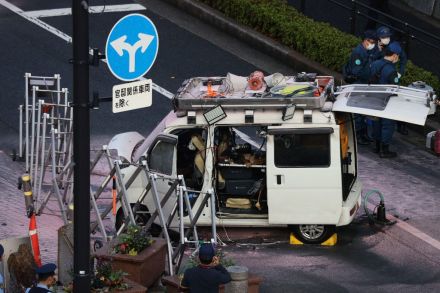
It has been an alarming day in Tokyo as political terror returned to the streets of the capital. A man was arrested for throwing Molotov cocktails at the headquarters of the ruling party Jiminto (LDP) in the centre of the city. The bombs hit a police vehicle and the resultant fire was soon extinguished. Today’s attack marks the third time homemade weapons were employed The man who threw the Molotovs, identified as 49-year-old Atsunobu Usuda from Saitama, near Tokyo, then tried to drive his car into the grounds of the prime minister’s office, but he couldn’t get through the metal barrier. After that he tried to throw a smoke bomb at police. Then he was arrested. The man’s wrecked van was found to contain 10 unused firebombs.

How claims of cultural appropriation scuppered an acclaimed new ballet

From our UK edition

On 14 March 2020 I was at Leeds Grand Theatre for the première of Northern Ballet’s Geisha. The curtains swung open on fishermen flinging out their nets, geisha, samurai, 19th-century Japanese village folk, followed by the sudden appearance of American sailors. It was in essence a Japanese Giselle: the tale of a geisha, spurned by her American lover, who dies of grief, and whose restless spirit returns from the grave. Far from being offended, the Japanese Embassy offered their official imprimatur It was a unique production. Many of the dancers at Northern Ballet are Japanese, Chinese or Korean and this was an east Asian story.

Skiing, sushi and hot springs in the Japanese Alps

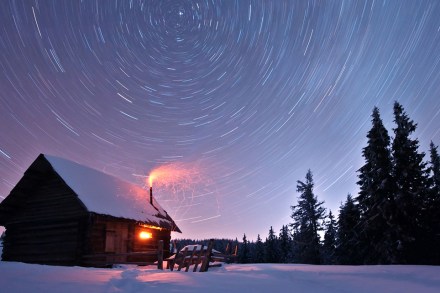
Nozawa Onsen and Hakuba, my favorite ski resorts near Tokyo, are booking up fast. A trip to Japan guarantees novelty, not least if you book a ski trip. Underpinned by excellent food, surreal views, reliable snow cover, fantastically cheap prices and delightful onsen culture, it’s no wonder the country is increasingly popular with gaijin (non-Japanese). Australian, American and European powder hounds now fill the towns every year, but there are endless authentic experiences waiting in each charmingly idiosyncratic resort. A quick Google betrays that my favorites are already filling up for winter ’24/25. So here’s a run-down of what to expect, and where I’d recommend you book, subayaku.

Must-watch TV: Apple TV+’s Pachinko reviewed

From our UK edition

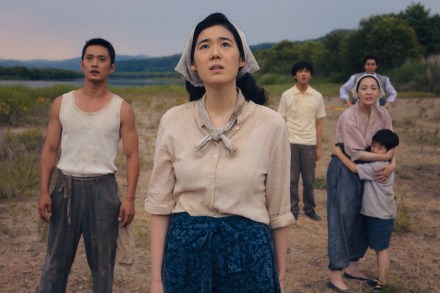
Pachinko is like an extended version of the Monty Python ‘Four Yorkshiremen’ sketch (‘I used to have to get out of shoebox at midnight, lick road clean, eat a couple of bits of coal gravel’) relocated to mostly 20th-century Japan and Korea. There’s so much misery it makes Angela’s Ashes look like Pollyanna. And there’s so little by way of laughter or a redemptive pay off you might be tempted to end it all like one of the numerous doomed characters do – off camera, fortunately – in the almost relentlessly catastrophe-laden season one.

India radiates kindly light across the East

From our UK edition

‘Everywhere I could see India, yet I could not recognise it.’ So said India’s great national poet Rabindranath Tagore of South-East Asia, after travelling there in 1927. Tagore was fascinated by how elements of ancient Indian culture had found their way eastwards: gods, temple architecture, the Sanskrit language and the great epics the Ramayana and the Mahabharata. A nationalist but also a universalist, Tagore welcomed the reshaping of these ideas by the people who received them, a process whose fruits he encountered in Malay literature and Balinese dance. He even hoped that one day a ‘regenerated Asia’, making creative use of its shared cultural heritage, might heal the world of the wounds he believed had been inflicted on it by the modern West.

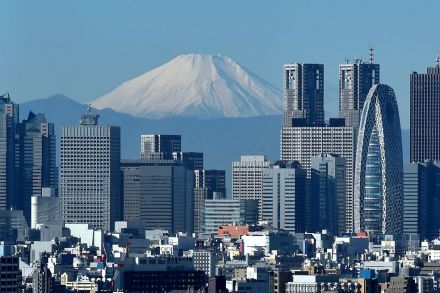
The allure and terror of Mount Fuji

From our UK edition

Six men have died on Japan’s iconic Mount Fuji since the start of the climbing season in July. This figure, two more than last year, is especially worrying given that steps had only recently been taken to mitigate the dangers of climbing the mountain. Various restrictions were introduced earlier this year to deal with overcrowding, which has become a feature of the mountain. A cap of 4,000 climbers a day was imposed along with a fee of 2,000 yen (£10). A website giving advice about weather conditions and congestion on the mountain was set up. Prayers were offered in an official ceremony before the climbing season opened.

Five Tokyo tourist traps worth falling into

With my Customs Declaration Form in hand and Japanese customs handbook in my pocket, I touched down in Tokyo for the first time, from Mumbai. I was wearing flip flops in February, but feeling as ready as I ever would. “Don’t point your chopsticks.” “Never raise your voice.” “No talking on public transport.” “Try to arrive early.” “Take your garbage home with you.” “Meetings should not be canceled.” “Make sure you slurp your noodles.” “Jaywalking is punishable with up to three months in prison.” There was a lot to remember. I was determined not to follow the trodden path, to find spots nobody else had. Then I got off the train in central Tokyo.