Japan

Japan is refusing to tiptoe around the Taiwan issue

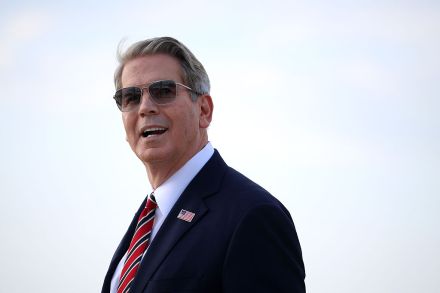
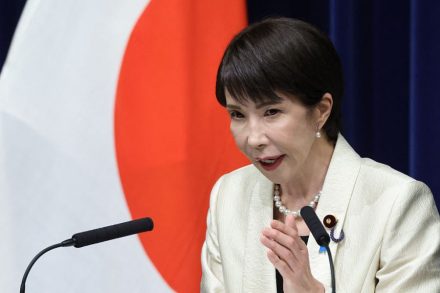
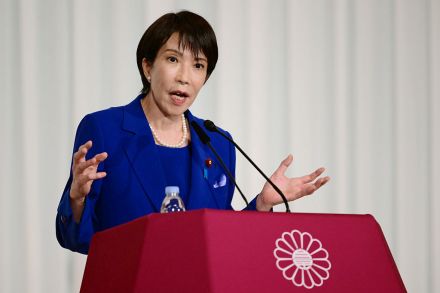
One of the most serious issues in the well-filled in-tray of freshly endorsed Japanese Prime Minister Sanae Takaichi is Taiwan, which China claims as its own sovereign territory, and the lamentable state of Sino-Japanese relations. Takaichi provoked fury with comments in the Japanese parliament in November when she stated that were China to attack Taiwan, it would be interpreted as a "survival-threatening situation" for Japan, implying a military response could follow. Under the terms of its constitution, Japan is severely limited in its military options but Takaichi appeared to be preparing more solid ground with her phrasing. A 2015 law changed the constitution allowing Japan to retaliate if the country faced a "life-threatening" situation.

Sanae Takaichi is making a huge election gamble

Japan will go to the polls in February for a general election after Prime Minister Sanae Takaichi called a snap poll today. Takaichi is looking to make the most of her extraordinarily high approval ratings – in what has proved quite a lengthy honeymoon period – to secure a more comfortable mandate for her ambitious policy platform. It is a bold move by Japan’s first female prime minister and not without risk. Her Liberal Democratic party (LDP), the closest thing Japan has to the UK Conservatives and long seen as the natural party of government, has a slim majority in the lower house thanks to the support of three independent lawmakers but lacks a majority in the upper chamber.

sanae takaichi

Are America’s women heading for the exit?

Life is apparently so disagreeable in Donald Trump’s America that 40 percent of women aged between 15 and 44 want to leave. That is four times higher than the 10 percent who wanted to quit the US in 2014. According to Gallup, which conducted the poll, nearly half the nation’s younger women have “lost faith in America’s institutions.” This disenchantment accelerated after the Supreme Court’s 2022 decision to overturn Roe v. Wade, which enshrined the constitutional right to abortion. Younger American men are bearing up better. Only 19 percent share women’s distaste for the Donald, a 21 percent differential which is the largest recorded by Gallup since it began asking the question in 2007.

Women

Trump’s Asian vacation

President Trump is meeting with Chinese Prime Minister Xi Jinping tonight, or tomorrow, or whenever it is in Asia. Regardless of the time, the meeting will have enormous implications for the future of the US economy and for geopolitical stability. Don’t worry, Trump told his dinner companions in South Korea last night. The three-to-four-hour meeting “will lead to something that’s going to be very, very satisfactory to China and to us. I think it’s going to be a very good meeting. I look forward to it tomorrow morning when we meet.” The China summit will cap what’s been an absolutely delightful Asian invasion for Trump and his retinue. Trump told reporters last week that he felt incredibly lucky.

Donald Trump

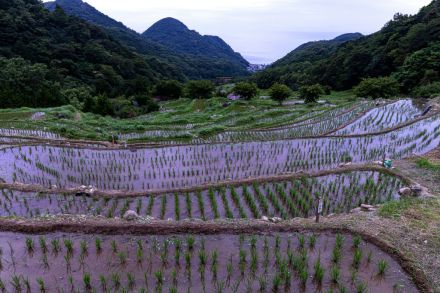
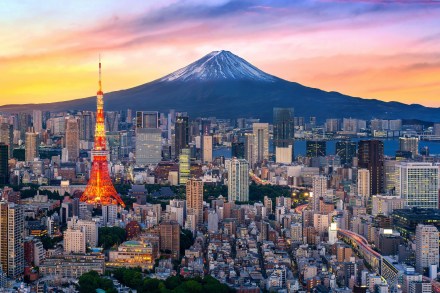
In awe of Fuji-san

My personal version of hell? Shibuya station, Tokyo. Shibuya Scramble is one thing: the busiest pedestrian intersection on the planet, it sees two million people elbow each other, every day. But the train station that thousands of them are trying to get to? That’s where my hopes go to die. A place where you’ll find me near tears, wondering if I’ll ever see my loved ones again. It’s almost impossible to navigate, spread across a dizzying number of floors and stuffed with throngs of human beings speaking a dozen languages. New platforms spring up all the time, often at the top of an unassuming escalator, or via a tiny hidden exit of the Hikarie shopping mall. There are (one or two) signposts, sure, but my Japanese leaves much to be desired.

Fuji

Introducing Japan’s own Iron Lady

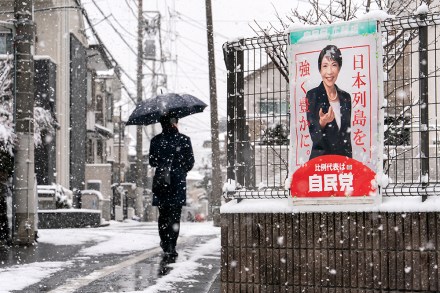
Japan is still in many ways a traditionalist – not to say a sexist – society. But the times they are a changing, and the ruling Liberal Democratic Party (LDP) have just chosen Sanae Takaichi as its leader, which means that she will become the country’s first ever female Prime Minister, and it’s most stridently right-wing one. Takaichi, 64, revels in the nickname the "Iron Lady" and is a hardline patriotic right-winger who is an avowed admirer of the original Iron Lady - Britain’s Conservative Prime Minister Margaret Thatcher, who Takaichi has cited as her role model.

Takaichi

I love Labubu

I don’t recall how it happened. One moment I was a sane member of society, the next I was at an arcade, slotting coin after coin into a claw machine – and on the other side of the glass, taunting me with her feral grin, was the object of my desire: Labubu. Labubu is a mischievous, furry elf-monster with bunny-like ears and distinctive sharp teeth. Depending on who you ask, she is either incredibly cute or incredibly creepy. She exists in many forms – most notably as a key-ring collectible plush doll – embodying an ugly-cute aesthetic called kimo-kawaii in Japanese that both unsettles and endears. Her creator, Hong Kong–born and Netherlands-raised Kasing Lung, was inspired by Nordic folklore.

labubu

Beware the Nagasaki and Hiroshima revisionism

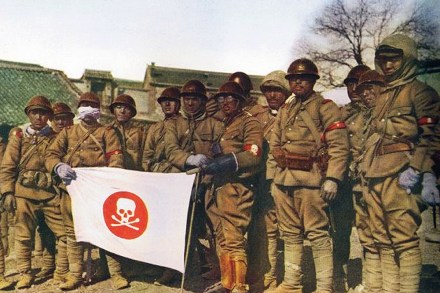
2025 is the 80th anniversary of the end of World War II, the most calamitous conflict in history. The victory over Nazism in Europe is universally fêted, but the triumph over Japanese militarism receives far less celebration. The atomic bombing of Japan, which forced unconditional surrender, has long been criticized by revisionist historians as unjust, unnecessary and morally depraved; that narrative has been absorbed as the truth of the matter. Decades of liberal education have shifted opinions massively, with only 35 percent of Americans believing the bombings were justified as compared to 85 percent in 1945. Those younger than 50 oppose the bombings by significant margins.

Hiroshima

Five Tokyo tourist traps worth falling into

With my Customs Declaration Form in hand and Japanese customs handbook in my pocket, I touched down in Tokyo for the first time, from Mumbai. I was wearing flip flops in February, but feeling as ready as I ever would. “Don’t point your chopsticks.” “Never raise your voice.” “No talking on public transport.” “Try to arrive early.” “Take your garbage home with you.” “Meetings should not be canceled.” “Make sure you slurp your noodles.” “Jaywalking is punishable with up to three months in prison.” There was a lot to remember. I was determined not to follow the trodden path, to find spots nobody else had. Then I got off the train in central Tokyo.

Snowshoeing with septuagenarians

Wading through breakup grief, I’d hit the haziest stage of recovery, somewhere between lying horizontal in dark rooms, and shaving my head. Short of purchasing clippers, I’d resolved to write about wellness travel. Clad in regulation white cotton pajamas in the Western Ghats of India, my lifestyle habits had been judged (hard) and my thoughts about aging, recalibrated. A vigorous wellbeing regimen had revealed my 34-year-old body to be pushing 40, metabolically. Confronting? Yes. Salvageable? Also yes. (More mindfulness, fewer cigarettes, and – my addition – no men). Next stop: I’d pull on my hiking boots for a flight out of sweltering Mumbai, to icy Tokyo.  Post-Covid, Japan dominates algorithms and bucket lists.

The truth about the Trump ‘trade deals’

They say three times makes a pattern. So what should we make of the President’s trade agreements, three of which he confirmed this week, as the August 1 deadline for "reciprocal tariffs” looms?  If there remained any confusion about his agenda, he helpfully laid it out in all caps. “I WILL ONLY LOWER TARIFFS IF A COUNTRY AGREES TO OPEN ITS MARKET. IF NOT, MUCH HIGHER TARIFFS!” he wrote on Truth Social. “USA BUSINESSES WILL BOOM!” Given the size of the lettering, and the similarities to the deals secured with Indonesia, the Philippines and Japan this week, we should take Donald Trump at his word on this one. Put simply: so long as other countries cut taxes for their businesses, he will hike taxes on American businesses ever so slightly less.

trump trade

Trump’s Japan deal is a hollow victory

The reaction of markets to the US trade deal with Japan shows yet again that if you presage bad news with even worse news you can make people pathetically grateful at the outcome. Shares in Toyota surged by 14 percent at the news. Yet why, when the deal will see imports of Japanese cars to the US slapped with tariffs of 15 percent? Because back on "Liberation Day" in April,  Donald Trump announced that Japanese imports would be subject to 24 percent tariffs. Reactions to Trump’s reset in trade relations with the rest of the world have undergone wild swings in recent months. First, markets plunged.

Tariffs

Has Trump given up on tariff deadlines?

“TARIFFS WILL START BEING PAID ON AUGUST 1, 2025,” Donald Trump shared on Truth Social this morning. “There will be no change... No extensions will be granted. Thank you for your attention to this matter!” It’s a rather definitive statement from the President. But we’ve been here before. The original 90-day extension of “reciprocal tariffs” (better described as trade deficit figures with a percentage symbol attached) was also supposed to be a hard deadline. The President suggested only last week that there were no plans to push implementation back again. But here we are: a new date, a new deadline and a mixed market reaction.

tariff

The truth about ninjas

One of my favorite scenes in Kill Bill, Quentin Tarantino’s black comedy martial arts film, is the meeting of Beatrix “the Bride” Kiddo, played by Uma Thurman, with sword-maker Hattori Hanzo at his scruffy sushi bar in Okinawa. Hanzo: What do you want with Hattori Hanzo? Kiddo: I need Japanese steel. Hanzo: Why do you need Japanese steel? Kiddo: I have vermin to kill. Hanzo: You must have big rats, to need Hattori Hanzo’s steel. Tarantino filched his sword-maker’s name from history. Hattori Hanzo was a real ninja (or rather, the historically correct word shinobi). Born in 1542, he spent his life in the service of the shogun Tokugawa Ieyasu and compiled the manual Shinobi Hiden (Legends of Ninja Secrets).

ninja

Masa Son: the world’s most reckless investor

For a few days in February 2000, Masayoshi Son was the richest person in the world. A risk-taker and showman, universally known as Masa, he had long been disdainful of Japan’s staid "salaryman" business culture and was riding the wave of dot-com mania. His company SoftBank, founded in 1981, had bet big on the growth of online shopping. The bullish mood didn’t last, and Masa slunk away from the limelight — but only for a while. A techno-optimist, the now sixty-seven-year-old has repeatedly reinvented himself, urging doubters to see beyond the immediate: "You’re limiting your field of vision to thirty years… Start bold and think 300 years ahead.

Masa

Trump announces steel tariffs

President Trump said that steel tariffs would be announced Monday — and that reciprocal tariffs against, among others, the European Union, were coming early this week. Yet questions remain whether these tariffs will go into effect, or if their announcement is being used as a bartering chip, as with other tariff threats last week.The threat of tariffs reemerged after Trump met with Japanese prime minister Shigeru Ishiba last week to discuss Japanese investment in US Steel. This 25 percent tariff on imported steel and aluminum appears to be an attempt to protect US and Japanese shared interests. This tariff is set to be placed on all nations equally and is not a bargaining tool, unlike those with which Trump threatened Canada and Mexico last week.

Skiing Hokkaido’s powder triangle

"Insane, isn’t it?!” Kyle yelled from thirty feet below, leaning back on his snowboard to watch me struggle. I summoned every ounce of strength in my jet-lagged body to prize my legs, still attached to skis, from several feet of fresh snow. Wedged sideways, I pulled myself up by a tree root, alternating between hysterical laughter and acute panic as little progress was made in five minutes. I’d come to Japan for the powder — and I’d sure found it on my first morning in Furano, Hokkaidō. Fighting to stand up, I steeled myself to tackle the impossibly light powder reaching my armpits, on the widest skis I’d ever clipped into. It really did feel different to snow in the US or Europe. This would take some getting used to. “You said you wanted ‘Japow’!

Hokkaido
Tokyo

Tokyo drift: Japan’s once-pricey capital is now cost-effective… for Americans

I spent my last afternoon in Tokyo stocking up on snacks and feasting on cheap and delicious conveyor belt sushi, in anticipation of characteristically criminal airport concession prices. But when I made my way past Haneda Airport’s Rodeo Drive-esque esplanade of luxury shops — does anyone really buy a $10,000 Omega watch on their way to their gate? — I was in for a surprise. Bottles of water, iced tea and other soft drinks were less than $1 in airport vending machines, just like everywhere else in the country. I wasn’t hungry, but when I realized that I could buy a plate of yakisoba with shrimp, pork and squid for the yen equivalent of $6 and six takoyaki (essentially balls of fried octopus) for $4.75, I ordered both.

Skiing, sushi and hot springs in the Japanese Alps

Nozawa Onsen and Hakuba, my favorite ski resorts near Tokyo, are booking up fast. A trip to Japan guarantees novelty, not least if you book a ski trip. Underpinned by excellent food, surreal views, reliable snow cover, fantastically cheap prices and delightful onsen culture, it’s no wonder the country is increasingly popular with gaijin (non-Japanese). Australian, American and European powder hounds now fill the towns every year, but there are endless authentic experiences waiting in each charmingly idiosyncratic resort. A quick Google betrays that my favorites are already filling up for winter ’24/25. So here’s a run-down of what to expect, and where I’d recommend you book, subayaku.

Why Japan won’t repeat the West’s mistakes on immigration

Japan has become another piece of fodder for the West’s culture wars. After a recent visit with his family, talk-show host Jimmy Kimmel praised the country for its clean toilets and lack of litter, only to be lambasted by right-wing pundits such as Ben Shapiro, who accused the comedian of having leftist beliefs that are completely at odds with what makes Japanese society so safe and orderly. Namely, Shapiro argued, Japan is a closed-off nation, unpersuaded by arguments to allow mass migration, and its homogeneity and “unique culture,” along with a strict legal system, help sustain this “package deal.” During the height of the Syrian refugee crisis nearly a decade ago, amid intense international criticism, Japan refused to accept asylum seekers from the Middle East.

Japan