Japan

Lartigue’s photos are made for the Insta generation

From our UK edition

Will photography as an art form survive the age of Instagram? Now that we think we are all photographers, and curators and collectors too, constantly cropping, sifting, saving and storing, our sensibilities risk becoming blunted, and our attitudes blasé. Two new shows confirmed to me that galleries are going to have to be clever to maintain photography’s hard-won status. In Milton Keynes, the MK Gallery hosts a new retrospective of the photographer’s photographer, Jacques Henri Lartigue (1894-1986).

What precipitated a worldwide total war in the 1930s?

From our UK edition

More than 80 years after it ended, we are still living through the aftermath of the second world war. When people use the word ‘postwar’ they invariably mean this war and the changes it wrought upon international relations, trade, economics, domestic politics, social values and much more besides. Yet it remains all too easy, certainly in the English-speaking world, to cleave to a rather parochial view of that conflict as something that ended up spreading to lots of exotic places while still ultimately concerning the great battle between good and evil that was the Allies vs the Nazis. Can there be any corner of Hitler’s psyche, any charming detail of the home front in Britain, which remains unprobed in books, TV programmes and museum exhibits?

The dark side of Japanese convenience stores

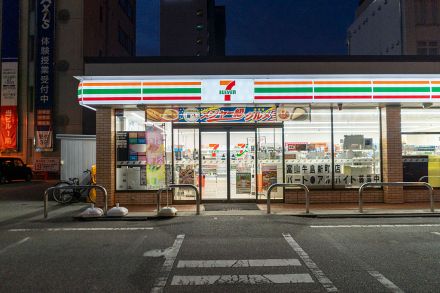
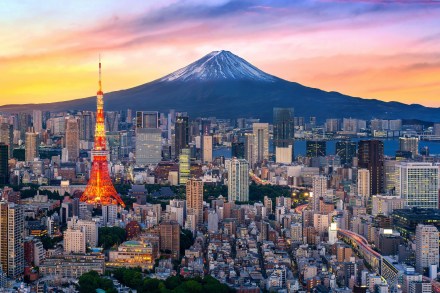
Japanese cities can disappoint. Visitors stroll around hoping to be awe-struck by the dreamy spectacle of clip-clopping Geisha in their wooden geita, or barreling sumo wrestlers, or high-stockinged ninja girls (à la Kill Bill), and all against a Blade Runner backdrop, only to be confronted with mostly unremitting blandness. The constants are these: concrete, plastic, more concrete, more plastic, endless construction (one crappy shopping complex or mansion block replacing another), confusion, and noise. It can all seem dizzyingly homogenous. The defining feature of the Japanese city these days is the ubiquitous convenience store or "konbini," the scaled-down supermarkets/post offices/banks/…whatever the customer requires it to be.

7-11

Japan isn’t as safe as you think

I was robbed in Tokyo recently, an experience as unexpected as it was distressing. Despite long years in London, plus decades of rough and ready globetrotting to some of the sketchiest places on earth, I have never been a victim in any of these notorious crime hotspots (I feel snubbed especially by London), but this was the second such experience in supposedly the safest city in the world.   What are the odds? The first time I dropped my wallet in a branch of the bargain bucket Don Quijote store and later received a phone call from the staff saying they had it, with ID cards intact but 50,000 yen gone.

Riveting: Kokuho reviewed

A three-hour Japanese epic about a classical performance art (kabuki) isn’t the easiest sell, I’ll grant you, but I’ll give it my best. Kokuho is multi-award winning. It is the highest grossing live-action film in Japan ever. It is sumptuously filmed. It is masterfully sweeping. The kabuki itself is stunning, so much so that you may one day wish to visit the kabuki theatre in Tokyo, although be warned: the shortest production is four hours. Some last all day. Looked at this way, you are getting off lightly here. I felt entirely immersed in a world I had known little about Directed by Lee Sang-il, and adapted from Shuichi Yoshida’s two-part novel, the film is a drama spanning 50 years.

People need to calm down about Nigel Farage’s bitcoin wheeze

From our UK edition

There’s a Tube strike in the old-fashioned style as I write – and you’ll understand the irritation, mine and that of restaurateurs across London, when I add that I’ve just cancelled a table at Noble Rot in Greek Street because my companion can’t face struggling into town. The loss of trade on these days, of which more are planned for May and June, is immeasurably damaging for an already fragile urban economy. More irritating still is the fact that behind the disruption is disharmony between unions: RMT members, just under half the driver workforce, are striking against Transport for London’s proposal of a four-day week (plus extra days off in return for other minor changes) which their Aslef brethren are keen to accept.

Two Tokyo misfits: Hooked, by Asako Yuzuki, reviewed

From our UK edition

Following the enormous success of Butter’s English translation in 2024, it seemed inevitable that another of Asako Yuzuki’s novels would surface in the UK. Nairu pachi no joshikai (The Nile Perch Women’s Club), published in 2014, has now become Hooked. Billed as a literary thriller about female friendship, loneliness and obsession, it is a deeply strange, unsettling read. The novel follows Eriko, a high-flying project manager, and Shoko, a slacker housewife blogger, who both struggle with life – or, rather, with the behaviour expected of Japanese women. Both have achieved a level of acceptance socially (Eriko in her career, Shoko in her relationship), but they find the pursuit of ‘gal pals’ a major stumbling block in their quest for the appearance of normality.

Japan’s fascination with Andrew Mountbatten-Windsor

From our UK edition

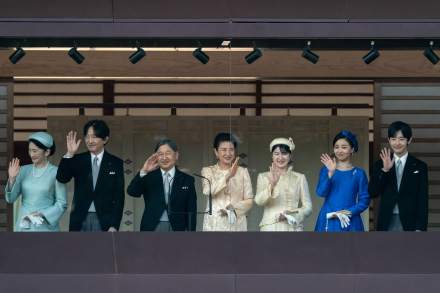
The Japanese are fascinated by the scandal concerning the aristocrat formerly known as Prince Andrew. The main themes resonate powerfully. The concepts of duty, shame and being a burden to one’s family are deeply woven into Japanese culture and so embedded in the language that it is hard to express yourself without touching on them. There are at least four expressions for ‘black sheep of the family’ in Japanese and one of the very first kanji I learned was for the word ‘muru-hachibu’ (eight against one) which means ‘sent to Coventry’ (shouldn’t that be Norfolk now?).   There might also be a sense of ‘there but for the grace of god’ relief for the Japanese in watching a fellow constitutional monarchy floundering.

Nintendo and the plumber who conquered the world

It’s not more than a parlour game, perhaps, to speculate about history’s most crucial inventions. One invention often makes the next possible. Electric light revolutionised human productivity, allowing us to work well beyond sundown. The combustion engine and later the turbine engine collapsed our sense of distance, putting other continents within a day’s travel. We’re still debating what the internet’s done; how social media offers the double-edged sword of instant communication and addressability for good and ill; how it encourages the avatarisation of ourselves as online presences. We’re both ourselves online and not quite ourselves, entirely embodied and yet psychically elsewhere. But then again, we’ve always experienced this on some level or another.

Japan is refusing to tiptoe around the Taiwan issue

One of the most serious issues in the well-filled in-tray of freshly endorsed Japanese Prime Minister Sanae Takaichi is Taiwan, which China claims as its own sovereign territory, and the lamentable state of Sino-Japanese relations. Takaichi provoked fury with comments in the Japanese parliament in November when she stated that were China to attack Taiwan, it would be interpreted as a "survival-threatening situation" for Japan, implying a military response could follow. Under the terms of its constitution, Japan is severely limited in its military options but Takaichi appeared to be preparing more solid ground with her phrasing. A 2015 law changed the constitution allowing Japan to retaliate if the country faced a "life-threatening" situation.

The new freakish shopping trend

On the fourth floor of Selfridges, in London, is the children’s toy department. Most of the vast space is given over to soft toys – mounds of synthetic fur, thousands of little beady eyes – and when I visited last Saturday afternoon the customers were almost all adults. I spent two hours there, standing by a tower of little Paddington bears, watching the shoppers in the queue for the till, and it was eye-opening. Almost no one was buying for a child. I saw two Chinese women with white toy lambs, a 17-year-old boy with a dragon, what looked like drug dealers queuing for Pokémon cards, and a genuinely troubling number of sad-looking women in their mid-twenties clutching long-eared toy bunnies made by a company called Jellycat.

Japan’s female leader is a bright beacon, but do her sums add up?

From our UK edition

My scepticism towards soaring markets with unconvincing fundamentals was nurtured by working in Tokyo in the mid-1980s, when the Nikkei index took off like a rocket. Shamelessly boosted by traders and analysts alike, share prices rose to absurd heights before crashing in the early 1990s and taking with them any notion of Japan as the next great economic power. The Nikkei took 34 years to regain its 1989 peak of 38,916. Since passing that benchmark, the index has roared upwards again – despite Japan’s chronic problems of stagnant growth, ballooning public debt, sclerotic corporate leadership, expensively ageing population and fears of inflation.

The strange economics of Japan’s all-you-can-drink pubs

From our UK edition

Imagine going into an English pub and slapping a tenner down on the bar. ‘All I can drink, please,’ you say. ‘Certainly sir,’ says the barman. ‘You’ve got two hours.’ ‘Right then,’ you say. ‘I’ll start with a pint.’ Ten minutes later: ‘Whisky, please, no ice.’ Shortly afterwards: ‘I think I’ll have a Bloody Mary.’ Then: ‘Pint of that there. The green one. Please.’ Shortly afterwards. ‘Large white wine.’ And so the night wears on. You can have absolutely anything you like: cocktails, double G&Ts, rum and coke, Jack Daniels and Jack Daniels. Two hours is enough to render you senseless. You have drunk the equivalent of £100 of booze for £10, and you need a taxi, a chicken fajita and an urgent visit to the toilet.

Japan, the land of the rising wine industry

From our UK edition

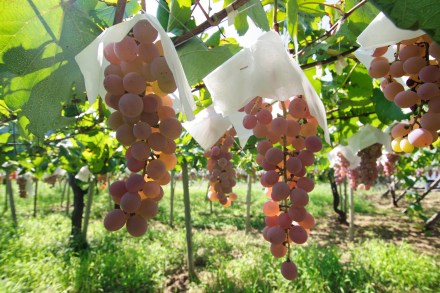
Travel to Hokkaido, Japan’s northernmost island, and I imagine one of the last things you’d expect to find is a Frenchman making wine. But tucked away in Hakodate, Etienne de Montille, a ninth-generation winemaker from the 300-year-old Domaine de Montille in Burgundy’s Côte de Beaune, is challenging preconceptions about Japanese wine. The de Montille family has been synonymous with Burgundy for centuries, but Etienne decided in 2016 to try something different, setting up vineyards in both Hokkaido and Santa Barbara, California.  ‘I was touched by what I saw,’ Etienne told the Japan Times last year.

Sanae Takaichi is making a huge election gamble

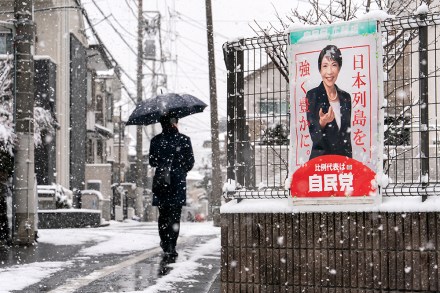
Japan will go to the polls in February for a general election after Prime Minister Sanae Takaichi called a snap poll today. Takaichi is looking to make the most of her extraordinarily high approval ratings – in what has proved quite a lengthy honeymoon period – to secure a more comfortable mandate for her ambitious policy platform. It is a bold move by Japan’s first female prime minister and not without risk. Her Liberal Democratic party (LDP), the closest thing Japan has to the UK Conservatives and long seen as the natural party of government, has a slim majority in the lower house thanks to the support of three independent lawmakers but lacks a majority in the upper chamber.

sanae takaichi

Global fish stocks have been perilous for decades – so why is still so little being done?

From our UK edition

The great American activist Aldo Leopold once argued that to be a modern environmentalist was to suffer a world of wounds as you endured the losses inflicted on one cherished organism after another. No one, then, can suffer more anguish than the campaigner for the world’s fishes. In this wide-ranging, heartfelt, meticulously assembled account of our oceans Rose George shows why. She tells us that there are four million fishing vessels worldwide, the most appallingly efficient belonging to China, the EU, Taiwan, Japan, Russia and the USA. It is primarily these giant industrial regimes that have driven four-fifths of the planet’s fishes to the edge of sustainable limits. Much of this damage was done decades ago. Even in the 1970s the North Atlantic fisheries were declining.

Are America’s women heading for the exit?

Life is apparently so disagreeable in Donald Trump’s America that 40 percent of women aged between 15 and 44 want to leave. That is four times higher than the 10 percent who wanted to quit the US in 2014. According to Gallup, which conducted the poll, nearly half the nation’s younger women have “lost faith in America’s institutions.” This disenchantment accelerated after the Supreme Court’s 2022 decision to overturn Roe v. Wade, which enshrined the constitutional right to abortion. Younger American men are bearing up better. Only 19 percent share women’s distaste for the Donald, a 21 percent differential which is the largest recorded by Gallup since it began asking the question in 2007.

Women

An escape from investment banking to the open road

From our UK edition

A beguiling cinema advert back in the 1970s showed a young man with a series of doors closing around him with resounding clunks. First, he was hemmed in by the boredom of school, then work, and finally a mortgage – but as soon as he got the keys to his first motorbike, he could hit the open road and escape to freedom. Vroom, vroom. I seem to remember the initial scenes were in grim black and white, but when he got the bike everything switched to vibrant colour – although that may be false memory syndrome.

How to drink sake

From our UK edition

There is a fellow called Anthony Newman who is fascinated by drink, as a consumer, a producer and an intellectual. That said, he spent some years supplying Australians with craft beer, which does not sound very intellectual. But he insists he paid for his own passage and was able to return without a ticket of leave. While living in Oz he visited Japan, and found himself captivated by many aspects – not least sake, the rice wine which is its national drink. Nearly 90 per cent of sake is consumed locally. Anthony decided the potential export market was enormous. I have heard it persuasively argued that Japan is the most complex of all the world’s great countries.

Trump’s Asian vacation

President Trump is meeting with Chinese Prime Minister Xi Jinping tonight, or tomorrow, or whenever it is in Asia. Regardless of the time, the meeting will have enormous implications for the future of the US economy and for geopolitical stability. Don’t worry, Trump told his dinner companions in South Korea last night. The three-to-four-hour meeting “will lead to something that’s going to be very, very satisfactory to China and to us. I think it’s going to be a very good meeting. I look forward to it tomorrow morning when we meet.” The China summit will cap what’s been an absolutely delightful Asian invasion for Trump and his retinue. Trump told reporters last week that he felt incredibly lucky.

Donald Trump