

There’s a Tube strike in the old-fashioned style as I write – and you’ll understand the irritation, mine and that of restaurateurs across London, when I add that I’ve just cancelled a table at Noble Rot in Greek Street because my companion can’t face struggling into town. The loss of trade on these days, of which more are planned for May and June, is immeasurably damaging for an already fragile urban economy.
More irritating still is the fact that behind the disruption is disharmony between unions: RMT members, just under half the driver workforce, are striking against Transport for London’s proposal of a four-day week (plus extra days off in return for other minor changes) which their Aslef brethren are keen to accept. There’s an echo in this of the way rival print unions in the 1980s helped destroy each other (a story currently on stage as In The Print at the King’s Head Theatre in Islington) as they lost the battle against Rupert Murdoch’s Wapping revolution. A similar denouement can’t come soon enough for London’s public transport.

Risk piled upon risk
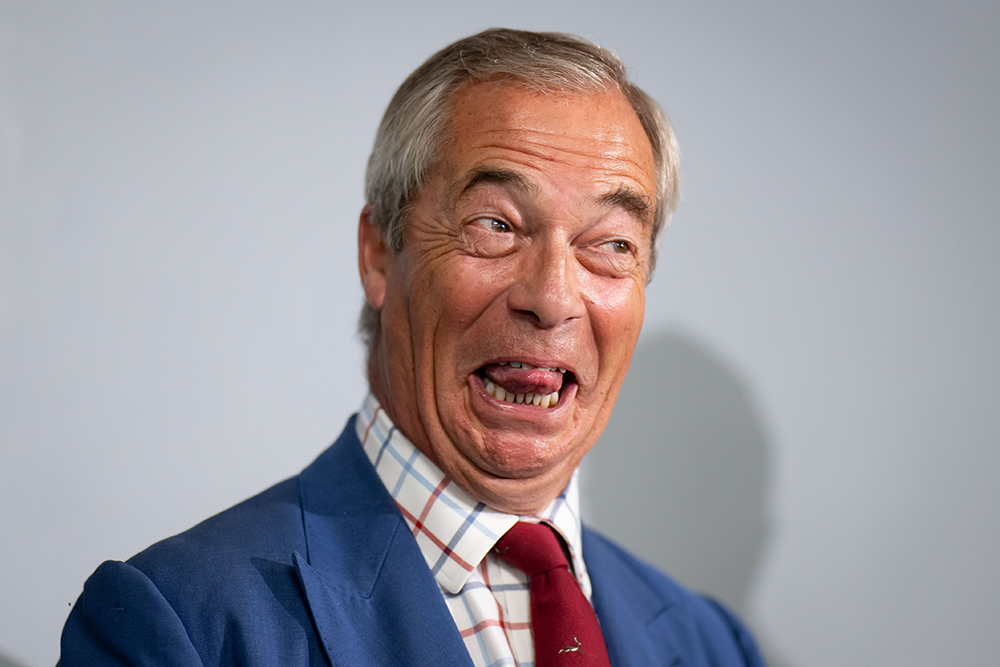
I can think of no conceivable reason to invest alongside Kwasi Kwarteng and Nigel Farage in Stack BTC, the ‘bitcoin treasury’ that launched on the Aquis smaller-companies exchange in March, having emerged from the remains of a previous crypto venture called Kasei. On the other hand, I also cannot think why the Financial Conduct Authority should investigate Farage for ‘market abuse’ – as the Lib Dem deputy leader Daisy Cooper demanded – in the form of a Stack promotional video which she claimed could be seen as ‘using the Donald Trump playbook to put [Farage’s] own financial interests above the public good, potentially luring people into high-risk schemes for his own gain’.
It’s true that Farage has an ulterior motive for bitcoin boosterism, in the hope of harvesting Reform UK campaign funds from donors in the crypto arena. But this story is, or should be, all about caveat emptor among consenting adults. Bitcoin is a gambling chip with no intrinsic value, no regulator and a rollercoaster history. Stack’s ‘primary focus on accumulating and holding bitcoin as a reserve asset for long-term value appreciation’ is an absurd way to describe skimming a profit from holding other people’s gambling chips. The use of phrases such as ‘reserve asset’ and ‘the treasury of tomorrow’ by executive Stack chairman Kwarteng, with his 38-day record as chancellor in charge of a real Treasury, is disingenuous to say the least.
If you’re tempted, take a look at Strategy Inc, the New York accumulator of more than $60 billion worth of bitcoin on which Stack appears to be modelled: while bitcoin’s price shed 37 per cent since last July, Strategy’s shares dived 62 per cent. But if you still feel inclined to amp up your bitcoin play by adding Stack’s share-price volatility plus the ‘execution risk’ of potentially ill-timed buying and selling by Kwarteng’s crew – and perhaps you’re even thinking of borrowing money to do so – that’s your choice. Just don’t think of it as any kind of investment.
Buying into adversity
Let me raise the tone by saluting an admirable exemplar of high-risk investing. ‘Buy at times of maximum pessimism’ was the philosophy passed by the great investor Sir John Templeton (1912-2008) to his protégé Mark Mobius, who died last week aged 89. As the guiding light of Templeton’s pioneering ‘emerging markets’ fund, Mobius travelled to the ends of the Earth in search of undervalued companies, treating all negativity and temporary turmoil as buying opportunities.
Pre-Templeton in the 1970s, he had bought Japanese stocks on single-digit price-earnings ratios while Japan’s exports were regarded as cheap and shoddy, long before its 1980s stock market boom. Later, in Argentina, Mobius invested when inflation was at 2,000 per cent and so-called smart money was fleeing – ahead of a 500 per cent stockmarket surge under the presidency of Carlos Menem. In the Philippines he bought a chunk of the main telephone company in the middle of a political coup. Most recently he declared Venezuela after the removal of the former president Nicolas Maduro ‘worth watching again’.
Today, Mobius might have been eyeing steel companies such as Mobarakeh and Khouzestan, well placed for reconstruction contracts, on Tehran’s little-known Tedpix share index, which has dropped sharply since the outbreak of hostilities. An investor as prescient as Mobius might even have bought them a couple of years ago, since when, despite the recent fall, the Iranian market still stands 40 per cent higher. And by the by, we might wonder what outcome of the war that performance predicts.
Spring sunshine
‘The world belongs to optimists’ was another Mobius mantra, borrowed from the 19th-century French politician François Guizot, which also offers a happy theme for spring weddings. At one such in London this weekend, I took the opportunity to quiz twentysomethings (and their parents) about career prospects in the teeth of the job-eating advance of AI.
They were cheerful in the sunshine, chatting about ‘venue-scouting in Monaco’, ‘managing F1 sponsors’, someone’s girlfriend who’s a Goldman Sachs graduate trainee and someone else’s daughter who’s the chief engineer on an oil rig. My favourite was a charming young man who last time we met told me proudly he’d found ‘a job in the City’ – in one of those Escape Rooms that brings computer games to life. Since then he’d ventured in wholesale fruit and veg and now he’s ‘saving the Javan rhino’.
Then came news of a surprise fall in unemployment from 5.2 per cent to 4.9 per cent for the quarter to February. The trend can’t hold as the UK ‘flirts with recession’ (the EY Item Club’s forecast, with which I concur) in post-Iran oil-shock conditions later this year. But maybe, just maybe, this season’s pessimism has been overdone.






Comments