Japan

How to drink sake

From our UK edition

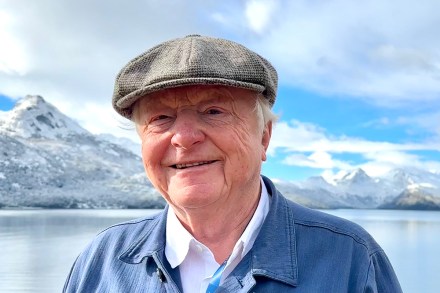
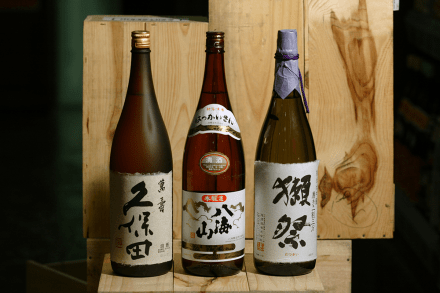
There is a fellow called Anthony Newman who is fascinated by drink, as a consumer, a producer and an intellectual. That said, he spent some years supplying Australians with craft beer, which does not sound very intellectual. But he insists he paid for his own passage and was able to return without a ticket of leave. While living in Oz he visited Japan, and found himself captivated by many aspects – not least sake, the rice wine which is its national drink. Nearly 90 per cent of sake is consumed locally. Anthony decided the potential export market was enormous. I have heard it persuasively argued that Japan is the most complex of all the world’s great countries.

Trump’s Asian vacation

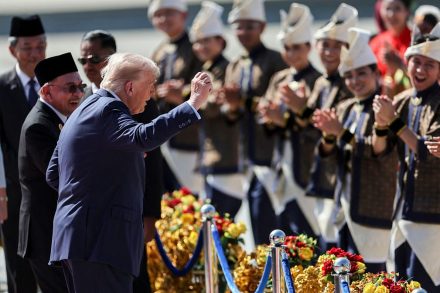
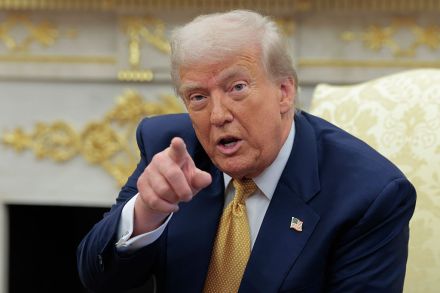
President Trump is meeting with Chinese Prime Minister Xi Jinping tonight, or tomorrow, or whenever it is in Asia. Regardless of the time, the meeting will have enormous implications for the future of the US economy and for geopolitical stability. Don’t worry, Trump told his dinner companions in South Korea last night. The three-to-four-hour meeting “will lead to something that’s going to be very, very satisfactory to China and to us. I think it’s going to be a very good meeting. I look forward to it tomorrow morning when we meet.” The China summit will cap what’s been an absolutely delightful Asian invasion for Trump and his retinue. Trump told reporters last week that he felt incredibly lucky.

Donald Trump

In awe of Fuji-san

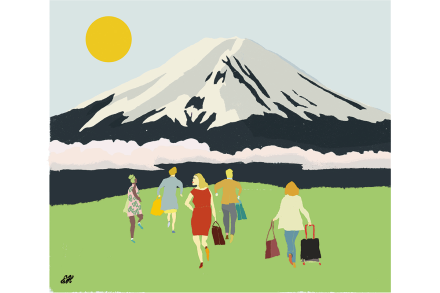
My personal version of hell? Shibuya station, Tokyo. Shibuya Scramble is one thing: the busiest pedestrian intersection on the planet, it sees two million people elbow each other, every day. But the train station that thousands of them are trying to get to? That’s where my hopes go to die. A place where you’ll find me near tears, wondering if I’ll ever see my loved ones again. It’s almost impossible to navigate, spread across a dizzying number of floors and stuffed with throngs of human beings speaking a dozen languages. New platforms spring up all the time, often at the top of an unassuming escalator, or via a tiny hidden exit of the Hikarie shopping mall. There are (one or two) signposts, sure, but my Japanese leaves much to be desired.

Fuji

Introducing Japan’s own Iron Lady

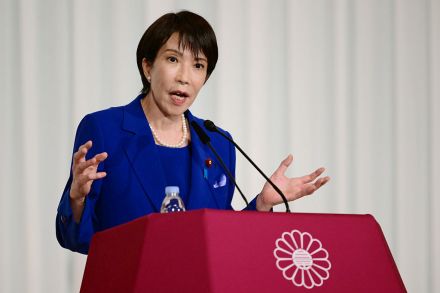
Japan is still in many ways a traditionalist – not to say a sexist – society. But the times they are a changing, and the ruling Liberal Democratic Party (LDP) have just chosen Sanae Takaichi as its leader, which means that she will become the country’s first ever female Prime Minister, and it’s most stridently right-wing one. Takaichi, 64, revels in the nickname the "Iron Lady" and is a hardline patriotic right-winger who is an avowed admirer of the original Iron Lady - Britain’s Conservative Prime Minister Margaret Thatcher, who Takaichi has cited as her role model.

Takaichi

Why Japan doesn’t care about having its first female leader

From our UK edition

Japan is to have a female prime minister. Well, probably. Sanae Takaichi, the 64-year-old conservative veteran, has at the third attempt won the presidency of the Liberal Democratic Party (LDP) – which brings with it the bonus of being prime minister. Or at least it usually does. The LDP are currently in a coalition government, so Takaichi’s appointment will need to wait a couple of weeks to be confirmed at an extraordinary session in the diet (the national legislature). You might think the Japanese, feminists especially, would make something of having their first female prime minister, but the news has elicited not much more than a shrug here. There has been little fanfare and still less rejoicing.

Could a ‘futurehood’ revolution save Britain?

From our UK edition

As the collapse of birthrates accelerates across the developed world, even our language is struggling to keep up. Over nine years of demographic research, I’ve resorted to coining my own vocabulary just to describe what’s unfolding. ‘Birthgap’, for the widening gulf between generations – too few young to support too many old. ‘Yesterlands’, for once-thriving communities now quietly hollowing out. ‘Retronomics’, for the slow yet continuous un-ravelling that follows demographic decline, as nations are forced to retrofit their economies to fit their shrunken societies. Lately, I’ve been searching for another missing word – this time, to capture the invisible sense that a society still believes in its own tomorrow.

The concept of ‘the West’ seems to mean anything you like

From our UK edition

A hundred years ago, T.S. Eliot wrote to Geoffrey Faber, for whose publishing company he had just started work, complaining: ‘The Defence of the West… is a subject about which everyone thinks he has something to say.’ Plus ça change? Back then, people were coming to terms with a war that had shown the West to be neither as unified nor as civilised as had been assumed. A century on, American isolationism, demographic decline, mass immigration, Islamism and a slow but decisive shift in global economic gravity are giving commentators the opportunity to bloviate endlessly about the decline/suicide/end/decay/of the West. But what exactly it is that we are defending or lamenting is far from clear. Georgios Varouxakis’s The West attempts to answer that question.

I love Labubu

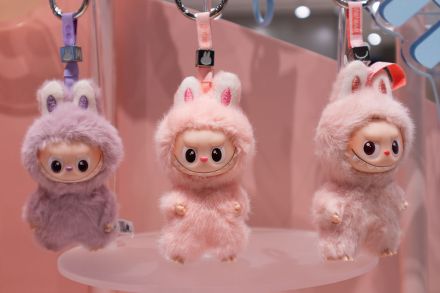
I don’t recall how it happened. One moment I was a sane member of society, the next I was at an arcade, slotting coin after coin into a claw machine – and on the other side of the glass, taunting me with her feral grin, was the object of my desire: Labubu. Labubu is a mischievous, furry elf-monster with bunny-like ears and distinctive sharp teeth. Depending on who you ask, she is either incredibly cute or incredibly creepy. She exists in many forms – most notably as a key-ring collectible plush doll – embodying an ugly-cute aesthetic called kimo-kawaii in Japanese that both unsettles and endears. Her creator, Hong Kong–born and Netherlands-raised Kasing Lung, was inspired by Nordic folklore.

labubu

Beware the Nagasaki and Hiroshima revisionism

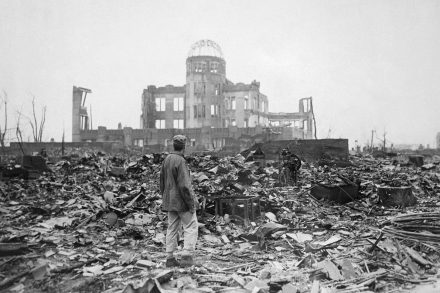
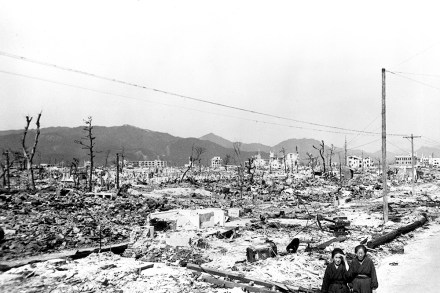
2025 is the 80th anniversary of the end of World War II, the most calamitous conflict in history. The victory over Nazism in Europe is universally fêted, but the triumph over Japanese militarism receives far less celebration. The atomic bombing of Japan, which forced unconditional surrender, has long been criticized by revisionist historians as unjust, unnecessary and morally depraved; that narrative has been absorbed as the truth of the matter. Decades of liberal education have shifted opinions massively, with only 35 percent of Americans believing the bombings were justified as compared to 85 percent in 1945. Those younger than 50 oppose the bombings by significant margins.

Hiroshima

Snowshoeing with septuagenarians

Wading through breakup grief, I’d hit the haziest stage of recovery, somewhere between lying horizontal in dark rooms, and shaving my head. Short of purchasing clippers, I’d resolved to write about wellness travel. Clad in regulation white cotton pajamas in the Western Ghats of India, my lifestyle habits had been judged (hard) and my thoughts about aging, recalibrated. A vigorous wellbeing regimen had revealed my 34-year-old body to be pushing 40, metabolically. Confronting? Yes. Salvageable? Also yes. (More mindfulness, fewer cigarettes, and – my addition – no men). Next stop: I’d pull on my hiking boots for a flight out of sweltering Mumbai, to icy Tokyo.  Post-Covid, Japan dominates algorithms and bucket lists.

What’s next for Taiwan?

From our UK edition

When Portuguese traders sailed past a verdant, mountainous land on the fringe of the Chinese empire in the mid-16th century, they named it Ihla Formosa – ‘beautiful island’. But Kangxi, the third emperor of the Manchu Qing Dynasty, was less impressed when his naval forces captured it in 1683, scoffing: ‘Taiwan is no bigger than a ball of mud. We gain nothing by possessing it, and it would be no loss if we did not acquire it.’ Beautiful or not, Taiwan was a pirates’ lair, inhabited by tattooed head-hunters and best left alone. Yet the Qing clung on to Taiwan for two centuries, with Chinese settlers gradually displacing the indigenous Austronesian population.

The merchant as global reporter

From our UK edition

Joad Raymond Wren’s ambitious history of early modern European news, capacious in structure, monumental in volume, is named for a witticism by John Earle (c.1601-65). The author of Microcosmography, a compilation of satirical ‘characters’ whose obvious modern heir is Victoria Mather’s ‘Social Stereotypes’, was arguably the funniest member of mid-17th century England’s most likeable clique, the Great Tew Circle. Wren more than once returns to Microcosmography’s comparison of the nave of St Paul’s, where London’s freshest newsletters were to be procured, with the commercial buzz of the Royal Exchange, with news replacing goods and hard cash as a potentially fruitful alternative currency.

The truth about the Trump ‘trade deals’

They say three times makes a pattern. So what should we make of the President’s trade agreements, three of which he confirmed this week, as the August 1 deadline for "reciprocal tariffs” looms?  If there remained any confusion about his agenda, he helpfully laid it out in all caps. “I WILL ONLY LOWER TARIFFS IF A COUNTRY AGREES TO OPEN ITS MARKET. IF NOT, MUCH HIGHER TARIFFS!” he wrote on Truth Social. “USA BUSINESSES WILL BOOM!” Given the size of the lettering, and the similarities to the deals secured with Indonesia, the Philippines and Japan this week, we should take Donald Trump at his word on this one. Put simply: so long as other countries cut taxes for their businesses, he will hike taxes on American businesses ever so slightly less.

trump trade

Trump’s Japan deal is a hollow victory

The reaction of markets to the US trade deal with Japan shows yet again that if you presage bad news with even worse news you can make people pathetically grateful at the outcome. Shares in Toyota surged by 14 percent at the news. Yet why, when the deal will see imports of Japanese cars to the US slapped with tariffs of 15 percent? Because back on "Liberation Day" in April,  Donald Trump announced that Japanese imports would be subject to 24 percent tariffs. Reactions to Trump’s reset in trade relations with the rest of the world have undergone wild swings in recent months. First, markets plunged.

Tariffs

Could Japan soon be governed by chatbots?

From our UK edition

Tokyo Could Japan be the world’s first -algocracy – government by algorithm? The concept has been flirted with elsewhere: in 2017 a chatbot called Alisa challenged Vladimir Putin for the Russian presidency. But there is reason to believe that if any major country is going to replace its politicians with AI, it will be Japan.  The citizens of Yokosuka in Kanagawa have had a remarkably lifelike AI avatar of their mayor, Katsuaki Uechi, at their service for over a year now. It (he?) speaks perfect English with a slight Japanese accent, with Uechi’s facial features manipulated to make it look as if he is pronouncing the words correctly. The avatar exists on the city’s website and YouTube channel, standing at a podium, making speeches.

Has Trump given up on tariff deadlines?

“TARIFFS WILL START BEING PAID ON AUGUST 1, 2025,” Donald Trump shared on Truth Social this morning. “There will be no change... No extensions will be granted. Thank you for your attention to this matter!” It’s a rather definitive statement from the President. But we’ve been here before. The original 90-day extension of “reciprocal tariffs” (better described as trade deficit figures with a percentage symbol attached) was also supposed to be a hard deadline. The President suggested only last week that there were no plans to push implementation back again. But here we are: a new date, a new deadline and a mixed market reaction.

tariff

The stigma still surrounding leprosy

From our UK edition

One of the earliest leper hospitals in Britain was built in London near the beginning of the 12th century by Queen Matilda, the wife of Henry I. It was a benign combination of housing, hospital and chapel, with patients free to come and go as they wished. Matilda started a fashion among the wealthy, so that by 1350 there were more than 300 such hospitals across the kingdom. Far from lepers being shunned and feared as outcasts, therefore, their treatment for much of the medieval period was enlightened. ‘The mythology of the “medieval leper” seems no more real than that of the vampire or ghoul,’ writes Oliver Basciano. The author is a journalist who has worked for the Financial Times and the BBC.

Remembering Hiroshima 80 years on

From our UK edition

In October 1945, towns and cities across the United States celebrated ‘A Tribute to Victory Day’ in celebration of the United States’s military victory over Nazi Germany and imperial Japan. The biggest event was held in Los Angeles and broadcast live across the country. In scenes ‘reminiscent of the pre-war Nazi rallies at Nuremberg’, Iain MacGregor writes, more than 100,000 people crammed into the Memorial Coliseum to watch the ‘cinematic legend’ Edward G. Robinson lead a massive cast on giant stage sets recreating key moments of the defeat of the Axis powers. For the evening finale, in the glare of searchlights, three Boeing B-29 Superfortresses flew low over the stadium and, as the audience gasped, a huge mushroom cloud rose behind the stage.

With Jun Tanaka

From our UK edition

25 min listen

Jun Tanaka is a Japanese-British chef with over 30 years’ experience in some of London’s most famous restaurants, including La Gavroche, Restaurant Marco Pierre White and The Square. In 2016 he opened the Ninth, which was awarded a Michelin star two years later. On the podcast, Jun tells Lara why the smell of baking brings back early food memories, how Japanese packed lunch is superior to English packed lunch, and why, in his view, you still can’t get a good ramen in London.

Poise and gentleness: Hiroshige, at the British Museum, reviewed

From our UK edition

Why is Hiroshige’s work so delightful? While his close predecessor Hokusai has more drama in his draughtsmanship, Hiroshige’s pastoral visions conjure a sense of timeless continuity that appealed to his contemporaries as much as to present-day teens who love the merch. His is a world in which everything has happened before, and will happen again. People race for shelter from a sudden shower of rain; a finely dressed lady adjusts her slipping belt. Human life seems small and predictable against his vast mountains and limpid lakes.