Italy

The Romantic poets

From our UK edition

People can be mightily protective of their Romantic poets. When I worked at the Keats Shelley House, overlooking the Spanish Steps in Rome, one of my colleagues developed a callus on her hand where the daily task of locking the museum door — emphatically — caused the key to abrade her skin. And when I last visited Keats’s grave, with a friend, in the city’s Non-Catholic Cemetery, a middle-aged Italian woman snapped at us to shut up as she muttered through a printout of ‘To Autumn’. It’s strange in a way that Keats should inspire such devotion in Rome, since he wrote no poetry in Italy and only a handful of letters survive from the four months that he spent dying there.
Long life | 21 April 2016

From our UK edition

As we prepare in Britain for our momentous referendum in June, Italy has just had one. It happened last Sunday while I was on holiday in Tuscany, and it was about as futile an exercise in democracy as there could be. Italy has lots of referendums. They come in two kinds. First, there is the constitutional referendum, which is used to approve any change to the constitution that has been passed twice by both houses of parliament. Then there is the popular referendum, which is held by popular demand to request the abolition of the other kinds of law that parliament has enacted. Constitutional referendums are rare.

Repeat prescription

From our UK edition

Walter Sickert was once shown a room full of paintings by a proud collector, who had purchased them on the understanding that they were authentic Sickerts. The painter took one look around, then announced genially, none of these are mine, ‘But none the worse for that!’ Were Giorgione to return to life, and take a stroll around the Sackler Galleries at the Royal Academy, he might echo those words. Few of the works on show, in all probability, were actually executed by Giorgione, but they are none the less magnificent for that. This is — wisely — not an exhibition that attempts to reassemble the artistic personality of that enigmatic figure (there have been quite a few of those over the years).

On the trail of Piero

From our UK edition

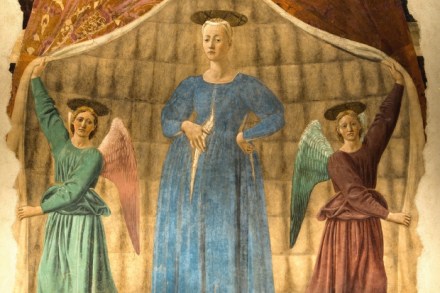
Piero della Francesca is today acknowledged as one of the foundational artists of the Renaissance. Aldous Huxley thought his ‘Resurrection’ ‘the best painting in the world’. His compositions marry art and science with cool precision and a sophisticated grasp of perspective — he was, after all, a mathematician. But he was only rediscovered in the mid-19th century after centuries of relative obscurity. Following his death in 1492, his artistic achievements faded in the memory and he became known chiefly as a geometer (his numerous writings include an innovative treatise on solid geometry and perspective). This is not wholly surprising.

Lake Iseo

From our UK edition

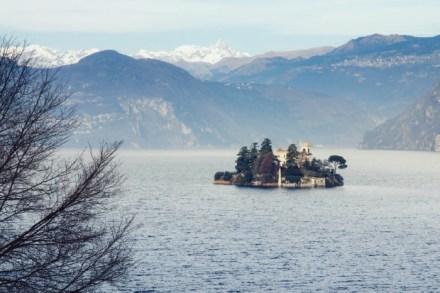
If you’ve never heard of Lake Iseo, you’re not alone. Nestling shyly between chocolate-box Como and glamorous Garda, the smallest of Lombardy’s four major lakes has quietly resisted the limelight over the centuries. Fashionistas may frolic on photo shoots in Garda’s ritzy spas, while excursion boats patrol Como’s west bank in the hope of spotting George Clooney in his front garden. But pint-sized Iseo shelters beneath cascades of forest, her charms undisturbed by tourist hordes. Iseo’s waters shimmer benignly amid nothing more disruptive than birdsong, the splashing of traghetti boats and the occasional peal of church bells. Inevitably, a few cognoscenti have rumbled Lake Iseo’s unique brand of magic over the years.

The pleasures of Puglia

From our UK edition

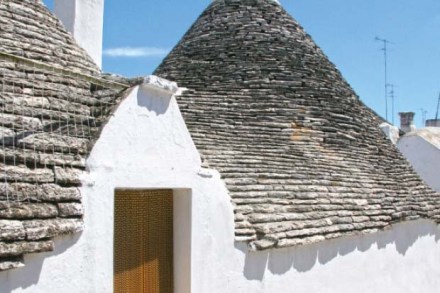
If Italy is the elegant, over-the-knee boot plunged into the Mediterranean, then Puglia is the narrow peninsula that forms its spiky stiletto heel. The word that springs to mind regarding Puglia is trullo — miniature stone structures that look like igloos, and in my experience are the ideal devices to convince your kids to holiday with you. Why would they choose an eight-day party in Croatia when they can stay in cute white circular mini-houses, with an infinity pool in front? Even better, you could go for a trulli hotel, complete with that Puglian speciality, the beach pool. And into these beach pools wade the Italians, with their indifferent attitude to bathing in public. They aren’t for exercise.

The rarest blend of white and gold

From our UK edition

This unusual book is beautifully written, produced and illustrated, but its subject — the small Slender-billed curlew — is strangely absent. In his ‘introduction to a ghost’, Horatio Clare explains that, when he was commissioned to tell the story of the western world’s rarest bird, it did, at least officially, still exist. This grail of the birding world, which he has never seen, he describes as a beautiful creature, a species of curlew plumaged in a blend of whites and golds, with dark spots on the flanks, slim and graceful of form, more refined than the plump common curlew, with a thinner down-curving beak which makes it look as though it is chewing a stem of grass. He tries to trace it in Sicily, Italy, the Peloponnese, the Balkans and Turkey.

Murder, he wrote

From our UK edition

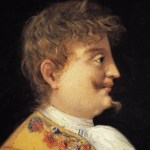
The allure of Carlo Gesualdo, eighth Count of Conza and third Prince of Venosa, has been felt by music-lovers from the humblest madrigal singer to the likes of Stravinsky, Boulez and Werner Herzog. Now, just three years after celebrating the 400th anniversary of his death in 1613, his birth in 1566 gives us a second chance to remind ourselves of that heady mix of murder and chromaticism that so famously characterises his life and work. For most classical composers the music is the way into the biography. Beethoven’s deafness becomes interesting once one has got to know the Missa Solemnis. Enquiry into the circumstances that surrounded Mozart’s death begins with hearing the Requiem.

Pisa

From our UK edition

Say ‘Pisa’ and everyone thinks of the Leaning Tower. Fair enough; it’s a curiosity, and the tourist board must be pleased that Mussolini’s plan to straighten it came to nothing. It stands, or leans, next to the cathedral in the Piazza dei Miracoli, and beyond the cathedral is the Baptistry, one of the most beautiful buildings in Italy. I was in Pisa for the annual book festival, which attracts an extraordinary number of independent publishers and huge audiences (25,000 over a long weekend). Each year the director, Lucia della Porta, invites a foreign delegation, and this was Scotland’s turn.

Cable cars, cheese and chic on the quieter side of the Alps

From our UK edition

'It sounds like you’re having an Ann Summers party up there,' a male traveller called, as our group erupted into girlish hysterics on the viewing terrace of Punta Helbronner, a mountain in the Mont Blanc massif. Unfortunately for him there was no lingerie in sight; instead our shrieks had been brought on by the threat of a lightning storm hitting us at 3,462 metres up. As my hair stood on end and my phone crackled, a guide ushered us back to the cable car, part of the new Mont Blanc skyway which offers the idler Alpine adventurer an easy way to get close to Europe’s largest peak. Still, there’s something alluring about a storm in the Alps, especially when the lightning-lit mountain peaks can be viewed from the safe confines of a rotating carriage.

There will be blood | 17 September 2015

From our UK edition

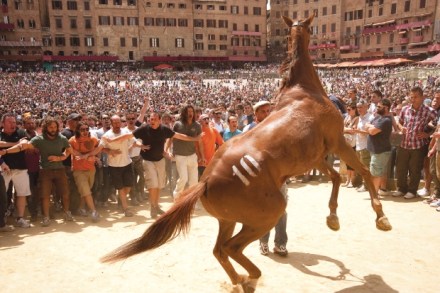
If you don’t want to spend hundreds of euros on a good seat, the best place to watch the Palio di Siena is by the start. For my first time — decades ago — I arrived early in the apron-shaped Piazza del Campo and sweated out the long afternoon as a tide of tension rose. By early evening, when the horses and jockeys finally entered from the courtyard of the towering Palazzo Pubblico, 50,000 spectators ached for release. I clambered on to a temporary fence for a better view. A Sienese woman who was maybe 19 hauled herself up and, for balance, grabbed me from behind. As the jockeys embarked on the long, casuistical process of lining up at the start rope, she began to moan, then weep.

Stewed Siena

From our UK edition

The Indian summer was still fending off the mists and mellow fruitfulness. But the autumn term was about to begin; the season’s changes would soon be manifest. So it was a day for anecdote and recapitulation; for telling amusing August tales, behind which lurked deeper meanings. A couple of friends had been to the Palio, as everyone should, once. I remember being surprised that several hours of mediaeval pageantry could hold one’s attention, which it certainly did: but more than once? No one would watch Psycho twice. I also remember being surprised that the young of Siena would spend weeks rehearsing: hard to imagine that happening here. The spectacle ends with a horse race: several circuits of the Piazza del Campo. It is excitable viewing.

Low life | 27 August 2015

From our UK edition

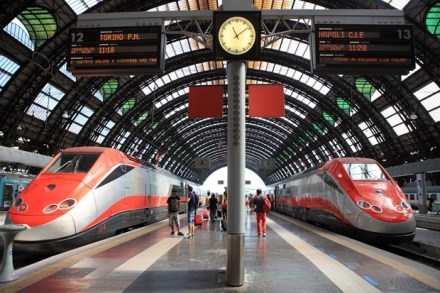
I sprinted through Milan station, speed-read the departures monitor without stopping, and arrived gasping on platform 8 with two minutes to spare. The driver of the FrecciaBianca bullet train was waiting only for the guard’s signal to depart. The guard was standing on the platform beside the open door of the rearmost carriage, fingering her whistle. This short, plump, raven-haired woman was exuding geniality and relaxed informality through her far too big peaked cap and ill-fitting uniform as though it were fancy dress. I was about to fling myself up the short ladder, but had to step aside for lust’s young dream in satin hot pants descending the steps with feline grace. She asked the guard if there was time for a last cigarette. The guard said something like, ‘Why not?

Trattoria tour

From our UK edition

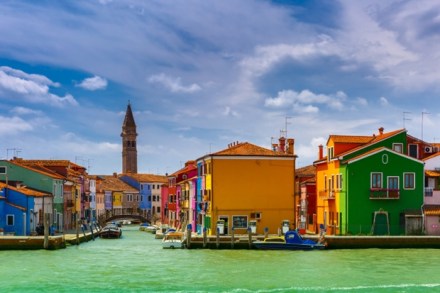
The Gatto Nero — or ‘Black Cat’ — is in Burano, a tiny island in the Venetian lagoon. It is close to ‘haunted’ Torcello, with its ancient campanile and its branch of the Cipriani restaurant. (The only equivalent thing I can imagine is a branch of Soho House at Dracula’s castle, or possibly Chernobyl.) I like the name Black Cat; it reminds me of the Blue Parrot in Casablanca. I like that you must leave San Marco, with its tat and wonders combining queasily, to get here; I like the brightly coloured houses like Bratz dolls fighting; it looks, to me, like Notting Hill with fish, lace and a soul. I like that the Black Cat has a black cat; or at least it used to. I do not see it today. Perhaps it left suddenly, or died?

Florence

From our UK edition

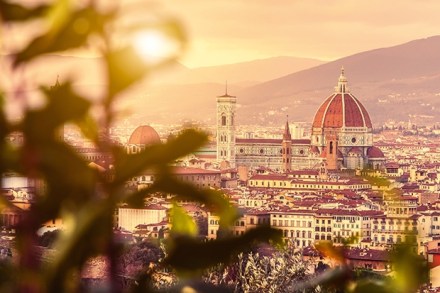
The British have always been in love with Florence. First visits cannot disappoint. One friend recalls being herded around as a schoolgirl, unexpectedly coming face to face with the replica of Michelangelo’s David in the Piazza della Signoria and fainting right there in the street. Return visits can be just as stunning. You can fly in to Pisa or to Florence airport, which receives an increasing number of flights. And the high-speed train from Rome takes just an hour and a half. Weather-wise it can be tricky to pick the best season. Winters can be very cold, but like many Italian cities Florence develops a different charm as it empties of tourists. August can be a mess, but any time is better than never. The hotels are pricey, but they include some of the world’s best.

Does anybody still believe that the EU is a benign institution?

From our UK edition

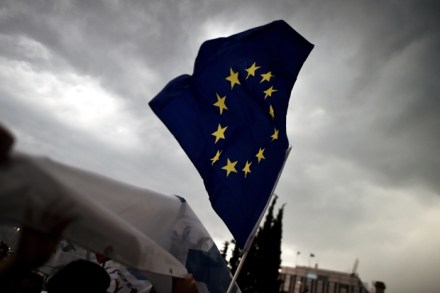
Ever since Margaret Thatcher U-turned in the dying days of her premiership, there has been a kind of agreement between Left and Right on what the European Union is. Most Conservatives followed the late-vintage Thatcher. They stopped regarding the EU as a free market that British business must be a part of, and started to see it as an unaccountable socialist menace that could impose left-wing labour and environmental policies on a right-wing government. As many critics have said, the Tory version of British nationalism that followed had many hypocrisies. It did not want foreigners infringing national sovereignty when they were bureaucrats in Brussels but did not seem to mind them when they were generals at Nato or economists at the WTO.

Letters | 25 June 2015

From our UK edition

Free trade with Africa Sir: Nicholas Farrell suggests that a naval blockade is the only solution to Italy’s immigration crisis (‘The invasion of Italy’, 20 June). Examining the causes of the situation might identify other measures. Since the European Union effectively closed its borders to trade with Africa to protect European farmers from lower food prices, the agricultural economies of most African countries have been in decline. Of course there is another reason for Africa’s decline. About 60 years ago, the Europeans found it convenient to convince themselves that in Africa self-government was better than good government. It followed that aid would be a convenient substitute for the risks or inconveniences of free trade.

Greece may soon face a humanitarian crisis of its own

From our UK edition

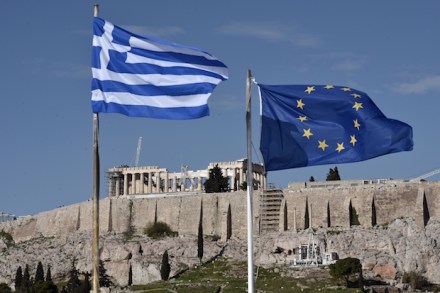
Normally, the phrase ‘continent in crisis’ is hyperbole. But it seems appropriate today as we contemplate the situation Europe, and more specifically the EU, finds itself in. In the next few days, Greece could default, triggering its exit from the single currency and financial disruption across the Eurozone. Meanwhile, Rome is on the verge of unilaterally issuing Mediterranean migrants travel documents enabling them to travel anywhere in the Schengen area because—as Nicholas Farrell reports in the magazine this week—Italy simply cannot cope with many more arrivals. Those involved in the British government’s preparations for a Greek exit put the chances of it at 50:50.

Portrait of the week | 18 June 2015

From our UK edition

Home Talha Asmal, aged 17, from Dewsbury, West Yorkshire, died in a suicide bomb attack on forces near an oil refinery near Baiji in Iraq, having assumed the name Abu Yusuf al-Britani. A man from High Wycombe, Buckinghamshire, Thomas Evans, 25, who had changed his name to Abdul Hakim, was killed in Kenya while fighting for al-Shabab. Three sisters from Bradford were thought to have travelled to Syria with their nine children after going on a pilgrimage to Saudi Arabia. Britain had had to move intelligence agents, the Sunday Times reported, because Russia and China had deciphered documents made public by Edward Snowden, the CIA employee who has taken refuge in Russia. Payments expected by customers of the RBS group of banks failed to enter accounts overnight.

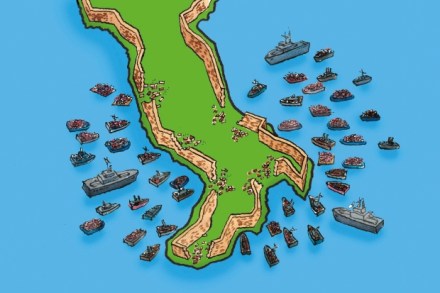
The invasion of Italy

From our UK edition

Let us suppose that along the coast of Normandy up to one million non-EU migrants are waiting to be packed like sardines in small unseaworthy vessels and to cross the English Channel. Let us suppose that first the Royal Navy, then the navies of a dozen other EU countries, start to search for all such vessels in the Channel right up to the French coast, out into the North Sea and the Atlantic even, and then ferry all the passengers on board to Dover, Folkestone, Hastings, Eastbourne and Brighton in a surreal modern-day never-ending version of the Dunkirk evacuation of 1940. Would the British government agree to take them all? What of the British people? And if they did agree, what would the British government and people do with all the migrants? How would they cope?