Italy

Italy’s in terminal decline, and no one has the guts to stop it

From our UK edition

[audioplayer src="http://traffic.libsyn.com/spectator/TheViewFrom22_23_Oct_2014_v4.mp3" title="James Forsyth, Mats Persson and Matthew Elliott discuss Europe" startat=60] Listen [/audioplayer] Rome   The Rome Opera House sacked its entire orchestra and chorus the other day. Financed and managed by the state, and therefore crippled by debt, the opera house — like so much else in Italy — had been a jobs-for-life trade union fiefdom. Its honorary director, Riccardo Muti, became so fed up after dealing with six years of work-to-rule surrealism that he resigned. It’s hard to blame him.
The one economic indicator that never stops rising: meet the Negroni Index

From our UK edition

This dispatch comes to you from Venice — where I arrived at sunset on the Orient Express. More of that journey on another occasion, I hope. Suffice to say that if you happen to have been wrestling with the moral choice of bequeathing what’s left of your tax-bitten wealth to ungrateful offspring or spending it on yourself, don’t hesitate to invest in a last fling on this time capsule of elegant extravagance. Made up of rolling stock built in the late 1920s, the train itself symbolises everything that 20th-century Europe was good at — engineering, craftsmanship, style, cross-border connections — when not distracted by political folly and war.

Prue Leith’s diary: I want to be green, but I’ve got some flights to take first…

From our UK edition

‘Please God, make me good, but not yet.’ I know the feeling. As I get older and more deeply retired, I globe-trot more and my carbon footprint is horrendous. And guilt does not result in abstinence. The brain is persuaded but the flesh is weak. Years ago I chaired Jonathon Porritt’s sustainability organisation, Forum for the Future, and I remember holding a fund-raising dinner for rich Cotswolders and hoping no one would notice my gas-guzzling old car, toasty warm house, and melon with more air-miles than flavour. I’ve tried harder since then, but it’s not easy. A couple of years ago I converted my ancient barn into an eco-friendly house with heat-exchange pump, grey water collection, massive insulation, the lot.

Ezra Pound – the fascist years

From our UK edition

‘There are the Alps. What is there to say about them?/ They don’t make sense. Fatal glaciers, crags cranks climb, /Jumbled boulder and weed’, was Basil Bunting’s 1949 opinion of Pound’s Cantos; but as the sometime friend of Pound continued: ‘There they are, you will have to go a long way round / If you want to avoid them.’ This judgment has proved wise. Here we are in 2014, not avoiding one of the most contentious figures in 20th-century literature: poet, midwife of Eliot’s The Waste Land, economist, translator, committed Fascist, anti-Semite, avid supporter of James Joyce and Mussolini, later alleged traitor to the United States of America and — meaning he never had to stand trial for treason — patient of St Elizabeth’s psychiatric hospital, Washington DC.

The Spectator at war: The consequences of neutrality

From our UK edition

From The Spectator, 10 October 1914: IT would be a base act to try to bribe or to threaten a neutral Power like Italy into joining the Allies. The notion of taking up the attitude that she may find herself in the wrong box when the peace is made is one which must be utterly hateful to every Englishman. Not only is it certain that if Italy remains neutral, and does not come to the assistance of the Allies, no vengeance will be taken upon her for her aloofness, but, more than that, no one here will even pretend that her failure to show an active friendship with us may have terrible consequences.

Pizza, choc-ice and Leonardos – the treasures of Turin

From our UK edition

To most non-Italians Turin spells Fabbrica Italiana Automobili Torino (Fiat). But this subalpine city has a longer history than the internal combustion engine. It may be twinned with Detroit, but its cavalcade of equestrian monuments testifies to an older sort of horsepower — the sort harnessed by the condottieri of the House of Savoy to turn their little Duchy into a major player on the European stage and, for four brief years from 1861 to 1865, into the capital of the Kingdom of Italy. So while Detroit has the Detroit Institute of Arts, Turin has 55,000 sqm of royal museums, currently undergoing unification into a single complex called the ‘Polo Reale’.

Italy is killing refugees with kindness

From our UK edition

The next time you eat a fish from the Mediterranean, just remember that it may well have eaten a corpse. As the Italian author Aldo Busi told the press just the other day: ‘I don’t buy fish from the Mediterranean any more for fear of eating Libyans, Somalis, Syrians and Iraqis. I’m not a cannibal and so now I stick with farmed fish, or else Atlantic cod.’ Personally, I prefer my fish natural, fattened on drowned human flesh, but there you go. I take the point.

The Italians are disgusted with our holidaymakers

From our UK edition

As the holidays draw to a close, Italian newspapers have been reporting with perplexity and distaste on the outlandish behaviour of foreign tourists in Italy, by which they mean young people from northern European countries. One report told of a couple making love in broad daylight on a bridge over the Grand Canal in Venice, the Ponte degli Scalzi (which, as a commentator pointed out, means ‘Bridge of the Barefooted’, not ‘Bridge of the Bare-bottomed’). Other reports talked of people sunbathing naked in public places or picnicking in large groups under the colonnades in St Mark’s Square. Venice suffered most from these excesses, but nowhere was immune.

How Richard Wilson made Wales beautiful

From our UK edition

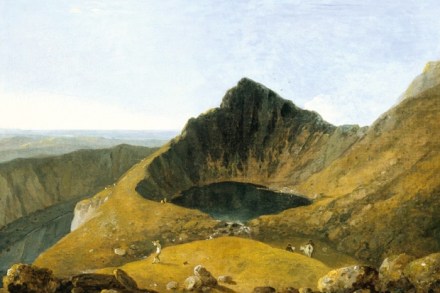
‘I recollect nothing so much as a solemn — bright — warm — fresh landscape by Wilson, which swims in my brain like a delicious dream,’ wrote Constable of his encounter with the Welsh artist’s ‘Tabley House, Cheshire’ after he visited the gallery of that house owned by Sir John Leicester. Recalling this epiphany, Constable went on to say of Richard Wilson: ‘He was one of the great appointments to shew to the world what exists in nature but which was not known till his time.

Soldier, poet, lover, spy: just the man to translate Proust

From our UK edition

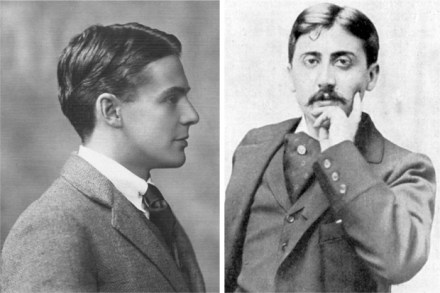
Charles Kenneth Scott Moncrieff’s Englishing of Proust — widely and immediately agreed to be one of the greatest literary translations of all time — very nearly didn’t happen. Scott Moncrieff only suggested the project to his publisher after they rejected a collection of satirical squibs in verse (sample: ‘Sir Philip Sassoon is the Member for Hythe;/ He is opulent, generous, swarthy and lithe.’). Like any good hack, he had another suggestion up his sleeve: there was this character Proust just starting to be published — making a bit of noise in France. Constable didn’t immediately see the value: ‘They replied that they did not see much use in publishing a translation of Prevost [sic].

If you want real stress, move to the country

From our UK edition

It’s much more stressful to live in the country than in a town. There are always threats of one kind or another — wind farms, housing developments, road ‘improvements’, and so on. And then there are often arguments with neighbours about this and that. If it’s not leylandii, which are not one of our problems in south Northamptonshire, there’s always something. We used to have peacocks that migrated to our neighbours’ gardens and proceeded to ruin them. (The peacocks were duly eliminated.) Then the man who mowed our lawn upset people by doing it too early in the morning and waking everybody up.

Think Britain’s tabloid journalists are bad? Try Italy’s tabloid judges

From our UK edition

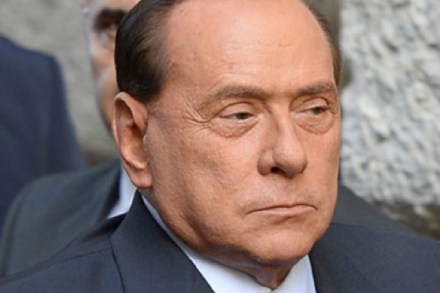
There is a small light at the end of the tunnel but it comes too late, I fear, to save Italy from the abyss:  Silvio Berlusconi was yesterday acquitted on appeal of committing Bunga Bunga with Ruby the Heart-Stealer when she was sweet 17 for which he had been sentenced to seven years in prison. Che bello! Yet if ever a reason were needed for Britain to have absolutely nothing whatsoever to do with European courts of any kind, and the European Arrest Warrant in particular, we need look no further than the Berlusconi Bunga Bunga trial. If it could happen to him, a media tycoon and four times Italian Prime Minister, it could happen to you.

Brave, noble, forgotten – the other side of Italy’s second world war

From our UK edition

At the time of the armistice of September 1943, when the kingdom of Italy formally transferred its allegiance from the Germans to the invading Allies, there were some 40,000 British prisoners-of-war languishing in camps around the country. Camp gates were thrown open by fleeing Italian guards, but on orders from Whitehall thousands of PoWs stayed put until the Germans arrived and packed them off to other camps in Germany. Some 4,000 of them, however, set off to seek freedom either by heading north towards Switzerland or south towards the advancing Anglo–American forces, which had just arrived on the Italian mainland after their conquest of Sicily.

World Cup diary: Italy were poor but England were worse

From our UK edition

Another fairly unpleasant evening spent watching England playing football. Ah well. It used to be that England were renowned for two things: we could score from set pieces, and we knew how to defend set pieces. In fact we rarely scored from open play – but give us a corner, or a free kick, and suddenly we became dangerous. Similarly, we rarely conceded from set pieces. This was a consequence of the English game, I suppose. Against Italy we conceded from a set piece in fairly lamentable fashion. Worse, though, was the endless parade of wasted corners and free kicks. I don’t know how many corners we had in the second half – maybe eight? Only one found the head of an England player.

Harry’s Bar, where a slice of cake costs €32 – and is worth it

From our UK edition

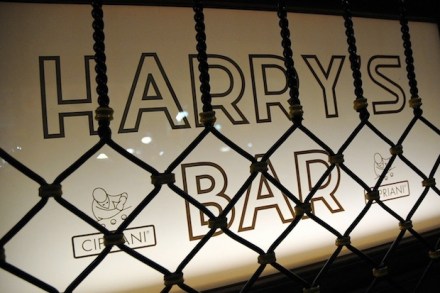
Harry’s Bar is a dull pale box. This is remarkable in Venice, which is a hospice for dying palaces, held up aching over the world’s most charismatic puddle; Harry’s is a transgressive anti-palazzo. It is a world-famous restaurant, the jewel of the Cipriani brand, and it is very conscious of this honour; it sells branded tagliarelli and books about the meals it served 30 years ago to the rich and famous; it is into auto-iconography, like the city it lives in. For this, and so much else, I blame Ernest Hemingway. He ate here after shooting birds in the lagoon and doesn’t the world know it? Some men fought against Hitler. Others ate against him. Outside, people pose for photographs by the signage.

The mathematical revolution behind ‘the greatest picture in the world’

From our UK edition

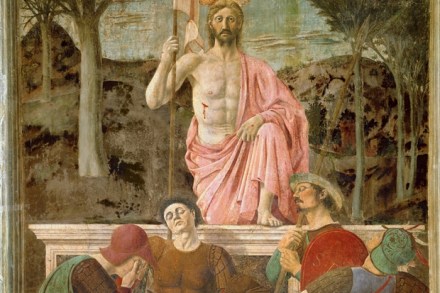
It seems odd to enter a room dominated by what Aldous Huxley famously called ‘the greatest picture in the world’ to find not another soul there. Looking down from an end wall of the mediaeval civic hall in the quiet little Tuscan town of Borgo San Sepolcro, Piero della Francesca’s ‘Resurrection’ is an image of astonishing power, showing a stern-faced risen Christ stepping out of his tomb in the dawn light of the first Easter morning like an unstoppable force of nature, exuding supernatural authority as he turns the leaves on the trees behind him from wintry death to the new life of spring. This is a painting like no other in the history of art.

The minimum wage is broken – here’s how to fix it

From our UK edition

While welcoming George Osborne’s emphasis this week on raising employment, I have some caveats about his target – to have the highest employment rate in the G7. This isn’t hugely challenging. Those in employment currently amount to 71.2 per cent of the UK population of working age, well ahead of Italy (55.5 per cent), France (64.1 per cent) and even the USA (67.4 per cent). Germany, at 73.5 per cent, is the current table-topper and the one Mr Osborne aims to overtake. Aggregates like this, though, are dodgy to interpret and are affected by differences in age cohort size and other factors.

Venetian secessionists deserve to be punished!

From our UK edition

How should the western powers react when part of a friendly nation holds an illegal referendum and votes to secede from the country in which hitherto it was located? Sanctions? Military reprisals? We’d better send the gunships to the watery redoubt of Venice, then, which has just voted overwhelmingly to leave Italy. The Venetians, part of Italy for 150 years, are sick of paying taxes to bail out the indolent and mafia-ridden south of the country and wish to go it alone. The rest of Lombardy may soon follow suit. Rome has refused to recognise the plebiscite, fearing that the entire country may cease to exist. No sense of history, these Venetians. For them, Garibaldi is just a biscuit.

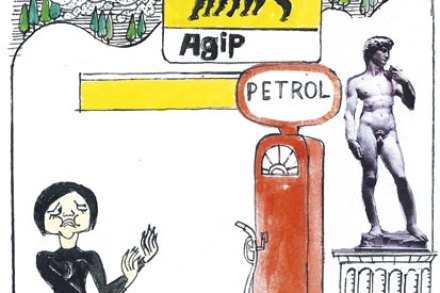
Clarissa Tan’s Notebook: Why I stopped drinking petrol

From our UK edition

Florence was in fog the day I arrived. Its buildings were bathed in white cloud, its people moved as though through steam. The Arno river was a dense strip of dew. At the Piazzale Michelangelo, the statue of David was etched by the surrounding murkiness to a stark silhouette, the renaissance defined by gothic cloud. I peered through a telescope that overlooked the city and saw nothing for miles. My friend Alessandro told me this was unusual for sunny Tuscany, which made me feel quite pleased. Perhaps with each day that passed I would see less of Florence — the ultimate tourist experience. At a nearby cemetery, the milky arms of stone angels reached out through the brume, while creaking old Fiats disappeared into the ether.

Christmas past in Spectator letters

From our UK edition

This is a selection of seasonal letters from The Spectator’s 185-year archive, now online at archive.spectator.co.uk. The emblem to the right is by our cartoon editor, Michael Heath. It was his first drawing for the magazine, and appeared in 1959.   Spare the turkey Sir: Of the thousands who within the next few days will be ordering their Christmas turkeys, are any aware of the fact that the useless custom that makes it the proper and correct thing to have its most useless head upon the dish condemns the poor thing to a cruel and lingering death, while but for this custom, its head would be cut off comfortably and at once, and death would be instantaneous?