Peter Phillips

Last words | 5 May 2016

From our UK edition

This, my 479th, is to be my last contribution as a regular columnist to The Spectator. I have written here for 33 years and 4 months, a way of life really, and one I have greatly enjoyed. I thank Auberon Waugh in absentia for suggesting me to Alexander Chancellor in the first place; and Charles Moore for keeping me on in the early years, once we were up and running. I also thank three quite exceptional arts editors: Gina Lewis, Jenny Naipaul and the doyenne of these pages, Liz Anderson. Things have moved on from my habitual think pieces, outraged rants, ad hominem demolition of palpable idiots written in the back of aeroplanes.

Modernist cul-de-sac

From our UK edition

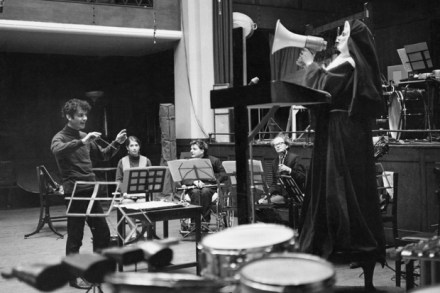
The intransigence of Maxwell Davies, Boulez and Stockhausen is coming home to roost. Here were three composers, famous if not exactly popular, who called many shots by the time they died yet whose works were little loved in their lifetimes by the concert-going public and stand little chance of performance now they are dead. How was such imbalance possible? The intransigence had a lot to do with it. People thrill to a bold stance, and they don’t come much bolder than Boulez and Stockhausen in the Sixties. To be fair, Max was a very British version of this attitude. When Boulez died, the French press focused on a national hero whose main achievement, it seemed, had been to impress generations of foreigners while building monuments in Paris, as a true Frenchman should.

ENO must go…

From our UK edition

Last week Darren Henley, chief executive of Arts Council England, revealed that opera receives just under a fifth of the Arts Council’s total investment in our arts organisations, which amounts to many millions of pounds. Yet it accounts for ‘between 3 and 4 per cent of live audiences in theatres’. How can these figures possibly be justified? Especially when the art form is so obviously a plaything of the wealthy. Once upon a time there was an organisation that had the intention of providing opera at reasonable prices to the less well-off. It was based in a poor part of London, where it pursued its ideals by presenting everything in English and emphasising the dramatic aspect of its chosen repertoire.

Sound and fury | 28 January 2016

From our UK edition

No one is consulted. No one is held to account. No one has the authority to turn it off. How is it that muzak has slipped through every legal control? The blame, I’d say, lies with those who are frightened of silence — with those who spend more money in shops that buzz to a friendly background hum, and laugh too loudly when all around are mute. To moderate their visceral fear of the quiet they cling to cheaply produced, intellectually demeaning and superficially comforting sub-music. Muzak comes in various forms — piped, performed live, and through other people’s headphones, when you can’t actually hear pitched sounds, only a desiccated, insistent beat. Live it can be most memorable. Everyone must have their least favourite story.

Murder, he wrote

From our UK edition

The allure of Carlo Gesualdo, eighth Count of Conza and third Prince of Venosa, has been felt by music-lovers from the humblest madrigal singer to the likes of Stravinsky, Boulez and Werner Herzog. Now, just three years after celebrating the 400th anniversary of his death in 1613, his birth in 1566 gives us a second chance to remind ourselves of that heady mix of murder and chromaticism that so famously characterises his life and work. For most classical composers the music is the way into the biography. Beethoven’s deafness becomes interesting once one has got to know the Missa Solemnis. Enquiry into the circumstances that surrounded Mozart’s death begins with hearing the Requiem.

Fantasy on ice

From our UK edition

In this exciting new era of Spectator cruises I have been put in mind of a dream event long in the planning: to hear Allegri’s Miserere on ice, specifically on the ice of Antarctica. A number of things came together to put this on my bucket list, from the thought of dressing up like penguins (as usual) while we sing to penguins, to reading in the press that the Tallis Scholars ‘have performed on every continent on the planet except Antarctica’. I want to fill a boat with like-minded enthusiasts and adventurers, and set off from South America via the Falklands to the Antarctic Peninsula, hoping to make a landing and a concert at Paradise Bay.

Diary of a music competition judge

From our UK edition

Monday (21 September): to St John’s Smith Square for the opening night of the London International A Cappella Choir Competition, which happens to coincide with the 2,000th concert of the Tallis Scholars, broadcast live on the BBC. This is a coincidence, since when we planned the event a year ago it was far from hitting precisely that round number. The inevitable reshuffling of dates since then has come out in favour of veracity, not that anyone but me, the keeper of the database, would have known. Or cared, probably. It is a big occasion which we made all the harder for ourselves by having to travel back that same day from a show the previous evening in Barcelona; and then choosing to sing a devil of a mass by Sheppard for the first time.

Bad conduct

From our UK edition

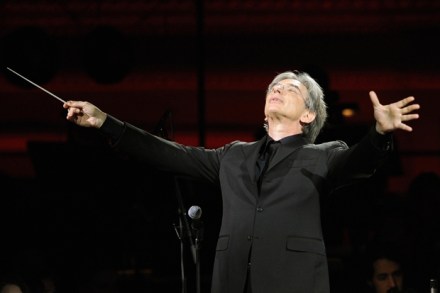
To be honest, my friendship with Michael Tilson Thomas hasn’t gone quite as I had hoped. It started in February 1990, when he chose a Tallis Scholars track for one of his desert island discs. This was a movement from a mass by Josquin des Prez, that he said (apparently impromptu) was music which ‘completely comforts me and brings me into a state of tranquillity’. I thought I might have found a new messiah. For many years now I have had the hope of meeting an orchestral conductor who is prepared to take on the challenges of performing a major work from the unaccompanied choral repertoire. Of course there have always been those who have included choral society-type singing in their symphony programmes.

Orchestral infallibility

From our UK edition

Watching the Berlin Philharmonic going into conclave to choose a successor to Simon Rattle — after countless hours of secret discussion they have chosen Kirill Petrenko — reminds one of little less than the election of a pope. In both cases the expectation is the same: the organisations are so iconic that they must continue into the future without a hitch and without question. Whatever sort of job they are doing, or have done, they have become too much a part of normal life to be abolished. Why is it that symphony orchestras of any standing are expected to survive indefinitely, where smaller musical organisations, though they may be just as established, are not? What are the long-term prospects for the Monteverdi Choir after John Eliot Gardiner retires?

Première league

From our UK edition

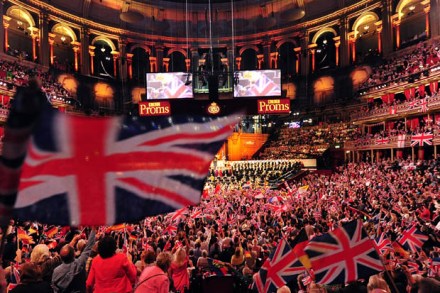
This year the Proms are to stage 21 world premières and 11 European, UK or London premières. It is good to see the corporation continuing its mission to encourage new music, though some think they overdo it. I heard one of our leading keyboard players say that when he was asked to première a piece recently, he replied that he would rather dernière it. Clearly the BBC takes a more hopeful view. The most eye-catching new work in the series, leaving Whitacre out of it for now, will surely be the Fourth Symphony of our latest musical knight, Sir James MacMillan.

Evolutionary road

From our UK edition

As Sepp Blatter has so affectingly remarked, the organisation he formerly headed needs evolution, not revolution. There is a consensus that this is also what David Pickard will bring to the Proms, when he takes over after this season. Of course, Pickard’s job is going to be more complex than Blatter’s ever was. The challenge for Pickard is that however hard he tries to please most of the people most of the time, the modalities of running the Proms mean that he cannot be friends with everyone — and for him there will be no short cuts. What do we expect from the Proms these days? Despite all the flurry in the press pack, the underlying formula has actually become quite fixed in recent years.

Mexican wave

From our UK edition

Tours that start in Mexico have a nasty habit of repeating on one. Of all the British groups touring in the United States at the moment, we were the only one to launch our efforts there. But the upshot is that, two weeks later and safely in New York, I am still directing a sea of unnaturally white faces. I am often asked what happens when someone falls ill on stage. The answer is that they leave it, while trying to give the impression that this is all part of the evening’s entertainment. The resulting sense of unease can be felt by everyone in the room, but is perhaps worst for the conductor, whose job it is to fashion an interpretation out of people whose minds are surely elsewhere.

Our hero worship of Bach is to blame for rubbish like ‘Written By Mrs Bach’

From our UK edition

My impression that Bach has come to rival Shakespeare as a flawless reference point in the cultural life of the nation has recently received some further corroboration. Remember the fuss that some academics, in the hope of recognition, created around the authorship of the bard’s works and where it got them? I don’t know how far the non-specialist public has been swayed by the BBC4 television programme entitled Written By Mrs Bach, but the Earl of Oxford came to mind as I watched it. The claims in the programme are so obviously rubbish that I would have thought the average film company might have thought twice about filming it, let alone the BBC airing it. But if it hadn’t been Bach in question no one would have taken it up. Who cares who wrote Haydn’s piano trios?

There’s nothing wrong with getting into Thomas Tallis on the back of Fifty Shades of Grey

From our UK edition

Great works of art may have a strange afterlife. Deracinated from the world that created them they are at the mercy of what people think is important centuries later. Nothing shows this more clearly than the contribution that Tallis’s ‘Spem in alium’ has made to Fifty Shades of Grey. In case you are none the wiser, ‘Spem in alium’ is probably the most complex piece of music to come from the 16th century, and just possibly from any century. Written for 40 independent voices, it is unlikely to be sung with every note in place, though any sort of approximation shows just how majestic it is. Whether this was in the mind of E.L.

Spotify: saint or sinner?

From our UK edition

We have all read about the current woeful state of the CD industry — how it is 28 per cent down on last year, which was 25 per cent down on the previous year, and so on — but do we know why? Is it the endless financial crisis? Or is it that CDs, as a concept, are knackered? And this is despite the fact that more people are taking an interest in recorded music than ever before. The villain of the piece is of course the internet. Where previously the music one wanted was not available without going into a shop and buying it, now there is every chance that there will be a version of it somewhere on the net, which you can listen to for nothing. If it happens to be on YouTube, you may get visuals as well, or a score to follow.

Does anyone have the balls to bring back castrati?

From our UK edition

One of the most complete bars to the authentic performance of both baroque opera and some renaissance polyphony is the current unavailability of castrati. There isn’t much to be done about it of course, but we might regret that we can no longer hear a sound which, at its best, fascinated all who did hear it. And we don’t know what that sound was. The two famous and unique recordings of Alessandro Moreschi, made in old age in 1902 and 1904, give us some clues, but can hardly represent the sound of the greatest 18th-century practitioners. There are some pointers in contemporary reports.

Why Church music is back in vogue – and squeaky-gate music has had its day

From our UK edition

One of the growth areas of contemporary music is in setting sacred texts. It might be thought that I had a special interest in claiming this, but in fact what I am about to describe represents a sea change in recent practice. Where there was once ‘squeaky gate’ (or ‘dripping tap’) music — as very dissonant writing used to be called — many leading composers are now writing in a style that is at least tonal and can occasionally seem almost naïve. There was a time when the first performance of a recent commission struck fear into the most broad-minded listener. We used to brace ourselves for horror and were rarely disappointed. In those days, the struggle to write more atonally than the next man was palpable.

Peter Phillips is mugged by a gang of Praetorius-loving six-year-old girls in China

From our UK edition

We have read about the remarkable opening up of China in recent years: how many people live there and how good they are at business, perhaps finding the prospect of them rushing into our world rather daunting. However, a part of this process has been the sudden curiosity there for western art-forms. Not long ago the idea of a tour of China by a European early music group would have seemed completely fantastical. What space was there in a country which for many years had allowed only eight ‘model plays’ to be publicly staged — all of them about the achievements of the army — for the votive antiphons of Tallis, or the Passions of Bach? Not everyone in that vast country is ready for such delicacies yet, but a light has begun to shine.

Christopher Hogwood: the absolutist of early music

From our UK edition

The death of Christopher Hogwood has deprived the world of the most successful exponent of early music there has ever been, or is ever likely to be. It has also reduced by one the quartet of conductors who have been called ‘the Class of ’73’, a term coined by Nick Wilson in a recent study of the early-music revolution of the 1970s and 80s. It refers to four groups that were founded in that year that are held to have changed the face of modern concert-giving: Hogwood and the Academy of Ancient Music; Trevor Pinnock and his English Concert; Andrew Parrott’s Taverner Choir; and my own Tallis Scholars. Of these it was Hogwood who had the most immediate impact and commercial success. It is also fair to say that his recordings are the most numerous, but least played, of all the Class.

Enough ‘themes’ at festivals

From our UK edition

One might have expected the streets of Edinburgh, especially at festival time, to bear some evidence of the political struggle currently engulfing our nation, but in fact there was none at all. Apparently, the arguments for and against independence have to be traded on the doorstep and not in the street, which, to those visitors who anticipated fireworks, almost amounted to a vacuum. However, it meant that the streets could be made over to the customary bewildering number of stand-ups, advertisements, students handing out leaflets (they come at you these days on roller-skates, pirouetting as they approach), and thespians of every type.