Thomas Marks

Byron in Venice

From our UK edition

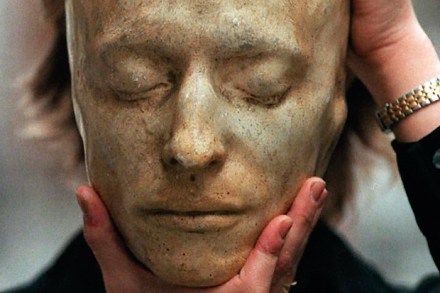
‘I want to see Venice, and the Alps, and Parmesan cheeses.’ So wrote Lord Byron in 1814, some two years before he settled — if that is the word — in the lagoon city. Even after his arrival in the winter of 1816, Venice retained its fantastical allure: he identified with its decay (which he would still find today) and savoured its lack of tourists (which he would not). The city was, he wrote, ‘the greenest island of my imagination’, a place that had soon established itself as his ‘head, or rather my heart, quarters.’ It certainly had his blood pumping: for Byron, Venice became a playground for all manner of physical exertion.

What next for contemporary art auctions?

From our UK edition

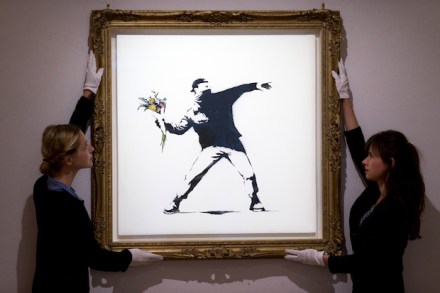
With auction houses in the news following record-breaking sales, I sat down with Ralph Taylor, Global Head of Post-War and Contemporary Art at Bonhams, to discuss how the contemporary art market is shaping up for 2018. Are auction houses getting too close to emerging artists and damaging their careers through speculative sales? How difficult is it to lure young collectors into the unfamiliar world of the saleroom? And how can an auction house like Bonhams compete with the big two of Sotheby’s and Christie's in this competitive field? You can listen to our conversation here: Thomas Marks is the editor of Apollo.

Genoa

From our UK edition

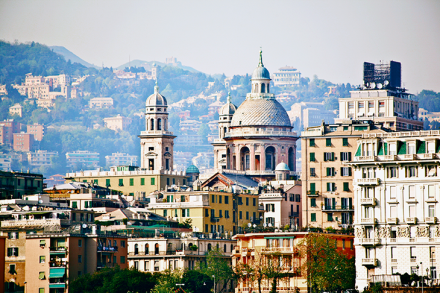
Some say Genoa takes its name from Janus, the two-faced god of time and doorways. Perhaps. What’s certain is the city has two aspects: the vast industrial port, its docks the bared teeth of the Italian Riviera; and, in the ruched strip of land between the Ligurian Sea and the hills, a bewildering network of alleys, stairways, and irregular little squares. ‘Genoa is the tightest topographic tangle in the world,’ wrote Henry James, ‘which even a second visit helps you little to straighten out. In the wonderful crooked, twisting, climbing, soaring, burrowing Genoese alleys the traveller is really up to his neck in the old Italian sketchability.’ The port has sent out illustrious exports in its time.

The Romantic poets

From our UK edition

People can be mightily protective of their Romantic poets. When I worked at the Keats Shelley House, overlooking the Spanish Steps in Rome, one of my colleagues developed a callus on her hand where the daily task of locking the museum door — emphatically — caused the key to abrade her skin. And when I last visited Keats’s grave, with a friend, in the city’s Non-Catholic Cemetery, a middle-aged Italian woman snapped at us to shut up as she muttered through a printout of ‘To Autumn’. It’s strange in a way that Keats should inspire such devotion in Rome, since he wrote no poetry in Italy and only a handful of letters survive from the four months that he spent dying there.

The Apollo Podcast July/August: The Imperial War Museum Reopens

From our UK edition

The Apollo magazine podcast, produced in association with The Spectator's Culture House, takes a monthly look at international art and museum news. In the July/August edition, Thomas Marks is joined by Diane Lees, director-general of the Imperial War Museums, and writer and curator David Boyd Haycock to discuss the reopening of IWM London and the role of art in recording and commemorating the first world war. Apollo web editor Maggie Gray picks out some of the summer’s major art world stories, including deaccessioning in Northampton and trouble in Russia. The pod concludes with a discussion of Gilbert & George’s new exhibition at White Cube in London and a look ahead to some of September’s big openings.