Italy

Country house opera

From our UK edition

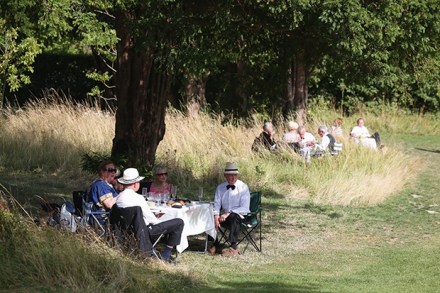
I stole a blanket last night. Rather a nice one, in fact. I feel bad about it, of course, but guilt is less inconvenient than pneumonia; and after trying to blow-dry my waterlogged dinner jacket with the winds howling through Garsington Opera’s ‘airy’ pavilion, it seemed like pneumonia or the blanket were the options. Forgive the melodramatic, self-justificatory tone. That, too, has its roots in the evening’s diversions, which included a performance of Intermezzo, Richard Strauss’s melodramatic and self-justificatory autobiographical account of a marital misunderstanding. It’s an odd piece, lovely in some ways, trite and misogynistic in others.
Benefits for people who don’t live here? Great idea

From our UK edition

Yet another exciting discovery from the world of Islamic science. As you are probably aware, Islamic culture has always paid a high regard to science and Muslims will tell you proudly that they invented absolutely nothing. That is, they have provided the world with the mathematical representation of absolutely nothing, what we now know as zero. Where would we be without nothing? In the tenth century the scholar Muhammad ibn Ahmad al-Khwarizmi decided that it would be useful to draw a little circle to signify zero if you were doing some complex calculation. He called it sifr.

Long life | 14 May 2015

From our UK edition

On election day I was in Puglia in the ‘heel’ of Italy, where interest in British politics could hardly be lower. One local news website that I consulted appeared to give higher priority to the fact that Italian penis-enlargement operations had increased by 20 per cent during the past year than to the electoral bombshell in Britain. I was staying with friends in their beautifully restored house — a former olive-oil press — close to the sea and below the remarkable hilltop town of Ostuni, between Bari and Brindisi, known as ‘la città bianca’ for its white medieval walls and palaces. At dusk it seemed to glow as in a dream.

The people from the sea

From our UK edition

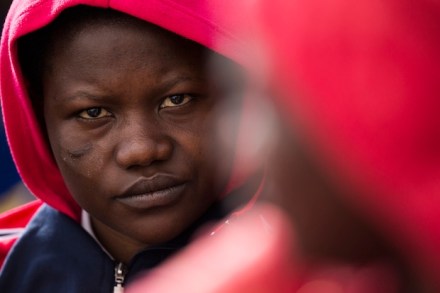
 Lampedusa The young hang about in packs or speed around town, two to a scooter. Old women group together on benches around the town square in front of the church. The men continually greet each other as though they haven’t met for years. The likelihood is small. With fewer than 6,000 inhabitants, and as close to Libya as it is to Italy, Lampedusa is the sort of place from which any ambitious young Italian would spend their life trying to escape. Yet every day hundreds and sometimes thousands of people are risking their lives to get here. ‘Please tell people we have nice beaches,’ one islander pleads.

Indulge your inner reptile

From our UK edition

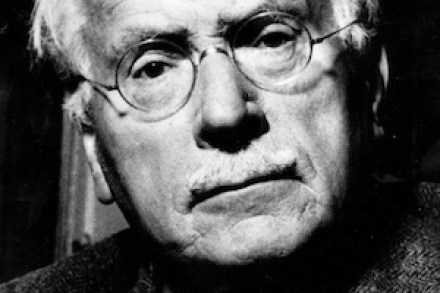
What do you get if you cross renegade psychoanalyst Carl Jung with lizard-men conspiracist David Icke? It is a question no one in their right mind would ask, but this book represents a kind of answer anyway. Offering a rambling pseudoscientific argument that some countries are better than others at enabling their citizens to flourish, it affects to have uncovered archetypes of the Jungian ‘collective unconscious’ that are characteristic of each nation. Meanwhile, cultures get a gold star if they indulge, rather than repress, the ‘reptilian’ part of our brains, which is mainly interested in food and sex, as opposed to the ‘limbic’ brain (emotions) and the cortex (higher reasoning). As the authors repeatedly insist, ‘The reptilian always wins.

A deadly silence

From our UK edition

One Friday, 28 people were rescued by the Italian coastguard when the boat on which they were fleeing Libya capsized in the Mediterranean. Arriving homeless and without prospects in a strange land, these were — relatively speaking — the lucky ones. As many as 700 are thought to have drowned. Add them to the tally. On Monday, another boat capsized with 400 souls feared lost. Last year more than 3,000 died in the Mediterranean trying to get to the West. It has become a phenomenon of our times. We do not hear much about life in the supposedly liberated Libya, but the fact that even immigrants into Libya would rather risk death than stay there gives a fair idea.

The dreamer

From our UK edition

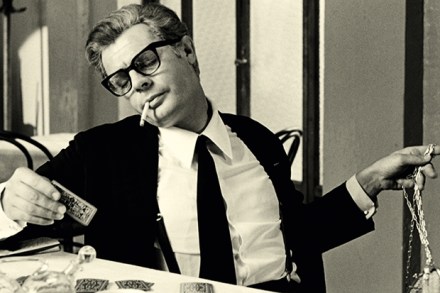
Federico Fellini’s La Dolce Vita was a box-office triumph in Italy in 1960. It made $1.5 million at the box office in three months — more than Gone With the Wind had. ‘It was the making of me,’ said Fellini. It was also the making of Marcello Mastroianni as the screen idol with a curiously impotent sex appeal. No other film captured so memorably the flashbulb glitz of Italy’s postwar ‘economic miracle’ and its consumer boom of Fiat 500s and Gaggia espresso machines. Unsurprisingly, the Vatican objected to the scene where Mastroianni makes love to the Swedish diva Anita Ekberg (who died earlier this year at the age of 83) in the waters of the Trevi fountain. Sixties Rome became a fantasy of the erotic ‘sweet life’ thanks in part to that scene.

Rise early to see the Vatican at its best

From our UK edition

The sun has only just risen in Rome and we are standing bleary-eyed in a short queue outside the Vatican. Our guide, Tonia, takes us through security, and within minutes we are in a nearly empty Sistine Chapel. In an hour it will be crammed with tourists — sweating, gawping, getting in each other’s way. Vatican officials will be shushing and clapping to quieten the chatter. Now, though, we are free to contemplate Michelangelo’s swirl of naked bodies in peace. Michelangelo claimed that he painted the ceiling entirely on his own. In fact, Tonia explains, he started off with 15 helpers, though he got rid of them all along the way. He ‘fought everyone’, she says. ‘On the one hand he was amazing but in human relationships, no.

How to walk along canals in Venice without feeling like a tourist

From our UK edition

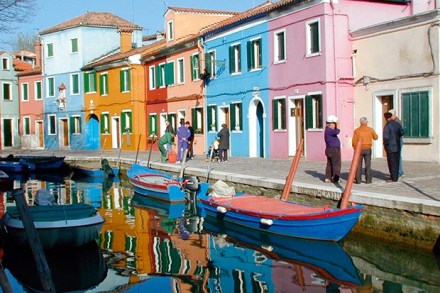
I arrived in Venice believing it would reek of sewage. It didn’t. The walk into the centre went through cobbled alleys packed with loud Americans in sandals and Italian ladies tottering in kitten heels. But it was when crossing the Rialto bridge that I first felt as though I was truly in Venice, with tacky gold gondola models for sale at extortionate prices, and tourists jostling for prime photo spots. How else are you supposed to know you’re on holiday? The canals are wonderfully chaotic; smaller boats have to dart out of the way of the Vaporettos as perilously overcrowded gondolas bob in their wakes. Gondoliers nap in the afternoon shade, pretending not to see the half a dozen tourists who turn up hoping to squeeze in to one boat and make their guide earn his money.

Good time girls: Italian women prefer sunglasses to babies, according to Nicholas Farrell

From our UK edition

Like so many Britons who chased the dream and woke up in Italy I have contemplated writing a book about the Italians. I even thought of what to call it: Those Italians.The title was prompted by what an Albanian port official told the media during some international crisis in response to the news that the entire cargo of an Italian aid ship had disappeared one night in the Albanian port of Durres. ‘Yes it is incredible,’ the official conceded, ‘but — my friends — there is always something funny going on with those Italians.’ An Albanian, of all people! But such books are a poisoned chalice. The theme demands that you capture the spirit of the place and its people and yet avoid stereotype and cliché.

Nigel Farage’s diary: How I survived Dry January

From our UK edition

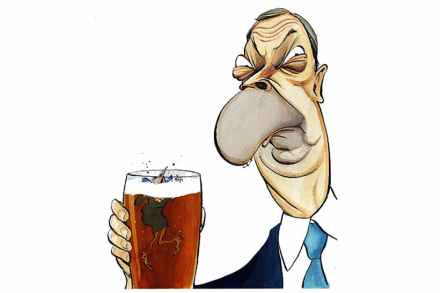
Dry January is tougher than it sounds. Well, for me anyway. It’s now been some 28 days since I’ve had a drink, and you should see what that means for my campaigning strategy. ‘Ginger beer? Lemonade?’ Pub-goers around the country can’t believe it when I walk in and whisper my order over the bar. The fact is they don’t believe I’m really doing it. ‘I’m not all spin and bluster like those other lads,’ I usually reply. ‘If I promise I’m going to do something, I’ll bloody well do it.’ Still, I can’t say it’s never going to tempt me again. Especially not given the week I’ve had. It all started in Milan.

The benefits of breeding like a rabbit

From our UK edition

Let’s face it. Whatever Pope Francis actually means when his head is in the clouds during those in-flight press conferences of his, we Europeans need to breed like rabbits if we want to preserve Europe. That is not why I have bred like a rabbit, but it is the brutal truth. I have five children aged 11 down to three — because until the age of 40 I thought I was infertile and did not think I could breed at all, let alone like a rabbit; and because though I am a devout agnostic, I am married to Carla, a devout Catholic, who is much younger than me and refuses to use contraception. Indeed, I still do fear that I am infertile and that all these conceptions, if not immaculate, are at least miraculous. I am 56, after all. And guess what?

The bleak calculation made by the passengers on the Ezadeen

From our UK edition

Well, thank God they made it. The Ezadeen, formerly a livestock carrier and now adapted for its human cargo of 360 people, has arrived today at Corigliano Calabro near Lecce. The Italian coastguard, which brought the vessel into port, has been conspicuously humane in its treatment of the refugees. The newborns are to have the best of care; the other migrants - abandoned, it would seem, by the crew at some point in the voyage from Turkey - have been given a courteous reception, rather than treated as criminals. Yet these 360 Syrians follow the 796 individuals, many also from Syria and from Eritrea, abandoned by the crew of their ship earlier this week.

Pippa Middleton on wine, fishing and Kim Kardashian

From our UK edition

A few days ago I went truffle hunting in Piedmont. It’s been a bumper year for white truffles in northern Italy — the best ever, according to some experts — thanks to climate change and an exceptionally wet summer. My guide was a brilliantly sharp-eyed Italian, Mario, whose dog Rex did the snuffling. Mario told me that dogs are better trufflers than pigs because pigs often eat the truffles before you can get your hands on them. We (or rather Rex) found two, and I have been devouring truffle since I returned; I’ve had it with scrambled eggs, mashed potato, pasta and even just straight onto toast. I didn’t think it was possible to get bored of something so expensive, but I must say I’m a bit truffled out, and my flat now smells of truffles.

Michael Seresin – from film noir to pinot noir

From our UK edition

Michael Seresin claims, rather modestly, to ‘have no palate’, choosing instead to describe wine with light, colour and form. These are not your typical winemaker’s terms, but they make perfect sense given his unusual back story. Born and raised in New Zealand, Seresin emigrated to Europe in 1966 to pursue a career in cinematography. Movie buffs will know what happened next — Seresin, in his own words, ‘did really well, really quickly’, making a name for himself with a series of Alan Parker flicks: Bugsy Malone, Midnight Express, Fame. It was during this period that he leased a house in Italy — still his ‘favourite country in the world’ — and fell in love with wine.

Spectator letters: Richard Ingrams defends Joan Littlewood, and the truth about Napoleon’s poisonous wallpaper

From our UK edition

The state of Italy... Sir: Ambassador Terracciano’s letter (Letters, 1 November) about Nicholas Farrell’s article (‘The dying man of Europe’, 25 October) seems to me to be ill-researched and not thought through. Nicholas Farrell is spot on. The Ambassador is not. In another forum the Ambassador, on being asked what Italian nationals contribute to Britain, claimed that: ‘There is no area in which they don’t excel. Not only finance and management but also culture and the scientific and medical world, from professorship at Oxford to the chorus director of the Royal Opera, from the Science Festival at Cambridge to the director of the Tate Gallery in Liverpool.’ Has he ever stopped to think why this talent is in England, and not in Italy?

Should we revive the Colosseum?

From our UK edition

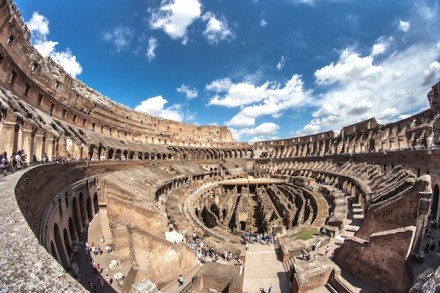
It occurs to me that Italy isn’t the best place to live if you’re an architect. Take a walk at random through Rome or Florence or Venice, and it is quite possible that you won’t pass a single building made in the last century, let alone the last decade. Certainly, no one needs a Cheesegrater grating bolts all over the place when there are so many historic monuments to preserve. But while Italy’s old buildings are nectar to tourists, they can prove a headache for those trying to adapt their cities to modern life. No surprise, then, that some Italians have come out in support last week of a proposal to restore the floor of the Colosseum in Rome.

The shameful truth: Britain lets in far too few refugees

From our UK edition

Pictures from Calais have returned to our television screens, showing desperate men and women trying to break into lorries bound for Britain. A Sudanese man died jumping from a bridge onto a lorry heading for Dover. Another perished after falling from the axles of a bus. The mayor of Calais has blamed Britain for being an ‘El Dorado’ offering aspirational benefits to migrants — but as she’d know, the Africans arriving in her morgues would never have qualified for welfare. They risked death due to a sense of desperation, and hope, that we can scarcely imagine. The same is true in the Mediterranean, where 2,500 have died after embarking on unseaworthy boats heading for Europe. Corpses of Syrians, Egyptians and others now regularly wash up on Italian shores.

Letters: In defence of Italy, and the rise and fall of the military moustache

From our UK edition

Italy’s to-do list Sir: You would expect a long letter of rebuttal by a piqued senior diplomat in response to the many barbs that Nicholas Farrell packed into his piece about Italy (‘The dying man of Europe’, 25 October). Among the most painful ones were that Italy is ‘almost doomed’ and parts of it are ‘hopeless’, which are far too simplistic statements. Mr Farrell is remarkably complacent in his negative bias. But beyond the sea of clichés, the piece offers a useful to-do list. So I will limit myself to a brief comment on its title, highlighting some details not mentioned in the article: if decline is the issue, there are plenty of people in Italy who are trying to tackle it — among them a new wave of Italian politicians.

How Italy failed the stress test (and Emilio Botín didn’t)

From our UK edition

Continuing last week’s theme, it was the Italian banks — with nine fails, four still requiring capital injections — that bagged the booby prize in the great EU stress-testing exercise, followed predictably by Greece and Cyprus, while Germany and Austria (with one fail each) fared better than some of us had feared. The most delinquent European bank turned out to be the most ancient, Banca Monte dei Paschi di Siena, which was judged to have a capital shortfall of €2.1 billion as a result of a very modern set of problems. Founded in 1472 as a kind of charitable pawnbroker, the bank which eventually became Italy’s third largest had a more or less blameless 527-year record until it listed on the Italian stock exchange in 1999.