Israel

Israel’s attack on Iran has been planned for years

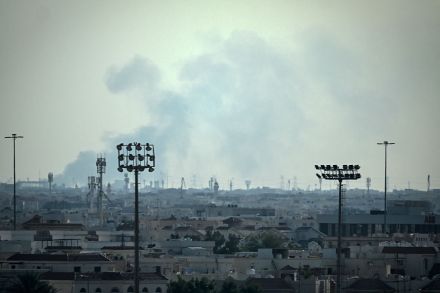
It was clear at the time that what happened on 7 October 2023 would change the Middle East. What was perhaps less obvious was the impact it would have on the rest of the world. In addition to the suffering in Gaza, the weeks and months that followed Hamas’s horrific attacks have seen the reconfiguration of Syria, the effective dismantling of Hezbollah, the decapitation of the leadership of Hamas and now, with Iran, a time when the decision-making in Tehran, Jerusalem and Washington will have a profound effect on the shape of the emerging global order. Historians like to think about turning points and moments in the past where the wheels of history turned. In one sense that is, of course, true about 7 October.

Come friendly bombs and fall on Iran

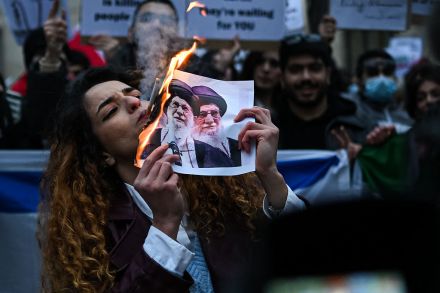
It is heartening to see the lefties out marching in defence of mullahs and their enlightened rule of Iran. The Stop the War Coalition has been organising protests the length and breadth of the country, demanding ‘Hands off Iran’. It is harder for the marchers to identify specifically with their cause than it is when they’re marching about Palestine: Iranians don’t wear keffiyehs. Perhaps they should take on their marches an intricately woven carpet or some uranium-235. Or maybe design some sort of badge that can be cheaply manufactured and somehow symbolises the country – I would suggest the image of a crane with a homosexual dangling at the end of it.

Does the government support Trump’s Iran strikes?

13 min listen

The weekend saw the US launch airstrikes on three Iranian nuclear sites, with Tehran warning of ‘everlasting consequences’. Despite an emergency Cobra meeting and Luke Pollard’s morning media round, we are still waiting for an answer on whether the government supports Trump’s action. Keir Starmer’s assured and confident position on the world stage now looks to be in peril, as he is pulled between Trump, his attorney general and the court of public opinion. Can he de-escalate? Also on the podcast, Nigel Farage delivered a speech this morning in which he announced changes to non-doms and unveiled a new ‘Britannia card’ – although most of the questions afterwards centred on the situation in the Middle East.

Starmer at sea, Iran on the brink & the importance of shame

46 min listen

Starmer’s war zone: the Prime Minister’s perilous position This week, our new political editor Tim Shipman takes the helm and, in his cover piece, examines how Keir Starmer can no longer find political refuge in foreign affairs. After a period of globe-trotting in which the Prime Minister was dubbed ‘never-here Keir’, Starmer’s handling of international matters had largely been seen as a strength. But as tensions escalate in the Iran–Israel conflict, global events are beginning to create serious challenges. They threaten not only to derail the government’s economic plans but also to deepen divisions within the Labour party, particularly between the leadership and much of the parliamentary party. Tim joined the podcast alongside The Spectator US editor Freddy Gray.

Striking Fordow will not solve the Iran problem

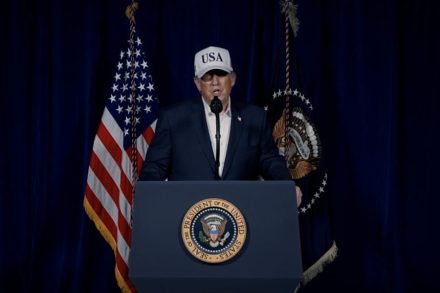
The world is watching Donald Trump to see if he will give his military the green light to use one of America’s most deadly weapons, the Massive Ordnance Penetrator (Mop), to destroy Iran’s underground nuclear facilities at Fordow. As a man with a seemingly inexhaustible need for attention, this is a gratifying position for him to be in. But a potentially dangerous one for the rest of us. ‘Trump doesn’t have a taste for war,’ someone said to me recently. ‘War’s bad for business.’ This appears to be true so far; we have certainly seen Trump try his hand at peace-making in Gaza, Ukraine and Iran with consistently poor results. But history is full of examples of far more principled men than Trump acquiring a taste for war through a thirst for power and money.

What else could Israel do?

Over the past few days British readers have been able to enjoy a number of hot takes on the situation in the Middle East. First, there have been all the politicians, such as the Scottish First Minister John Swinney, who have called for our government to step in and ‘de-escalate’ the conflict between Israel and Iran. But even leaving aside whether the mullahs in Tehran can be swayed by Britain or Scotland, ‘de-escalation’ is the only surefire way to ensure that they continue to pursue a nuclear capability. Elsewhere, the BBC has been playing a blinder. When the conflict began, it decided that its audience would be well served by having the celebrity chef Hugh Fearnley-Whittingstall give his thoughts on the matter.

Who’s pushing Trump to be an Iran hawk?

‘This never would have happened if I had been president,’ says Donald Trump, whenever the international news goes from bad to worse. It’s a line he uses a lot in relation to the wars in Ukraine and Gaza, both of which began in the interregnum between his first administration and his second. Yet the latest war, between Israel and Iran, is a different matter. Trump of course blames his predecessor, Joe Biden, who ‘made Iran rich’ with $300 billion for the evil regime’s dreaded nuclear weapons programme. It was Trump, though, who in 2018 tore up Barack Obama’s nuclear deal with Iran and in 2020 killed Qasem Soleimani, the head of the Iranian Revolutionary Guard’s Quds Force.

Westminster waits for Donald’s decision

14 min listen

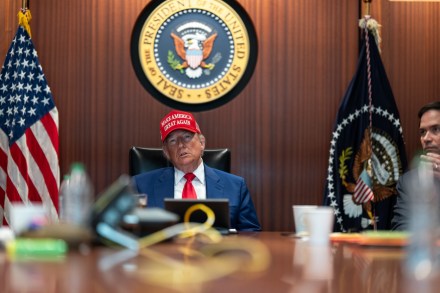
Westminster waits with bated breath to discover whether Donald Trump will ally with Israel in striking Iranian nuclear sites. The President called for ‘UNCONDITIONAL SURRENDER!’ from Tehran overnight. The day to day of domestic politics appears diminished by comparison with the ever-looming threat of an escalated conflict… But the show must go on: today’s PMQs saw Chris Philp (why not Robert Jenrick?) and Angela Rayner deputising for their absent leaders; Liz Kendall introduced legislation to enact cuts to personal independence payments for disabled people; the Commons voted to decriminalise abortion at any point until birth; and the Office for National Statistics (ONS) is up to its old tricks, announcing that inflation has fallen when the reality is much more complicated.

Operation Rising: will Trump get dragged into the Israel-Iran conflict?

20 min listen

Relations between Iran and Israel are deteriorating rapidly, with comparisons being drawn to Israel’s 1981 strike on Iraq’s Osirak nuclear reactor. Israeli Prime Minister Benjamin Netanyahu appears to be advocating for regime change in Tehran, reportedly encouraging the United States to take military action. Donald Trump, who previously came close to authorising a strike, is now said to be more cautious – mindful of the risks of exposing American forces abroad and being drawn into another protracted conflict, contrary to the non-interventionist platform on which he was elected. The Iranian regime, built on a foundation of resistance, is responding to Israel’s attacks while also expanding its network of regional proxies, which now extends as far as South America and east Africa.

In defence of Piers Morgan

‘What happened to Piers Morgan?’ asked a Spectator writer last weekend. The answer, according to slavishly pro-Israel commentator Jonathan Sacerdoti, is that I’m now ‘darker’, ‘degraded’, ‘dismal’ and ‘debase(d)’ – because I’ve become more critical of how Israel is prosecuting its war in Gaza. For a long time on my YouTube show Uncensored, I defended the country’s right to defend itself after 7 October attacks. But I now believe Benjamin Netanyahu’s government has crossed the ‘proportionality’ line with its recent food and aid blockade and relentless bombardment of civilians. Self-evidently, Israel is failing in its mission to eliminate Hamas and get the remaining hostages released.

A Jewish guide to arguing 

52 min listen

Daniel Taub, former Israeli Ambassador to the UK, joins Damian Thompson to talk about his new book Beyond Dispute: Rediscovering the Jewish art of constructive disagreement. In a fast-moving interview, Daniel explains how the art of arguing has shaped Jewish humour and scholarship, and Damian asks him about keeping kosher, life after death – and the influence of the Talmud on Curb Your Enthusiasm.  Produced by Patrick Gibbons.

Israel is going too far

I have kept my silence on the Middle East for ten years. I left Israel in 2015, after five years as British ambassador, as the first Jew in the role. Since then, I have turned down every request to be a talking head. Neither the world nor my successors needed another ex-ambassador pundit. But I now feel obliged to break my silence, just once, to say that the Israeli government’s treatment of the Gazan population is both wrong and self-defeating. And that it is not anti-Israel or pro-Hamas to say that withholding humanitarian aid is not the answer. The situation is the opposite of straightforward. It is not just that there are no easy answers; there may be no answers of any sort. The Israeli position is impossible.

The derangement of Harvard

It is 60 years since William F. Buckley said that he would ‘rather be governed by the first 2,000 people in the Boston telephone directory than by the 2,000 people on the faculty of Harvard University’. Yet even the godfather of American conservatism would be surprised at how much more attractive the folks in the phone directory appear today. Harvard is currently having a major row with Donald Trump’s administration. It results from the way in which the university responded to the 7 October attacks in Israel. While the Hamas massacres were still on-going, more than 30 Harvard University student organisations signed a letter which claimed to hold the ‘Israeli regime entirely responsible for all unfolding violence’.

Two hours of yakking about Israel: Giant, at the Harold Pinter Theatre, reviewed

Two hours of yakking about Israel. That’s all you get from Giant at the Harold Pinter Theatre. Endless wittering laced with venomous bigotry. The year is 1983 and the celebrated kiddie author, Roald Dahl, has kicked up a massive stink by denouncing Israel for attacking Lebanon in late 1982. His latest scribble, The Witches, is about to be published in America but a handful of bookshops are threatening to boycott his work. Tom and Jessie, two executives from Dahl’s publishing firm, visit him at home and beg him to withdraw his anti-Semitic rant. Dahl refuses because he loathes the Jews, hates Israel and endorses all the usual myths about Jewish control of politics and finance.

Trump and Netanyahu go their separate ways

The release of Edan Alexander, the last living American-Israeli hostage held by Hamas, was a moment of profound relief for his family and a rare flicker of hope for war-fatigued Israelis. The 21-year-old soldier, kidnapped on 7 October 2023, walked free on 12 May 2025 after 584 days in hell.  The jubilation was quickly muddied by political spin. Israeli Prime Minister Benjamin Netanyahu, ever the opportunist, claimed the release stemmed from Israel’s relentless military pressure. The truth, however, lies elsewhere: American backchannels, led by Trump’s special envoy Steve Witkoff, secured Alexander’s freedom through quiet diplomacy in Qatar, not IDF bombs in Gaza.

How come the only Palestinians Louis Theroux met were non-violent sweeties?

Louis Theroux: The Settlers was never likely to be a programme with much of a narrative arc – and so it proved. In the first 30 seconds, Louis put it to a Jewish householder on the West Bank that his house was ‘quite deep in what are called the Palestinian Territories’. ‘You call it the Palestinian Territories,’ the man replied. ‘I call it the heart of Judea.’ And that, on the whole, was that. Louis travelled from one Jewish settlement to another, doing his best to challenge the inhabitants with his faux-naif questions and impressive range of quizzical expressions. And yet, of course, none of them budged an inch.

The moral shortcomings of Palestine Action

Pro-Palestinian activists under the banner of Palestine Action have been waging what it’s not too much of an exaggeration to call a war against companies and institutions in this country that are seen to support Israel’s offensive in Gaza. In one attack last summer at a Bristol facility owned by the British subsidiary of the Israeli defence company Elbit, a van was used to smash through fencing before activists laid about the building with sledgehammers, and two police officers and a security guard were injured in the ruckus. In dozens of ‘actions’, these activists have caused millions of pounds worth of damage to companies that supply equipment not just or even mainly to Israel, but to the British armed forces.

The world is now inexorably divided – and the West must fight to survive

In The Builder’s Stone, Melanie Phillips reminds us forcefully that we must never forget how 7 October 2023 changed the world. On that day Hamas terrorists from Gaza invaded southern Israel and brutally raped women and butchered or burned alive 1,100 Jewish men, women and children. They also dragged 250 Israelis, including three-year-old twins, grandparents and young women whom they had already attacked, into Gaza as hostages. They filmed it all on their body cameras, and perhaps the most terrifying thing they recorded was the glee with which they carried out these atrocities. Phillips, a British writer who lives in Jerusalem and London, has spent many decades fighting Goliaths.

Portrait of the week: Foreign aid cut, Pope in hospital and King pulls a pint

Home Before flying to Washington, Sir Keir Starmer, the Prime Minister, said: ‘We have to be ready to play our role if a force is required in Ukraine once a peace agreement is reached.’ He told the Commons that Britain would raise defence spending to 2.5 per cent of national income by 2027, funded by cutting development aid from 0.5 per cent to 0.3 per cent of GDP. The government surplus for January, when much tax comes in, was £15.4 billion, the highest ever, but far below the £20.5 billion predicted by the Office for Budget Responsibility. Average household energy bills will rise from April by £111 to £1,849 a year. BMW said it was shelving reintroduction of electric vehicle production at its Oxford Mini plant. BP dropped its goal of cutting oil and gas production.

Who is responsible for the BBC’s Gaza documentary debacle?

In 2007, the BBC was engulfed in scandal for an embarrassing – if relatively trivial – misrepresentation of Queen Elizabeth II. A promotional clip for a documentary, A Year with the Queen, was edited to suggest the monarch stormed out of a photoshoot in a huff, when in reality, the sequence had been misleadingly spliced together. The outcry was immediate. Within hours, the BBC issued an apology. By the following day, an internal investigation had been launched. The corporation treated the matter with the utmost urgency, leading to resignations, extensive inquiries, and a near-existential crisis over editorial ethics. Fast-forward to 2025, and the BBC has once again been caught red-handed with a dodgy documentary.