Iraq

The eternal allure of the Caliphate

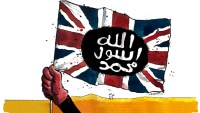
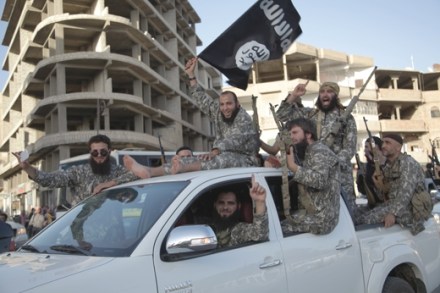
There’s nothing like a caliphate to rally disparate groups. The Sunni Islamic organisation ISIS has recruited fighters from all over the world with its dream of a single Muslim state, which now apparently exists in parts of Iraq and Syria. Across Europe, young men are packing their bags and heading to the east to join the jihadis. It’s an odd thing to want to do, but there’s something about a caliphate. In India in the 1920s, thousands of Muslims rallied behind the idea of a caliphate to support the Ottoman Caliphate. It was surprising because the Muslim population in India had never shown unity or indeed any fondness for Turkey. In fact many of them had fought against the Turks.

Baghdad notebook: “Things were better in Saddam’s time”

In the passport queue at Baghdad airport, my heart sinks. This place vies with Cairo for the title of most venal airport in the Middle East. Our luggage is minutely examined by the Mukhabarat, or secret police, then customs. Early morning becomes mid-afternoon. Our papers (scrupulously in order) lie unattended on a desk. Eventually, a customs man, with a large moustache and belly hanging over his belt, waddles over. ‘We cannot stamp these today,’ he says. ‘We will have lunch now, and then we will sleep. Come back tomorrow. Or the next day.’ Our bags are moved into a room piled high with luggage seized from other TV crews: flak jackets, lights, someone’s camera and editing gear. ‘How much?’ asks our fixer, wearily.

I like the look of this exciting new Islamic State. But why don’t they want Belgium?

There is something attractive about almost the whole of southern Europe being part of an immense and somewhat rigorous caliphate, as promised by the exciting Sunni Islamic movement formerly known as Isis. This new entity, stretching from Santander in what we currently know as Spain, to Cox’s Bazar on the Bangladesh and Burmese border, would handily encapsulate 98 per cent of the worst countries in the world, as defined by me out of rank prejudice, but also by various more scientific UN criteria.

After 100 years, the mess we made of the Middle East is coming full circle

When I hear the words Sykes-Picot I more often than not feel like punching an Englishman or a Frog — any Englishman, any Frog — in the mouth, but then I think of François Georges-Picot’s granddaughter Olga, and my pugilistic thoughts turn to romantic mush. More about those two arrogant and ignorant fools later, but first Olga. I was 22 and she was 19 or 20 and we met in New York where she was studying acting and I was studying girls. It was love at first sight and we swore we’d never ever look at anyone else ever but then the summer ended and we never saw each other again. Well, I did see her but she was 20 feet tall and in Technicolor.

Jihadists to Joe Bloggs: a ‘Snoopers’ Charter’ would mean everyone could be spied on

Theresa May has suggested she may reignite plans for a 'snoopers’ charter', in order to provide intelligence services with greater surveillance powers.  She has called for new powers in order to respond to the terror threat from British jihadists returning from the Middle East.  In September 2012, Nick Cohen explained in The Spectator why a communications data bill would be a dangerous thing: Ever since the millennium, I have wondered how long the utopian faith in the emancipatory potential of the web will last. Of course, we know the new technologies give the citizen new powers to communicate and connect. We hear this praised so loudly and so often, how could we not know?

Liam Fox warns on security spending and on avoiding Iraq

The Cabinet is split between doves and hawks on whether Britain should back US involvement in Iraq, but this morning Liam Fox argued on the Andrew Marr Show that whether or not the Uk avoids military action, it will not be able to avoid the threat from jihadists. he said: 'Remember, the West is seen as a single entity. There are those who say if we don't get involved, if we hunker down, then we'll be fine, there'll be no backlash. That is utterly, utterly wrong because the jihadists don't hate us because of what we do; they hate us because of who we are and we can't change that. It's our values and our history that they detest more than anything else.

Britain is not alone in its mad attitude to Islamism

There is a tendency in Britain to think we are alone in our national madness. So I thought I would cheer everyone up on this lovely weekend by pointing out that one of the big stories in the Netherlands this week has been whether or not a pro-ISIS demonstration should be allowed in the Hague. The demonstration was planned to take place outside the Iraqi Embassy. There are of course some who are strongly pro-ISIS in the Netherlands. There are also some who are against. Most importantly there is also a political class which has been carefully weighing up the alleged undesirability of ISIS with the historic Dutch tradition of free speech. I suppose we must wish the Dutch people well in these deliberations.

The Security Services have lost track of 1 in 4 of those who’ve gone to fight in Syria

We have just had a second intelligence failure on Iraq. The speed and extent of ISIS's sweep into the country took the UK governnment by surprise. Whitehall was not alone in this. As I reveal in the magazine this week, when representatives of the US Joint Chiefs of Staff came to London recently, Iraq was way down their agenda. What makes this intelligence failure so worrying is that we are relying on the security services to keep track of the 400-odd Britons who have gone to fight with ISIS in Syria and Iraq. Senior government figures believe that of those who have gone to Syria and then returned to the UK, the authorities have lost track of one in four of them. This reveals the sheer scale of the domestic threat that we face.

America and Britain could save Iraq’s Christians – it’s just they don’t care

The Syro-Iraq war, as the firestorm should probably now be called, rages on, with the sword of Damocles hanging over us in Britain. Some 400 British Muslims are fighting with ISIS – only 150 fewer than the number of Muslims in the whole British Army – and we can be pretty sure of blowback when they return home. Afterwards I imagine we’ll have the politicians lecturing us about how this has nothing to do with Islam and then those bizarre ‘one London’ style posters will appear all over the capital; and 90 per cent of the media coverage will be on the danger of Islamophobia – cue footage of football hooligans waving flags.

Obama announces military advisers for Iraq

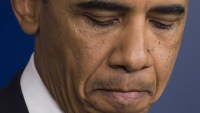
President Obama has just announced that the US is prepared to launch strikes against ISIS in Iraq if the situation on the ground requires it. The US will send up to 300 military advisers to the country. It is understood that they will provide intelligence on what targets US air power should hit. But Obama stressed that they would not be involved in combat roles. In a sign of the US's deep disenchantment with the current Iraqi government, administration officials have told the Washington Post that they are working to see if a new Iraqi government can be put together following this April's parliamentary elections. The US would like to see a broader based, less sectarian government emerge that includes Shi'ites, Sunnis and Kurds.

Podcast: Terror’s comeback kids and Steve Coogan, foe of press censorship?

Why do Iraq’s jihadists keep on coming back? On this week’s View from 22 podcast, Daveed Gartenstein-Ross and Freddy Gray (1 min, 29 sec) examine why groups such as ISIS have a habit of disappearing, losing their territorial gains and reappearing more deadly than ever. What can the West do, if anything, to combat the ISIS threat in Iraq? Are we going to see instability in the region for years? James Forsyth and Isabel Hardman (10 min, 29 sec) also look at the disappearance of hawks in Westminster and why Parliament is so reluctant to intervene in foreign lands. Does the ghost of Tony Blair and Iraq scare off MPs from voicing interventionist feelings? It’s also been a terrible week for Ed Miliband — will Labour consider junking their leader?

Welcome to the era of ISIS – and pop-up terror

[audioplayer src="http://traffic.libsyn.com/spectator/TheViewFrom22_19_June_2014.mp3" title="Daveed Gartenstein-Ross and Freddy Gray discuss ISIS, Iraq and pop-up terrorism" startat=49] Listen [/audioplayer]Jihadist banners flying. Victorious extremists on camera slapping and then executing dehydrated and pleading Shia members of the Iraqi security forces. Dark reports of mass slaughter. City charters released in captured territory heralding the implementation of an extreme version of Islamic law. We’ve seen it all before, but it remains shocking — and the latest advance by the Islamic State of Iraq and al-Sham (ISIS) is arguably the most disturbing development in Iraq’s already horrifying recent history.

How the Westminster hawk became an endangered species

[audioplayer src="http://traffic.libsyn.com/spectator/TheViewFrom22_19_June_2014.mp3" title="James Forsyth and Isabel Hardman discuss the death of Westminster hawks" startat=726] Listen [/audioplayer]There is a slight whiff of the summer of 1914 to Westminster at the moment. The garden party season is in full swing and the chatter is all about who is up and who is down. In the Commons chamber itself, domestic political argument dominates. You would not know that a vicious sectarian war is raging in the Middle East. At the first Prime Minister’s Questions after the fall of Mosul to the terrorist group ISIS, no one asked David Cameron to explain the government’s policy on Iraq. The situation in Iraq is dire on both a humanitarian and a strategic level.

Please, Cameron – no moral grandstanding over Iraq

If there’s a bright spot in the murky mess of Iraq, it’s that finally we have a war that it is impossible to paint in simple terms, as a battle of good against evil. This time, even our PM, the self-appointed heir to Blair, can’t grandstand about defeating ‘terror’ or protecting ‘innocent civilians’ because there’s terror and innocence on every side. He can’t pose as world policeman; stand side by side with Obama and say ‘we must not let this evil happen’, because clearly we already have. Take ISIS, the Islamist group once affiliated to al-Qa’eda who’ve become the world’s new public enemy number one. ISIS have captured parts of northeast Syria and Iraq, and have begun to eye up Baghdad.

The return of oil price anxiety is a timely reminder to get fracking

‘Iraq turmoil sends crude oil prices to nine-month high’ is the sort of headline that used to send shivers down economists’ spines, especially if it appeared on the same page as ‘Europe faces gas shortage as Russia cuts Ukraine supply’. How worried should we be at the current turn of events in the energy world? Since Iraq’s new insurgency kicked off, the price of a barrel of Brent Crude has blipped from $105 to $115 — nothing to panic about — but the more pessimistic analysts are talking of a further $30 rise if Iraqi oil flows of 3.6 million barrels a day (representing about 4 per cent of global demand) are seriously disrupted.

Petraeus: America can’t serve as an air force for a Shi’ite militia

If conservatives had an answer to Woodstock, it would resemble the Margaret Thatcher Conference on Liberty held today by the Centre for Policy Studies. The lineup is stellar, and I’ve been here all day. General David Petraeus is one of the many guests and was asked what he’d do about the rise of ISIS. Here’s what he said, 3:30 into the below clip: ‘If there is to be support for Iraq, it has to be support for a government of Iraq. That is; a government of all the people; and that is representative of and responsive to all elements of Iraq. President Obama has been quite clear on this: This cannot be the United States being the air force for Shia militias or a Shia on Sunni Arab fight. It has to be a fight of all of Iraq against extremists.

The Commons is finally talking about Iraq. Will anyone notice?

PMQs last week took place just hours after Mosul had fallen to ISIS. But despite this, not a single MP asked Cameron what the government's position on the situation in Iraq was. Today, though, Ed Miliband devoted all six questions to the topic. There was much consensus between Cameron and Miliband but one doubts that the governments in either Baghdad or Tehran will take much notice of what was said in the Chamber. Indeed, the Commons seemed oddly passive about the exchanges as if everyone was aware of the limits to Britain's ability to influence the situation. listen to ‘PMQs: Cameron and Miliband on Iraq’ on Audioboo One thing that remains striking is Cameron's conviction that a terrorist enclave in Iraq would be a direct threat to Britain.

Please David Cameron, no moral grandstanding over Iraq this time

A preview of Mary Wakefield's column in this week's Spectator... If there’s a bright spot in the murky mess of Iraq, it’s that finally we have a war that it is impossible to paint in simple terms, as a battle of good against evil. This time, even our PM, the self-appointed heir to Blair, can’t grandstand about defeating ‘terror’ or protecting ‘innocent civilians’ because there’s terror and innocence on every side. He can’t pose as world policeman; stand side by side with Obama and say ‘we must not let this evil happen’, because clearly we already have. Take ISIS, the Islamist group once affiliated to al-Qa’eda who’ve become the world’s new public enemy number one.

The Middle East’s own 30 Years War has just begun

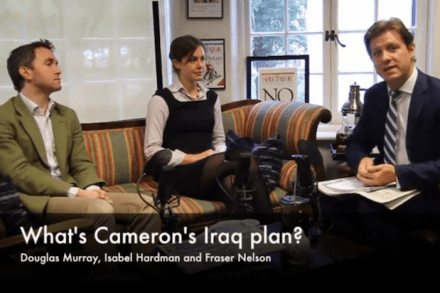
In January, Douglas Murray explained in The Spectator how relations in the Middle East were becoming increasingly tense. With northern Iraq now in turmoil, following the advance of Islamist militant group Isis, Douglas's insight seems prescient. Syria has fallen apart. Major cities in Iraq have fallen to al-Qa’eda. Egypt may have stabilised slightly after a counter-coup. But Lebanon is starting once again to fragment. Beneath all these facts — beneath all the explosions, exhortations and blood — certain themes are emerging. Some years ago, before the Arab ‘Spring’ ever sprung, I remember asking one top security official about the region. What, I wondered, was their single biggest fear?