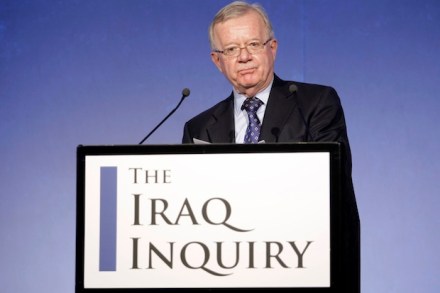
Iraq war

To win, the Democrats need to be more like Trump

From our US edition

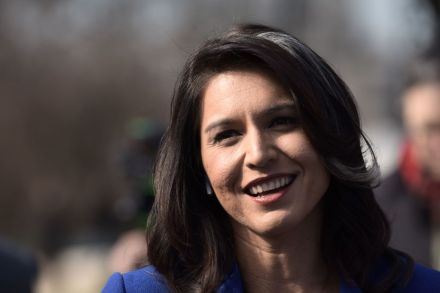
Here is the tragedy of the Democratic party in 2019: its partisans are left to hope that personal hatred of Donald Trump will do for them in 2020 what the Iraq War and the Great Recession did in 2006 and 2008. The first time Nancy Pelosi became speaker of House of Representatives, her party was the party of second thoughts about Iraq. The fact that Democrats won control of the Senate with the 2006 election was even more clearly tied to that misbegotten war: the victory of James Webb over George Allen gave Democrats their 51st seat. Webb was a former Republican – a Reagan cabinet official – who switched parties and challenged Allen out of disgust with the George W. Bush administration’s foreign policy.
democrats tulsi gabbard trump

Trump should use the State of the Union to end the Afghanistan war

From our US edition

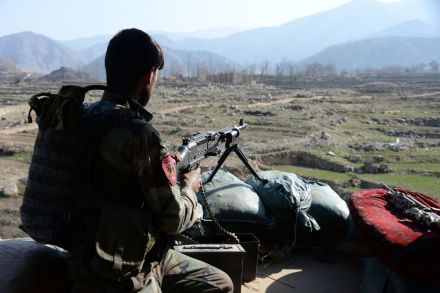
Excited speculation is mounting in Washington tonight as rumors circulate that President Trump may use his State of the Union to announce a state of emergency to secure the funding Congress has denied his border wall with Mexico. But Trump has a historic, monumental opportunity to give the American people a more significant lasting legacy – not a wall, but a permanent end to America’s policy of forever-war. Afghanistan is now the longest war in US history, yet Sen. Mitch McConnell deemed it necessary to move against what he called a ‘precipitous withdrawal’ from Afghanistan and Syria this week. ‘How do you leave precipitously after 17 years?’ asked Sen. Rand Paul. ‘We are no longer fighting anyone who attacked us on 9/11.

afghanistan war

15 years after Iraq, regime change has come to Washington

From our US edition

This week marks 15 years since the start of America’s war in Iraq. Regime change was George W. Bush’s objective, and Saddam Hussein was duly removed, tried, and executed. But Bush could not have counted on how much regime change would also come to Washington as a result of the war. It contributed to the Republicans’ loss of Congress in 2006 and to the failure of Bush’s party to keep control of the White House in 2008. Yet it did even more: it helped to give Barack Obama, an antiwar candidate—and premature winner of a Nobel Peace Prize as president—an edge against Hillary Clinton among the activist left in the 2008 Democratic primaries. As a senator, Mrs. Clinton had, after all, voted for the war. And then there is Donald Trump.

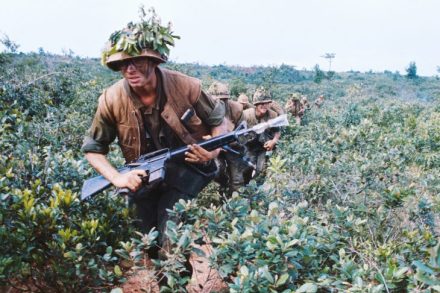
BBC4’s The Vietnam War was unique, informative and shattering

The Vietnam War BBC4 The BBC should be praised for showing all ten episodes of this unique, informative and shattering American series on the Vietnamese war, despite screening eight fewer hours than in the original. Before each episode the BBC warned that 'some viewers may find some scenes upsetting'. Which ones? A frog jumping in a pool of blood from the head of a dead Vietcong (NLF) fighter? The Saigon police chief shooting a prisoner in the head? The American colonel offering a case of whiskey to the first man to bring him the severed head of an enemy soldier? Which he gets. The eager US soldier on his first day in Vietnam noticing strings of what he thought were leaves, which he realised were the ears of dead enemies?

Killing time | 18 May 2017

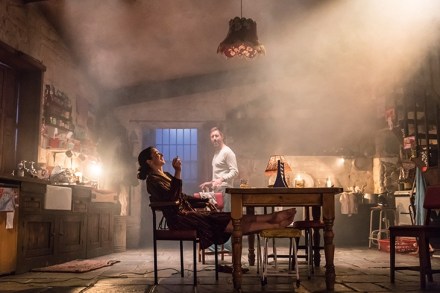
Jez Butterworth’s new play The Ferryman is set in Armagh in 1981. Quinn, a former terrorist, has swapped the armed struggle for a farming career and now lives with his sick wife, their countless kids, his sister-in-law and her only son. But the IRA, who murdered his brother as punishment for his disloyalty, are due to pay a visit with unknown intentions. More violence, perhaps? Protection money? Or both. Well, neither, it turns out. They merely want Quinn to refrain from blaming his brother’s death on them. Rather a low price to ask. And yet Quinn is willing to defy them even though he knows they repay disobedience with murder, and he now has a dozen vulnerable dependents to protect. These plot elements don’t quite stack up.

Corbyn is the real heir to Blair

Alastair Campbell once famously punched the Guardian’s Michael White in the face. A commendable thing to do, undoubtedly, as Mr White is the very incarnation of pomposity and self-righteousness. Quite possibly the best thing Campbell has ever done. But the brief spat (White hit back, according to White) was revealing in another way. Robert Maxwell had just drowned by falling off his yacht and Campbell, then working in the lobby for Maxwell’s paper, the Daily Mirror, took exception to White’s glee at this watery end to the proprietor’s life. ‘Captain Bob, Bob, Bob!’ White chortled, so Campbell punched him.

Changing of the Bard

Hamlet was probably written sometime between 1599 and 1602. The Almeida’s new version opens with a couple of security guards watching surveillance footage taken in a corridor. Well, of course it does. Nothing says ‘late medieval Denmark’ like closed-circuit television. Hamlet (Andrew Scott) appears. His black shirt and matching trousers suggest a snooker pro at the Crucible or a steward on a Virgin train. Scott is known as a ‘character actor’ (code for ‘baddie’) rather than a leading man.

Sir John Chilcot says Blair damaged trust in politics

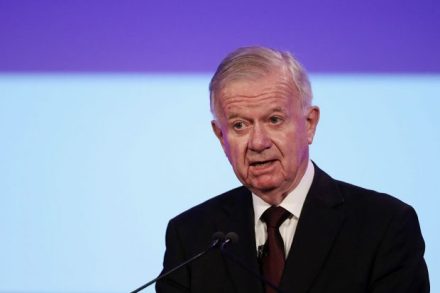
Sir John Chilcot isn’t a man who deals in pithy quotes. His Iraq War inquiry report came in at two-and-a-half million words, and even the executive summary was 150 pages long. Yet Chilcot's assessment of Tony Blair during his select committee appearance this afternoon was about as damning as he could manage. Asked whether the former PM had damaged trust in politics, Chilcot had this to say: ‘I think when a government or the leader of a government presents a case with all the powers of advocacy that he or she can command, and in doing so goes beyond what the facts of the case and the basic analysis of that can support, then it does damage politics, yes.

Blair witch project

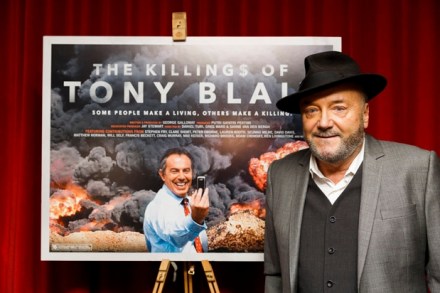
I had been wondering where Gorgeous George Galloway might pop up next. Defenestrated from his seat in Bradford West, humiliated in the London mayoral elections — where he received 1.4 per cent of the vote — and no longer apparently an attractive proposition to the reality TV producers, his public life seemed sadly to be drawing to a close. But nope, here he is with a film about the person all left-wing people hate more than any other, Tony Blair. It’s a good film, too, in the main. The Killing$ of Tony Blair was partly crowdfunded and it may well be that the only people who watch it will be those who forked out to have it made.

Heroes in error

In the first year or so of the Iraq occupation — or ‘big Army goatfuck’, as it is not quite specifically referred to in former US Army soldier Roy Scranton’s debut novel — three central storylines move through and around each other.

Don’t knock ‘secret deals’. We’ll need one soon

As a founder member of the Guild of Blair-Bashers, someone who reacted strongly against him from our first encounter at dinner when he was only an opposition spokesman, as a commentator who railed against the invasion of Iraq the moment the idea was mooted and right through to the end, and as a journalist who throughout Tony Blair’s time at No. 10 beat my tiny fists against the imposter I always thought him to be, perhaps I may deserve your attention now, after Chilcot, that I have something to say in Mr Blair’s defence? I don’t believe that in any important way the former Prime Minister lied. And I don’t agree there would have been anything wrong with his giving secret undertakings to the President of the United States.

Themistocles vs Tony Blair

Tony Blair has excused himself for the Iraq war by saying that he did what he believed was right. But no one was suggesting that he had done what he believed was wrong. The charge was a matter of integrity: that he deceived Parliament and turned a blind eye to the evidence on weapons of mass destruction. The Athenians knew a sharpster when they saw one. The historian Diodorus described how in 477 BC Themistocles, a man admired by the Athenians but known to be something of a con man, conceived of a plan to turn Piraeus, at that time a rocky outcrop, into a full-blown commercial and military harbour.

Tony Blair’s rumination over his own ‘good faith’

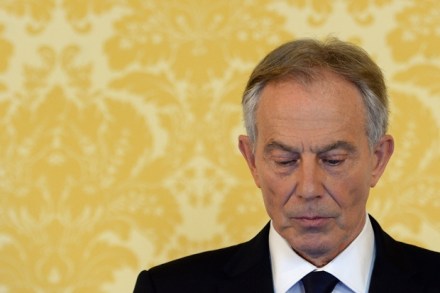
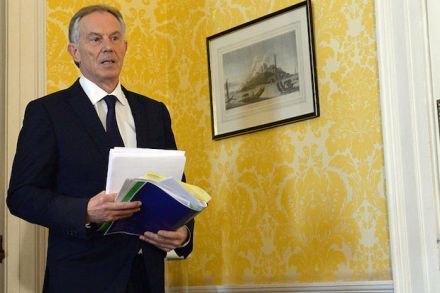
Tony Blair appeared emotional, sounded hoarse, and constantly fixated upon his belief that he acted in ‘good faith’ over Iraq when he responded to the Chilcot report this afternoon. The former Prime Minister spoke or took questions for two hours, and started by saying that he accepted ‘full responsibility, without exception and without excuse’. But he also made clear that he disagreed with Chilcot’s findings that the decision to invade Iraq could have been delayed. The key feature of the long press conference, though, was Blair ruminating constantly on whether he had acted in good faith when taking the decision to go to war.

Has Parliament learned the lessons of the Iraq war?

Normally whenever someone mentions Iraq in the House of Commons, the Chamber descends into a grouchy scrap. But today’s statement on the Chilcot report from David Cameron and the questions that followed it were surprisingly measured and thoughtful. As James notes, Jeremy Corbyn didn’t mention Tony Blair, and he didn’t give a furious response to the Prime Minister, either. Of course, his analysis of the report wasn’t comfortable for many Labour MPs - indeed, Ian Austin shouted from the backbenches that his party leader was a ‘disgrace’. But he did not call for Blair to stand trial, and neither did he rant at length about the failings of the West.

The Spectator podcast: Brexit, and the return of political lying | 28 May 2016

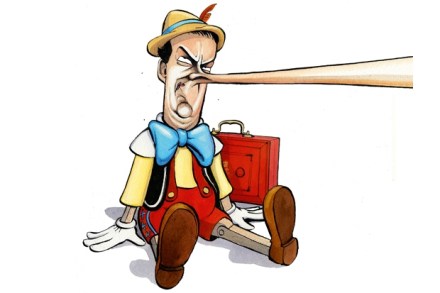
To subscribe to The Spectator’s weekly podcast, for free, visit the iTunes store or click here for our RSS feed. Alternatively, you can follow us on SoundCloud. Are David Cameron and George Osborne using the same techniques of deceit deployed by New Labour in the run-up to the Iraq war? In his cover piece this week, Peter Oborne argues that's just what is happening. He says that in their EU campaign, the Chancellor and Prime Minister have put dirty tricks back at the heart of government. But Matthew Parris in his column says that in politics there’s no point complaining about being lied to. That’s the cry of the bad loser. Both Peter and Matthew join Fraser Nelson on the podcast.

The Spectator podcast: Brexit, and the return of political lying

To subscribe to The Spectator’s weekly podcast, for free, visit the iTunes store or click here for our RSS feed. Alternatively, you can follow us on SoundCloud. Are David Cameron and George Osborne using the same techniques of deceit deployed by New Labour in the run-up to the Iraq war? In his cover piece this week, Peter Oborne argues that's just what is happening. He says that in their EU campaign, the Chancellor and Prime Minister have put dirty tricks back at the heart of government. But Matthew Parris in his column says that in politics there’s no point complaining about being lied to. That’s the cry of the bad loser. Both Peter and Matthew join Fraser Nelson on the podcast.

Brexit, and the return of political lying

Sir John Chilcot’s report into the Iraq invasion, due to be published on 6 July, is expected to highlight the novel structure of government created by New Labour following its landslide victory of 1997. As Tony Blair started to make the case for war, he began to distort the shape and nature of British government in several ways — the most notable being the deliberate debasement of the traditional idea of a neutral, disinterested civil service. Under Blair, civil servants were told to concern themselves less with the substance than the presentation of policy. They were informed that their loyalty lay more with the government of the day, less with the British state. This had dramatic effects.

Americans for Brexit

Because Americans love Britain, and because we are a presumptuous lot, we often advise the United Kingdom on its foreign policy. And not only the UK, but Europe. Successive US administrations have urged European nations to form a United States of Europe as an answer to the question attributed to Henry Kissinger: ‘Who do I call if I want to call Europe?’ The latest such unrequested advice was offered to your Prime Minister by no less a foreign-policy maven — see his successes in Libya, Middle East, China, Crimea — than Barack Obama. The outgoing president informed David Cameron that his administration wants to see ‘a strong United Kingdom in a strong European Union’.

You can’t forget what Will Self says – even if you wish you could

It lasted for just a few seconds but was such a graphic illustration of the statistics behind the bombing campaign in Syria — and not a word was spoken. Martha Kearney called it an ‘audio graphic’ on the World at One on Monday and explained how Neal Razzell and James Beard for the World Service had been monitoring the number of US combat missions on Islamic State targets in Syria, hour by hour, 24/7, and comparing them with earlier bombing campaigns. Each electronic beat we heard represents one hour, Razzell told us; each beep represents the launch of one combat mission. For Syria, the electronic beeps between each beat were quite far apart — clearly distinguishable. The sound we heard represented two raids an hour, he explained, every day for 450 days.

Chilcot Report will be published in June or July 2016

Finally, Sir John Chilcot has announced when his inquiry into the Iraq war will arrive. He has written to the Prime Minister this morning to say the findings of his inquiry will be published in June or July next year. After years of increasing pressure from the public and government, Chilcot says the text will be finished the week commencing 18 April 2016 and the report will then be checked by national security staff. When it finally arrives, it is going to be a long read: 'The very considerable size of our report – more than two million words in total — means it will take some weeks to prepare the report for printing and publication.