Iraq war

How Dick Cheney made Donald Trump

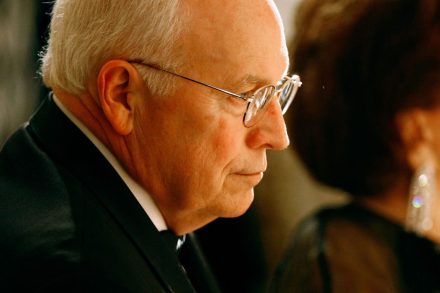
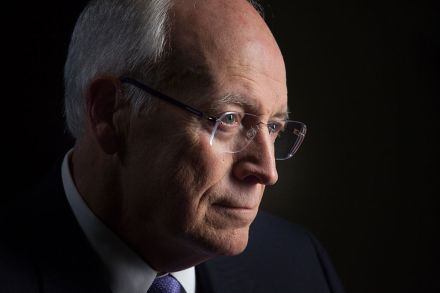
Former vice president Dick Cheney, who died on Monday at age 84, loathed Donald Trump. In a 2022 election campaign ad for his daughter, Liz, a congresswoman from Wyoming, he declared: “In our nation’s 246-year history, there has never been an individual who is a greater threat to our republic than Donald Trump.” Yet Cheney was more responsible for Trump’s rise than almost anyone else in the Republican establishment. He helped to mastermind the calamitous Iraq War and preached the unitary executive theory of the presidency. Instead of vilifying Cheney, MAGA-world should offer him a bouquet of appreciation. Recall that it was during the 2016 South Carolina primary that Trump first showed his real independence from the folderol surrounding the Iraq War.
dick cheney

Dick Cheney dies at 84

Former vice president Dick Cheney died last night aged 84. He arrived in Washington as a congressman for Wyoming, then became secretary for defense under George H.W. Bush and served for eight years as George W. Bush’s vice president. He was considered by many to have pulled the strings behind the Bush administration. What is perhaps his most lasting legacy is the “Cheney Doctrine,” which influenced America’s decision to engage in wars in the Middle East. He campaigned for a military response to the 9/11 terrorist attacks, which drove his conviction that any country, organization or individual that posed a threat to the US, or that might in the future, needed to be taken out.

John Bolton’s AOL chat with Iran

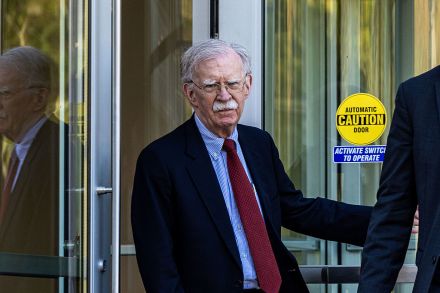
“John Bolton Surrenders To Federal Authorities” is a headline I could have only dreamed of seeing 20 years ago, but this morning it came true. Following yesterday’s grand-jury indictment of Bolton, the former Trump National Security Advisor and W. Bush Iraq War architect/manipulator gave himself up and pled not guilty in federal court on charges of mishandling classified information. But if Bolton isn’t guilty, I’m a high-stakes poker professional. The charges claimed that Bolton was “unlawfully hoarding” documents, that he sent classified information over grandpa communication medium AOL instant Messenger in 2018 and that he shared more than 1,000 pages of notes, while working on a memoir, with his wife and daughter, neither of whom had security clearances.

John Bolton

‘Blood! Blood! Blood!’: the Battle of Fallujah twenty years on

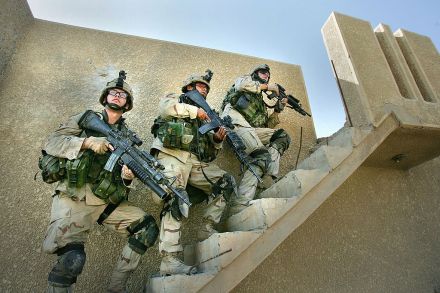
The National Museum of the Marine Corps has built a replica of a street in Fallujah, the Iraqi city that American forces half-destroyed in order to save it, in a battle twenty years ago next month. The exhibit promises visitors an “interactive experience that puts them in the boots of a Marine as he kicks down the door of a suspected insurgent stronghold.” If you have a games console, you can play Six Days in Fallujah, a video game where you take the role of a Marine who narrates the action of a firefight that really happened. Fallujah has become a symbol of gritty heroism and sacrifice — or for critics of the Iraq war, occupation and war crimes. Either way, the battle is deeply lodged in the popular imagination.

Fallujah

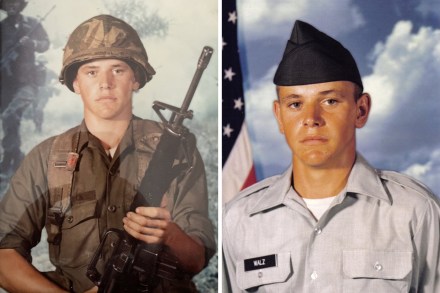
Tim Walz has played fast and loose with his military service record

In an era of declining trust, the military retains widespread public confidence — 61 percent as of a Gallup poll this year. Large majorities of Americans look up to those who wore the uniform and associate serving in the military with positive stereotypes like self-discipline, loyalty and responsibility. Politicians and our political system? Not so much. Only 26 percent of Americans have confidence in the presidency, and confidence in Congress stands at 9 percent. It’s no wonder that both parties recruit military veterans to run for office, hoping that the halo from their service will soften the sharp edges of political reality and garner crossover appeal come election day.

tim walz service

Joe Biden’s non-defense policy

No one can say the Iraq War was under-discussed. On the eve of the 2003 invasion, President George W. Bush and his advisors explained and defended Operation Iraqi Freedom to, among others, British prime minister Tony Blair, Saudi ambassador prince Bandar bin Sultan, the United Nations Security Council and skeptical members of Congress, the media and the American public. Bush even faced opposition from his own secretary of state, Colin Powell, who cautioned the president against invading Iraq with what would come to be known as the “Pottery Barn Rule”: if you break it, you own it. An experienced military leader, General Powell understood the complexities of war and the importance of having an exit strategy.

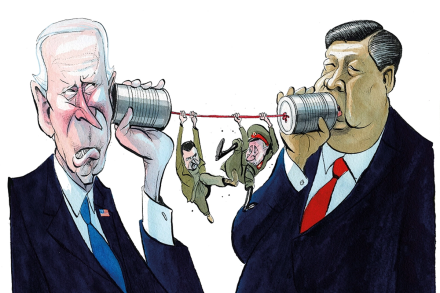
ukraine war biden defense

Why do neoliberals get let off the Iraq War hook?

Given the worldwide climate of political intolerance, I often try to deflect hostility by prefacing my comments with the old saw that “reasonable people can disagree.” As a strong believer in intellectual freedom and Socratic dialogue, I do in fact feel duty-bound to listen to the other side, or sides, of an argument. Yet there’s one subject about which I’m as close-minded as the wokest opponent of liberal debate — a topic about which I won’t brook any disagreement because there simply isn’t any reasonable form it can take: that is, George W. Bush’s and British prime minister Tony Blair’s disastrous decision to invade Iraq in 2003 and its deadly, still hugely malignant consequences in the Middle East.

invasion

On the anniversary of the Iraq invasion, spare us the sermons

Twenty-one years ago today, the United States committed its worst foreign-policy mistake in generations: invading Iraq to overthrow Saddam Hussein, the despot who ruled the Arab country with an iron fist for nearly a quarter-century. The entire operation was supposed to be a “cakewalk,” in which the mighty US military, stocked with the best technology and weapons the world had to offer, would pummel a decrepit Iraqi army that was hobbled by international sanctions for the better part of a decade. The mood at the time was serious but stoic. Donald Rumsfeld, the US defense secretary, argued that the entire war wouldn’t last more than five months.

iraq war

An impressive examination of the conjoined fates of Iraq and the United States

In July 4, 1821, secretary of state John Quincy Adams gave a speech to Congress on American foreign policy. He said of the United States that “wherever the standard of freedom and independence has been or shall be unfurled, there will her heart, her benedictions and her prayers be. But she goes not abroad, in search of monsters to destroy.” For the first 150 years of the republic, its leaders dutifully observed Adams’s counsel. But after Woodrow Wilson’s intervention in World War One, American policy has tacked in the opposite direction. For over a century America has indeed been going abroad, searching for monsters to destroy.

Iraq

It’s time for Congress to take back its war powers

On March 29, more than twenty years after the United States commenced Operation Shock and Awe in Baghdad, the Senate made history by repealing the military force authorization that green-lit the operation. The bill, which also aims to kill a previous 1991 authorization for the use of military force, or AUMF, against Iraq during the Gulf War, now heads to the House of Representatives where it faces an uncertain future.  On the face of it, repealing both measures would seem like an ordinary event. Saddam Hussein, after all, has been dead for over sixteen years, hanged by an Iraqi court for a litany of crimes against his own people. His regime dissolved within three weeks of the 2003 invasion.

state of the union
bioweapon labs

Secret bioweapon labs are Putin’s MacGuffin 

Some commentators have already noted the strange homology between Russia’s evocation of “secret bioweapon labs” in Ukraine and the US evocation of Saddam Hussein’s weapons of mass destruction, which in both cases were used to justify military attack. It’s not that the US was unsure if Saddam had WMDs; they positively knew he did not have them, which is why they risked a ground offensive in Iraq, rather than sticking to air bombing. The nonexistent Iraqi weapons of mass destruction perfectly fulfill the role of a “MacGuffin” in Alfred Hitchcock’s films. A MacGuffin is “an object, event, or character in a film or story that serves to set and keep the plot in motion despite usually lacking intrinsic importance,” per Merriam-Webster.

Marking twenty years of America’s most endless war

The Iraqi people have been through plenty over the last twenty years: a regime change operation against Saddam Hussein; a jihadist insurgency against American occupation forces; a sectarian civil war between Shia and Sunni armed groups; Iranian political interference; an Islamic State rampage; a US-organized counter-ISIS coalition that destroyed the terrorist group’s territorial caliphate. According to Brown University’s Cost of War Project, at least 275,000 Iraqi civilians died in war-related violence between 2003 and 2019. On March 19, the US will mark the twenty-year anniversary of Operation Shock and Awe, the massive air campaign against Saddam’s Iraqi army that paved the way for the ensuing armored drive to Baghdad.

foreign policy

No one wants to join the military anymore

Last week marked the 246th birthday of the United States. This year also marks, according to Lieutenant General Thomas Spoehr of the Heritage Foundation, when we “question the sustainability of the all-volunteer force.” As reported in late June by NBC, all branches of the military are falling short of their 2022 recruiting goals. The Army, for instance, has met only 40 percent of its enlisted recruitment target for the fiscal year, which for the military services ends on September 30. Those in the Pentagon tasked with attracting candidates have listed reasons they are struggling to meet their mission: lack of eligibility, Covid restrictions putting a damper on outreach, competition from a robust civilian employment market, and a lack of a desire to serve.

military

Is Putin nuts?

As Russian forces level Ukrainian cities with artillery, missiles and airstrikes, there's a concerted effort to get inside the mind of Vladimir Putin: from pundits, former US national security officials and current heads of government. What could possibly get the man to stop the bombardment and support a ceasefire? Is Putin intent on conquering all of Ukraine? Or is there some combination of concessions the Ukrainian government and the West could offer that would end the war and bring about a full Russian troop withdrawal? The fact is none of us know what Putin’s endgame is. Putin’s own advisors, especially those kept out of the inner circle, may not even understand what the Russian leader is planning.

crazy nuts

Noninterventionists never win arguments

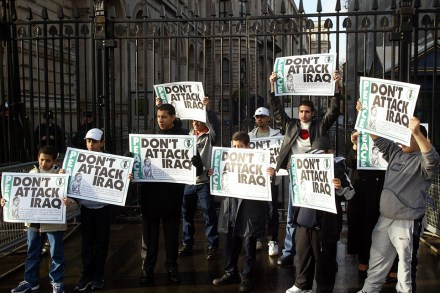
I’ve been thinking about where I was on the eve of the US invasion of Iraq in 2003, and my memories of the event are quite depressing. What have we learned? As a research fellow at the Cato Institute at that time, I was working with other analysts preparing research, authoring commentaries, publishing op-ed articles and giving interviews to the broadcast media, warning about the consequences of the coming American military conquest in the Middle East. It's not polite to toot one’s own horn, but we were right.

terror

Return to Iraq

The land around Erbil, the capital city of the Kurdistan region of northern Iraq, is mostly beige, flat and seemingly endless. The mountain has seen a lot of action. The terror group ISIS remains dug in around it and the Kurdish peshmerga, with whom I recently spent time, continue to battle against them. Iraq. Two syllables, almost two decades of conflict. When people think of Iraq they think of several things: the disastrous 2003 war, oil (like all Arab countries in the popular imagination), ISIS and, if they’re a bit older, the mustachioed features of Saddam Hussein that stood, in the early years of this century, for the type of dictator painted as the West’s greatest threat. I think of all those things, too. But they’re leavened by something else: family.

iraq

We are all Donald Rumsfeld

Donald Rumsfeld died this week — and it’s just so easy, isn’t it? It’s so convenient to dance on the grave of the man who helped bring about the disastrous Iraq war. For Rumsfeld, the old dictum, de mortuis nihil nisi bonum, seems to have been discarded almost from the start. The obituaries, mostly in left-leaning publications like the Atlantic and the Daily Beast, have been downright vicious. Rumsfeld was George W. Bush’s first defense secretary who, alongside Dick Cheney, pushed hard for deposing Saddam Hussein after 9/11. Because of this, he’s been labeled a war criminal. He’s been held responsible for hundreds of thousands of deaths, both in Iraq and in Afghanistan where he refused to accept a Taliban surrender.

donald rumsfeld

Donald Rumsfeld succeeded at everything — so why did he fail in the end?

What kind of man was Donald Rumsfeld? A successful one, by almost every measure. Ivy League scholar-athlete, captain of Princeton’s football and wrestling teams. Successful candidate for office, easily reelected to Congress twice before he left to join the Richard Nixon administration. There he proved a success at navigating both the federal bureaucracy and the internal politics of the scandal-consumed administration. He survived Nixon’s resignation and soon became Gerald Ford’s chief of staff — and after that, the youngest man ever to serve as secretary of defense, taking charge of a newly-minted all-volunteer force whose morale and discipline were in shambles after Vietnam.

donald rumsfeld

Adios, AUMF

Saddam Hussein was executed at the gallows in 2006 — but the Authorization for the Use of Force used by the US military to topple his regime in Iraq is still alive and kicking, a legacy the Pentagon has been loath to bury along with that war. That legislation, passed in October ahead of the March 2003 invasion of Baghdad, authorized then-president George W. Bush to use the Armed Forces of the United States ‘as he determines to be necessary and appropriate’ in order to ‘defend the national security of the United States against the continuing threat posed by Iraq; and enforce all relevant United Nations Security Council Resolutions regarding Iraq’.

aumf

Joe Biden’s endless wars

In just over a week, the Empire hopes to strike back. Joe Biden personifies the foreign policy of endless war that Democrats and neoconservatives pursued for 25 years, from the end of the Cold War until the election of Donald Trump in 2016. Biden voted for the biggest and most foolish intervention of that era, the Iraq War of 2003. He has not so much repudiated this act as tried to exculpate himself for it, claiming that in voting to authorize military force he didn’t think military force would be used. This is not credible on its face, and not the way anyone understood the vote at the time. It was as clear a vote for war as any vote has been since World War Two.

joe biden endless wars