Carl J. Schramm

Carl J. Schramm is a professor at Syracuse University, a fellow at the Institute for Applied Economics, Global Health and the Study of Business Enterprise at the Johns Hopkins University and serves on the board of Frontier Allies.

The US has left the World Health Organization. What next?

At this year’s World Economic Forum America’s friends and enemies heard about what some are calling a new world order. In Davos, President Trump advanced his own version of Realpolitik. America has its particular interests and he doesn’t mind being fully transparent about them and the actions they portend.   He plainly said that NATO is not forever. His Board of Peace is described as a possible prototype that will displace the UN. Trump has no regard for Biden’s devotion to the “rules based world order” when it really means the US has to pay for everyone else to honor the rules.   This is the reason that while the good and great were chatting it up in Davos the US finalized its withdrawal from the World Health Organization.

world health organization

Joe Biden’s non-defense policy

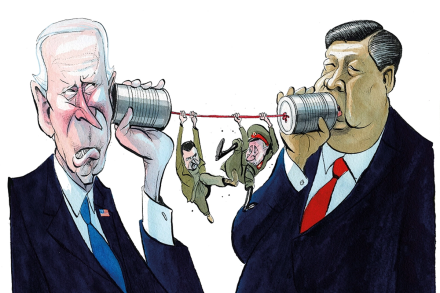
No one can say the Iraq War was under-discussed. On the eve of the 2003 invasion, President George W. Bush and his advisors explained and defended Operation Iraqi Freedom to, among others, British prime minister Tony Blair, Saudi ambassador prince Bandar bin Sultan, the United Nations Security Council and skeptical members of Congress, the media and the American public. Bush even faced opposition from his own secretary of state, Colin Powell, who cautioned the president against invading Iraq with what would come to be known as the “Pottery Barn Rule”: if you break it, you own it. An experienced military leader, General Powell understood the complexities of war and the importance of having an exit strategy.

ukraine war biden defense

Biden is strangling small business creation

As a recession looms, policymakers have predictably turned to entrepreneurs to start new businesses and jumpstart the economy. While this may be a good political talking point, the fact is that new business formation has never shortened a recession or reduced its impact. Some economists have looked to Covid to explain the unprecedented number of new businesses that sought IRS tax IDs during the pandemic. Washington’s touted “surge in entrepreneurship” is proving evanescent, however. Many individuals, facing economic lockdowns and the prospect of extended unemployment, decided to create businesses, often from home. Few of these companies will ever employ anyone except their founders — and rates of new business formation are already falling back to pre-pandemic levels.