Iraq war

Return to Iraq

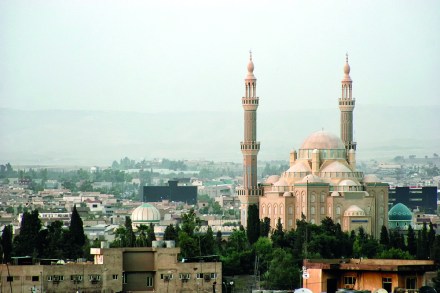
The land around Erbil, the capital city of the Kurdistan region of northern Iraq, is mostly beige, flat and seemingly endless. The mountain has seen a lot of action. The terror group ISIS remains dug in around it and the Kurdish peshmerga, with whom I recently spent time, continue to battle against them. Iraq. Two syllables, almost two decades of conflict. When people think of Iraq they think of several things: the disastrous 2003 war, oil (like all Arab countries in the popular imagination), ISIS and, if they’re a bit older, the mustachioed features of Saddam Hussein that stood, in the early years of this century, for the type of dictator painted as the West’s greatest threat. I think of all those things, too. But they’re leavened by something else: family.
iraq

Colin Powell: A great man – and a failure

From our UK edition

My memory of Colin Powell feels personal, even though we were 6,000 miles apart at the time. I was in Baghdad, covering the invasion of Iraq for the BBC. Powell was giving the speech of his life at the UN Security Council, accompanied by Powerpoint, trying to convince the world that Iraq had weapons of mass destruction. I had just come from a press conference with senior Iraqi officials, who denied there were any WMDs in the country. They were shifty, oleaginous, terrified of Saddam. It wasn’t hard to believe they were lying and that dignified, decent Colin Powell, was right. ‘If Powell says so,’ I thought, ‘it’s probably true.

We are all Donald Rumsfeld

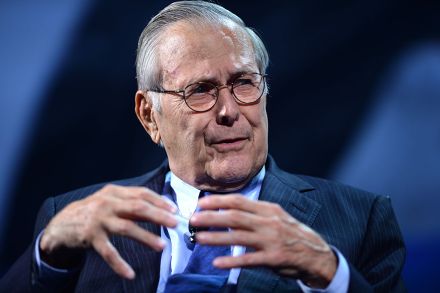
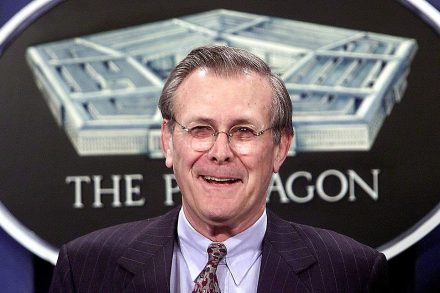
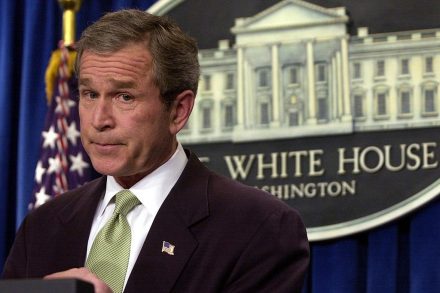
Donald Rumsfeld died this week — and it’s just so easy, isn’t it? It’s so convenient to dance on the grave of the man who helped bring about the disastrous Iraq war. For Rumsfeld, the old dictum, de mortuis nihil nisi bonum, seems to have been discarded almost from the start. The obituaries, mostly in left-leaning publications like the Atlantic and the Daily Beast, have been downright vicious. Rumsfeld was George W. Bush’s first defense secretary who, alongside Dick Cheney, pushed hard for deposing Saddam Hussein after 9/11. Because of this, he’s been labeled a war criminal. He’s been held responsible for hundreds of thousands of deaths, both in Iraq and in Afghanistan where he refused to accept a Taliban surrender.

donald rumsfeld

Donald Rumsfeld succeeded at everything — so why did he fail in the end?

What kind of man was Donald Rumsfeld? A successful one, by almost every measure. Ivy League scholar-athlete, captain of Princeton’s football and wrestling teams. Successful candidate for office, easily reelected to Congress twice before he left to join the Richard Nixon administration. There he proved a success at navigating both the federal bureaucracy and the internal politics of the scandal-consumed administration. He survived Nixon’s resignation and soon became Gerald Ford’s chief of staff — and after that, the youngest man ever to serve as secretary of defense, taking charge of a newly-minted all-volunteer force whose morale and discipline were in shambles after Vietnam.

donald rumsfeld

Adios, AUMF

Saddam Hussein was executed at the gallows in 2006 — but the Authorization for the Use of Force used by the US military to topple his regime in Iraq is still alive and kicking, a legacy the Pentagon has been loath to bury along with that war. That legislation, passed in October ahead of the March 2003 invasion of Baghdad, authorized then-president George W. Bush to use the Armed Forces of the United States ‘as he determines to be necessary and appropriate’ in order to ‘defend the national security of the United States against the continuing threat posed by Iraq; and enforce all relevant United Nations Security Council Resolutions regarding Iraq’.

aumf

Incoherent and conspiracy-fuelled: Adam Curtis’s Can’t Get You Out of My Head reviewed

From our UK edition

‘History,’ wrote Edward Gibbon, ‘is, indeed, little more than the register of the crimes, follies, and misfortunes of mankind.’ In this respect, though, history has nothing on the work of Adam Curtis, whose latest documentary Can’t Get You Out of My Head has now arrived on BBC iPlayer — all six episodes and eight and a half hours of it. Anybody who’s seen Curtis’s previous series (including The Century of the Self, The Power of Nightmares and The Trap) will know what to expect. Once again, he mixes terrific news footage, short clips of more or less anything, mood-inducing songs and a lordly commentary to remind us just how hopeless — in both senses — human beings are.

Joe Biden’s endless wars

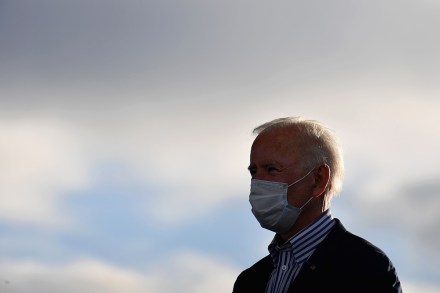
In just over a week, the Empire hopes to strike back. Joe Biden personifies the foreign policy of endless war that Democrats and neoconservatives pursued for 25 years, from the end of the Cold War until the election of Donald Trump in 2016. Biden voted for the biggest and most foolish intervention of that era, the Iraq War of 2003. He has not so much repudiated this act as tried to exculpate himself for it, claiming that in voting to authorize military force he didn’t think military force would be used. This is not credible on its face, and not the way anyone understood the vote at the time. It was as clear a vote for war as any vote has been since World War Two.

joe biden endless wars

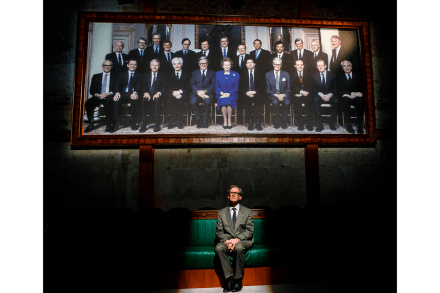
Why great speeches are made for stage and screen

From our UK edition

Curious thing, writer’s block. If you believe it exists. Terry Pratchett didn’t. ‘There’s no such thing,’ he said. ‘It was invented by people in California who couldn’t write.’ He had a point. Writers write, period. But there is a syndrome in my house known as Not Starting Anything New Through Fear Of It Being Not Very Good. Less catchy than ‘writer’s block’, but arguably a more accurate description of the condition. My Covid-induced version of the above involved endlessly ‘honing’ an already completed play about my mother to devastatingly little effect and musing on the oldest creative question of all: is there a formula for writing success, and if so what is it?

Pita Shack flashback

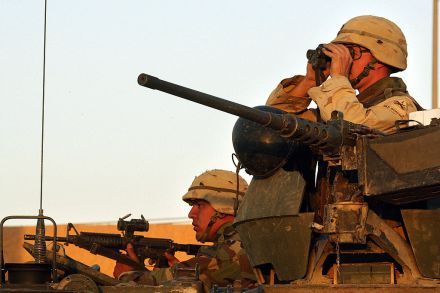
Friday afternoon in the Pita Shack diner in the northern suburbs of Austin, Texas and I was surrounded by Iraqis. There was even a picture of a sweet-looking Marsh Arab girl in her papyrus boat hanging on the wall. It was all unexpected but strangely familiar, stirring memories of Delta-30’s turret-scanning the junction of Red 11 in downtown Al Amarah back in 2004. During the first Gulf War in 1991, the Maysan province around Al Amarah was the site of local uprisings against Saddam Hussein. In retaliation he drained the region’s marshes to deprive the local Marsh Arabs of the waters on which their livelihoods and 6,000-year-old culture depended.

pita shack

Sumptuous and very promising: A Suitable Boy reviewed

From our UK edition

Nobody could argue that Andrew Davies isn’t up for a challenge. He’d also surely be a shoo-in for Monty Python’s Summarise Proust competition. After turning both War and Peace and Les Misérables into satisfying, unhurried six-part drama series, he’s now taken on Vikram Seth’s 1,300-page novel A Suitable Boy. The first episode started with a wedding that immediately established the programme’s visual sumptuousness, while also serving as a handy introduction to the main characters. The groom’s rebellious brother Maan, for example, chafed at the idea that he was supposed to be next.

The Middle East mess has nothing to do with Donald Trump

Last week, like millions of others across the globe, I emerged blinking and stumbling from my fallout bunker to assess the destruction wrought by World War Three. There were a few surprises in store. Nukes had failed to rain from the sky. Critical infrastructure remained intact. Rationing was not yet in force. People still weren’t going to see Cats. World War Three, historians will note, consisted of: an assassination, a poorly organized funeral, the histrionic launching of a few sketchy rockets, an Everest of bad tweets and the downing of a passenger plane. But one thing remained as permanent as the second law of thermodynamics: all of this was Donald Trump’s fault.

middle east messs

Few have ‘empowered’ Iran more than Lindsey Graham

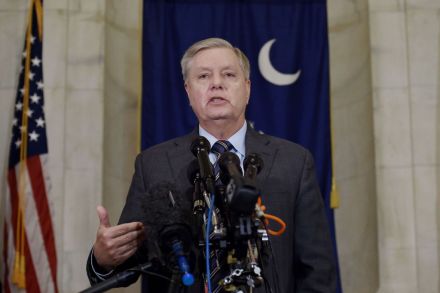
When Republican senators Mike Lee and Rand Paul walked out of a military briefing Wednesday over the recent US attack that took out top Iranian general Qasem Soleimani, they were not happy about how that exchange went.Sen. Paul said the briefing was 'less than satisfying', blasting the meeting as 'insulting to logic and the Constitution'.A fiery Sen. Lee elaborated further. 'I had hoped and expected to receive more information outlining the legal, factual, and moral justification for the attack,' Lee said. 'The briefing lasted only 75 minutes, whereupon our briefers left. This, however, is not the biggest problem I have with the briefing, which I would add was probably the worst briefing I've seen, at least on a military issue, in the nine years I've served in the United States Senate.

lindsey graham

Trump’s foreign policy isn’t working

An end to endless wars? Get real. America’s foreign policy since the end of the Cold War is a never-ceasing tragedy. One front improves, another worsens. On Sunday, it emerged that the Taliban council had agreed a ceasefire in Afghanistan, a development that could at last end America’s longest war, its 18-year military engagement in the graveyard of empires. Maybe President Donald Trump really could make good on his promise to end America’s hopeless and destructive foreign entanglements. At the same time, however, Iraq has fallen into greater chaos again — because America can’t stop meddling. George W. Bush’s other great disaster continues. The failure cycle whirs.

baghdad iraq foreign policy

Six poems for Veterans Day

James Jeffrey served in the British Army for nine years, from his commissioning as a second lieutenant shortly after 9/11 to leaving as a captain in 2010. He served in Iraq in 2004 as a tank commander with the Queen’s Royal Lancers, providing armored support to the 1st Battalion, The Princess of Wales’s Royal Regiment, followed by another tour in 2006. He deployed to Afghanistan in 2009 with the headquarters of the Welsh Guards Battle Group on Operation Herrick 10, during which the regiment’s commanding officer, Lt. Col. Rupert Thorneloe, was killed by a Taliban IED and became the first commanding officer killed in action since the 1982 Falklands War. Jeffrey now works as a writer and a journalist. Read his Veterans Day essay on al-Amarah here.

veterans
iraq amarah veterans

Gunning it into al-Amarah

James Jeffrey served in the British Army for nine years, from his commissioning as a second lieutenant shortly after 9/11 to leaving as a captain in 2010. He served in Iraq in 2004 as a tank commander with the Queen’s Royal Lancers, providing armored support to the 1st Battalion, The Princess of Wales’s Royal Regiment, followed by another tour in 2006. He deployed to Afghanistan in 2009 with the headquarters of the Welsh Guards Battle Group on Operation Herrick 10, during which the regiment’s commanding officer, Lt. Col. Rupert Thorneloe, was killed by a Taliban IED and became the first commanding officer killed in action since the 1982 Falklands War. Jeffrey now works as a writer and a journalist. Read his Veterans Day poems here.

The Cheneys have always put war first and America last

Donald Trump has called the Iraq war the ‘worst single mistake’ in US history. Most Americans, including our military, agree with the president. That grand mistake should be an example to all of the tragic unintended consequences inherent in regime change. It should be an enduring reminder of the misery that can be unleashed when our leaders don’t think soberly about what happens after they start a war. The Iraq war was started by Dick Cheney along with President George W. Bush in 2003. In the 16 years he’s had to reflect, the former vice president has been clear for many years that he would not hesitate to do it all over again. His daughter, Rep.

cheneys

Katharine Gun: the spy who tried to stop the Iraq war

From our UK edition

In his memoir of office, Decision Points, George W. Bush writes about going to see Tony Blair in the Azores in the last days before the invasion of Iraq in 2003. It was a crisis meeting because they had failed to get a second UN resolution, to give legal cover for the war. This was thought crucial to help Blair and his government survive a no-confidence motion in the House of Commons. After the meeting, the Brits and the Americans shook hands on the tarmac and walked to their planes. Bush remembers his national security adviser, Condoleezza Rice, saying to him: ‘I hope that’s not the last time we ever see them.

A new ‘War on Terror’ is a terrible idea

Does anyone in their right mind really think the ‘War on Terror’ waged by the United States since 9/11 has been a successful policy? , The terrorist group the US claimed it was most determined to destroy, al-Qaeda, has surged in strength over the last few years. ISIS sprouted in Iraq and Syria as a direct consequence of the general ‘War on Terror’ posture, which had its most egregious manifestation in the 2003 invasion. Today, the US bombs countries and stations troops all over the world with the nebulous goal of ‘defeating terrorism,’ which of course is just a tactic and can never be truly ‘defeated’ – or so we once thought.Back in the George W.

war on terror

The uneasy legacy of Christopher Hitchens

Winston Churchill looked forward to an expansive lunch. He was in his late seventies, prime minister for a second time, and this cabinet meeting was dragging on. It was nearly one o’clock and they were down to the eleventh item on the agenda, a memorandum on town planning. Wearily, Churchill said: ‘Ah yes, I know town planning, densities, broad vistas, open spaces...give me the romance of the 18th-century alley with its dark corners, where footpads lurk.’ It is possible to have this exact feeling watching cable news today. Somehow, you’re watching CNN or MSNBC, and some bloviating no-mark like Don Lemon or Chris Hayes or Ezra Klein is grimacing through air time.

christopher hitchens

After 30 years of bad wars, who thinks one with Iran will be good?

Don’t believe the hawks who tell you they don’t want a war with Iran. Instead, ask them if they’d go to war to stop Iran from getting nuclear weapons, or if they’d prefer war to peace if peace meant the mullahs’ regime could cling to power. War is a means to an end, and the hawks believe the ends of regime change and nuclear nonproliferation justify war, if it comes to that. Peace too is only a means to an end, and war is what happens when the means of peace are deemed insufficient.President Trump has a cooler head than most of his critics when it comes to nuclear weapons, as he’s proved so far with his North Korea policy. And North Korea actually has the bomb, which Iran is some distance from possessing.

bad wars