Iran

Iran’s useful idiots: British complicity in Tehran's terror

It is still unclear what will happen next in Iran. I fervently hope the current protests will cause the tyrants of Tehran to fall. It would be ideal if they were replaced by an order that allowed the population of 90 million to choose who governs them and build a country that reflects joy, hope and modernity rather than Ali Khamenei’s brutal Islamist fever dream. I also know how unlikely that is. Revolutions tend to produce disorder and repression, not order and freedom. After the failure of the Constitutional Revolution in 1911, there was a decade of chaos, fragmentation and insurgency in Iran until Reza Khan seized power and founded

Portrait of the week: Digital IDs ditched, unrest in Iran and an app to check you're not dead

Home The government dropped plans to make digital ID compulsory to work in Britain. Sir Keir Starmer, the Prime Minister, called it ‘disgraceful’ that Grok, the online tool on Elon Musk’s X, could undress pictures of people. X limited the function to subscribers, but Liz Kendall, the Technology Secretary, said that the government would back Ofcom if it decided to block X in Britain. ‘They just want to suppress free speech,’ Mr Musk wrote on X. Sir Keir, due to visit China this month, was warned by some Labour MPs not to approve a vast new Chinese embassy in London. The government signalled a U-turn on increases to business rates

Can Iran’s protestors keep going?

As Iran enters the third week of nationwide protests, the pace of events has become dizzying. News breaks by the minute, and, as Persians say: ‘One eye is filled with tears, the other with blood.’ We are all waiting anxiously for a change that feels both inevitable and profoundly uncertain. For five to six consecutive days now, the Iranian regime has completely severed the country’s communication with the outside world. Not only has internet access been cut, but even ordinary landlines and direct mobile phone calls to and from Iran have become impossible. In a digital age in which nearly every aspect of daily life depends on connectivity, the blackout

Why Nadhim Zahawi (and Reform) are making a mistake

50 min listen

This week on Quite right!, Michael and Maddie examine Nadhim Zahawi’s dramatic defection to Reform UK and ask whether it strengthens the party’s insurgent credentials or exposes a deeper strategic mistake. Is Reform becoming a genuine outsider movement, or simply a refuge for disaffected Tories? And what does the pattern of Boris-era defections reveal about credibility, competence and the challenge of turning populist energy into a governing force? Then, Iran: mass protests against the regime have erupted onto the streets of Tehran and beyond. Are these demonstrations the prelude to real regime change – or another brutal crackdown waiting to happen? And what role should the West, and the United

What the Iranian uprising means for the Middle East

The Middle East has long been organised around two competing logics: pragmatic alignment and ideological alignment. Before the 7 October war, these logics produced two regional blocs that structured most political, diplomatic and security behaviour. The Palestinian attack and invasion that triggered the war ruptured both systems. Incentives shifted, alliances frayed, and assumptions collapsed. What followed has not been the emergence of a calmer order, but a reconfiguration in which ideology has returned in new forms and pragmatism has narrowed, and hardened, requiring deliberate encouragement and support to survive. For more than a decade, regional politics moved along these two tracks. Pragmatic alliances rested on interests that could be negotiated,

Justin Marozzi, Lisa Haseldine, William Atkinson & Toby Young

32 min listen

On this week’s Spectator Out Loud: Justin Marozzi analyses what Trump’s coup in Venezuela means for Iran; Lisa Haseldine asks why Britain isn’t expanding its military capabilities, as European allies do so; William Atkinson argues that the MET’s attack on freemasonry is unjustified; and, Toby Young explains why the chickenpox vaccine is a positive health measure. Produced and presented by Patrick Gibbons.

What Trump’s coup in Venezuela means for Iran

In a city awash with visual propaganda, one mural in Caracas is especially striking for the western visitor. In it, Jesus Christ stands alongside Imam Mahdi, a prophesied messianic figure who many Muslims believe will appear with him during the End Times to restore peace and justice to the world. There is only one Venezuelan – the late president Hugo Chavez – among the six smaller figures on the mural. Three are Iranian, including Qasem Soleimani, a commander in the Islamic Revolutionary Guard Corps elite Quds Force, killed by a US airstrike in 2020. One is an Iraqi commander killed in the same strike, and the last is Lebanese, Imad

Iranians are risking everything to convert to Christianity

Apostasy – specifically, conversion to Christianity from Islam – is punishable by death in Iran. Suspected Christians are routinely imprisoned and tortured. Despite this, evangelical Christianity is sweeping through Iran. A 2020 survey of 50,000 Iranians conducted by a Dutch NGO, the Group for Analysing and Measuring Attitudes in Iran, suggests that there could be more than 1.2 million Christian converts. In a country with a population of 90 million, that’s a sizeable portion – and it’s growing fast. ‘It’s probably more like two million today,’ says Father Jonathan Samadi, founder of the Persian Anglican Community of London. ‘The numbers increase every year.’ Father Jonathan converted as a young man,

The mixed legacy of Zbigniew Brzezinski, strategist of the Cold War

In the autumn of 1938, within nine weeks of each other, two boys arrived in New York, fleeing the gathering storm: a 15-year-old Jewish German and a ten-year-old Catholic from Poland. Both would repay the mortal debt they owed by dedicating their lives to the Land of the Free. The older boy was, of course, Henry Kissinger, later Grand High Poobah to Richard Nixon and Gerald Ford. The younger was Zbigniew Brzezinski, Jimmy Carter’s national security adviser from 1977 to 1981 and the subject of a magisterial biography bythe Financial Times’sWashingtonsupremo, Edward Luce. From the first, Zbigniew Brzezinski (pronounced ‘ZbigNieff BreshinSki’, as Carter helpfully informed his team) sat in Kissinger’s

Trump could bomb Iran again

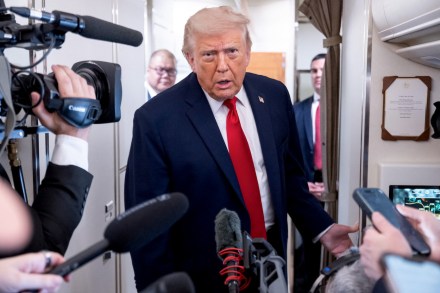
President Trump has already warned Tehran that he’ll be back if Iran tries to revive and advance its nuclear programme, following the strikes by B-2 stealth bombers. Judging by the comments of the head of the International Atomic Energy Agency (IAEA), Trump may find himself with this dilemma sooner than he thinks. Iran could return to enriching uranium in ‘a matter of months’, according to Rafael Mariano Grossi, IAEA’s director-general, in an interview with CBS News at the weekend. However, a number of questions need to be asked before the B-2s take off again from their Whiteman Air Force base in Missouri.  Trump hopes that the combination of twelve days

Peter Frankopan, Tim Shipman, Francis Pike, Hermione Eyre and George Young

42 min listen

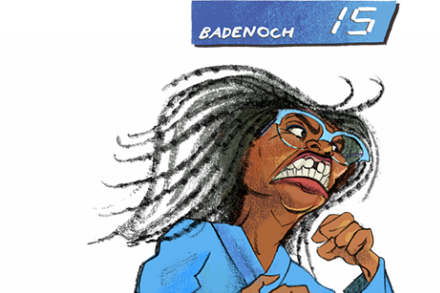
On this week’s Spectator Out Loud: Peter Frankopan argues that Israel’s attack on Iran has been planned for years (2:00); just how bad are things for Kemi Badenoch, asks Tim Shipman (13:34); Francis Pike says there are plenty of reasons to believe in ghosts (21:49); Hermione Eyre, wife of Alex Burghart MP, reviews Sarah Vine’s book How Not To Be a Political Wife: A Memoir, which deals with Vine’s marriage to ex-husband Michael Gove (28:46); and, George Young reports on the French sculptors building the new Statue of Liberty (34:45).  Produced and presented by Patrick Gibbons.

War and peace, why restaurants are going halal & the great brown furniture transfer

45 min listen

This week: war and peace Despite initial concerns, the ‘Complete and Total CEASEFIRE’ – according to Donald Trump – appears to be holding. Tom Gross writes this week’s cover piece and argues that a weakened Iran offers hope for the whole Middle East. But how? He joined the podcast to discuss further, alongside Gregg Carlstrom, the Economist’s Middle East correspondent based in Dubai. (01:51) Next: why are so many restaurants offering halal meat? Angus Colwell writes about the growing popularity of halal meat in British restaurants. This isn’t confined to certain food groups or particular areas – halal is now being offered across restaurants serving all sorts of cuisine, from

We should welcome regime change in Iran

On the first night of what Donald Trump has called the ‘12-day war’ between Israel and Iran, someone spray-painted a message in Farsi on a wall in Tehran: ‘Thank you, Israel. Hit the regime hard – and leave the rest to us.’ That graffiti encapsulated the feelings of many millions of Iranians. If you doubt this, you can read (in translation from Farsi) opposition accounts such as ManotoOfficial and IranIntlTV on Instagram or Telegram, which in the past two weeks have been posting countless messages and comments in support of Israel. These accounts are widely seen by people inside Iran, who use VPNs to get around the regime’s online censorship

Israel’s attack on Iran has been planned for years

It was clear at the time that what happened on 7 October 2023 would change the Middle East. What was perhaps less obvious was the impact it would have on the rest of the world. In addition to the suffering in Gaza, the weeks and months that followed Hamas’s horrific attacks have seen the reconfiguration of Syria, the effective dismantling of Hezbollah, the decapitation of the leadership of Hamas and now, with Iran, a time when the decision-making in Tehran, Jerusalem and Washington will have a profound effect on the shape of the emerging global order. Historians like to think about turning points and moments in the past where the

Come friendly bombs and fall on Iran

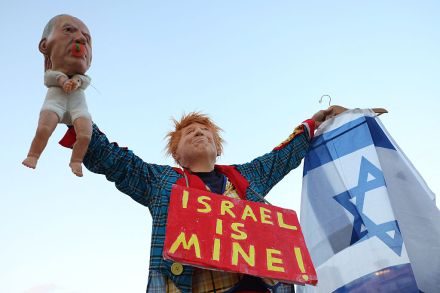
It is heartening to see the lefties out marching in defence of mullahs and their enlightened rule of Iran. The Stop the War Coalition has been organising protests the length and breadth of the country, demanding ‘Hands off Iran’. It is harder for the marchers to identify specifically with their cause than it is when they’re marching about Palestine: Iranians don’t wear keffiyehs. Perhaps they should take on their marches an intricately woven carpet or some uranium-235. Or maybe design some sort of badge that can be cheaply manufactured and somehow symbolises the country – I would suggest the image of a crane with a homosexual dangling at the end

Iran: 'what the f***' is going on?

14 min listen

It is rare to see the President so visibly frustrated (see The Apprentice, circa 2004), but after Iran and Israel seemingly ignored his ceasefire announcement – and his plea on Truth Social, ‘PLEASE DO NOT VIOLATE IT!’ – Donald Trump has come down hard on both sides. In a clip taken this afternoon he exclaimed: ‘These are countries who have been fighting so long and so hard, that they don’t know what the f*** they’re doing.’ Succinctly put by the President. The exchange of fire could be the expected tit-for-tat seen after the announcement of ceasefires in other global conflicts, but it has dampened the mood at Nato, which world

Does the government support Trump’s Iran strikes?

13 min listen

The weekend saw the US launch airstrikes on three Iranian nuclear sites, with Tehran warning of ‘everlasting consequences’. Despite an emergency Cobra meeting and Luke Pollard’s morning media round, we are still waiting for an answer on whether the government supports Trump’s action. Keir Starmer’s assured and confident position on the world stage now looks to be in peril, as he is pulled between Trump, his attorney general and the court of public opinion. Can he de-escalate? Also on the podcast, Nigel Farage delivered a speech this morning in which he announced changes to non-doms and unveiled a new ‘Britannia card’ – although most of the questions afterwards centred on

Starmer at sea, Iran on the brink & the importance of shame

46 min listen

Starmer’s war zone: the Prime Minister’s perilous position This week, our new political editor Tim Shipman takes the helm and, in his cover piece, examines how Keir Starmer can no longer find political refuge in foreign affairs. After a period of globe-trotting in which the Prime Minister was dubbed ‘never-here Keir’, Starmer’s handling of international matters had largely been seen as a strength. But as tensions escalate in the Iran–Israel conflict, global events are beginning to create serious challenges. They threaten not only to derail the government’s economic plans but also to deepen divisions within the Labour party, particularly between the leadership and much of the parliamentary party. Tim joined

The inside story of how Labour is dealing with Iran

16 min listen

This week, our new political editor Tim Shipman takes the helm and, in his cover piece, gives us the inside track on how Labour is dealing with Iran, Donald Trump and the prospect of escalating war in the Middle East. He writes that this could be the moment when all of Keir Starmer’s chickens come home to roost: his well-curated international image is at risk of crumbling as global crises present greater challenges; his hands are tied by legal advice from the controversial Lord Hermer; the Chagos Islands are being drawn into the US’s retaliation plans; and there remains the looming threat of backbench rebellion over Labour’s national security strategy.