Iran

Who’s pushing Trump to be an Iran hawk?

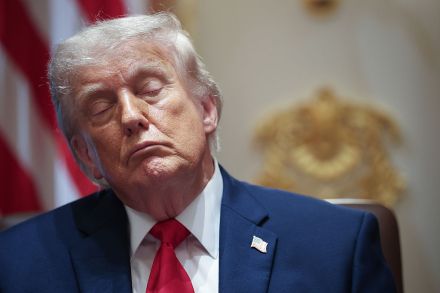
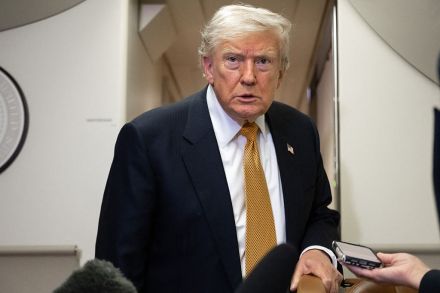
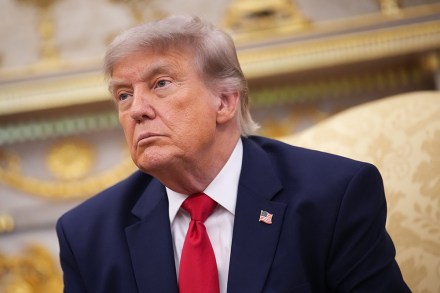
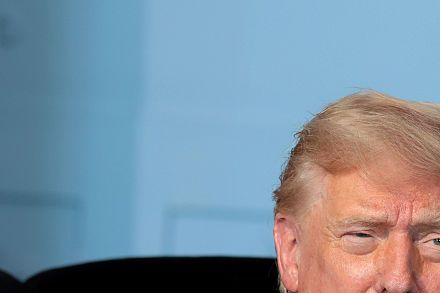
‘This never would have happened if I had been president,’ says Donald Trump, whenever the international news goes from bad to worse. It’s a line he uses a lot in relation to the wars in Ukraine and Gaza, both of which began in the interregnum between his first administration and his second. Yet the latest war, between Israel and Iran, is a different matter. Trump of course blames his predecessor, Joe Biden, who ‘made Iran rich’ with $300 billion for the evil regime’s dreaded nuclear weapons programme. It was Trump, though, who in 2018 tore up Barack Obama’s nuclear deal with Iran and in 2020 killed Qasem Soleimani, the head

Westminster waits for Donald’s decision

14 min listen

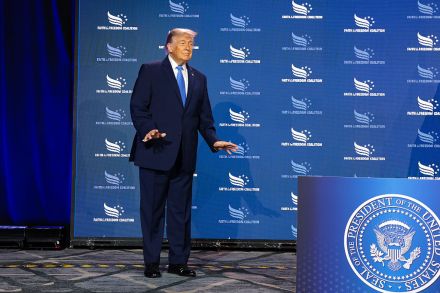
Westminster waits with bated breath to discover whether Donald Trump will ally with Israel in striking Iranian nuclear sites. The President called for ‘UNCONDITIONAL SURRENDER!’ from Tehran overnight. The day to day of domestic politics appears diminished by comparison with the ever-looming threat of an escalated conflict… But the show must go on: today’s PMQs saw Chris Philp (why not Robert Jenrick?) and Angela Rayner deputising for their absent leaders; Liz Kendall introduced legislation to enact cuts to personal independence payments for disabled people; the Commons voted to decriminalise abortion at any point until birth; and the Office for National Statistics (ONS) is up to its old tricks, announcing that

Operation Rising: will Trump get dragged into the Israel-Iran conflict?

20 min listen

Relations between Iran and Israel are deteriorating rapidly, with comparisons being drawn to Israel’s 1981 strike on Iraq’s Osirak nuclear reactor. Israeli Prime Minister Benjamin Netanyahu appears to be advocating for regime change in Tehran, reportedly encouraging the United States to take military action. Donald Trump, who previously came close to authorising a strike, is now said to be more cautious – mindful of the risks of exposing American forces abroad and being drawn into another protracted conflict, contrary to the non-interventionist platform on which he was elected. The Iranian regime, built on a foundation of resistance, is responding to Israel’s attacks while also expanding its network of regional proxies,

Israel strikes Iran – how will Iran retaliate?

14 min listen

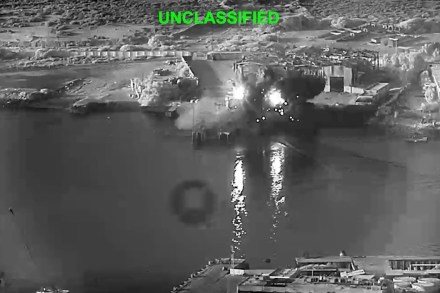
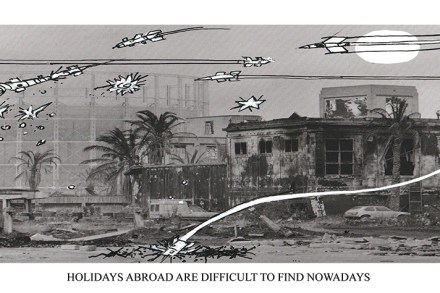
Israel struck military and nuclear targets in Iran overnight in a major escalation of hostilities in the Middle East has begun further strikes on Friday. Iran has vowed retaliation though President Trump has warned Iran and encouraged the Iranians to continue negotiations over their nuclear programme. Further talks had been due to take place this weekend. What’s Israel’s objective? And does this underline the unpredictability of geopolitics, at a time when the UK has pledged significantly more money for defence?  Patrick Gibbons speaks to James Heale and Michael Stephens, associate fellow at RUSI. Plus: updates on assisted dying and the government’s plans for welfare. Produced by Patrick Gibbons.

Paul Wood, Katy Balls, Olivia Potts, Benedict Allen, Cosmo Landesman and Aidan Hartley

40 min listen

On this week’s Spectator Out Loud: Would Trump really bomb Iran, asks Paul Wood (1:38); Katy Balls interviews Health Secretary Wes Streeting on NHS reform, Blairism and Game of Thrones (8:38); Olivia Potts examines the history – and decline – of the Easter staple, roast lamb (18:25); the explorer Benedict Allen says Erling Kagge and Neil Shubin were both dicing with death, as he reviews both their books on exploration to earth’s poles (22:13); Cosmo Landesman reflects on what turning 70 has meant for his sex life (28:46); and, Aidan Hartley takes us on an anthropomorphic journey across Africa (33:55).  Produced and presented by Patrick Gibbons.

Would Trump really bomb Iran?

A satellite picture shows six American B-2 Stealth bombers parked on the runway at Diego Garcia. The planes – each with a distinctive flying-wing shape, like a bat – are sinister, otherworldly, and seem like a portent. Surely that’s the idea. Donald Trump has warned the Iranian leadership there ‘will be bombing the likes of which they have never seen before’ if they don’t agree to limit their nuclear programme. The US is also sending a second aircraft carrier to the Middle East and anti-ballistic missile batteries to Israel. This is Trump’s ‘coercive diplomacy’, and so far, it’s working. In his first presidency, Trump resisted the war hawks, such as

Ukraine is just one part of Trump’s Great Game

Washington D.C. For Donald Trump and Vladimir Putin, it’s a case of today Ukraine, tomorrow the world. In their much-hyped telephone call this week, the Russian leader didn’t appear to give much away: a step towards a sort-of ceasefire, a prisoner swap and a few other bits and bobs. But Putin knows that Trump wants a lot more than just an agreement on the Donbas. Settling the most significant conflict in Europe since the second world war is merely a prelude to a much bigger deal in the Holy Land, a truly historic arrangement that could satisfy the Donald’s desire to be thought of as a peace legend. That’s why

Extraordinary: The Seed of the Sacred Fig reviewed

The Seed of the Sacred Fig is by the Iranian filmmaker Mohammad Rasoulof and all you need to know is that it is extraordinary. What you don’t need to know, but may like to know, is that Rasoulof, who has already been imprisoned multiple times by the authorities, filmed it clandestinely while directing remotely from an undisclosed location and then had to flee Iran on foot. The journey was extremely complicated and dangerous and took 28 days. You could never accuse Rasoulof of taking filmmaking lightly. But that’s not the bottom line. The bottom line is: it’s enthralling cinema. The film follows a family in Tehran. Iman (Misagh Zare) is

Will the Syrian Civil War create another ISIS?

There are unintended consequences, and then there are unintended consequences. What we are seeing in Syria, as Aleppo and Hama fall (and Homs braces itself) to a coalition of anti-regime forces whose DNA is to be found in al-Qaeda et al, is an unintended consequence of Israel’s bombardment in Syria of Iran-funded pro-Assad groups, and the pulverising of Hezbollah in Lebanon. An unintended consequence of the weakening of Iran and its Axis of Resistance. For the three pillars on which Bashar al-Assad props up (for the time being) his murderous kleptocratic narco-state – Iran, Hezbollah and Russia – are, respectively, on their ‘best’ behaviour in the hope of talks with

A pause between wars

‘What is to stop it happening again?’ was the pertinent question put to me by a Lebanese friend this week as we discussed over a mezze the announcement of a ceasefire between Israel and Hezbollah. Given what we know of the terms agreed between the combatants, the answer seems to be, ‘Not a lot.’ Generally, I am not one to pour cold water or see the glass half empty. But beyond welcoming a cessation in the brutal meeting out of death by bombardment on the civilians in both Lebanon and northern Israel, it is hard to see the ceasefire agreement as sustainable in the long term.   Since Hezbollah weighed in

Iran is playing a dangerous game

A drone exploded in a sleepy Israeli seaside town yesterday. The target of the attack was Benjamin Netanyahu. By luck, the drone missed its target – Netanyahu’s home – and no one was hurt in the explosion. Hezbollah launched three drones from Lebanon toward Caesarea. Two were shot down by the Israel Defense Forces but, worryingly, the third arrived undetected. Sirens, which are supposed to warn civilians of an impending attack, did not sound, meaning no one knew they should seek refuge in a bomb shelter. The Israeli Prime Minister claimed he was not at home when the drone hit. An Iranian – or Iranian-backed – assassination of the Israeli Prime

The Iranian diplomat trying to stop Armageddon

‘The embassy is being invaded. The ambassador has had to lock himself in his office upstairs, and there are people on our balcony. Your government is responsible for the safety of our diplomats and embassy. We will hold you accountable…’ The voice at the other end of the line was calm, though there was no mistaking the underlying aggression. ‘The Vienna Convention is very clear about the responsibility of host countries for diplomatic missions.’ I received that call in the autumn of 2017, when I was coming to the end of my second year as Britain’s ambassador to Iran. A large group of demonstrators had been campaigning loudly outside the

Israel's revenge, farewell Fraser & the demise of invitations

37 min listen

This week: Israel’s revenge and Iran’s humiliation. As the anniversary of the October 7th attacks by Hamas approaches, the crisis in the Middle East has only widened. Israel has sent troops into southern Lebanon and there have been attempted missile strikes from the Houthi rebels in Yemen and from Iran. Is there any way the situation can de-escalate? And how could Israel respond to Iran? Former BBC foreign correspondent Paul Wood and defence and security research Dr Limor Simhony join the podcast (1:03). Next: it’s the end of an era for The Spectator. This issue is Fraser Nelson’s last as he hands over the reins to Michael Gove. Having spent 15

Israel was right to ignore the West

There are sources in the Jewish tradition that warn against exultation at the downfall of one’s enemies. But I am not Jewish, and so I have exulted greatly these past two weeks. If you follow most of the British media, you may well think that the past year involves the following events: Israel attacked Hamas, Israel invaded Lebanon, Israel bombed Yemen. Oh and someone left a bomb in a room in Tehran that killed the peaceful Palestinian leader Ismail Haniyeh. Kamala Harris warned that the IDF shouldn’t go into Rafah. As she wisely said: ‘I’ve studied the maps’ Of course all this is an absolute inversion of the truth. Hamas

Is Israel trying to drag America into a war with Iran?

The American general David Petraeus famously asked of the invasion of Iraq: ‘Tell me how this ends.’ That’s the question as Israeli bombs and missiles fall on Lebanon and the few missiles Hezbollah has sent in response are intercepted. Iran’s ‘axis of resistance’ seems paralysed with indecision. Does Benjamin Netanyahu take this as a win, the vindication of the enormous chance he took by opening a new northern front? Or, like a gambler intoxicated by success at the tables, does he press on? More airstrikes, followed by an invasion of Lebanon… and then the bombers fly on to Iran?  Some Israelis commentators are already calling this the Third Lebanon War

Iran and Hezbollah don’t want a war with Israel

Hezbollah’s response to the killing of senior official Fuad Shukr, when it finally came, was a more minor event than anticipated. For weeks, both the Lebanese Shia Islamist group and its Iranian patron have been threatening a terrible revenge for the recent assassinations in Beirut and Tehran. It is now clear, however, that neither Hezbollah or Iran wishes to risk a descent to all put war at the present time. Iran appears to have relegated its response to the killing of Hamas leader Ismail Haniyeh in Tehran to some point in the future. Hezbollah, meanwhile, sought to target two sites of high significance – the Mossad headquarters, and the HQ

‘I came here to escape radical Islam’: the asylum seekers who understand the rioters’ fears

Sousou is a 24-year-old Syrian-Palestinian woman who arrived in Britain a few weeks ago in a rubber dinghy from Calais. Her husband was also on the boat, along with 70 other men and women. Sousou was (and is) pregnant and the passengers all nearly drowned – as her aunt had done on a previous crossing attempt. There were too many people on board and the overloaded dinghy began to take in water. Sousou and her husband were rescued by the British coastguard and for a while they felt safe – until the riots began. Now, after things seem to have quietened down, she talks to me from a hotel in

The new alliances dedicated to destroying democracy

After staging a failed coup and going to prison, the Venezuelan army officer Hugo Chavez ran to be president in 1998, campaigning against corruption and offering revolutionary change. His nation was seen as a prosperous beacon of stability, built on its great oil wealth, envied by many people elsewhere in the region. He won by promising to tackle the inequality that scarred it so badly and take on the oligarchs enriching themselves through favours and nepotism. Western celebrities, journalists and politicians, from Sean Penn through to Jeremy Corbyn, started flocking to South America to hail their new progressive hero supposedly fighting for social justice. As Venezuela slid to ruin, Russian

Anti-Semitism has returned to French politics

New Caledonia is an archipelago in the South Pacific not far from Australia. James Cook discovered it in 1774, but, after concluding that too many languages were spoken there, he declined to annex it to the British Empire. France, not as cautious, made it a distant colony under Napoleon III. Today, riots are convulsing the territory. Supposedly ‘decolonial’ in aim, they are most certainly violent and fuelled by the anti-white racism that, from London to Brussels and Paris, has become the trademark of the new radical left. The strangest thing is that among the flags of the Kanak independence movement, one also sees Azeri flags. Why Azeri? Because Azerbaijan, which

Who has the worst voice in parliament?

For the first time in more than two decades we are dog-less, and the house feels horribly empty. Our Patterdale terrier, Bonnie, led a long, vigorous life but her balance had gone and her breathing was heavy, so we called the vet. Patterdales are little imps and Bonnie was ‘known to the police’. I never discussed politics with her but she liked Lib Dems; that is, she liked biting them. A public footpath bisects our garden. Most ramblers escaped intact but Bonnie had a habit of nipping tall, grey-ponytailed men with walking poles. She nipped the vicar, too, tearing a cartoon-style square out of the seat of his chinos. The