Iran

My letter from Chris Packham

From our UK edition

I do not know Chris Packham, the BBC nature broadcaster, personally, but he wrote me a letter last month, enclosing a book called Manifesto, The Battle for Green Britain by Dale Vince which, he tells me, ‘has something very important to say at this most important time’. In his letter, Chris says that ‘irrespective of any party politics’, ‘The coming election will be the most important of our lifetimes’ because we are ‘halfway through the last decade’ left to avoid ‘the worst of climate breakdown’. So ‘we must help young voters navigate the new voting rules’. Politics has ‘become the final frontier for a real greener Britain’. What Chris does not mention is that party politics is very important in this most important book.


The Lebanese always return home

From our UK edition

Beirut You might have thought that the threat of the Gaza war spiralling into an all-out regional conflagration, along with breathless travel advice from western governments urging their nationals to leave the country, would have deterred Lebanon’s expats from flying home to celebrate Eid al-Fitr this year. Not one bit. Flights, hotels and restaurants were fully booked despite Iran’s drone strike. The Lebanese know that even if there is fighting (and in South Lebanon, there is on an almost daily basis), if it isn’t on your doorstep, there’s no reason to stop the party. The Lebanese know that even if there is fighting, if it isn’t on your doorstep, there’s no reason to stop the party In any case, the Lebanese always think they have the inside track.

What Iran’s attack on Israel means for the Jewish state, America and the region 

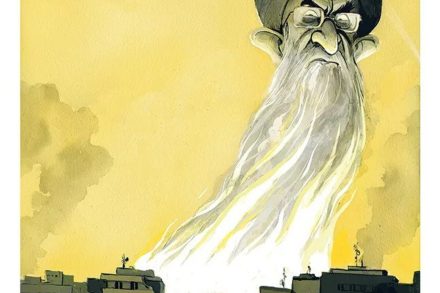
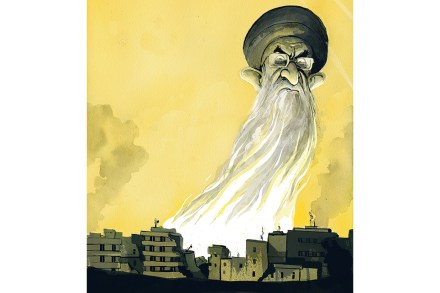
Iran’s unprecedented attack on Israel Saturday night represents a dangerous escalation for three reasons. The first is its scale, some 300 drones and missiles. Second, it marks the first time the Islamic Regime has launched a lethal attack on Israeli territory from Iran itself, rather than through proxies. Most important of all is the combination of the first two: a major attack launched against Israel from Iranian territory. Although Israel, the US, the UK and, surprisingly, Jordan managed to shoot down nearly all the incoming drones and missiles, it was the thought that counts. And it was a very dangerous thought. Within hours, the Iranian attack changed the region’s strategic landscape.

israel iran

On the anniversary of the Iraq invasion, spare us the sermons

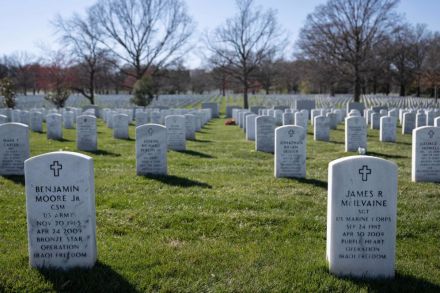
Twenty-one years ago today, the United States committed its worst foreign-policy mistake in generations: invading Iraq to overthrow Saddam Hussein, the despot who ruled the Arab country with an iron fist for nearly a quarter-century. The entire operation was supposed to be a “cakewalk,” in which the mighty US military, stocked with the best technology and weapons the world had to offer, would pummel a decrepit Iraqi army that was hobbled by international sanctions for the better part of a decade. The mood at the time was serious but stoic. Donald Rumsfeld, the US defense secretary, argued that the entire war wouldn’t last more than five months.

iraq war

Nixing BRICS: how to counter the China-led alliance

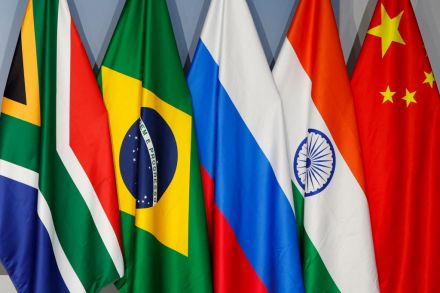
Americans are used to exercising influence through international entities such as NATO, the World Trade Organization or the World Bank. Each of these groups was set up with American leadership or at its instigation; all have been used to advance Washington’s vision of global liberal-democratic capitalism. No comparable international organization or collection of nations has been influential since the Soviet Union’s collapse. That may be changing. The so-called BRICS alliance (its founding countries were Brazil, Russia, India, China and South Africa) recently added new members Iran, Ethiopia, Egypt and the United Arab Emirates.

BRICS

Biden’s action in Iraq and Syria is merely delayed reaction

What do you think of the apothegm “Better late than never?” I think it is often dubious. For confirmation, I adduce the airstrike the Biden administration just conducted against eighty-five targets in Iraq and Syria. The attacks, against infrastructure associated with Iran’s Revolutionary Guard, are billed as the opening salvo in response to last week’s drone attack by Iranian assets in Jordan that left three Americans dead and more than forty injured. Taking a page from an earlier, square-jawed time, officials from the administration tersely commented that America’s “multi-tiered” response would continue at a “time and in a manner of our choosing.”  Spoken like a real administration. I wonder from what storeroom they got the script?

air strikes iraq syria

What are Biden’s options on Iran?

The drone strike that struck near the sleeping quarters of a small US outpost in northeastern Jordan, killing three American troops in the process, has landed like a thud in the corridors of the Biden administration. Hawkish lawmakers who have been jonesing to bomb Iran into the Stone Age for years, such as Lindsey Graham and Tom Cotton, are using the weekend’s travesty to push the argument to an even higher decibel. The logic: Iran and its proxies need to understand that the US won’t be pushed around. It’s an emotionally satisfying response, but one that could get the United States into a heap of trouble if not thought through and tailored appropriately. President Biden and his advisors have spent the last forty-eight hours talking through options.

joe biden iran

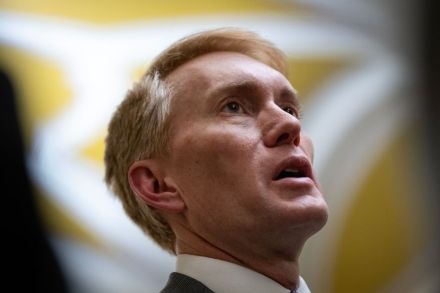
Senator Lankford defends his immigration deal

Senate Republicans who are negotiating an immigration reform bill with Democrats are defending their efforts after conservatives reacted angrily to leaked details for the deal. The lead negotiator, Senator James Lankford, said on Fox News Sunday that his detractors are relying on “internet rumors” to fuel their opposition to the bill.“This bill focuses on getting us to zero illegal crossings a day,” Lankford said. “There’s no amnesty, it increases the number of border patrol agents, it increases asylum officers, it increases detention beds so we can quickly detain and then deport individuals.

james lankford

How dangerous is the Sunni-Shia schism?

From our UK edition

In 2014, with the Middle East convulsed by the murderous, self-styled Islamic State, a Daily Mail reader wrote a letter to the editor which began: ‘Are you confused by what is going on in the Middle East? Let me explain...’ Aubrey Bailey went on to describe the dizzying complexity of diplomatic relationships thrown into turmoil: So, some of our friends support our enemies and some of our enemies are our friends, and some of our enemies are fighting our other enemies, whom we don’t want to lose, but we don’t want our enemies who are fighting our enemies to win... And all this was started by us invading a country to drive out terrorists who weren’t actually there until we went in to drive them out – do you understand now?

Why hasn’t Hamas freed its American hostages?

Hamas’s most valuable assets are the American hostages it holds. That simple fact means the terrorist organization will demand the highest value in return. What can America give Hamas in exchange? Not prisoners, since the US doesn’t hold any Hamas fighters. That means the US cannot follow the Israeli pattern of giving Hamas three Palestinian prisoners in exchange for every one held by Hamas. Nor can America provide boatloads of cash, as the Biden administration has for Iran. Biden could continuing giving Iran money, but that is much harder in the midst of war. And it is untenable politically to pay Hamas directly while the fighting continues. The Biden team might promise to help rebuild Gaza later, but that’s not valuable to Hamas right now, as it fights for its life.

hamas

Facing the facts of the West

The century began with a global celebration — the West’s belief in liberal democratic capitalism had battled foes for centuries and emerged victorious. All that remained was for the rest of the globe to melt into the West’s soft and loving embrace. Two decades in, things look much less rosy. China’s rapid rise has not spurred democratization, as many suggested it might; instead it has nourished a massive ideological and political competitor that may supplant the West not only economically but as an arbiter of global culture and behavior. Western decline is not yet inevitable, but Western values will survive and spread only if leaders recognize two clear facts. The first is that the spread of Western values has in large part been due to the dominance of Western power.

west

Alan Dershowitz: when Israel must consider the nuclear option

Professor Alan Dershowitz is one of Israel’s most prominent defenders outside the Jewish state. He has just written — in record time — a book about the events of October 7: War Against the Jews — How to End Hamas Barbarism. It will be published next month and will argue, among other things, that the Hamas attack “has required Israel to consider its nuclear option as a last resort to assure its survival.” I spoke to Professor Dershowitz and asked him first, about another of the book’s arguments, that there should be no absolute distinction between civilians and combatants in Gaza, but instead “a continuum of civilianality.” "It existed in Nazi Germany," he said.

dershowitz nuclear option

Time for Biden to change course from Obama’s failed Middle East policies

When a long-silent former president finally speaks out, the public listens. So do foreign leaders, especially when the former president is closely tied to the current one. That’s why Barack Obama’s comments on the war in Gaza attracted attention.  Anyone who remembers President Obama’s foreign policy knew what to expect: criticism of Israel and a delicate dance around Iran’s malign behavior. In fact, he did not mention Iran at all. He totally ignored their role. His audience expected him to add a few words of moral self-righteousness, warning Israel about future civilian casualties, as if Israeli Defense Forces hadn’t taken enormous and costly steps to avoid them.

biden obama resize

Joe Biden’s Middle East diplomacy is a wreck

From our UK edition

Joe Biden prides himself on his decades of foreign-policy experience, his ability to talk tough yet be kind, and his talent for bringing opposing sides together. Touching down in Israel today, he gave Bibi Netanyahu a big hug – quite the gesture – and promptly told him he believed that ‘the other team’ – i.e. Hamas, not Israel – was responsible for the bomb that struck a hospital in Gaza last night, killing many of non-combatant Palestinians and inspiring another wave of anti-Israel protests. Biden will now set about trying to help release the hostages held by Hamas and persuading local powers to allow a secure flow of humanitarian aid into Gaza.   Israel will be grateful for Biden’s show of support.

‘The mask has slipped’ – Tuvia Gering on China, Israel and Hamas

From our UK edition

43 min listen

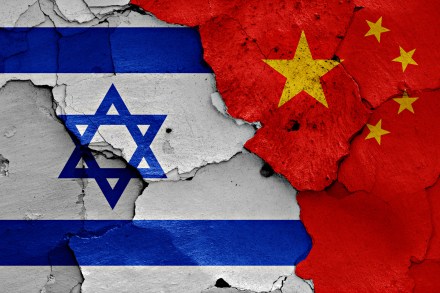
When China brokered a historic detente between Saudi Arabia and Iran earlier this year, it seemed that a new phase in world history – and certainly in Chinese foreign policy – had opened up. Instead of the US being a policeman of the world, it was the rising power, China, that was stepping into that role. Whereas Chinese foreign policy had previously only really cared about promoting trade and silencing dissidents, it seemed that perhaps, now, Beijing was taking a more leadership role in global diplomacy and security issues. And yet the events of the last week and China’s response to them have shown that perhaps the country isn’t ready for that responsibility just yet.

Paul Wood, James Heale and Robin Ashenden

From our UK edition

23 min listen

This week Paul Wood delves into the complex background of the Middle East and asks if Iran might have been behind the Hamas attacks on Israel, and what might come next (01:11), James Heale ponders the great Tory tax debate by asking what is the point of the Tories if they don’t lower taxes (13:04) and Robin Ashenden on how he plans to introduce his half Russian daughter to the delights of red buses, Beefeaters and a proper full English (18:36).

What Iran gains from the conflict in Israel

From our UK edition

A little more than a week before Hamas carried out its Operation Al-Aqsa Flood, the US National Security Advisor, Jake Sullivan, said: ‘The Middle East region is quieter today than it has been in two decades.’ Sullivan was expressing a consensus view, one apparently shared by the Israeli government. Then came the attacks of last weekend and, as the Israeli President, Isaac Herzog, said, ‘Not since the Holocaust have so many Jews been killed in one day.’ The surprise attacks have been called Israel’s 9/11, its Pearl Harbor, and so the question Israelis are asking is: how could this happen? And of more consequence, perhaps: who was really behind it? The sheer scale of the attack may not have been planned.

joe biden middle east foreign policy

Biden must rethink US policy in the Middle East

Responsibility for the catastrophe now unfolding in the Middle East belongs to Hamas and its sponsor, Iran. The atrocities we are now discovering — the deliberate killing of innocents, the capture of hostages — were an integral part of Hamas’s military strategy and grew directly out of its vicious hatred of all Jews — and of Western civilization. These are acts of true evil and, in committing them, Hamas has the full backing of Iran. President Biden spoke for America when he said, bluntly, “The brutality of Hamas’s blood thirstiness brings to mind the worst rampages of ISIS. This is terrorism.” It is important to begin with these basic points before discussing mistakes made by Israeli and American leaders.

Has VR finally come of age?

From our UK edition

A heavily made-up Iranian woman in bra and knickers is dancing seductively before me. We’re in some vast warehouse, and she’s swaying barefoot. But then I look around. All the other men here are in military uniforms and leaning against walls or sitting at desks, smoking and looking at her impassively. I slowly realise we are in a torture chamber and this lithe, writhing woman is dancing, quite possibly, for her life. Me? I have become one of her tormentors. You can immerse yourself in war-ruined Ukraine, go on the run from the Holocaust, become a mushroom Welcome to The Fury, a bravura attempt by Iranian artist Shirin Neshat to use virtual technology in her art. ‘Have you ever experienced VR before?

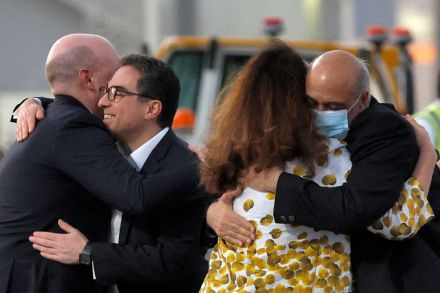
The truth about the US-Iran prisoner deal

Negotiating with Iran can be the diplomatic equivalent of a day-long migraine. While Iran policy often strikes a chord in Washington, DC, people across the political spectrum come together on this basic proposition: the Iranians are some of the best hagglers on the planet. Wendy Sherman, a career US diplomat who played a major part in negotiating the now-defunct Iran nuclear deal, referred to the Iranians as legendary for their skill at the bargaining table. Donald Trump alluded to their skill, too: “[T]]he Iranians, frankly, are great negotiators,” he said in 2016. And former ambassador (and now CIA Director) William Burns commented the same year, “The Iranians are very skilled negotiators, very tough.