Iran

US troops finally leave Syria

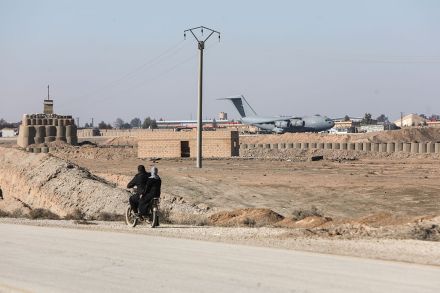
In December 2018, to the shock of pretty much everybody in the US national security establishment at the time, President Donald Trump publicly ordered the withdrawal of all US troops from Syria. The announcement caused a panic within the Defense Department, State Department and National Security Council, whose officials teamed up to dissuade Trump from going through with it. A similar story unfolded ten months later, in October 2019. Again, the bureaucracy pushed back; in October 2019, the House went so far as to pass a resolution opposing a US withdrawal, with senior Republican lawmakers signing onto the measure. Fast-forward more than six years later, and the US troop withdrawal Trump floated about during his first term is finally coming to fruition in his second.

Syria

Will Trump ‘totally obliterate’ Iran’s nuclear program – again?

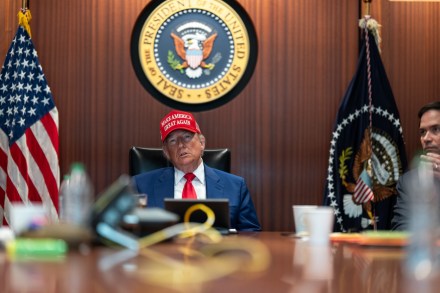
Donald Trump spent much of the second half of last year boasting about the total and utter success of his military strikes on Iran. “As you know,” he said in August, “we took out the nuclear capability of Iran, and to use the term that people try to dispute without any knowledge, it was obliterated.” Iran’s nuclear program, he assured the world, had been set back by “decades.” Yet yesterday, just six months on, there he was again – meeting Israel’s Benjamin Netanyahu once more to discuss the urgent need to prevent Iran from developing a nuclear weapon.

Why Turkey wants to help Iran

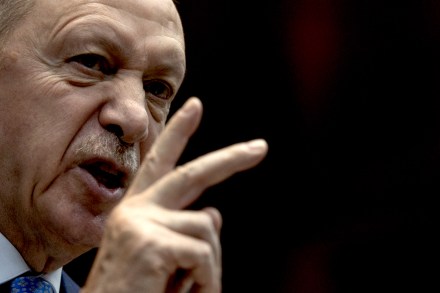
The Iranian regime remains firmly in the crosshairs of American bombers. As President Trump mulls whether to strike, Turkey is using every available channel to halt a military intervention. President Recep Tayyip Erdoğan has personally offered to mediate between Tehran and Washington. At the same time, Turkish authorities have tightened their grip on exiled Iranian opposition figures. Turkey’s sudden support for Iran is not born of friendship. Over the past two decades, the two countries have repeatedly found themselves on opposing sides. In the Syrian civil war, Iran sent Shi’a proxies to prop up the dictator Bashar al-Assad, while Turkey armed and trained Sunni rebel groups. Ankara’s push for dialogue is driven by a fear of regional destabilization.

erdoğan turkey

Why Erdogan wants to help Iran

The Iranian regime remains firmly in the crosshairs of American bombers. As President Trump mulls whether to strike, Turkey is using every available channel to halt a military intervention. President Erdogan has personally offered to mediate between Tehran and Washington. At the same time, Turkish authorities have tightened their grip on exiled Iranian opposition figures. Turkey’s sudden support for Iran is not born of friendship. Over the past two decades, the two countries have repeatedly found themselves on opposing sides. In the Syrian civil war, Iran sent Shi’a proxies to prop up the dictator Bashar al-Assad, while Turkey armed and trained Sunni rebel groups. Ankara’s push for dialogue is driven by a fear of regional destabilisation.

Iran is out of good options

Over the last week, the USS Abraham Lincoln aircraft carrier, additional F-15 fighter planes and naval vessels carrying sea-launched cruise missiles have been making their way to the Middle East in what can only be described as a bid by President Trump to squeeze Iran into submission. In case anybody doubted this is what Trump was after, he took to Truth Social early in the morning to send the Iranians a message: give me what I want or face bombing the likes of which you’ve never seen. "A massive Armada is heading to Iran. It is moving quickly, with great power, enthusiasm, and purpose,” Trump wrote. "Hopefully Iran will quickly “Come to the Table” and negotiate a fair and equitable deal – NO NUCLEAR WEAPONS – one that is good for all parties.”What deal is Trump referring to?

Iran

The censors are winning

They say you should never meet your heroes, a rule that is not always correct. But I did have a salutary session some years ago when a friend in New York asked me if I wanted to meet a comedian I really do admire. I had been looking forward to the meeting, but unfortunately it took place during the summer of 2020. If you remember those far-distant days, this was a time when America was obsessing over the story of alleged disproportionate police violence against black Americans. One of the cases was that of a woman named Breonna Taylor. Although the case for the police’s actions and the victim’s innocence revolved around a number of issues, the main one was whether officers should have shot when they did.

Playing ball with Team Trump

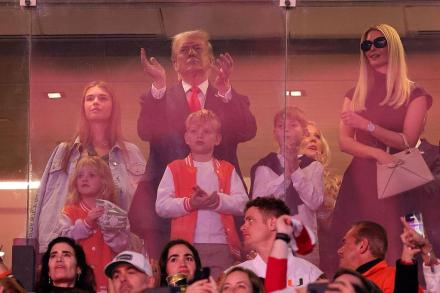
The State Department has a “secret playbook for using sports to advance Trump’s agenda,” according to Politico. Foggy Bottom has a tough assignment ahead. Witness the opening ceremonies of Sunday’s NBA game in London between the Memphis Grizzlies and Orlando Magic, the first NBA game in the UK in six years. As Vanessa Williams sang the National Anthem, someone shouted “Leave Greenland alone,” which the arena cheered. Cockburn doesn’t think Williams is much of a threat to Greenland. President Trump’s appearance last night at the College Football Championship – along with Secretary of State Marco Rubio, Ivanka and Jared, Kai Trump and Steve Witkoff – went without a hitch.

Mickey Down, Charlie Gammell, Sean Thomas & Douglas Murray

From our UK edition

32 min listen

On this week’s Spectator Out Loud: Mickey Down, co-creator of Industry, reads his diary for the week; Charlie Gammell argues that US intervention could push Iran into civil war and terrorism – warning that there are more possibilities than just revolution or regime survival; false dichotomy at the heart of; Sean Thomas bemoans the bittersweet liberation from his libido; and, Douglas Murray believes Britain has a growing obsession with race. Produced and presented by Patrick Gibbons.

Won’t somebody think of the freezing cold press corps?

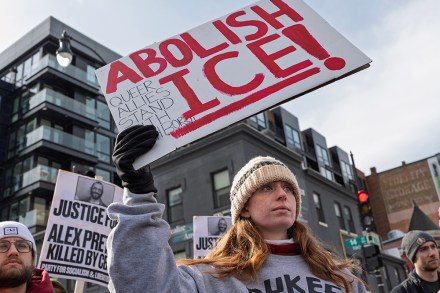
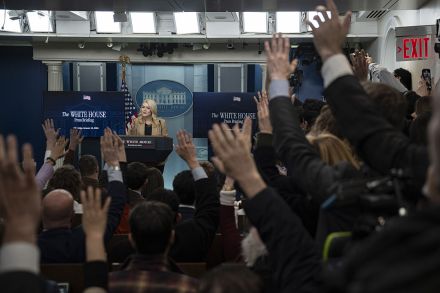
Journos on ice How hot is the White House briefing room? Pretty scorching if you’re Niall Stanage, the Hill reporter who was drawn into a back-and-forth with press secretary Karoline Leavitt over ICE’s conduct. Leavitt asked for Stanage’s opinion on why Renee Good was shot, he gave it… and she branded him a “biased reporter with a left-wing opinion.” “You shouldn’t even be sitting in that seat, you’re pretending like you’re a journalist but you’re a left-wing activist,” Leavitt continued, in a moment that was rapidly clipped for Team Trump’s social media and posted by a flurry of White House staff. The temperature is considerably lower for most other journalists, however.

Iran’s useful idiots, Gordon Brown’s second term & the Right’s race obsession

From our UK edition

43 min listen

As the world watches events in Iran, and wonders whether the US will intervene, the Spectator’s cover this week examines 'British complicity in Tehran’s terror’. When thinking about what could happen next in the crisis, there is a false dichotomy presented between regime survival and revolution; the reality is more complicated, though there is no doubt that this is the biggest threat to the theocratic regime in decades.  For this week’s Edition, host Lara Prendergast is joined by political editor Tim Shipman, columnist Rachel Johnson and features editor – and Edition co-host – William Moore. They commend the bravery of Iran’s protestors but criticise the ‘inept, naive and wrong’ response of the Foreign Office.

Iran: why theocracies survive – with Peter Frankopan

From our UK edition

25 min listen

In the 21st century, the theocratic nature of the Iranian regime – ruled by senior Shia clerics – appears to be a rarity. The constitutional role of religion is perhaps matched only by the Vatican City and Afghanistan, though these vary in terms of autocracy – as evidenced by the brutal suppression of protests across Iran in the past few weeks. The regime, installed following the 1979 revolution and led first by Ayatollah Khomeini and now Ayatollah Khameini, has proven remarkably resilient; how has it survived so long?

Why can’t Democrats speak frankly about Iran?

The manicured grounds of Harvard University are tranquil. Ditto the expensive quads of Yale, Princeton, Columbia and Stanford. All across the fruited plain, the self-denominated paragons of virtue who just yesterday sported “Free Palestine” buttons and joined in “No Kings” rallies are greeting today’s greatest enormity – the slaughter of tens of thousands of Iranian citizens by their insane Islamicist government – with the repetition of that hit by Simon and Garfunkel: "The Sounds of Silence." Or, as the headline of a story in National Review put it: "Iranian Civilians Are Being Massacred to the Sound of Progressive Silence." Accurate numbers are hard to come by since the murderous Islamic regime in Iran has shut down public access to the internet.

iranians
ayatollahs

The rule of the Ayatollahs is broken. What happens now?

"Help is on the way," promised Donald Trump to the people of Iran defying the Islamic Republic. In the same social media post, the President, characteristically light on detail, also urged Iranian protesters to take over the institutions of the Islamic Republic (presumably by force) and to keep a note of the names and numbers of their oppressors for retribution’s sake. Whatever these words presage – be it air strikes on Iranian Revolutionary Guard Corps (IRGC) and Basij facilities, or cyberattacks on Iran’s intelligence agencies, to blind the regime as the regime has blinded protesters by shutting down the internet – it remains to be seen if such an intervention will tip the balance in favor of the regime, the protesters, or simply chaos.

Iran’s cheerleaders are on borrowed time

From our UK edition

Predictions ageing poorly is an occupational hazard for journalists and commentators. But few have gone as sour as those made by Roger Cooper in this magazine, in February 1979, days after the last Shah of Iran had fled. In a piece titled ‘Is Khomeini the leader for Iran?’, Cooper speculated that ‘the prospect… of an Iranian Islamic republic… must surely be more alluring to all but the most stubborn defenders of an ancient regime’. The Ayatollah, he suggested, offered Iranians ‘the chance to resume their true national and cultural identity’. No suggestion was made of imminent death squads, mass imprisonments or looming theocratic repression and economic hardship.  Cooper can be forgiven for failing to realise just how miserable the Islamic Republic would be.

Iran’s useful idiots: British complicity in Tehran’s terror

From our UK edition

It is still unclear what will happen next in Iran. I fervently hope the current protests will cause the tyrants of Tehran to fall. It would be ideal if they were replaced by an order that allowed the population of 90 million to choose who governs them and build a country that reflects joy, hope and modernity rather than Ali Khamenei’s brutal Islamist fever dream. I also know how unlikely that is. Revolutions tend to produce disorder and repression, not order and freedom. After the failure of the Constitutional Revolution in 1911, there was a decade of chaos, fragmentation and insurgency in Iran until Reza Khan seized power and founded the Pahlavi dynasty.

Portrait of the week: Digital IDs ditched, unrest in Iran and an app to check you’re not dead

From our UK edition

Home The government dropped plans to make digital ID compulsory to work in Britain. Sir Keir Starmer, the Prime Minister, called it ‘disgraceful’ that Grok, the online tool on Elon Musk’s X, could undress pictures of people. X limited the function to subscribers, but Liz Kendall, the Technology Secretary, said that the government would back Ofcom if it decided to block X in Britain. ‘They just want to suppress free speech,’ Mr Musk wrote on X. Sir Keir, due to visit China this month, was warned by some Labour MPs not to approve a vast new Chinese embassy in London. The government signalled a U-turn on increases to business rates for pubs in England before the ink was dry on the Telegraph’s Save Our Pubs campaign.

iranian

How Trump can squeeze the Iranian regime

The Iranian people have shown true courage as they protest against the Islamic Republic. As the pressure mounts, some elements of Iran’s regime have been pushing to negotiate with the Trump administration – trying to create the impression they are ready to drink from the "poisoned chalice" as the Islamic Revolution’s founder Ruhollah Khomeini did to end the Iran-Iraq war in 1988. Saeed Laylaz, a reformist economist, told Euro News last week that, "I have information that Iranian political officials are ready for dialog with the other side.

Can Iran’s protestors keep going?

From our UK edition

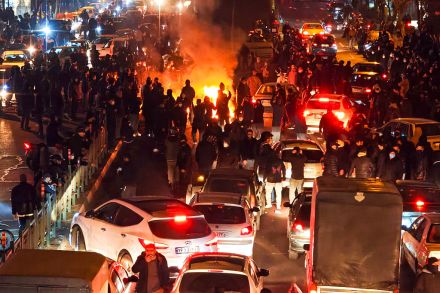
As Iran enters the third week of nationwide protests, the pace of events has become dizzying. News breaks by the minute, and, as Persians say: ‘One eye is filled with tears, the other with blood.’ We are all waiting anxiously for a change that feels both inevitable and profoundly uncertain. For five to six consecutive days now, the Iranian regime has completely severed the country’s communication with the outside world. Not only has internet access been cut, but even ordinary landlines and direct mobile phone calls to and from Iran have become impossible.

Why Nadhim Zahawi (and Reform) are making a mistake

From our UK edition

50 min listen

This week on Quite right!, Michael and Maddie examine Nadhim Zahawi’s dramatic defection to Reform UK and ask whether it strengthens the party’s insurgent credentials or exposes a deeper strategic mistake. Is Reform becoming a genuine outsider movement, or simply a refuge for disaffected Tories? And what does the pattern of Boris-era defections reveal about credibility, competence and the challenge of turning populist energy into a governing force? Then, Iran: mass protests against the regime have erupted onto the streets of Tehran and beyond. Are these demonstrations the prelude to real regime change – or another brutal crackdown waiting to happen? And what role should the West, and the United States in particular, play as the situation escalates?