Inflation

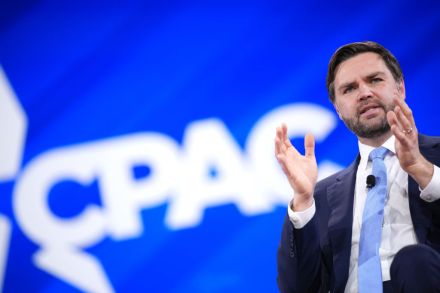
VP Vance touts border security, energy and humor at CPAC

From our US edition

Vice President J.D. Vance took to the Conservative Political Action Committee stage moments ago for a sit-down interview with Mercedes Schlapp.   In his signature earnest-yet-easy style, Vance reiterated his boss’s main, shared goals one month into the new administration: secure the southern border and grow the economy by unleashing American energy. While casting plenty of blame on the Biden administration throughout his talk, Vance touted the Trump administration’s early accomplishments; border crossings are already down 90 percent, he said, and “we’re just getting started.” In response to a question about fixing the economy, Vance said the key is, “Drill, baby, drill.

jd vance

Why Rachel Reeves is safe, for now

14 min listen

Foreign affairs are inescapable this week, with the readout from the meeting yesterday between Russian and American diplomats in Saudi Arabia. We understand that Trump told Putin that Ukraine will be part of the next round of peace talks. However, Trump’s shock-and-awe foreign policy continues to deliver significantly more shock than awe, especially after he seemingly blamed Ukraine for starting the war. What is he thinking? Could there be more to Trump's foreign policy than he is letting on?  Back in the UK, pressure is mounting on Rachel Reeves as more inaccuracies in her CV come to light, and inflation rises to 3 per cent. There have been murmurs that she could be replaced, but is there a viable candidate to replace her?

Reeves’s worst week so far?

16 min listen

It's been a tricky week for Rachel Reeves: an onslaught of criticism for the levels of borrowing costs, GDP at 0.1 per cent, and stagflation still gripping the UK economy. Remarkably she has come out of it looking stronger – politically at least. But can she afford to celebrate? The Spectator's Kate Andrews and data editor Michael Simmons join the podcast to discuss the economy, and go through some of the most striking graphs from The Spectator'sdata hub this week. Produced by Natasha Feroze.

Rising inflation will make Rachel Reeves’s job harder

12 min listen

New figures have shown that, for the year to November, inflation rose by 2.6%. While unsurprising, how much will this impact the Chancellor's plans going into the new year? Katy Balls speaks to Kate Andrews and Isabel Hardman about the impact on Labour, especially given their October budget. Also on the podcast: do the WASPI women deserve compensation? The team discuss Liz Kendall's announcement that Labour will not recompense women who faced pension changes; they also discuss the last PMQs of 2024. Produced by Patrick Gibbons and Oscar Edmondson.

Portrait of the week: Rising inflation, electric car targets and a tax on flatulent livestock

Home Thousands of farmers protested in Westminster against inheritance tax on farms. Tesco, Amazon, Greggs and 76 other chains belonging to the British Retail Consortium said that costs introduced by October’s Budget ‘will make job losses inevitable and higher prices a certainty’. The annual rate of inflation rose to 2.3 per cent from 1.7 a month earlier. The British economy grew by 0.1 per cent in the third quarter, but shrank during September; in the second quarter it had grown by 0.5 per cent. Beth, the Queen’s Jack Russell, died. An additional 50,000 pensioners will live in relative poverty next year as a result of cuts to the winter fuel allowance, the government estimated.

Is Rachel Reeves running out of luck?

11 min listen

An unexpected rise in inflation today takes the rate to higher than the Bank of England's target, and adds to Rachel Reeves's worries. James Heale talks to Katy Balls and The Spectator's data editor Michael Simmons about the latest figures, and they also discuss the shadow minister Alex Burghart's performance at Prime Minister's Questions. Produced by Cindy Yu.

Should Labour ditch the ‘doom and gloom’ narrative?

11 min listen

We have some new inflation figures today. Inflation rose 2.2 per cent in the 12 months to August. This is pretty much in line with the Bank of England's target and should be good news for Labour, so why do they persist with this doom and gloom narrative?  Elsewhere, Labour's awkward week has got more awkward with the news that Sue Gray, Keir Starmer's chief of staff, is paid more than him. Surely they could have seen this news story coming?  Oscar Edmondson speaks to Kate Andrews and James Heale. Produced by Oscar Edmondson.

Kamala Harris and that new car smell

From our US edition

If you felt the ground shaking, it was Democrats jumping for joy after dumping Joe Biden and settling on a new, more energetic replacement. Joe was the old clunker. Kamala has that new car smell. The switcheroo raises three fundamental questions for the election. First: how long will Harris’s novelty last? Answer: until Labor Day, but probably not longer. Second: how does Harris deal with the Biden administration’s policy failures? Answer: by emphasizing a hopeful future with few details and avoiding talking about her role in the administration’s mistakes. Third: how does Harris deal with her record of very progressive positions, on tape from her last presidential run?

Vice President new car smell kamala harris

The Squad will fight another day

From our US edition

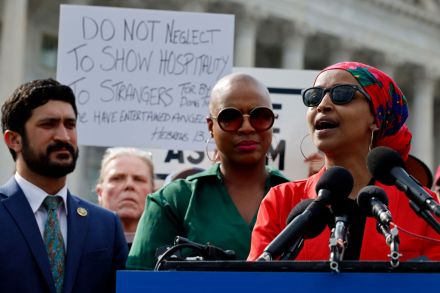
The 2024 primary season is slowly coming to a close — and last night’s marquee election saw a rare big win for the left-wing Squad in the House of Representatives: Congresswoman Ilhan Omar vanquished an underfunded opponent in the Democratic primary to avoid the fates of Congressmen Cori Bush and Jamaal Bowman.Following the Hamas terrorist attacks of October 7, the pro-Israel community was galvanized to challenge some of the most openly anti-Israel members of Congress. It successfully trained its fire on Bush and Bowman, who both carried major liabilities unrelated to foreign policy.

Why has the inflation rate gone up again?

11 min listen

We've got some news today on the inflation rate, which rose to 2.2 per cent in July, slightly up from the Bank of England’s target of 2 per cent, where the rate sat in May and June. It’s the first rate uptick this year – and though widely expected, it will be used to explain why the Bank’s continued hawkish stance, despite starting its rate-cutting process earlier this month. Is this a sign of economic conditions improving? Could it lead the way to interest rate cuts later this year?  Also today, the Treasury its under scrutiny after a Labour donor received a top civil service job. Do we need more transparency when it comes to political appointments?  Oscar Edmondson speaks to Kate Andrews and James Heale.  Produced by Oscar Edmondson.

Portrait of the Week: Supermajorities, falling inflation and rammed cows

Home The electorate mulled over the words of Grant Shapps, the Defence Secretary: ‘You don’t want to have somebody receive a supermajority.’ A question that lodged in the election campaign was put by Beth Rigby of Sky News to Sir Keir Starmer, the Labour leader, asking whether he had meant it when he said his predecessor, Jeremy Corbyn, would make a great prime minister; he replied: ‘I was certain we would lose the 2019 election.’ A few days later, Sir Keir told a phone-in questioner that serving in a Corbyn administration ‘didn’t cross my mind because I didn’t think we would win’. He evaded questions on council tax, taxing pensions and VAT on schools. A dishevelled Boris Johnson made some short videos endorsing Conservative candidates.

Sack Andrew Bailey? Let’s look at the case against him

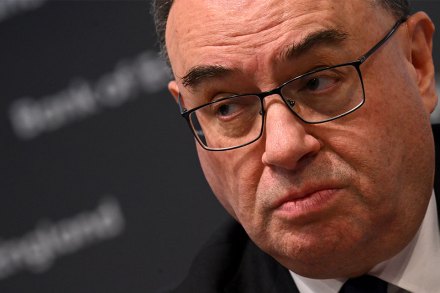
The Governor of the Bank of England, Andrew Bailey, is a loyal and well-intentioned public servant in a role that, by its nature, attracts constant blame and hindsight judgment. Liz Truss is a spectacularly failed 44-day prime minister with a book to sell. So when Truss says Bailey should have been sacked for his part in her downfall –when the Bank intervened to prevent a pension fund crisis after her chancellor Kwasi Kwarteng’s radical mini-Budget of September 2022 – and that he should be sacked anyway for being part of a Keynesian economic Establishment, with the Treasury and the Office for Budget Responsibility, that has delivered nothing but stagnation, my instinct is to stand up for Bailey.

Did Jeremy Hunt reduce inflation?

12 min listen

Inflation has fallen to 3.4 per cent, it was announced this morning. Jeremy Hunt said it was a sign that the government’s economic plan is working. Is he right? Max Jeffery speaks to Katy Balls and Kate Andrews.

The course of the American empire

From our US edition

In the 1830s, the English-born American artist Thomas Cole painted an ambitious sequence of five large rectangular canvases delineating “The Course of Empire.” He began with “The Savage State,” which depicts the rude life of humans before the advent of letters, domestication and permanent architecture. “The Arcadian or Pastoral State” is marked by harmony and some early accoutrements of civilization. “The Consummation of Empire,” at fifty-one inches by seventy-six inches, is a third larger than its fellows. Here we see a sun-drenched landscape transformed by a panoply of classical architecture counterpointed by bustling commerce and a triumphal, if overripe, stateliness. Next comes “Destruction.

empire

Javier Milei’s radical reforms could start to heal Argentina’s economy

Argentina has spent most of its 200-year history in deficit; no other country currently owes the International Monetary Fund a greater sum of money. The new finance minister, who entered government with President Javier Milei earlier this month, has been stark in making the point: ‘Out of the last 123 years, Argentina ran a fiscal deficit in 113... we have come to solve the addiction to fiscal deficits.’  Milei’s government is wasting little time carrying out what it calls ‘shock therapy’. The official value of the peso, Argentina’s currency, has been halved against the US dollar. Why might a government want to weaken its own currency, pushing up the price of imported goods for consumers?

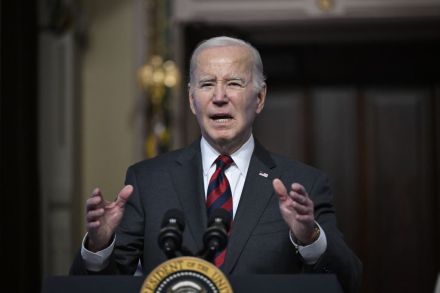
Biden’s economic blame game

From our US edition

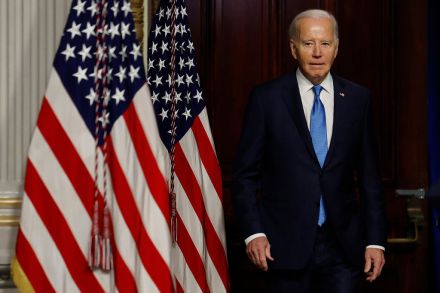
President Joe Biden presided over an event at the White House on Monday in which he announced the creation of a Council on Supply Chain Resilience and promised actions to “strengthen supply chains, lower costs for families and help Americans get the goods they need.” This news might bring a sigh of relief to many — finally, the Biden administration is taking inflation seriously! But the White House first led with a “Bidenomics” victory lap that felt more like a slap in the face than a swelling pocketbook. Transportation secretary Pete Buttigieg gave opening remarks in which he chastised the media for “saying that Christmas was going to be canceled” due to supply chain disruptions in the winter of 2021.

As America’s fiscal storm approaches, government prepares to save itself

From our US edition

It’s a familiar response whenever the National Weather Service warns of a Category 5 hurricane, a life-threatening winter blizzard or some other looming natural disaster. Government officials urge local citizens to seek shelter immediately, while promising that area police will keep guard to ensure that looters do not use the emergency to rob boarded-up homes and abandoned stores. Today, Americans are being warned to brace for another kind of storm, one involving not the weather but their personal finances.

fiscal debt

Portrait of the Week: The Crooked House fire, Liz Truss’s honours and a Commonwealth Games flop

Home The first of about 500 asylum seekers were taken to live on the Bibby Stockholm barge on the Isle of Portland, north of the prison and linked to the mainland by one road. The arrival of 339 migrants by small boat across the Channel at the weekend brought the year’s total to 15,071. The government declared it would increase enforcement action against lawyers who ‘coach illegal migrants to lie’ in making claims. Fines were to be tripled for employers and landlords who allow illegal migrants to work for them (up to £45,000 per illegal worker for a first breach) or rent their properties, the Home Secretary announced. The 18th-century Crooked House pub, near Dudley, was gutted by fire a fortnight after being sold, and the next day reduced to rubble by a mechanical digger.

Will Brits feel richer if inflation halves?

The government’s objective to ‘halve inflation’ by the end of the year seems to be back on track – for now. Last week’s interest rate hike was delivered with an updated inflation forecast from the Bank of England, showing the rate slowing to 4.7 per cent by the end of the year, just below Rishi Sunak’s target. The better-than-expected fall in the headline rate last month has forecasters thinking things are finally moving in the right direction. As Ross Clark reports on Coffee House, Capital Economics is expecting another major fall in the rate next week – down to 6.9 per cent on the year – when July’s figures are released.

Biden catches a break on inflation

From our US edition

Things are looking up. Today began with some very good economic news in Washington: Labor Department data shows inflation falling to a two-year low. The consumer price index rose 3 percent in the twelve months to June. That is a steep fall from the 9.1 percent price rise in the twelve months to June 2022, and perhaps the clearest sign yet that the US is on course to tame inflation while avoiding a recession — the soft landing that Joe Biden, Jay Powell and every other policymaker in Washington has been praying for.   Core consumer prices increased by 0.2 percent in June, the smallest single-month increase since August 2021 and an indicator that the pressure on prices is easing.

biden inflation