India

Has Britain fallen victim to the Asian vaccine war?

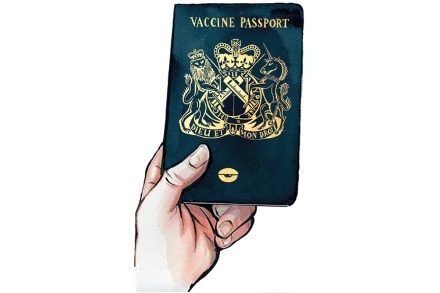
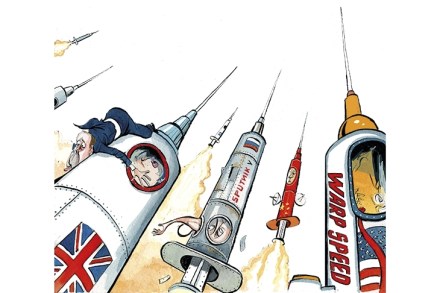
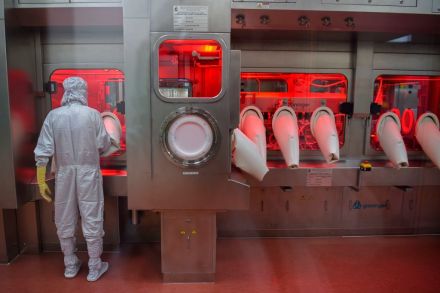
The success story of Britain's vaccine rollout has hit its first major obstacle: five million doses of the AstraZeneca vaccine will be held up for a month. But how many of us knew it was India, not manufacturing plants in the UK or Europe, that was supplying a considerable amount of our vaccine needs? And does the delay show that Britain is now caught in the middle of an emerging vaccine war in Asia? The delayed jabs are being manufactured in the Indian city of Pune (pronounced Poona).

Is India to blame for the UK’s vaccine delay?

The UK vaccination programme has been such a success to date that until yesterday evening it seemed a formality that the government would achieve its target of offering all adults at least a first dose of a Covid vaccine by July. Indeed, on Monday it looked as if this date might be brought forwards when it was announced that there would be a huge uplift in vaccine shots available, thanks to the arrival of a large consignment of AstraZeneca vaccine from India. Instead of 2 million doses a week, the vaccination programme would be able to deliver 4 million doses. On Wednesday evening, however, that hope was shattered. Firstly, Ursula von der Leyen renewed her threat to block exports of the Pfizer vaccine, British supplies of which are sourced from a factory near Brussels.

Will Modi’s ceasefire with Pakistan last?

The perpetually fractious relationship between India and Pakistan reached a particularly low point two years ago, after dozens of Indian paramilitary personnel were killed in a suicide attack in Pulwama in the mountainous terrain of Kashmir. India blamed the attack on Pakistan and bombed what it believed was a terrorist training camp in Balakot across the border. The Pakistani air force retaliated by shooting down an Indian air force plane in a dog-fight, with the pilot having to eject on enemy soil. The airman was returned; but the downward spiral in ties accelerated with the two countries withdrawing their high commissioners and suspending bilateral trade altogether.

Power jab: the rise of vaccine diplomacy

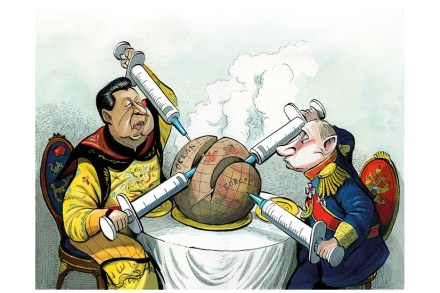
At the end of January the President of Chile, Sebastián Piñera, gave a speech on the tarmac of Santiago airport. ‘Today is a day of joy, excitement and hope,’ he said, standing in front of a Boeing 787 which had just arrived from Beijing. Inside it were two million vaccine doses produced by the Chinese company Sinovac. It was the first of two similar-sized shipments arriving that month. A few days earlier, the President of Mexico, Andrés Manuel López Obrador, had emerged from Covid confinement to thank a ‘genuinely affectionate’ Vladimir Putin for pledging 24 million Sputnik doses to Mexico in the coming months. Hopes of vaccinating his country with the Pfizer vaccine had dissipated when supply dried up.

China vs America: the struggle for south-east Asia

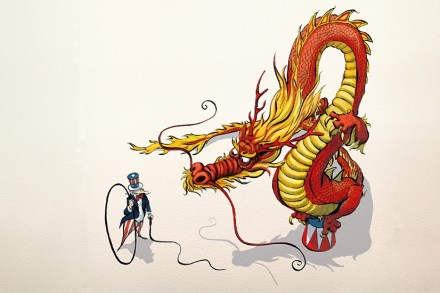
Is Antony Blinken, President Joe Biden’s secretary of state, preparing to abandon Barack Obama’s powder-puff Asian foreign policies? It is now widely agreed that Obama, under whom Blinken served as deputy secretary of state, ceded to China uncontested control of the South China Sea. Obama’s so-called ‘pivot to Asia’ was all talk and no trousers. Blinken, who believes that diplomacy must be ‘supplemented by deterrence’, may be about to implement a more aggressive foreign policy in south-east Asia and elsewhere. In his first speech as general secretary of the Communist party in 2012, Xi Jinping made his intentions clear.

India’s vaccine diplomacy

‘Vaccine diplomacy’ is playing an increasingly important role in the geopolitics of the Covid-19 pandemic. Countries like China and India are attempting to bolster their credentials and earn some goodwill, by donating or selling their surplus vaccine supplies to low-income countries, or nations with longer term partnership potential. China has already donated half a million doses of the Sinopharm vaccine to its regional ally Pakistan. This followed President Xi’s announcement earlier this year that the development and deployment of a Chinese vaccine will be ‘a global public good.

Just not cricket: the BBC is failing the Test

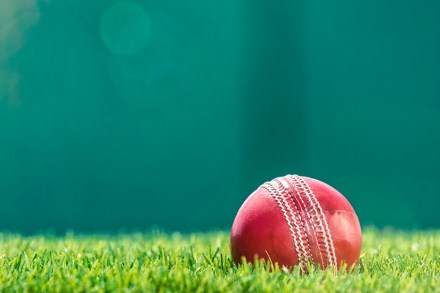
Michael Vaughan might disagree but — putting aside 2005 and all that — was there a more thrilling and satisfying series than India’s evisceration of the Aussies which ended at the Gabba? Especially after being rattled out for 36, their lowest ever score, in Adelaide in the first Test, when no one, not even extras, reached double figures, and then losing many of their best players to injury or absence. They’ve pulled off a skilful trick, the Indians, in making the world see them as underdogs despite them being a cricket-mad country of more than a billion people, which already runs and owns the game. Now there can’t be a cricket fan on the planet who isn’t excited about England’s upcoming Test series against Virat Kohli’s multi-talented team.

Are we heading for a golden era in British-Indian relations?

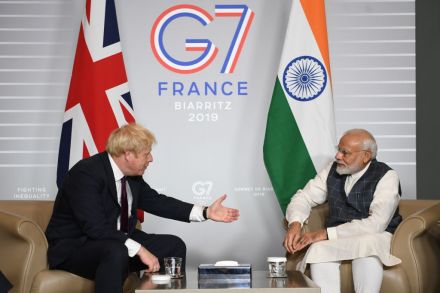
Britain's departure from the EU presents an exciting opportunity to build on old alliances around the world. Nowhere is this more true than in the UK's relationship with our old Indian friends.  India was preparing to roll out the red carpet for Boris Johnson this week. Being India’s annual guest of honour at their Republic Day celebrations is equivalent to the Buckingham Palace treatment or the Bastille Day invitation. Soldiers on double-humped camels, anti-satellite weapon systems on display and giant papier-mâché tableaux tributes to Mahatma Gandhi parade down New Delhi’s ceremonial boulevard that was once lined by statues of Britain’s kings and viceroys.

So good I watched it twice: Netflix’s The White Tiger reviewed

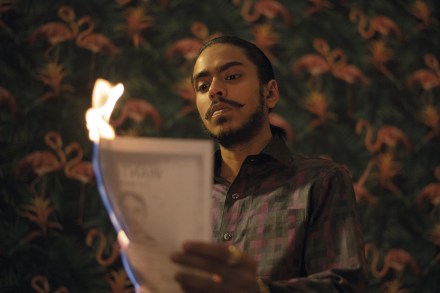
The White Tiger is adapted from the Booker-prize winning novel (2008) by Aravind Adiga. It is directed by Ramin Bahrani (Man Push Cart, 99 Homes) who also wrote the screenplay. It stars Adarsh Gourav, otherwise a songwriter and singer. It’s a rags-to-riches story set in India but it’s not at all a typical rags-to-riches story set in India. Those are some of the things you probably should know, but there is only one thing I want you to know: it is wonderful and, even though the subject matter is often chilling, and there’s simmering rage, and murder, it’s still two hours of boisterous, dazzling, swaggering fun. I watched it once and thought: I could easily watch that again. So I did. Unheard of. And one last thing I want you to know: Bahrani may be a genius.

Is Indian cricket no longer cricket?

There is nothing in world sport, ‘nothing in the history of the human race’, Ramachandra Guha modestly reckons, that can remotely match the passions that surround Indian cricket. I have no idea how many listeners or viewers hung on every ball of Ben Stokes’s Headingley heroics last year, but it is a safe bet that had it been Sachin Tendulkar or Sunil Gavaskar batting, and an India victory over Pakistan at stake, then you could add as many noughts to that figure as will accommodate a cricket-mad population edging its way towards the one and a half billion mark. The Commonwealth of Cricket is part celebration, part elegy, but before all else unashamedly the book of one of those tens of millions of India’s cricket fans.

A romcom with very little com: BBC1’s Black Narcissus reviewed

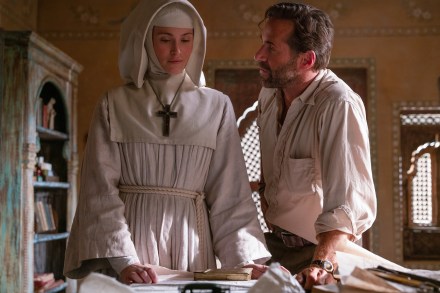
In Black Narcissus, based on the novel by Rumer Godden, five nuns set off for a remote Himalayan palace in 1934 to set up a convent school. The palace, donated by an Anglophile general, used to be a harem and was still adorned with erotic paintings. It was also where the general’s sister, Srimati, had committed suicide and where, just a few months previously, a male religious order had tried to establish a school too, before retiring defeated for mysteriously undisclosed reasons. The nuns’ main helper in practical matters, a British expat called Mr Dean (Alessandro Nivola), possessed an overwhelming maleness that expressed itself through such attributes as a chiselled jaw, an Indiana Jones hat and a handy way with a spanner. So what could possibly go wrong?

The truth about Burma’s ‘imprisoned princess’

As Perseus was flying along the coast on his winged horse Pegasus, he spotted Andromeda tied to a rock as a sacrifice to Poseidon’s sea monster Cetus. It was love at first sight. Perseus slew Cetus and married Andromeda. Thus began the damsel-in-distress archetype that has been a mainstay of western culture ever since. Riffs on the archetype have been used by Chaucer, Shakespeare, Dickens and Wagner. Perhaps it was these examples that inspired the global liberal establishment (the BBC, Hollywood and the Nobel Peace Prize committee among others) to create, in the 1990s, the mythical version of Aung San Suu Kyi, Burma’s ‘imprisoned princess’, the saintly spiritual heir to Mahatma Gandhi, as Time magazine described her.

Spectacular and mind-expanding: Tantra at the British Museum reviewed

A great temple of the goddess Tara can be found at Tarapith in West Bengal. But her true abode, in the view of many devotees, is not this sacred structure itself but the adjacent, eerily smoking cremation ground. There she can be glimpsed in the shadows at midnight, it is believed, drinking the blood of the goats sacrificed to her during the day. Many holy men and women live in that grisly spot too, adorned with dreadlocks, smeared with ash, and dwelling in huts decorated with lines of skulls painted crimson. As a domestic setting this wouldn’t suit everybody. But the varieties of religious experience (to borrow the title of a celebrated work by William James) are many and extremely diverse.

Kamala Harris’s Indian summer

From our US edition

The Indian vote in American politics has been a lock for the Democrats in recent years. President Obama won the group in 2008 and many of them preferred him to Mitt Romney in 2012. Likewise, Hillary Clinton won the Indian vote in something of a landslide in 2016 against President Trump. Early polling indicates that Asian Americans in general still lean Democrat. But might Joe Biden’s selection of Kamala Harris put a meaningful portion of the Indian vote up for grabs? Kamala Harris represents something historic for the Indian-American community — she is the first person with Indian ancestry to run on either party’s presidential ticket. The Biden campaign have been quick to capitalize on this, forming an 'Indians for Biden' National Council.

kamala harris indian

Sea change: China has its sights on the Bay of Bengal

Pangong Lake is the most unlikely of places for a naval conflict between two of the world’s nuclear-powers, India and China, with a third, Pakistan, looking on with not a little interest. Lying some 280 miles east of Islamabad, 360 miles north of New Delhi and 2,170 miles west of Beijing, Pangong Lake is in the remote northern Himalayas. In 1905, the explorer Ellsworth Huntington said that its beauty could ‘rival, or even excel, the most famous lakes of Italy or Switzerland’. It is a harsh world, frozen in winter, inhabited by a sparse indigenous population of hardy goat herders.

Sumptuous and very promising: A Suitable Boy reviewed

Nobody could argue that Andrew Davies isn’t up for a challenge. He’d also surely be a shoo-in for Monty Python’s Summarise Proust competition. After turning both War and Peace and Les Misérables into satisfying, unhurried six-part drama series, he’s now taken on Vikram Seth’s 1,300-page novel A Suitable Boy. The first episode started with a wedding that immediately established the programme’s visual sumptuousness, while also serving as a handy introduction to the main characters. The groom’s rebellious brother Maan, for example, chafed at the idea that he was supposed to be next.

How Britain can tame China

Chinese leaders love to use the phrase ‘win-win’, but they actually hope to win twice and leave other nations in positions of relative disadvantage. The Chinese Communist party’s behaviour during the Covid-19 crisis is a case in point. In the midst of the global pandemic, the People’s Liberation Army and the Ministry of State Security have conducted cyber-attacks against hospitals, pharmaceutical companies and medical research facilities developing Covid-19 therapies and vaccines. Triumphing in the race for a vaccine would help China emerge from the crisis in a position of relative advantage economically and psychologically, while reinforcing the idea that China’s authoritarian mercantilist system is superior to democratic free market systems. Win-win.

China is testing the limits of India – and the world

When the Chinese Central Military Commission drew up plans for a ‘war of extermination’ which would ‘gnaw the flesh off the bones’ of Indian forces in the Himalayas in 1962, China’s leaders believed that they were solving a problem. ‘It was India,’ as vice minister Zhang Hanfu said to the Soviet ambassador at the time, ‘that rejected peace talks to solve the Sino-Indian border issue, while China consistently adhered to a peaceful solution.’ And so the China-India Border War began, with Chinese troops sweeping through the disputed Himalayan territories, driving Indian soldiers from their positions. To China’s Communist party, military victory meant that India and China would soon be friends.

Will India and China go to war?

From our US edition

India and China are separated by the longest un-demarcated border in the world. They fought a war in 1962, which India squarely lost, and engaged in a fierce clash in 1967, in which India decisively prevailed. Since then, a tense peace has been maintained in the high and strategic Himalayan passes. The Line of Actual Control (LAC) that divides the two Asian rivals was sustained by a strict adherence to elaborate protocols agreed at the topmost levels by both sides. There have been numerous skirmishes and fistfights between Indian and Chinese soldiers over the years, but with the exception of an ambush by the Chinese in 1975 in which four Indian soldiers were killed, lives were never lost.

india

The renaissance of the porch

From our US edition

On a cold and unremarkable November night about 10 years ago, I arrived from India in Knoxville, Tennessee. The first thing I noticed about my new home was its massive front porch.Long and unfussy, it stretched along the entire width of the red-brick Craftsman bungalow. It had an old wooden floor and on one side furniture half-swallowed by shadow. More than anything, I was struck by its deep sense of ease, and how familiar it felt. I’d grown up in a small town in India, in a bungalow with a veranda not unlike this porch. Standing on it that freezing night, I suddenly felt a little less cold.

porch