
Even those who don’t think much of New York City Mayor Zohran Mamdani’s politics might grudgingly concede he has a knack for jumping on causes that resonate with his achingly progressive voter base. The idea of righting the wrongs of imperial history – anywhere, even thousands of miles away – is high on the tick list.
Hence Mamdani’s call for King Charles to return the Koh-i-Noor diamond, one of the world’s largest and most controversial jewels, to India. The 105-carat diamond, part of the Crown Jewels, is the subject of a fierce historical dispute, with India claiming that it was stolen during British colonial rule.
Leaving aside Mamdani’s political opportunism, what is it about the fate of the Koh-i-Noor diamond that seems to agitate so many Indians?
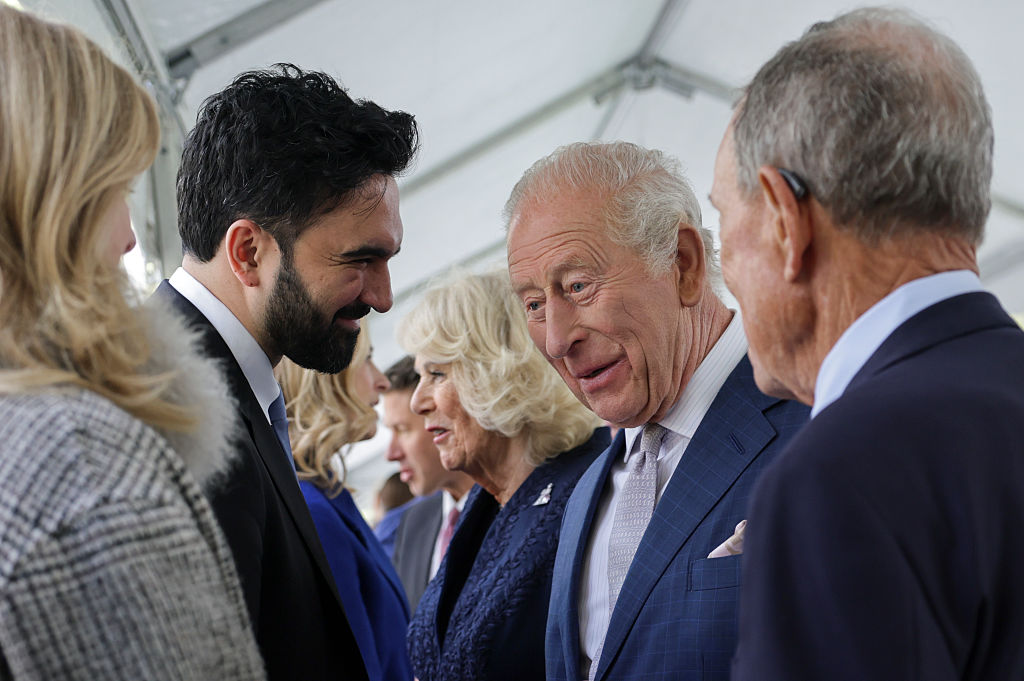
“I would probably encourage him to return the Koh-i-Noor diamond,” Mamdani, who has Indian roots, said at a news conference just ahead of a ceremony honoring victims of the 9/11 attacks. The Mayor later met Charles, who is on a four-day visit to the US, at the ceremony but it is unclear whether he brought up the diamond. Neither Mamdani’s office nor Buckingham Palace have shared details about their meeting.
Leaving aside Mamdani’s political opportunism, what is it about the fate of the Koh-i-Noor diamond that seems to agitate so many Indians? The gem was mined in India and dates back to at least the 17th century. It has always been the subject of intrigue and controversy, passing through the hands of, among others, Mughal princes and Punjabi maharajas.
It was handed to Britain in 1849 under a controversial treaty following the Anglo-Sikh war – signed by the ten-year-old Sikh ruler, Duleep Singh, after his mother was imprisoned. The diamond was given to Queen Victoria by the East India Company and is now an established part of the crown jewel collection. India finds this unpalatable, viewing Britain’s possession of the gem as a symbol of colonial injustice and plunder.
India has demanded its return from Britain several times since independence in 1947 – without success. The former prime minister, David Cameron, said in 2013 that returning the diamond was not “sensible.” Britain insists the diamond was obtained legally under the 1849 treaty. Well, yes, but the document was signed under duress by a child. It may well be legal but is it right?
There are stronger grounds in pointing out that any proposed return of the diamond would raise other significant issues that would be far from easy to resolve. For example, India claims outright ownership, choosing to ignore the rival ownership claims of Pakistan, Afghanistan and Iran. Who gets to decide which country has rightful claim to the diamond? There would also be legitimate concerns about a precedent being set for other artifacts in the possession of British institutions.
Even so, the case for the restitution of cultural treasures removed from countries under colonial rule is gaining in power. Such claims deserve to be heard and debated. The Koh-i-Noor resides in the Queen Mother’s crown which Queen Camilla chose not to wear at the coronation of Charles III. This decision is believed to have been informed by the desire to avoid prompting a diplomatic row with India. This will give India’s rulers encouragement in their campaign to being the Koh-i-Noor back home. More broadly, India has been making ground in its battle for the return of historical artifacts. In 2021, Prime Minister Narendra Modi returned to India with 157 artifacts handed back during an official visit to the United States. Modi also succeeded in getting Australia to return a number of Indian-origin artifacts that had been stolen from the country; with some of the rescued items dating back to the ninth century.
Yet the most sought-after prize remains the return of the biggest diamond. The campaign is as much about politics as cultural treasures. The Modi government likes to portray itself as the one and only true guardian of India’s cultural history. This is simply a shameless and self-serving exploitation of colonial era wrongs for political gain – but plays well enough with Indian voters. The New York Mayor’s intervention, during the royal tour of the United States, will give fresh impetus to India’s campaign to get its hands on the Koh-i-Noor. This issue has little to do with the voters of New York but Zohran Mamdani knows how to play to the crowd.





Comments