Housing

Waiting for welfare reform

After a summer of sporadic announcements, IDS’ welfare reforms will be published in a white paper next week. As in 1997, when Tony Blair urged Frank Field to think the unthinkable, there is consensus on the need for radical welfare change. IDS has earned respect as a moral and pragmatic reformer, and he attracts goodwill from across the House. The Liberal Democrats, Nick Clegg and Steve Webb particularly, were ‘vital’ in securing a spending concession from George Osborne, whilst Douglas Alexander has described IDS’ plans and ‘noble’ and pledges to support principle that welfare should be a safety net, not a vocation. He warms to the theme in today’s Guardian.

Hain’s hollow rhetoric 

This week’s interviewee on the BBC’s Straight Talk with Andrew Neil is Peter Hain. One of the topics for discussion is Labour’s disengagement with its core vote and the rise of the BNP. Hain admits that this can be ascribed to Labour’s failings and Westminster’s disengagement with voters. Certainly, Labour’s failure on housing and migration has been a major factor in Griffin’s rise. But there is nothing to suggest that Labour has the political strength to re-engage. Even after the recent furore, there have been no new initiatives on housing or migration, just pitiful contrition in the place of action. Hain’s outright refusal to share a platform with the BNP and engage with its arguments is a case in point.

EXCLUSIVE: What about those who aren’t pulling a housing benefit scam?

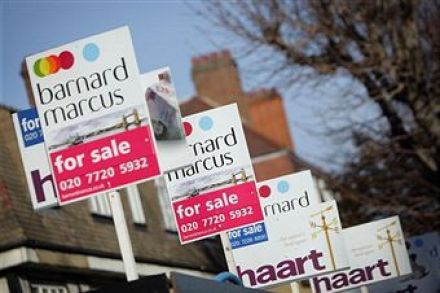
Most sensible taxpayers think Britain’s current housing benefit costs to be a terrific scam. In the last five years the bill has risen by 25 percent. We now pay £21billion each year, a good chunk of which flows private landlords turning a healthy profit from the state’s responsibility to the poor. We all know by now that a slew of reforms designed to cut the bill by at least £2bn will stop the indefensible abuses of taxpayers’ money like this and this. That’s why Danny Alexander, among others, claims that the coalition must be ‘brave’ on housing benefit. But cast aside the most extreme exploiters of the system and ask what happens to the rest. The effects of the reform will to be much more widespread.

The Lib Dems, breaking doors in anger

This one, from the Mail on Sunday, needs adding to the scrapbook: "Colchester MP Bob Russell’s fury over the Coalition’s housing benefit cuts boiled over at a stormy private meeting with the Deputy Prime Minister. To the astonishment of fellow Lib Dem MPs, it ended with Mr Russell storming out and slamming the Commons’ committee room door behind him. Witnesses said last night: ‘He took the door off its hinges.' In a bizarre twist, Mr Russell’s ally and fellow Lib Dem MP Mike Hancock - himself a fierce critic of Mr Clegg - tried to spare his colleague’s blushes by creeping back the following morning to repair the door before Commons authorities noticed it was even damaged.

The Tories rally after the Spending Review

It's just one poll, but today's YouGov effort for the Sunday Times seems to underline many of the themes of recent weeks. It has the Tories on 42 percent, 5 points ahead of Labour on 37 percent, and with the Lib Dems on 13 percent. So the Spending Review – accompanied, as it has been, by rows over housing and child benefits – has not yet had a precipitous effect on the Tories' poll rating. If anything, YouGov have had the blue vote rallying since 20 October. As always we should be wary of drawing too many conclusions from the shifting landscape of opinion polls and surveys, but some of YouGov's subsidiary findings could help explain the Tories' position. First up, 72 percent of respondents back the coalition's plan to impose a cap on housing benefit.

It is when Boris comes from the right that he is a threat to Cameron

The ease with which Number 10 dealt with Boris Johnson’s sally on housing benefit has revealed something important. A challenge from Boris is a threat to Cameron when Boris is vocalising the concerns of the right. But the mayor is far less dangerous when he is doing anything else. As one person close to the Tory leadership reflected to me on Friday, Boris’s interventions on Europe and 50p have caused Cameron problems because they have been immediately amplified by the right and Cameron has been conscious that most of his party agrees with Boris not him on the issue. But pretty much no one on the right agrees with Boris on housing benefit so his remarks fell on deaf ears. There is undoubtedly a space in British politics for a voice to the right of David Cameron.

Housing benefit reform is a Good Thing

Dressed with his effortless prose, Matthew Parris has a point (£) that proves why he is the leading commentator of the last two decades. Housing benefit reform is his subject and he urges his readers reject the legends that have accrued around the issue - not Boris, not Polly Toynbee, not shrill councils, not rapacious landlords and definitely not the government. No one, he says, has the numbers but there are several certainties: ‘The outcomes may not prove nearly as brutal as this week’s predictions. What (as I asked above) can we know? We know that comparisons with Paris are ludicrous. All of our big cities are speckled with very large-scale “social” housing of a type that is suited only to the income groups for which it was constructed.

More perspective on housing benefit

A useful reminder of the opinion polls on housing benefit from ConservativeHome's Harry Phibbs: "...in coming out with such hyperbole Labour show themselves to be out of touch with the voters. An ICM poll in June asked: "Do you support or oppose imposing a maximum weekly limit of £400 on Housing Benefit." Support was 68% with 23% opposed. Even among Labour voters there was strong support - by 57% to 35%. A YouGov poll in August asked: "Here are some policies the coalition government have announced in their first hundred days. For each one please say if you oppose or support it?" Among them was: "Putting a limit on housing benefit." 72% expressed support. 17% said they were opposed.

Some perspective on housing benefit

Depending on who you read, the planned £400 a week cap on housing benefit is either comparable to Nazi concentration camps, death squads in Brazil, or ethnic cleansing in the Balkans Critics have ranged from the Mayor of London to the ultra Left. So it is worth taking a moment to get some perspective. Firstly, the general caps on housing benefit don't even impact on social tenants because they pay lower, subsidised rents, (though the £26,000 cap on the total amount of benefits per household might hit them). But for housing benefit claimants in the private sector outside London, less than 1% are affected by the cap. And even in London 9 out of 10 of private renters claiming housing benefit will be totally unaffected.

Boris v Dave, this time it’s serious

Make no mistake about it, Boris Johnson’s rhetorical assault on the coalition’s housing benefit plan is a direct challenge to David Cameron’s authority. The two best-known Conservatives in the country are now involved in a battle that only one of them can win.   Boris told BBC London this morning: "What we will not see and we will not accept any kind of Kosovo-style social cleansing of London. "On my watch, you are not going to see thousands of families evicted from the place where they have been living and have put down roots." What is infuriating the Tory machine is not only Boris’s criticisms, but the language that he is used—which makes Labour’s talk of social cleansing sound positively moderate.

Clegg holds no punches

Third time's the charm? Not when it comes it Deputy Prime Minister's Questions it’s not. Nick Clegg put in an effective performance this afternoon, but – just like the previous two sessions – there was rather more heat generated than light. So far as Labour are concerned, this monthly Q&A is little more than an opportunity to barrack the Lib Dem leader – and they set about the task with undisguised relish. Unfortunately for them, though, Nick Clegg bites back. Hard.

Building more for less

There’s no way round this: housing in this country is in a pretty awful state. Waiting lists for the shrinking number of “affordable” or social homes are rising, while fewer people can afford to buy their own home. That would be the case even if the banks were able to lend – which they can’t because of the credit crunch.   Fewer than 100,000 new homes are currently being built per year, when 200,000 - 300,000 are needed.  The number of new mortgages being arranged is at its lowest level since 1975, while housing waiting lists have risen from 1 million in 2000 to 1.75 million today. The number of social homes has fallen by 250,000 in the last eight years.

Ominous signs in the housing market – but Osborne must remain undaunted

Are we on the verge of a double-dip in housing? The graph above, courtesy of Citi, certainly looks ominous enough. The blue line is a Royal Institute of Chartered Surveyors metric for the balance of surveyors reporting rising house prices - and, last month, it slipped into negative territory for the first time since July 2009. The pink line is the rise in house prices, year on year - and it's heading downwards too. At first glance, the picture looks a lot like the peak which preceded the crash in 2008. The question is whether we're going to plumb a similar trough. Citi, it must be said, are fairly sanguine about our prospects.

Opposing social housing reform looks like a marginal issue

The Sunday Times YouGov poll (£) contains some statistics that will warm Cameron’s cockles. ‘The poll also backs the idea, floated by the prime minister last week, that new tenants in council and social housing should have a limited term of five or 10 years before they have to make way for others if their circumstances have changed. The proposal, criticised by Simon Hughes, the Liberal Democrat deputy leader, is supported by 62% and opposed by 32%. Even among Liberal Democrat supporters there is strong support for the idea, by 67% to 26%. Tory supporters overwhelmingly back it, by 78% to 18%. Labour voters are only narrowly in favour, by 48% to 47%.’ The figures for Liberal Democrat and Labour support are surprising.

Will Hughes succeed in stirring up trouble over Right to Buy?

Simon Hughes led the angry response to David Cameron's thoughts on social housing, and now he's stirring it up again. In an interview with the South London Press – picked up by Sunder Katwala over at Next Left – the Lib Dem deputy leader has attacked the Right to Buy, saying that local councils should decide whether to offer it or not. Given the Thatcherite roots of the policy, there's a firecracker quality to Hughes's comments: lobbed into the debate, and designed to provoke the Tories. I'm not sure the Tories will be too perturbed by Hughes's intervention, though. Of course many of them are proud and supportive of Thatcher's Right to Buy policy – and rightly so.

Bring on the debate about social housing

David Cameron did say that his proposal to end council houses for life would trigger "quite a big argument" – and that is exactly what he has got today. The Lib Dems' Simon Hughes has offered the most vociferous dissent so far, stressing that this "in no way represent the policy of the coalition and certainly do not represent the policy of the Liberal Democrats." And, to be fair, he has a point: the idea had not gone through coalition channels before Cameron mooted it yesterday, and neither was it contained in the Tory manifesto – so there still needs to be a lot of conversation and consideration before anything like it can be put into action. It would be a shame if this reduced to a Tory-Lib Dem split story, though.

Never again should so much be wasted by so few

If you tire quickly of the tediously lengthy build up to Christmas, which starts about now, then heaven help you in dealing with two years of hyperbole about the 2012 Olympics. Even the most enthusiastic synchronised swimming fan will find it hard to imagine that the actual event will live up to the billing. And as a keen follower of sport (well, proper sport like football or motor racing), I hope that the London Olympics absolutely bomb.   I want half empty stadia, feeble athletic performances (particularly from British competitors) and embarrassingly low television viewing figures.

Smashing the welfare ghettos

There’s nothing quiet about Iain Duncan Smith this morning. Echoing Norman Tebbitt’s infamous ‘On yer Bike’ comments of 1981, Duncan Smith has vowed to obliterate ‘welfare ghettos’. For once I agree with Ed Balls: Duncan Smith is going further than Tebbitt, much further. The government is planning to move the long-term unemployed out of sink estates and into other areas, possibly hundreds of miles away, where unemployment is negative. Incentives for work and promises of low regional taxes in Northern England, Wales and Scotland were included in the Budget to this effect. This may be manna from Heaven for Balls - the traditional candidate in the Labour leadership contest can evoke the spectre of Thatcher and ‘give us a job’.

The waltz never got going

I was expecting drama when the Labour leadership circus called at Newsnight yesterday. Alas, the show whimpered and wheezed to a halt. A contest to determine the party’s future continues to gaze into the past. Assessing failure is essential to renewal, but the candidates are yet to offer anything substantively new.   Ed Balls and David Miliband shared one telling exchange. Balls has presented himself as the traditional candidate, and he would have you believe he speaks the language of Mrs Duffy. Gordon Brown’s hideous solecism in Rochdale revealed that he and his government were out of touch on issues such as housing and immigration. David Miliband is the centrist candidate and he dissociates himself from Balls and Duffy-speak.