Piotr Brzezinski

Damage sustained despite debt deal

From our UK edition

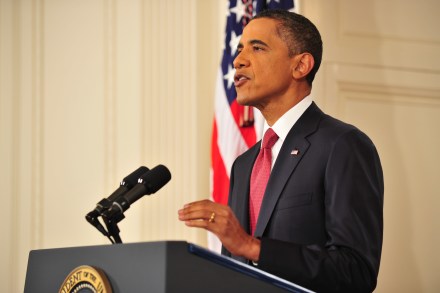
Frantic deal-making over the weekend appears to have clinched a $2.4 trillion US debt ceiling deal, with $900 billion in initial spending cuts and the rest to be determined by a committee over the autumn. The White House has the official statement here.  There’s still a chance the deal will fail in the House, but Republicans are sounding bullish. And Democrats will probably fall into line — not the least because the expiration of the Bush tax cuts over the next couple years could balance the current ‘all-cuts’ proposal.   Of course, negotiations could breakdown over the next 48 hours, but it’s now clear that, despite their rhetoric, US politicians ‘get it’ and fear the consequences of a default.
No sign of progress, apocalypse nigh

From our UK edition

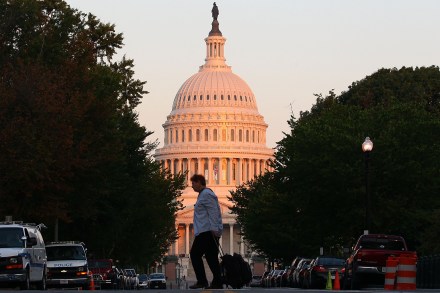
With less than a week to go before America’s August second debt ceiling deadline, negotiations have broken down. Nonetheless, a deal will almost certainly be done. The markets seem convinced, and it’s inconceivable to most observers that the US would arbitrarily default on its obligations (whether to bondholders, pensioners, or employees).  Inconceivable, however, is not the same thing as impossible. As in August 1914, rational decisions by reasonable actors can combine to create an unexpected and unintentional disaster. Even if both Republican and Democrat parties as a whole agree on the importance of raising the ceiling, individual members have every reason to vote against it.

Modest solutions

From our UK edition

While British papers have, naturally, focused on the eurozone’s slow-motion implosion— and, of course, a Westminster media story—America has been flirting with economic Armageddon. After months of phony negotiations over the government debt ceiling, the deadline is less than two weeks away.   Without an agreement by August 2nd the US government will have to impose immediate, catastrophic spending cuts of about 44% to stave off default. It would simply be unable to meet certain obligations, whether to pensioners, public employees or state governments.   Terrifyingly, that might be what voters want — only half of Democrats and less than a third of Republicans and independents support raising the debt ceiling.

The Brady solution to the Euro-crisis

From our UK edition

It was a busy weekend for euro-crisis observers. Mario Draghi, an Italian member of the European Central Bank, was finally appointed as its new President; Mervyn King, Governor of the Bank of England, acknowledged that the European sovereign debt crisis is a 'material threat' to British banks; David Cameron announced that Sir Jon Cunliffe, a Treasury civil servant, will be the UK's next ambassador to the EU; and, according to reports, French banks have laid plans for a 'Brady bonds'-style solution to Greece's troubles.   In the short run, the last of these will be the most important. Named after US Treasury Secretary Nicholas Brady, the innovative Brady Bonds programme helped solve the 1980s Latin American debt crisis.

The AV ‘stabbed in the back’ myth

From our UK edition

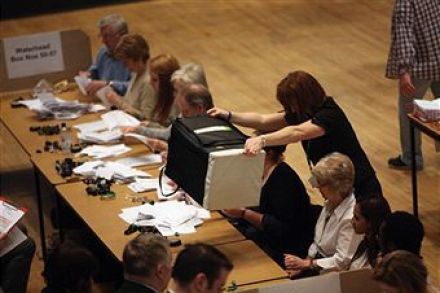
The referendum results haven’t even been announced yet, but the Yes campaign’s myth-making machine is already in full swing. Within moments of the polls closing, Simon Hughes took to the airwaves to dismiss a No vote as a "hollow victory" because of our "false facts and false figures". Just as some people on the left never came to terms with losing to Thatcher – blaming the SDP instead – Yes supporters are already peddling the idea that they only lost because the No campaign fought dirty. So let’s set the record straight on the supposed ‘lies and distortions’ of the last few months: We did not say the BNP would win seats under AV: The Yes campaign’s not-so-clever tactic has been to deny an accusation we never made.

What’s Labour’s alternative to the Big Society?

From our UK edition

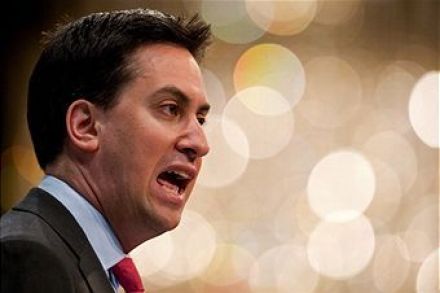
After a difficult few weeks for the Big Society, culminating in Liverpool’s nakedly political ‘withdrawal’ from the vanguard projects, Peter Oborne has already drafted an obituary for the Conservative's policy agenda.   As Oborne says, the Big Society goes to the heart of this government’s reason for existence, and its (real or perceived) failure would damage the Conservatives. But it's notable Labour has yet to come up with an alternative to the Big Society, or even a substantive critique of the idea. The problem for Miliband is that the Big Society agenda captures the centre ground of social policy – neither pro nor anti-state – and risks sidelining his party.

Ten things you need to know about the Localism Bill

From our UK edition

Last week’s Localism Bill introduced a range of novel measures, from elected mayors to local referendums. We’ve put together a list of Ten Things You Need To Know about it, by way of a primer for CoffeeHousers. The bill marks an important leap into the unknown. The dangers are less political – it’s hard for Labour to attack the principle of decentralisation – than practical, because it involves a genuine and significant loss of control for the centre. Pickles and company can’t predict what councils do with the new “general powers of competence,” nor what will happen if and when a new community-run service goes awry. But these challenges will only emerge in time.

California Dreamin’

From our UK edition

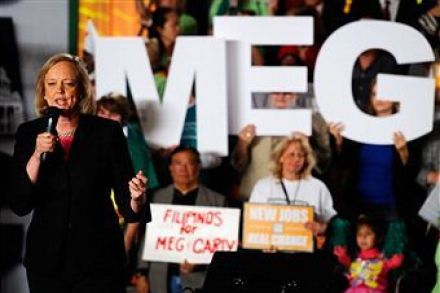
Amidst the Democrats’ doom and gloom over the US midterm elections, there is one race that will give Obama hope, and it is in the world’s 8th largest economy: California. The state’s once and would-be future Governor, Jerry Brown, looks set for a comfortable win over Meg Whitman, the former CEO of eBay. Recent polls have put Brown, a career Democratic politician, ahead by nearly double-digit figures.