History

On the silver trail

From our UK edition

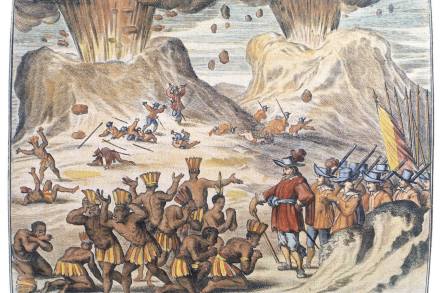
The Spanish empire was the first of Europe’s great overseas empires, and for many years the richest and most powerful. The Spanish empire was the first of Europe’s great overseas empires, and for many years the richest and most powerful. It was also unusual in being an empire of colonists. The Portuguese, and later the Dutch, created coastal forts and settlements which served as trading posts for high-value commodities, chiefly spices. But the Spanish extended their power into the vast spaces of the South American interior, populating the towns with native Spaniards and their half-caste cousins, and lording it over the indigenous inhabitants who worked the great agricultural estates and ranches.
Theatre to mark Western decline

From our UK edition

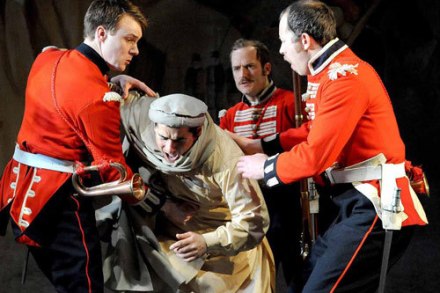
USO is not what it once was. The days of Bob Hope’s wisecracking have receded into the past, and ogled Playmates no longer sex their way across stages. The Pentagon has commissioned British theatrical talent to educate its troops about Afghanistan’s political culture and history. Performed by the Kilburn Tricycle Theatre, The Great Game is a 7 hour show about Afghanistan’s cycles of invasion, struggle and victory. Presumably if the grunts can withstand that, they can withstand anything. As Ben Macintyre notes in the Times (£), there is neither greatness nor beauty in the games that Western powers have played in Afghanistan.

Theatre of the macabre

From our UK edition

Sam Leith marvels at Victorian Britain’s appetite for crime, where a public hanging was considered a family day out and murder became a lurid industry in itself On my satellite TV box, murder is being committed 24 hours a day, seven days a week. I could probably live out the rest of my life watching the three CSIs, Bones, Criminal Minds and Waking the Dead without ever once breaking for a cup of tea or having to set the video to record. Is this a new thing? Sky Plus may be, but the obsession with murder? Not a bit. It all kicked off with the Victorians, as Judith Flanders’s winningly cheerful new book (aimed squarely at The Suspicions of Mr Whicher market) sets out to demonstrate.

Ancient and modern | 18 December 2010

From our UK edition

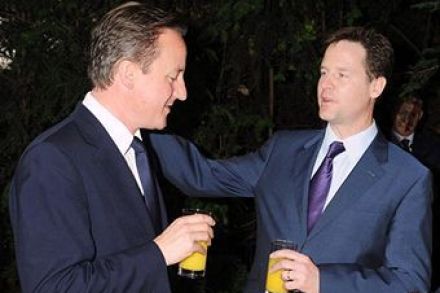
Last week, David Cameron’s enthusiasm for finding out how happy we all are — as if it were any business of his — led us to consider some Greek views of the matter. Balnea, vina, Venus corrumpunt corpora nostra; sed vitam faciunt balnea, vina, Venus proclaims a neat elegiac epitaph from Rome, expressing a common popular viewpoint — baths, wine and sex may wreck us physically, but they help make life worth living. Roman thinkers, however, were as keen as Greeks to discover the happiness that withstood all onslaughts. Stoicism, a Greek invention, was one answer. The basic tenet was that divinity was rational and omnipresent, suffused through nature, ‘like honey through a honeycomb’. Nature and reason were thus closely linked.

Another form of segregation

From our UK edition

N.B. This review was published without its final two paragraphs in the 18th December 2010 issue of The Spectator. These paragraphs have been reinstated for the online version below. These volumes — four for now, and a further six to come — are saddled with a title redolent of lantern lectures delivered in Godalming, say, round about the time that Rorke’s Drift became legendary overnight. The Image of the Black suggests people, or things, of a certain stamp. Penny blacks, so to speak: picked out with tweezers, profiles raised, their blackness being their distinction, their black face value assessed within the swelling majesty of Western Art.

From red giant to white dwarf

From our UK edition

Richard Cohen, who was a publishing director of Hutchinson and Hodder before moving to New York where he now teaches Creative Writing, is the author of one previous book: By the Sword: Gladiators, Musketeers, Samurai, Swashbucklers and Olympic Champions (2002). This comprehensive history drew on his deep, personal knowledge of the subject, for Cohen was five times the British national sabre champion, selected for the Olympic team every time between 1972 and 1984. Its illustrations include a superb shot of the author flying through the air sideways, executing a ‘horizontal fleche’ against Dom Philip Jebb at Downside Abbey. Chasing the Sun is even more ambitious.

The Greatest Englishmen XI

From our UK edition

17th September 1932: Members of the MCC cricket team aboard the liner 'Orontes' at Tilbury, en route for Australia (left to right) Walter Hammond, Douglas Jardine (captain), Brown, Bowes, Duckworth (head turned), Harold Larwood, Leyland, Mitchell, Paynter, Herbert Sutcliffe, Verity, Voce and Wyatt. Photo by H. F. Davis/Topical Press Agency/Getty Images. No, not this lot - though they were so good they might have beaten Bradman and Australia in 1932-33 bowling to "ordinary" fields. At the start of the tour, however, Jardine's men travelled from Perth to Adelaide by train across the Nullarbor Plain. It was a long, often tedious trip. To while away the time they picked various All-Time XIs.

Mastering the k-word

From our UK edition

The film The King’s Speech, which is due to appear in the UK in January, tells the story of George VI’s struggle to overcome his stammer. The film The King’s Speech, which is due to appear in the UK in January, tells the story of George VI’s struggle to overcome his stammer. The speech therapist who cured the King was an Australian called Lionel Logue, and Mark Logue is his grandson. This book grew out of the researches that he began when the film-makers approached him for information. Lionel Logue was an amateur actor and elocution teacher who made a career teaching Australians how to speak correctly, back in the long vanished days when they were ashamed of their lazy diction and half-open mouths.

Why we must remember the lessons of the Anglo-Scottish Enlightenment

From our UK edition

The Adam Smith Institute kindly asked me to speak at their Christmas reception last night, and yesterday I was mulling what to say. When at The Scotsman ten years ago, I would sometimes visit the great man's grave in Edinburgh, and be surprised to see only Chinese tourists paying tribute. It was a pretty good sign of how political power would play out. Edinburgh is, with Prague and Stockholm, among the most beautiful cities in Europe; itself a monument to the Enlightenment. And how tragic that students – even Scottish ones – are taught about the E word only in the context of the French Enlightenment. The likes of Rousseau, Voltaire, Diderot wrote of grandiose ambitions and recasting society using state power.

A thinker of arresting and compelling grandeur

From our UK edition

John Ruskin is the greatest writer whom, today, an educated person can admit not having read without embarrassment. One professes ignorance of Shakespeare or Dickens with apology or defiance, but most of us still seem unaware that Ruskin is as essential as Chaucer or Milton to understanding ourselves within a world (for all its ills), of beauty and happiness. Hopefully The Worlds of John Ruskin will bring new readers to one of modernity’s most remarkable thinkers. Ruskin first made his name with Modern Painters, a five volume work published between 1843 and 1860 which established Ruskin as the dominant art critic of the mid-19th century and is remembered chiefly for its passionate defence of Turner.

No man’s land

From our UK edition

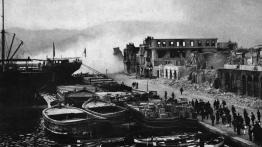
The shores of the eastern Mediterranean, from the eastern Aegean to the delta of the Nile, constitute a region known as the Levant, from the French for the sunrise. The French were first into Smyrna, opposite the island of Chios, which became a boom town in Ottoman times, trading figs and raisins from the hinterland. Far from Constantinople, it was a cheap and relaxed place to do business, encouraged by the Ottoman grants of consular jurisdiction and free trade. European consuls lived like princes in Smyrna, the merchants like lords. Tension between Muslims and Christians, between the many communities of Jews, Greeks, Armenians and Franks who settled there, were generally kept in check, both by the local authorities and by the consuls’ own naval might.

On the charm offensive

From our UK edition

Derek Hill (1916–2000), writes Bruce Arnold, was an English representational landscape and portrait painter of ‘haunting and evocative creative spirituality that is perhaps indefinable’. Derek Hill (1916–2000), writes Bruce Arnold, was an English representational landscape and portrait painter of ‘haunting and evocative creative spirituality that is perhaps indefinable’. But the biographer was undeterred. As an English author of books on the arts and the chief arts critic of the Irish Independent, he was a friend of Hill’s for the last 37 years of his life.

Brave on occasion

From our UK edition

Hitler’s experiences in the Great War have long been shrouded in mystery and controversy, not least because there is relatively little material from that time written by himself. Hitler’s experiences in the Great War have long been shrouded in mystery and controversy, not least because there is relatively little material from that time written by himself. Although Austrian by nationality, he volunteered for the German army in 1914 and served throughout the war in its List Regiment, mostly as a dispatch runner based at regimental headquarters. After he became a celebrity, quite a few former comrades wrote about his war service. Some were enthusiastically positive about Hitler’s military record, others were more sceptical.

The strange case of Turkey, Islamic history and V.S. Naipaul

From our UK edition

Nobel laureate V.S. Naipaul has pulled out of the European Writers’ Parliament in Istanbul, following pressure from Turkish writers who felt ‘uneasy’ about comments he had made about Islam in 2001. Naipaul compared Islam to colonialism, arguing that both had had ‘a calamitous effect on converted peoples. To be converted you have to destroy your past, destroy your history. You have to stamp on it, you have to say 'my ancestral culture does not exist, it doesn't matter.’ Naipaul’s comments concern the factual context of Islam’s expansion between the 7th and 17th centuries, hence the comparison with colonialism.

Who will benefit from the Royal wedding?

From our UK edition

David Cameron is playing down the effect the Royal Wedding will have on the 5th May elections, especially the AV referendum. Fleet Street’s having none of it however. On the one hand, Benedict Brogan can already hear the pops of champagne corks in the No to AV campaign offices. He reasons: ‘One consequence of the Royal wedding will be to make it even more difficult for AV supporters to get their campaign motoring in time for the referendum.’ On the other, Alex Barker makes the case for the Lib Dems’ Yes to AV campaign. He has a three point-plan, centring on low turnout following reduced campaign time. This, he thinks, will benefit those concerned about the injustice of the current system, rather than its die-hard defenders.

There was more to Blair than a winning smile

From our UK edition

Following Sir Christopher Meyer's review of George Bush's Decision Points, here is the other half of the double act. The closest I’ve come to meeting Tony Blair was knocking into Michael Sheen on the street. I got no closer reading Blair’s memoir, most of which is beyond parody. Cherie Booth QC is a strong armed nocturnal adventuress; Anji Hunter is a bountiful babe; and Mr Blair is a would-be Casanova with a taste for premonitions and Schindler’s List. You barely notice New Labour’s reform programme under the torrent of erratic writing and bizarre digressions.

The man and the myth

From our UK edition

Tolstoy’s legend is not what it was; but sometimes the world needs idealised versions of ordinary men, argues Philip Hensher The truism that Tolstoy was the greatest of novelists hasn’t been seriously questioned in the last century. The nearest competition comes from Proust and Thomas Mann, I suppose. But when you compare two similar moments in the writings of Tolstoy and one of these other supreme novelists, a difference emerges. Both War and Peace and In Search of Lost Time culminate in a glimpse of the next generation.

Deadlier than the Mail

From our UK edition

This is an effervescent, elegantly written and faultlessly researched romp through the life and times of someone whose name in Britain was spoken with genuine fondness by an urbane few, with self-righteous anger by some and with disdain or fascination by almost everybody who can read — as, like it or not, very few people don’t enjoy gossip. This is an effervescent, elegantly written and faultlessly researched romp through the life and times of someone whose name in Britain was spoken with genuine fondness by an urbane few, with self-righteous anger by some and with disdain or fascination by almost everybody who can read — as, like it or not, very few people don’t enjoy gossip. Tim Willis has caught the atmosphere of the Dempster decades with uncanny precision.

A split personality

From our UK edition

By the 1970s Ronald Fraser had established himself as an expert on modern Spain and an authority on its oral history, when that discipline was an exotic new concept. As a radical socialist, and a friend of the Marxist historian Perry Anderson, he published a series of distinguished books on popular risings and guerrilla warfare in 19th-century Spain. It was society seen from below. But no one reading the first edition of Fraser’s memoir, published in 1984, would have guessed any of this. Only in a new introduction does he mention his friendship with Gerald Brenan, whose The Spanish Labyrinth was a sacred text to all of us who wrote on 20th-century Spain.

A going-away present

From our UK edition

A great time ago when the world was young there was a pleasant and harmless custom by which a British ambassador when leaving his post could sit down and write a valedictory dispatch to the Foreign Secretary. This was not compulsory; often an ambassador withheld his opinions until he was leaving not just a particular post but the foreign office as a whole. The motives of the valedictory dispatch varied. Some ambassadors concentrated on summarising the country in which they had last served; others attempted to sum up the whole period of their service. Some took the opportunity to deplore the present state of Britain; others told amusing stories; almost all thanked the staff who had supported them, and in particular their wives.