History

Far from idealism

From our UK edition

If you think the Special Relationship has been looking strained in recent years, consider its condition during the American Civil War(1861-65). In 1863, an anonymous letter was delivered to Charles Francis Adams at the US legation in London: Dam the Federals. Dam the Confederates.Dam you both. Kill you damned selves for the next 10 years if you like; so much the better for the world and for England. Thus thinks every Englishman with any brains. NB PS We’ll cut your throats fast enough afterwards for you if you ain’t tired of blood, you devils. Brevity, they say, is the first grace of style. The feeling that letter encapsulates ran pretty high in England.

Thynges very memorable

From our UK edition

John Leland, who died in 1552, lived less than 50 years and was mad for the last five of them. Today he is one of the forgotten worthies of 16th-century England. An enormous edition of his major prose work may therefore seem an eccentric publishing choice. Yet there are many reasons why we should remember this gentle, melancholy and rather obsessive scholar from another age. Leland lived at a time when England was changing faster than it had ever done before. Henry VIII had broken with Rome. An aggressive protestantism had achieved a growing influence, and was soon to take possession of the English Church.

Anthem for doomed youth

From our UK edition

Britain’s greying post-war generation are getting increasingly used to a bad press. Britain’s greying post-war generation are getting increasingly used to a bad press. Once lauded for liberating British society, the teenyboppers of the 1960s are now vilified for squandering a time of plenty, having mortgaged their children’s futures to fund a reckless, debt-fuelled shopping spree. The Baby Boomers’ thirst for property speculation, their younger critics lament, has transformed the UK housing market into a vicious collusion between rack-rent retirees and latte-crazed estate agents. For the young, owning a house has become a distant dream.

Bearing the brunt

From our UK edition

Ostensibly this small book is a jolly and true story (illustrated with some charming black-and-white snapshots) about the military experiences of Wojtek (pronounced Voycheck), the bear who, bought as a cub by Polish soldiers in Persia, earned name, rank and number as the mascot of the 22nd Company of the Artillery Supply Command, 2nd Polish Corps. But it proves a deeper and, especially for British readers, a much darker tale. Neal Ascherson, in a fine historical essay, explains how Wojtek spread hope and fostered humanity among soldiers, who ‘had lost most of what is supposed to make a war worth fighting and a life worth living’. The men of the 2nd Polish Corps had fought and lost to the Germans and Russians, and survived deportation to the Soviet Union.

Objective thoughts

From our UK edition

Timothy Clifford enjoys the British Museum director’s tour of human history – but misses the beauty of Kenneth Clark’s ‘Civilisation’ ‘Mission Impossible’ is how Neil MacGregor, in the preface to this book, describes the task set for him by Mark Damazer, controller of BBC Radio 4. MacGregor was to introduce and interpret 100 objects chosen by colleagues from the British Museum and the BBC. They had to range in date from the beginning of human history, around two million years ago, right up to the present day. The objects were intended to cover the whole world equally, as far as it is possible. They would necessarily include the humble things of everyday life as well as great works of art.

A far-fetched war

From our UK edition

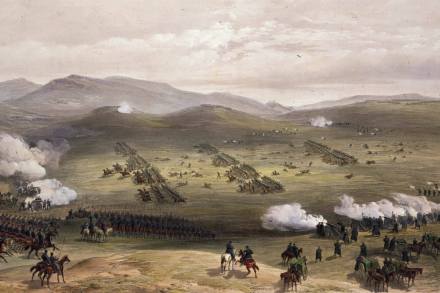
First, a disclaimer: this review will not touch upon some recent, odd behaviour of this book’s author, Orlando Figes, because I can’t see that it’s relevant. First, a disclaimer: this review will not touch upon some recent, odd behaviour of this book’s author, Orlando Figes, because I can’t see that it’s relevant. The history of the Crimean war is far removed in time and in space from contemporary literary politics, and I think we should keep it that way. Second, an unexpected fact. Although the Crimean war is also far removed in time and space from contemporary American politics, while reading this excellent book I could not help but marvel at the many parallels with the present.

That turbulent decade

From our UK edition

On 2 January, 1980, a new decade was ushered in with a strike by steelworkers. It was their first national stoppage for half a century, and after three tense months they were rewarded with a 16 per cent pay rise. Once again, a strike seemed to pay off, with weak managers sacrificing long-term gain to avoid short-term pain, whatever the costs ultimately to their industry or to the economy. But then, in a clear sign that the Eighties were going to be rather different to the tortured decade that had preceded it, the Government sacked the chairman of British Steel. He was replaced by a tough Scottish-born banker from Wall Street called Ian MacGregor, who immediately began challenging the old order and slashing the workforce.

Land of poets and thinkers

From our UK edition

The reason Peter Watson gives for writing this long intellectual history of Germany since 1750 is a convincing one: that British obsession with Nazism has blinded many British people to the achievements of German culture. Watson describes the complaints of German commentators about the emphasis on Nazism even in British schooling, which were borne out by the 2005 report of the Qualification and Curriculum Authority: ‘There has been a gradual narrowing and “Hitlerisation” of post-1914 history.’ Watson also discusses the importance of Nazism to America, and his most intriguing point is that interest in the Holocaust is a comparatively recent phenomenon. A study in the 1950s found that the effect of the Holocaust on American Jews was ‘remarkably slight’.

A race against time

From our UK edition

Lord Palmerston poses severe quantitative problems to biographers. His public life covered a huge span. Born in 1784, the year Dr Johnson died, he was nine years younger than Jane Austen and four years Byron’s senior. He died in 1865, the year Kipling, Yeats and Northcliffe were born. To put it another way, when he was a baby Reynolds was painting Mrs Siddons; when he died Manet was showing his ‘Olympia’, and Tolstoy had just published War and Peace. His long life was crowded with incessant political activity. He was on the Board of Admiralty in 1807, aged 23, even before he had a seat in parliament.

. . . and they did to us

From our UK edition

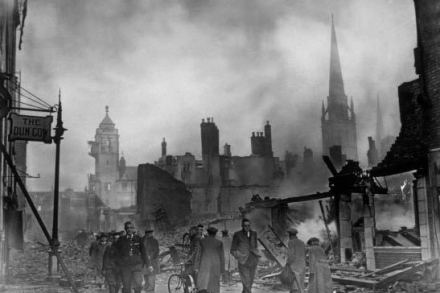
The craters are all filled in, the ruins replaced, and the last memories retold only in the whispery voices of the old. Apart from celebrating the resilience of our parents and grandparents 70 years ago, why remember the Blitz? It was triggered by the desire to retaliate, either Churchill’s to the random dropping of bombs on London in the summer of 1940 (heightened by the prior example of Nazi bombing of Guernica and Warsaw) or Hitler’s to the subsequent raid on Berlin. ‘This is a game at which two can play,’ he ranted on 4 September. ‘When they declare they will attack our cities in great measure, we will eradicate their cities.

Ride on in majesty

From our UK edition

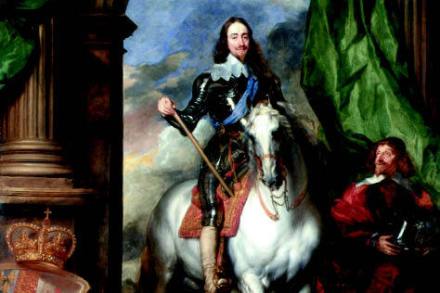
Governments in early modern England, having no standing army nor a civil service to speak of, required the consent of the governed. Authority had to be ‘culturally constructed’. That is the starting-point for Kevin Sharpe’s monumental investigation into royal branding in the age of the Tudors and Stuarts. In the first volume of a projected trilogy, Selling the Tudor Monarchy, he argued that the Tudors made the person of the monarch more important than administrative procedures in establishing royal authority. Elizabeth, in particular, fixed in the national memory by her portraits, played down political divisions and ‘privileged her image over actions and events’, making the sovereign the sacred ‘unifying embodiment of the nation’.

Troubled waters | 2 October 2010

From our UK edition

This is the fifth in C. J. Sansom’s engrossing series of Tudor crime novels. This is the fifth in C. J. Sansom’s engrossing series of Tudor crime novels. His hero is Matthew Shardlake, a middle-aged, hunchbacked property lawyer who lives on the fringe of Henry VIII’s dangerously magnetic court. In his youth a zealous Protestant, or Reformer, the excesses of the revolution we call the Dissolution have led him to distance himself from all factions. He seeks a wife and a quiet professional life, but in a world where the religious is political and the political religious, his insistence on justice invariably leads him into troubled waters.

Sweeter than honey

From our UK edition

The only thing I can remember about a Tesco advertisement on the television the other night is the line: ‘No rest for the wicked.’ It was meant ironically, of course. The only thing I can remember about a Tesco advertisement on the television the other night is the line: ‘No rest for the wicked.’ It was meant ironically, of course. The suggestion was not that wicked people alone shop at Tesco’s. Nor was the phrase intended as a pious invocation of the Bible, its source, Isaiah, 57:21. An anthropologist describing the clichés, or tropes, of Western cultures might form the idea that biblical religion played a lively part in daily discourse.

Capturing the last of England

From our UK edition

The book is interesting because it has insights and novelty, not least in taking a period and a culture regarded by many as second best compared with what was happening elsewhere at the time, and shows it to have been enlightened, intelligent and full of beauty. However, it infuriates partly because of the author’s occasionally cloying and highly adjectival style, and partly because, for all her scholarship in the subject, one gets the sense that she has spread herself too broadly and lacks a feel for the real popular currents of the Twenties and Thirties. The book is certainly ambitious.

Systematic genocide

From our UK edition

You don’t have to accept the definition of how to do things, and you don’t have to follow other people’s choices and paths, OK? It is about your choices and your path. It is a measure of people’s continuing admiration for Chairman Mao that last year the White House communications director, Anita Dunn, unashamedly described him as a ‘favourite political philosopher’ because, as she told an audience of American high- school graduates, Mao showed that You don’t have to accept the definition of how to do things, and you don’t have to follow other people’s choices and paths, OK? It is about your choices and your path.

In and out of favour in Iraq

From our UK edition

Nowadays the TV cameras make Baghdad look like a suburban car park, and for Tamara Chalabi, raised in England and Beirut on memories of pre-Saddam Iraq, the first encounter in 2003 was dismal. Her family kissed the very ground as they returned from exile, but initially she felt, and recognised, nothing. She has worked hard to connect with the city where she now lives, and in this absorbing book she has wrapped up much that is important in Iraq’s history in the story of her own family’s development through the 20th century. Of course the reader may want to ask what role Chalabi’s father played in landing Iraq in the mess it is in today.

Welsh wizardry and venom

From our UK edition

Paul Johnson reviews Roy Hattersley’s life of David Lloyd George No politician’s life is so difficult to write as Lloyd George’s. All who have tried have failed, and wise heavyweight historians have steered clear. I applaud Roy Hattersley’s courage in tackling this rebarbative subject and congratulate him on his success in making sense of Lloyd George’s early life up to his emergence as a major figure in parliament. Thereafter, however, he tends to lose his way in the trackless jungle of endless political crises during Lloyd George’s 16 years in office, festooned as they are with the undergrowth of his financial fecundity and the florid canopy of his love affairs.

The match that sparked the Civil War

From our UK edition

There are turbulent marriages. And then there are turbulent marriages in which the husband ends up getting beheaded on a stage. This book describes the latter. One doesn’t normally need to encourage publishers to hyperbole, but in the case of Katie Whitaker’s subtitle, there might have been a case for giving it a bit more welly. The story begins with a prissy 15-year-old French princess being taken to England, to a husband whom she’d never seen. It ends with that husband losing his crown and his head to Oliver Cromwell’s Parliamentarian taleban. The sad coda is the princess living out her days back in France, estranged from most of her children: older, wiser, but not much happier.

This mortal coil

From our UK edition

Among the most famous of all living poets, Nobel Laureate, highly educated, revered for his lectures and ideas as well as for his poetry, Seamus Heaney has a daunting reputation. He remains, however, enjoyed by a broad spectrum of readers, accessible, song-like, direct, concerned with everyday details and human relationships. Essentially, Heaney’s poetry strikes to the heart through its central metaphor — the very mechanics of being human. Human Chain, his latest collection, makes this familiar territory absolutely explicit, right from the title.

Flodden vs Culloden

From our UK edition

Further to this post, it's not a fair fight. Commenter Ben G asks: But isn't Culloden more significant? The effective end of a Scottish claim to the throne. Remember, after that you became 'North Britain'. This is a common misperception. Unlike Flodden, Culloden was not a fight between England and Scotland. As many, and perhaps more, Scots fought against the Young Pretender on Drumossie Moor as fought for him. The '45 was as much a Highland vs Lowland conflict as a Scotland vs England affair. Which is one reason why, from a Unionist perspective, Culloden is less important than Bannockburn. The latter prevented Scotland from becoming a northern Wales and so, in turn, permitted a Union in place of an annexation.