History

Visions of boyhood

From our UK edition

Among the many photographs in this comprehensive history is one of a master in a clerical collar. He stares at the camera with a startled expression and looks out of place, devoid of the self-assurance of others alongside him. His name is J. W. Coke Norris, and it dawned on me slowly that this was the man on whom Rattigan had based the character of Crocker Harris, the dessicated classics master in The Browning Version, played in the film by Michael Redgrave, a play so close to Rattigan’s heart that he never had to make an alteration or change a line. Like Crocker Harris, Coke Norris taught only the lower forms Latin and Greek, and was principally in charge of the school timetable. He took early retirement at 40.

How the West became so dominant

From our UK edition

Niall Ferguson has a zippy essay in The Times today previewing his forthcoming TV series and book on why the West became so dominant over the past 600 years. He argues that there are six features of the Western system that gave it its edge: “1. Competition: a decentralisation of political and economic life, which created the launch pad for both nation states and capitalism. 2. Science: a way of understanding and ultimately changing the natural world, which gave the West (among other things) a major military advantage over the Rest. 3. Property rights: the rule of law as a means of protecting private owners and peacefully resolving disputes between them, which formed the basis for the most stable form of representative government. 4.

The empire strikes back

From our UK edition

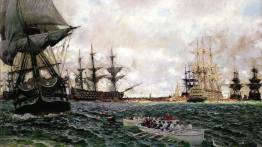
Something strange happened in New York on a cold November afternoon in 1783: the city effectively turned itself inside out. Mounted on a grey horse, George Washington marched down Manhattan at the head of the victorious US army. At the same time, British troops headed frantically in the opposite direction. When they reached the southernmost tip of the island, they clambered into longboats and rowed out to the Royal Navy ships waiting in the harbour. All this, of course, left the thousands of loyalists who had supported the British during the War of Independence in a very tricky position.

Poetic licentiousness

From our UK edition

Reprobates were, in the Calvinist lexicon, those unfortunates not included among God’s elect and therefore sentenced to eternal damnation. Reprobates were, in the Calvinist lexicon, those unfortunates not included among God’s elect and therefore sentenced to eternal damnation. For stern English puritans it was pleasing to think that Royalist ‘cavaliers’ were among them. Alas, there was no way of knowing. Gallingly, since life everlasting could be bought neither by good works (in the Roman tradition) nor by belief alone (in the Lutheran disposition), cavaliers had an equal chance of it with anyone else. But then, confusion reigns everywhere in the entangled mesh of roundhead versus cavalier.

The battle for the holy city

From our UK edition

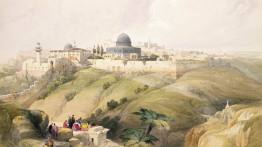
In a tour de force of 500 pages of text Simon Sebag Montefiore, historian of Stalin and Potemkin, turns to a totally different subject: the city of Jerusalem. Founded around 1000 BC by Jews on Canaanite foundations, it has been, in turn, capital of the Kingdom of Judah; scene of the crucifixion of Jesus and of Mohammed’s night ride to heaven; a provincial city in the Persian, Hellenistic, Roman, Arab, Ottoman and British empires; and finally the capital of Israel. Using the latest archaeological evidence, Montefiore recounts with verve the manias and massacres of the different dynasties which ruled the city. The line of David, the blood of the Prophet, the Crusader dynasties of Flanders and Lusignan dominated the city as well as competing religions.

Two Second World War Stories

From our UK edition

Riots today in Tobruk and Benghazi, places largely known to me from films and histories and comics of the Second World War. The scale of that conflict is, in some ways, ever-harder for people of my generation to grasp. Not only has there been nothing like it since (mercifully), it's hard to imagine anything like it happening again. Of course, that's what people have thought about war before. Two things popped up in my RSS feed today, telling stories of unknown or little-remembered aspects of the war. First, from Tom Ricks: During World War II, the [United States] Army intentionally formed a unit chockablock with fascisti and their suspected sympathizers. [...

Why the heck not?

From our UK edition

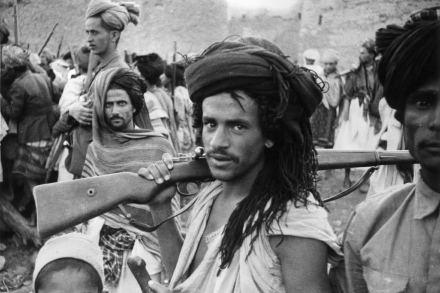
Philip Hensher recounts how a handful of British mercenaries in the 1960s, headed by the Buchanesque Jim Johnson (pictured above), trained a rag-tag force of Yemeni tribesmen to defeat the full might of the Egyptian army in a conflict that Nasser later referred to as ‘my Vietnam’ ‘Enormous fun and a tremendous adventure,’ one of the participants called it afterwards, voicing the sentiments of every British soldier running amok since the beginning of time. Probably there were soldiers under Boadicea who said exactly the same thing. This little known story from the very end of the imperial adventure is redolent of cheek, bravado and the undertaking of a challenge for no other reason than thinking ‘Why the heck not?

Traducing Canute Watch: Frank Field

From our UK edition

Interviewed by the Times, Frank Field fails the Canute Test: Mr Field said that it was not good enough for the Government to say there was enough money in the budget to maintain the existing Sure Start centres. “The Government needs urgently to step in,” he said. “At some stage they are going to have to grow up, stop being King Canute and realise if they don’t do something about Sure Start they are going to be overwhelmed by the incoming tide of local authority cuts. We are in a difficult phase. They are keeping to their localism commitment, but now there is evidence on just how dangerous localism can be.

Perchance to dream

From our UK edition

This book reads like an interesting after- dinner conversation between intelligent friends. That said, it is a rambling conversation, and although it is extremely entertaining, it does not add up to much. Its ostensible subjects are two instances of scientific intelligence being brought to bear on the possibility of defying, or surviving, death. In the first case, John Gray investigates those, such as Freddie Myers and Henry Sidgwick, who formed the Society for Psychical Research. In the second instance, Gray tells again the bizarre story of the cult of Lenin, and Leonid Krasin’s belief that, if Lenin’s body could be kept in a state of cryonic suspension, there might dawn a glad day in which Comrade Lenin could return to life.

Care or cure?

From our UK edition

Cancer is usually associated with death. For the cancer specialist, however, cancer is more about life: not just patients’ lives; the cancer itself often lives the life of Riley. If it has a life, then, it is entitled to a biography. Here, Siddhartha Mukherjee, an obviously compassionate oncologist, provides that biography. The basis of any biography is the story.

Nowhere becomes somewhere

From our UK edition

There have been quite a few anthologies of British eccentricity. Usually they are roll-calls of the lunatic: a sought-after heiress so snobbish she finally gave her hand in marriage to a man who had managed to convince her he was the Emperor of China; a miser so mean he would sit on fish until he considered them cooked; a man so addicted to cobnuts he would, after any long coach journey, be up to his knees in their shells. Men who refused to get into a bath, others who refused to get out of one, or were so quarrelsome they could spot an insult at 100 yards, others who so loved animals they would bath owls (which died), or founded their own religions so they could copulate with the faithful on the high altar (though I gather this was an ambition of the novelist Graham Greene).

A war of nutrition

From our UK edition

The long summer that led up to the last days of peace in Europe in 1939 — the vigil of the Nazi assault on Poland on 1 September and the ensuing Phoney War — gave little hint of the storm to come. The long summer that led up to the last days of peace in Europe in 1939 — the vigil of the Nazi assault on Poland on 1 September and the ensuing Phoney War — gave little hint of the storm to come. As German troops engulfed Poland, however, the Nazi science of massacre was put to the test. Within two months of Hitler’s invasion, an estimated 5,000 Jews were murdered behind the Polish lines. Millions were subsequently starved to death. Food is the central focus of this grimly absorbing enquiry into the second world war.

Yes, Virginia, the World Gets Better

From our UK edition

The year before I was born fewer than one in three countries in the world could be considered properly free. Today, according to Freedom House, nearly one in two can be classified as free. Despite the grinding stupidity and tedious witlessness that so often dominates our domestic politics we should remember that this is a great time to be alive. In fact there have been few better eras in human history. This is a big claim but it's justified given the expansion of liberty and opportunity across the planet these past 30 years. Of course there are exceptions and there remain many black holes of misery but the overall trend is clear.

Thank you, Nacia Anastazja Brodziak

From our UK edition

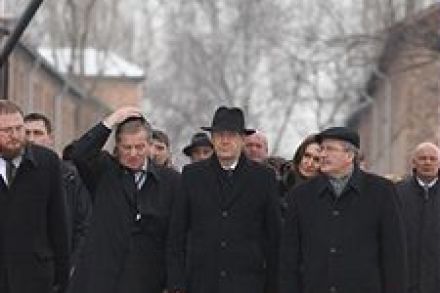
Today is Holocaust Day. A day to remember the horrors of the past. But it should also be an occasion to recall the moments of hope and the people - and peoples -  that personified that life-saving hope. Like Nacia Anastazja Brodziak who took in my fleeing grandparents, hid them from the Nazis in her tiny Warsaw flat and for five years pretended they were her Catholic cousins from the countryside. I went to see her more than a decade ago. I wanted to thank her. It is actually hard to thank someone without whom neither I nor my father would have been born. Today is a way to do so again - in one's prayers, or thoughts. It is also a day to thank peoples. The selflessness that individuals showed during World War II was also shown by a few nations.

All these Indias

From our UK edition

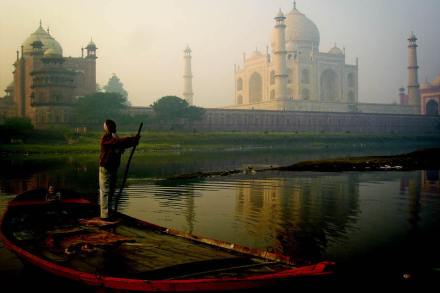
Some years ago I went to a dinner party in Lucknow, capital of India’s Uttar Pradesh, where the hosts and their guests were Hindus who as children had fled Lahore in 1947 at the time of Partition. A week later I was in Lahore, capital of Pakistan’s Punjab, and found myself in a house where the other diners were Muslim refugees who at a similar age had come from Lucknow. Midway through the second meal, I suddenly realised how similar the two groups of middle-class professional people were. Lawyers, teachers, booksellers and architects, they shared the same tastes and the same worries, their chief anxiety being that their belligerent governments had both recently acquired nuclear weapons.

Under Eastern eyes

From our UK edition

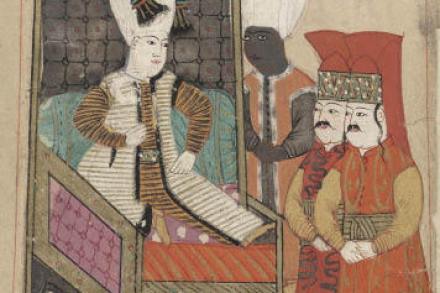
The Ottoman Empire inspired great travel books as well as great architects. Travellers like George Sandys, Richard Pococke or the Chevalier d’Arvieux in the 17th and 18th centuries were curious, erudite and less arrogant than their 19th-century successors. The Ottoman Empire inspired great travel books as well as great architects. Travellers like George Sandys, Richard Pococke or the Chevalier d’Arvieux in the 17th and 18th centuries were curious, erudite and less arrogant than their 19th-century successors. Like cameras, they recorded monuments, encounters, manners and customs. They can make the reader feel that he or she is there, in Smyrna or Beirut, at that time. Ottoman travel writers on Europe, however, are far fewer.

On the silver trail

From our UK edition

The Spanish empire was the first of Europe’s great overseas empires, and for many years the richest and most powerful. The Spanish empire was the first of Europe’s great overseas empires, and for many years the richest and most powerful. It was also unusual in being an empire of colonists. The Portuguese, and later the Dutch, created coastal forts and settlements which served as trading posts for high-value commodities, chiefly spices. But the Spanish extended their power into the vast spaces of the South American interior, populating the towns with native Spaniards and their half-caste cousins, and lording it over the indigenous inhabitants who worked the great agricultural estates and ranches.

Theatre to mark Western decline

From our UK edition

USO is not what it once was. The days of Bob Hope’s wisecracking have receded into the past, and ogled Playmates no longer sex their way across stages. The Pentagon has commissioned British theatrical talent to educate its troops about Afghanistan’s political culture and history. Performed by the Kilburn Tricycle Theatre, The Great Game is a 7 hour show about Afghanistan’s cycles of invasion, struggle and victory. Presumably if the grunts can withstand that, they can withstand anything. As Ben Macintyre notes in the Times (£), there is neither greatness nor beauty in the games that Western powers have played in Afghanistan.

Theatre of the macabre

From our UK edition

Sam Leith marvels at Victorian Britain’s appetite for crime, where a public hanging was considered a family day out and murder became a lurid industry in itself On my satellite TV box, murder is being committed 24 hours a day, seven days a week. I could probably live out the rest of my life watching the three CSIs, Bones, Criminal Minds and Waking the Dead without ever once breaking for a cup of tea or having to set the video to record. Is this a new thing? Sky Plus may be, but the obsession with murder? Not a bit. It all kicked off with the Victorians, as Judith Flanders’s winningly cheerful new book (aimed squarely at The Suspicions of Mr Whicher market) sets out to demonstrate.

Ancient and modern | 18 December 2010

From our UK edition

Last week, David Cameron’s enthusiasm for finding out how happy we all are — as if it were any business of his — led us to consider some Greek views of the matter. Balnea, vina, Venus corrumpunt corpora nostra; sed vitam faciunt balnea, vina, Venus proclaims a neat elegiac epitaph from Rome, expressing a common popular viewpoint — baths, wine and sex may wreck us physically, but they help make life worth living. Roman thinkers, however, were as keen as Greeks to discover the happiness that withstood all onslaughts. Stoicism, a Greek invention, was one answer. The basic tenet was that divinity was rational and omnipresent, suffused through nature, ‘like honey through a honeycomb’. Nature and reason were thus closely linked.