History

Rather in the lurch

From our UK edition

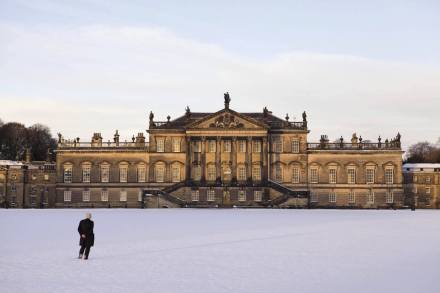
Will it ever end? The romantic interest in the architecture, history and life lived in the country house is as alive today as it was in 1978, when Mark Girouard wrote his seminal Life in the English Country House. There are now some three million members of the National Trust — guardians of the flame of country-house life that still just flickers in its teashops. The path to an instant peerage is along the passages of the imaginary Downton Abbey, and feudal splendour is still the dream destination of hedge-fund millionaires. How much is the dream driven by aesthetics, how much by nostalgia and how much by a fascination with social history?

The Poor Bloody Infantry Faces More Friendly Fire?

From our UK edition

In opposition Liam Fox boasted he could cut the Ministry of Defence by 25% without there being any impact on "frontline" troops. The confirmation that there will be 17,000 fewer men and women in uniform by this parliament's end mocks that promise. To govern is to choose, for sure, but the scale of these cuts leads one to wonder, again, what kind of capability will be left once they are completed. For now, the Gurkhas excepted, the infantry has been spared. But there are already indications that its luck, if you can call it that after all the reorganisations of recent years, will run out when the next "tranche" of cuts is announced. Today's editions of the Scotsman and the Herald each publish warnings that entire infantry battalions are at risk.

In the pink

From our UK edition

In 1988 Katherine Swift took a lease on the Dower House at Morville Hall, a National Trust property in Shropshire, and created a one-and-a-half acre garden in what had been a field. In The Morville Hours (2008), she placed that garden in its landscape and wrote one of the finest books about the history, philosophy and the practice of gardening you are likely to read. She is currently working on a sequel, and The Morville Year is a very welcome interim volume, gathering the columns she wrote for The Times between 2001 and 2005.

The trail goes cold

From our UK edition

For centuries, the history of the far North was a tapestry of controversies and mis- understandings, misspellings, dubious arrivals and equally dubious departures. Pytheas the Greek sailed north from Britain in the 4th century BC, found a place where the sea, land and sky seemed to merge, and was trounced by later scholars as a terrible charlatan. The Vikings mingled cartographical details with stories of trolls and hauntings. During the reign of Elizabeth I, Martin Frobisher went north and (mistakenly) thought he’d found gold. Undeterred, successive explorers and treasure hunters ventured into the Arctic wastes, many of them vanishing among the floes. Frederick Cook claimed to have reached the North Pole in 1908; his claim was promptly dismissed.

The evil of banality

From our UK edition

Aimez-vous Heidegger? According to his admirers, he was the most significant and influential philosopher of the 20th century. For Hannah Arendt, despite her claims eventually to have found the perfect husband in Heinrich Blucher, Heidegger was the love of her life. She was his precocious teenage pupil when he lectured on Plato’s Sophist at Marburg in 1924, and the Herr Doktor’s dark-eyed Jewish mistress not long afterwards. He was 35, married with two sons, only one of whom (it emerged much later) he had fathered. His wife Elfride was an eager anti-Semite; Heidegger’s eagerness was for his own advancement and fame. Hannah never got over the thrill of being his cookie.

Haitian horrors

From our UK edition

Twenty years ago, in 1991, I was shown round the National Palace in the Haitian capital of Port-au-Prince. A government official led me through long rococo halls crammed with oriental rugs, gilded boule clocks and vases of deep pink roses. Little had changed since Jean-Claude ‘Baby Doc’ Duvalier had fled Haiti in 1986. The Hall of Busts was lined with bronze heads of other Haitian presidents up to Elie Lescot in 1946. However, the bust of Jean-Claude’s dictator father ‘Papa Doc’ Duvalier had been removed to the ‘Dépot de Débris’, where it lay covered in dust. On 12 January 2010, the National Palace was turned to dust in an earthquake.

The joy of diversion

From our UK edition

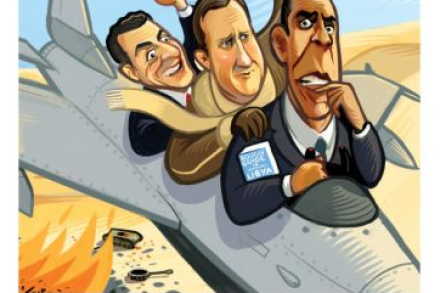
“We should have more history on the programme,” said Evan Davis at the end of yesterday’s episode of R4’s Today. “I learned a lot from that.” He had just been interviewing Peter Jones (listen here) about a piece in this week’s Spectator about the two Libyas — a split which may emerge as a result of the fly zone. Tripoli and Benghazi were originally part of two different worlds: Roman and Greek. For these coastal towns, north-south sea routes were more important than east-west road routes (which 500 miles of desert made pretty much impossible). Just as the Kurds managed independence in the north of Iraq after the 1992 No Fly Zone, so the ancient Cyrenaica may re-emerge now. Peter explains all this beautifully in this week’s magazine.

Sins of the fathers | 26 March 2011

From our UK edition

The trouble about writing a history of the popes is that there are so many of them. Usually elderly when elected, most of them have only lasted a few years. The longest reign was that of the mid-19th-century pope, Pius IX, Pio Nono, who clung on for 31 years. In our own times, Pius XII did 19 years, Paul VI 15 and John Paul II 18. But all were unusual. Closer to the average was poor John Paul I, who lasted 34 days. As a result there have been 264 popes. About some we know nothing and one or two may have been fictitious. ‘Pope Joan’ certainly was. So taking on the task of a comprehensive survey requires courage. Lord Norwich is a battle-hardened veteran of many popular histories. The Hon.

Iron in the blood

From our UK edition

How curious that such an outsize man, in physique as well as personality, should be remembered today mainly for giving his name to a small fish. For the 19th century, Bismarck was no herring but a leviathan. Between 1862 and 1890 he created Germany, seeing off first the Austrian empire and then France. He dominated Prussian and then German politics and played a central role in the international relations of Europe. He also created the German problem which has been with us in one form or another ever since: his new country which sat at the heart of Europe was already a great military power and in the years after unification grew into a great economic one as well. He came from an unlikely background for such an extraordinary statesman.

A chorus of disapproval

From our UK edition

At more than 700 pages including appendices, Guardian writer Dorian Lynskey’s 33 Revolutions Per Minute: A History of Protest Songs (Faber & Faber, £17.99) certainly can’t be accused of skimping on the details. Adherence to the pun of the title has resulted in a thorough if necessarily left-wing history of political dissent since the Thirties, but don’t expect much emphasis on the music. There’s a reason polemical songs are the ones you admire for their commitment rather than sing in the shower. But it’s precisely because there’s more protest here than song that the book does such a good job of exposing the poseurs.

The missing millions

From our UK edition

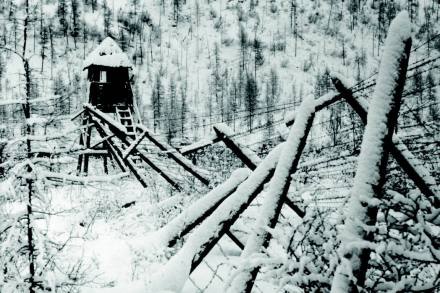
The collapse of the Soviet Union spawned an entire genre of literature: the Gulag memoir, produced by victims of the USSR’s concentration camps. A few masterpieces were published in the West, or in samizdat, before the 1980s, for example Evgenia Ginzburg’s renowned Into the Whirlwind and the works of Alexander Solzhenitsyn.But as Soviet-style communism fell apart, the long-suffering voices were allowed to speak, and in Russia an enormous number of first-person books and articles began appearing. In her brilliant 2004 Gulag, Anne Applebaum wrote the best history of the Soviet camps to appear outside of what was once referred to as the Eastern bloc. That was a monumental achievement.

Stalin: Not Such a Bad Chap Really

From our UK edition

That, anyway, seems to be one of the things to come out of Terry Eagleton's new book, Why Marx Was Right. It's not published until May but Tyler Cowen reports that it contains these winning arguments: But the so-called socialist system had its achievements, too.  China and the Soviet Union dragged their citizens out of economic backwardness into the modern industrial world, at however horrific a human cost; and the cost was so steep partly because of the hostility of the capitalist West. [...] Building up an economy from very low levels is a backbreaking, dispiriting task.  It is unlikely that men and women will freely submit to the hardships it involves. [...

The Execution of Admiral Byng

From our UK edition

It took place, as James Kirkup reminds us, on this day in 1757. As James puts it: To this day, his family argue – with considerable justification — that he was wrongly treated and should be pardoned. Every year on the anniversary of his death, bells sound in Southill, Bedfordshire, where his descendents still live. Voltaire immortalised Byng’s death in Candide with a scathing summary of the British attitude to its military commanders: il est bon de tuer de temps en temps un amiral pour encourager les autres. Sadly, those days are gone. For the avoidance of doubt, I’m not arguing that it was right to kill Byng, or that such brutal injustices should be visited on others.

‘This time it will be different’

From our UK edition

There used to be two rules of successful imperialism. First, don’t invade Russia. Second, don’t invade Afghanistan. As Rodric Braithwaite points out, invading the latter country itself offers no real difficulties. The Afghans abandon their strongholds and take to the hills, allowing the invader to enjoy the illusion of power in Kabul, with a puppet leader installed in the Bala Hissar, the old palace fortress. The problems come later, as a long war of attrition achieves little and finally obliges the invader to cut his losses and run. Anyone can see that this is what is happening at present to the British and American forces. And it has happened before. It happened to the British in the 1840s — a tragic venture about which I wrote a novel, The Mulberry Empire.

Pastures new

From our UK edition

On 20 September 1949, five days after his election as Chancellor of the newly created German Federal Republic, Konrad Adenauer addressed the Bundestag: ‘Much unhappiness and much damage’, he told the deputies, ‘has been caused by denazification . On 20 September 1949, five days after his election as Chancellor of the newly created German Federal Republic, Konrad Adenauer addressed the Bundestag: ‘Much unhappiness and much damage’, he told the deputies, ‘has been caused by denazification . . . many have atoned for a guilt that was subjectively not heavy.

Ravishing beauty

From our UK edition

For a composer who gave so much delight to so many, Ravel occupies a peculiar position in 20th-century music. Stravinsky’s famous description, ‘the most perfect of Swiss clockmakers’, still brings a chortle of recognition, though it might be better to think of him as a jeweller. In the words of one critic, writing in 1906, his music conceals tenderness ‘beneath a surface of flashing, kaleidoscopic precious stones’. Either way, he has probably been patronised by kind words more than any other great composer. Some listeners, it is clear, never forgave him for not being Debussy. Even the famous piano concerto, premiered in 1932, five years before his death, was damned by Constant Lambert as being ‘in painfully good taste throughout’.

Planting a dream

From our UK edition

Every schoolboy knows the story of six-year-old George Washington taking his ‘little hatchet’ to his mother’s prized cherry tree. Every schoolboy knows the story of six-year-old George Washington taking his ‘little hatchet’ to his mother’s prized cherry tree. Less well known is that in later years he more than made up for this childish piece of vandalism by planting thousands of trees on his estate at Mount Vernon. Gardening became such a passion that even while defending Manhattan against the British in July 1776 Washington found time to work on planting schemes.

A negative outlook

From our UK edition

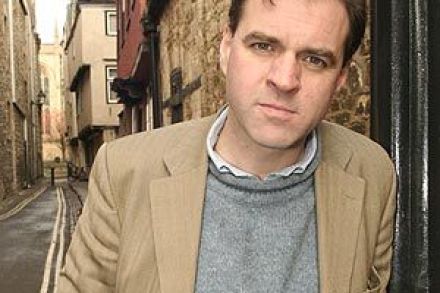
Why, the energetic historian Niall Ferguson asks in his new book, did a minority of people stuck out on the extreme western end of the Eurasian landmass come to dominate the world in cultural, political and economic terms for more than half a millennium? This, he says, ‘seems to me the most interesting question a historian of the modern era can ask’. Its supplementary — to which he only tentatively suggests answers — is ‘is it all over?’ Make no mistake [he writes], this is not another self-satisfied version of ‘the triumph of the West’. I want to show that it was not just Western superiority that led to the conquest and colonisation of so much of the rest of the world; it was also the fortuitous weakness of the West’s rivals.

So farewell, John Bull

From our UK edition

His Grace the Archbishop of Canterbury, Dr Fisher, keen to counter the dreadful spectre of the atomic bomb in the 1950s, observed that the very worst it could do would be to sweep a vast number of people at one moment from this world into the other, more vital world, into which anyhow they must all pass at one time. His Grace the Archbishop of Canterbury, Dr Fisher, keen to counter the dreadful spectre of the atomic bomb in the 1950s, observed that the very worst it could do would be to sweep a vast number of people at one moment from this world into the other, more vital world, into which anyhow they must all pass at one time. Simon Green notes that such an opinion had already become unacceptable by that time, even though it was not, and still is not, unorthodox theology.

Getting the balance right

From our UK edition

Branko Milanovic is the lead economist at the World Bank’s research department, a professor at the University of Maryland and a grand fromage at the Carnegie Endowment for International Peace too. Branko Milanovic is the lead economist at the World Bank’s research department, a professor at the University of Maryland and a grand fromage at the Carnegie Endowment for International Peace too. He is not, it turns out, a very light-hearted man and that’s a particular misfortune because The Haves and the Have-Nots was clearly designed to be the easy-reading version of his far more weighty tome on global inequality, Worlds Apart.