History

Days of wine and shrapnel

From our UK edition

Virginia Cowles was a 27-year-old American journalist working for the Hearst newspapers when she went to Spain for the first time. It was March 1937; the battle of Guadalajara had just brought a victory to the Republicans and besieged Madrid was an exciting place to be. Up till then, Cowles had reported mainly on events of a ‘peaceful nature’. Spain would turn her into a war reporter. Arriving at the Hotel Florida with her suitcase and typewriter, an elegant, resourceful young woman with a high forehead and dark brown hair, she was soon part of the gang of foreigners cheering the Republicans on. There was the bulky Tom Delmer from the Daily Express, in whose room she ate sardines and crackers and listened to Beethoven’s Fifth Symphony.

Remembering 9/9

From our UK edition

The annual memorial service at Flodden. Photo courtesy of Grant Kinghorn. Today marked the 497th anniversary of the battle of Flodden, perhaps the gravest military disaster in Scottish history and a fiasco that's still keenly recalled in these parts where Flodden is a bigger deal than Bannockburn. The story goes that some 50 men from Selkirk rallied to King James's colours but that only one, a man named Thomas Fletcher*, returned alive. Commemorating that loss remains at the heart of the town's Common Riding ceremonies each June. Outside the Borders, however, I suspect Flodden is most familiar as the inspiration for the most beautiful of all laments, The Flowers of the Forest (known here simply as The Lilting).

Amid the encircling gloom

From our UK edition

Africa is the setting for several of V. S. Naipaul’s finest fictional stories — In a Free State, A Bend in the River, Half a Life. Africa is the setting for several of V. S. Naipaul’s finest fictional stories — In a Free State, A Bend in the River, Half a Life. And there is a pattern to the themes in the African works: fear, post-colonial disintegration, isolation, approaching catastrophe, a sense of being trapped in a way of life that is hovering on the borders of savagery. It is an unforgettable vision, but it remains that of an outsider. In The Masque of Africa, Naipaul goes deeper; this is the account of a journey through five countries with the purpose of ‘investigating the effects of African belief on the progress of civilisation’.

The motherland’s tight embrace

From our UK edition

At nursery school, along with her warm milk, little Lena Gorokhova imbibed the essence of survival in the post-war Soviet Union. It consisted of a game called vranyo — pretence: My parents play it at work, and my older sister Marina plays it at school. We all pretend to do something, and those that watch us pretend they are seriously watching us and don’t know that we are only pretending. The school teachers pretended that their pupils’ 100 per cent attendance at Young Pioneer meetings was unconnected with the padlocked door of the meeting hall. The women standing in line pretended they saw no contradiction between reports of record harvests and empty shops, or glittering construction projects and shoddy, just-built university dorms.

Out of the woods

From our UK edition

These two memoirs by ladies born into the Russian elite in the 1880s have both had to wait many decades before publication in English. The Green Snake, however, has gone through eight editions in its original German, whereas The Russian Countess has never been published before. No one was in the least interested in a Russia that no longer existed. Margarita Woloschin was a painter and her husband was a well-known poet. She knew most of the key figures in the Russian Symbolist movement, and she became a disciple of Rudolf Steiner, the founder of anthroposophy. From 1924 to her death in 1973 she lived in Stuttgart and devoted herself to her art and her work as a teacher of Steiner’s doctrines.

Girls from the golden West

From our UK edition

Who was the first American to marry an English duke? Most students of the peerage would say it was Consuelo Yzagna who married the eldest son of the Duke of Manchester in 1876. But the banjo-strumming Cuban American Consuelo was not the first Yankee duchess. As early as 1828 the American Louisa Caton married the eldest son of the Duke of Leeds. This was half a century before the dollar princesses, trading titles for cash, played havoc with Burke’s Peerage. Louisa and her sisters were the pioneers of the American invasion of London society. Their conquest was so successful, and they became so assimilated, that they left barely a ripple. Only now has Jehanne Wake researched and pieced together their story. The four Caton sisters were born into one of the grandest American families.

Dramatic asides

From our UK edition

‘I Scribble, therefore I am’: this Cartesian quip is typical of Simon Schama, as is the comprehensive subtitle: ‘Writings on Ice Cream, Obama, Churchill and My Mother,’ among other topics, of course. ‘I Scribble, therefore I am’: this Cartesian quip is typical of Simon Schama, as is the comprehensive subtitle: ‘Writings on Ice Cream, Obama, Churchill and My Mother,’ among other topics, of course. This gives the flavour of the delights on offer: a miscellany of observations, reviews, mini-lectures and reminiscences written between 1979 and 2010.

Built for eternity

From our UK edition

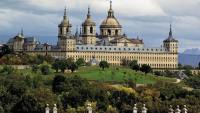
The Escorial, as a monastery and a royal palace, was the brain child of Philip II of Spain. Built in the latter half of the 16th century, about 30 miles north-west of Madrid, the huge granite complex with 4,000 rooms, 16 courtyards, a basilica, a library and picture gallery as well as the king’s private apartments, came to be regarded as the creation of a cold-hearted despot cut off from the outside world. For Richard Ford, whose 1850 Handbook for Travellers in Spain is the most learned guidebook ever written, the Escorial ‘was as cold as the grey eye and granite heart of its founder’.

A dream to fly

From our UK edition

Undeniably the Hawker Hurricane has suffered the fate of the less pretty sister. It is the Spitfire, at once beautiful and deadly, that is forever the star of 1940, firmly lodged in the British military pantheon, beside the longbow and HMS Victory, and the Hurricane is in the shadow. Yet it did more of the work, in greater numbers, and with more victories in the Battles of France and Britain. It too was loved and admired. Leo McKinstry, after his definitive books on the Spitfire and the Lancaster, sets out to repair this reputational injustice. His subtitle, ‘Victor of the Battle of Britain’, states the claim clearly.

A foot in both camps

From our UK edition

As a five-year-old in the Arab quarter of Jerusalem in the 1950s, Kai Bird overheard an elderly American heiress offering $1 million to anyone who could solve the Arab-Israeli conflict. Tugging on his father’s sleeve, he said: ‘Daddy, we have to win this prize.’ Crossing Mandelbaum Gate, Bird’s memoir of growing up in the Middle East, is full of such generosity and innocence. In 1956, Kai’s father, Eugene Bird, moved his young family from Oregon to East Jerusalem, where he was to serve as American vice-consul in a city divided in two by the 1949 armistice line.

A smooth passage

From our UK edition

Jonathan Raban left Britain and moved to Seattle in 1990, when he was 47. He sold his Volkswagen on his way to Heathrow airport. He bought a Dodge with Washington state plates the next day, and in this second-hand car he would, over the years, travel through and write about his new country. ‘The Pacific Northwest continues to be a magnet — the strongest regional magnet in the country, I would guess — for hopefuls and newlifers of every imaginable cast,’ Raban wrote in the summer of 1993, in a piece that’s now republished in Driving Home: It feels like the last surviving corner of the United States to be widely promoted … as the one green spot in the moral sand-waste of the world.

Raining on their parade

From our UK edition

Julius Caesar’s deputy, Cleopatra’s second lover, Marcus Antonius is the perennial supporting act. Julius Caesar’s deputy, Cleopatra’s second lover, Marcus Antonius is the perennial supporting act. In books about Caesar (like Adrian Goldsworthy’s recent biography) or about Cleopatra (mine among them), he appears as a partner, in the ballet-dancing sense of a burly chap whose prime task is to lift a more glittering other into the spotlight. Now he has been allotted half a book: but Goldsworthy is not the man to give him his due of appreciation. Author and subject are absurdly mismatched. Goldsworthy begins by telling his readers that Cleopatra ‘was not really that important’, but he does allow her some intelligence and charm.

“Henceforward all men everywhere will be living on the edge of a volcano”

From our UK edition

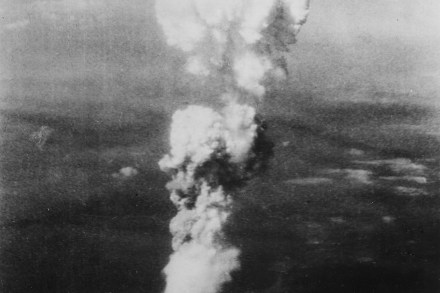
With today being the 65th anniversary of the bombing of Hiroshima, I thought I'd excavate The Spectator's leading article from the time:    A Crisis of Civilisation, The Spectator, 10 August, 1945 In Mr Churchill's statement about the atomic bomb issued by Mr Attlee on Sunday exultation at having anticipated the enemy gave way to awe. Mr Churchill spoke of this "revelation of the secrets of Nature" as one "long mercifully withheld from man." So terrific a power of destruction is now known to be in the hands of the Allies that in retrospect we can see that the race between the scientists threatened to be the decisive factor in the war against Germany.

L’homme qui dit non

From our UK edition

The study of history is a subversive calling. All countries make up a story that suits their idea of themselves. Authoritarians stamp out independent historical scholarship; extreme nationalists simply vilify those who try to tell the tale of what really happened. Charles de Gaulle stands at the heart of what France likes to think about itself; Winston Churchill plays a similar role on this side of the Channel. Even a Francophile like me concedes that there is a deal more fiction about the French story than the British. The distinguished historian Robert Gildea has helped to tear the covers of what he has called the ‘redeeming, unifying heroic story’ of France’s wartime years.

The invisible man

From our UK edition

Nicklaus Thomas-Symonds’s study of Clement Attlee is a specimen of that now relatively rare but still far from endangered species, the ‘political’ biography. Nicklaus Thomas-Symonds’s study of Clement Attlee is a specimen of that now relatively rare but still far from endangered species, the ‘political’ biography. It pays scant attention to anything except Attlee’s political career, and rigorously eschews any prying into whatever dark corners there may have been in his private life. Some may think that no politician’s career can fully be understood unless it is viewed in the context of what was going on in his domestic setting. Usually this is a point of view I would defend.

The threat of holy war

From our UK edition

John Buchan’s Greenmantle remains a marvellous read, even if its plot is absurd. John Buchan’s Greenmantle remains a marvellous read, even if its plot is absurd. Who could credit a story about German attempts, headed by the unlovely Kaiser Wilhelm and the glamorous and suitably ruthless Hilda von Einem, to stir up a world-wide Muslim holy war against the Allies during the first world war and ultimately build a vast German empire stretching to India itself? Now Sean McMeekin shows that fiction, after all, was not so far from the truth, and he makes the most of what is a very good story. He starts in the late 19th century with the construction of the Berlin to Baghdad railway.

Caught in the crossfire

From our UK edition

Maqbool Sheikh dreaded hearing a knock at the door of his home. For he was the most intimate witness to one of the world’s most enduring and forgotten conflicts, the struggle over Kashmir. As the only autopsy expert at the police hospital in Srinagar, it was his job to conduct post mortems on those shot, stabbed or blown to pieces — and the bodies arrived at the rate of around 1,000 a year. Each time, as he drove back to the mortuary, he wondered whether he would be confronted with the corpse of a child, a woman or another young man. The law required him to determine how each one died, and his judgment could affect how their families were treated — were they a terrorist, a police informer or simply another innocent bystander?

Tried and tested

From our UK edition

In June 1964, when Nelson Mandela was sentenced to life imprisonment for acts of sabotage against the apartheid government of South Africa, he was, as photographs reveal, a burly, blackhaired man, with a handsome, pugnacious grin. By the time he was released in 1990, his hair was grey and his features gaunt. But his first speech as a free man described the same ideal of a democratic, multiracial South Africa that he had presented in his final address before being sentenced — ‘an ideal I hope to live for, but if needs be, an ideal for which I am prepared to die’.

Crisp and brave

From our UK edition

Among my guests last weekend as I read Lord Mandelson’s book was Ben, aged two and a half. Among my guests last weekend as I read Lord Mandelson’s book was Ben, aged two and a half. Ben’s language skills are precocious, but he is passing through a stage, as some infants do, of preferring to speak in the third rather than the first person. Thus ‘Ben wants an ice cream’; or ‘Ben was a bit disappointed’. Once, even, he declared: ‘Ben’s quite tired’ (thoughtful pause), ‘he said.’ If the unexamined life is indeed not worth living, this child has taken the lesson to heart. Peter Mandelson, who has called his memoir The Third Man, might have benefited from following Ben’s lead.