Margaret Macmillan

Edwardian Opulence, edited by Angus Trumble – review

From our UK edition

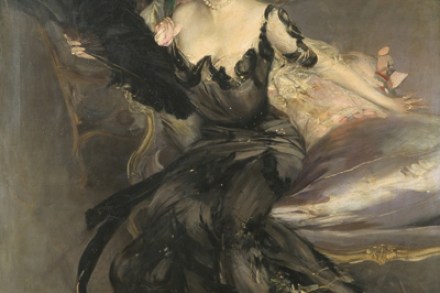
She sits there on the cover exuding sex and wealth and a certain knowingness. Mrs Lionel Phillips, who came from a modest background in South Africa, had the good sense to marry one of the ‘Rand Lords’ who made their piles in the new gold and diamond fields. She and her husband bought their way into society in Britain, accumulating houses and furniture and having themselves painted, as in this wonderful portrait, by the fashionable Giovanni Boldini. That of Mr Phillips is more subdued, even sombre.   The face, said the Athenaeum, ‘is amazing in its unscrupulous vulgarity’. Well, one might think, the anonymous critic could have taken a look around him.
Iron in the blood

From our UK edition

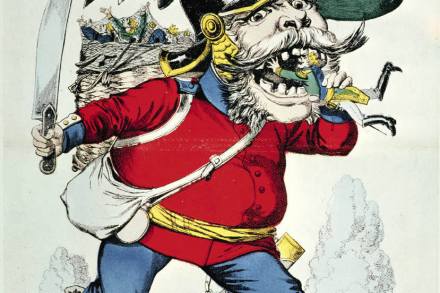
How curious that such an outsize man, in physique as well as personality, should be remembered today mainly for giving his name to a small fish. For the 19th century, Bismarck was no herring but a leviathan. Between 1862 and 1890 he created Germany, seeing off first the Austrian empire and then France. He dominated Prussian and then German politics and played a central role in the international relations of Europe. He also created the German problem which has been with us in one form or another ever since: his new country which sat at the heart of Europe was already a great military power and in the years after unification grew into a great economic one as well. He came from an unlikely background for such an extraordinary statesman.

The threat of holy war

From our UK edition

John Buchan’s Greenmantle remains a marvellous read, even if its plot is absurd. John Buchan’s Greenmantle remains a marvellous read, even if its plot is absurd. Who could credit a story about German attempts, headed by the unlovely Kaiser Wilhelm and the glamorous and suitably ruthless Hilda von Einem, to stir up a world-wide Muslim holy war against the Allies during the first world war and ultimately build a vast German empire stretching to India itself? Now Sean McMeekin shows that fiction, after all, was not so far from the truth, and he makes the most of what is a very good story. He starts in the late 19th century with the construction of the Berlin to Baghdad railway.

In the hands of fools

From our UK edition

Miranda Carter certainly has a penchant for awkward, often impossible characters. Her fascinating biography of Anthony Blunt explained, as well as anyone could, that strange mixture of aesthete, snob, revolutionary and traitor. Now she turns to the three monarchs who ruled Russia, Germany and Great Britain at the outbreak of the first world war. Nicholas II, Wilhelm II and George V are not as intelligent or as interesting as Blunt but they sat at the centre of great powers and great affairs. What a strange and sad collection they were. Nicholas hated being Tsar and did his best to avoid difficult decisions. Even as Russia stumbled towards revolution he refused to cede an iota of power, in the conviction that God had entrusted him with an unalterable autocracy.

The done thing

From our UK edition

The Politics of Official Apologies, by Melissa Nobles George W. Bush, judging by his repeated invocations, thinks that time will eventually prove that he was right. He is not alone in putting his faith in the future. We all call a lot on history these days as the impartial tribunal which will eventually dole out the gold stars and the black marks. We also seem to think that we set past wrongs right by making apologies to groups and individuals. A descendant of that Elizabethan freebooter, Jack Hawkins, has apologised for slavery; post-war Germany apologised and made recompense for the Nazi crimes against the Jews; and the Australian and Canadian governments have said sorry for their treatment of their aboriginals. It is easy to be cynical about some of this.

God bless America

From our UK edition

The Most Noble Adventure contains a striking pair of photographs of the business district in Hamburg. The first, taken in 1945, shows shattered buildings, clouds of smoke and a virtually empty street. Five years later, the same scene is transformed. The damage has largely been repaired and the sidewalks are filled with well-dressed pedestrians. Was this extraordinary recovery, representative of what was happening all over Western Europe, a result of the Marshall Plan which pumped billions of dollars of American aid into a war-torn Europe? Or was it bound to happen sooner or later, once Europeans recovered their nerve and their will?

When the sun finally set

From our UK edition

I first read the Raj Quartet in the early 1970s, when Paul Scott’s decision to set his novels in the dying days of the British Raj in India seemed an eccentric choice, almost as though he did not want readers. The British were tired of their imperial past. Who wanted to know the names of the long gone empire builders whose statues dotted cities and towns? Only a few students wanted to study imperial history. (I was one, perhaps because Canadians were acutely aware of how being part of a great empire had shaped them.) The empire to most people in Britain was an embarrassment, a joke, and a bore. It must have been galling to Scott that critical recognition of what is an extraordinary contribution to English literature was so slow in coming.