History

Alan Greenspan doesn’t exist

From our UK edition

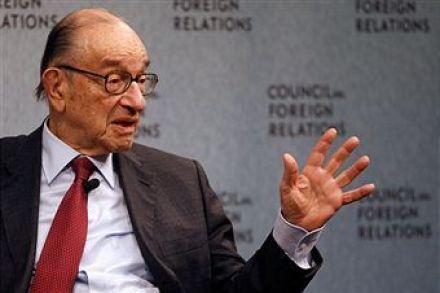
Five years have passed since Alan Greenspan stepped down from the most influential banking job in the world. (Now that’s how to leave at the right time.) Described in books, interviews and profiles too numerous to mention as ‘the most powerful regulator/person on earth’, he served as Chairman of the Federal Reserve for 19 years. For reasons of sheer longevity, perhaps Greenspan deserves to be called the architect of the modern global economy more than any of his elected contemporaries.

A conflict of loyalty

From our UK edition

What was life like in Hitler’s Germany? This question has long fascinated authors and readers alike, as books like Alone in Berlin, The Boy with the Striped Pyjamas and The Book Thief bear witness. What was life like in Hitler’s Germany? This question has long fascinated authors and readers alike, as books like Alone in Berlin, The Boy with the Striped Pyjamas and The Book Thief bear witness. Nazi Germany, it has often been argued, was a totalitarian dictatorship. Through force, indoctrination and even common consent, such an interpretation contends, Hitler wielded total power and had complete control of the German population. But were the tentacles of the Nazi state as strong as this understanding suggests?

The Queen’s Speech

From our UK edition

At the state dinner at Dublin Castle this evening is rather good. As you would expect from HMQ it says all the right things and does so modestly and without fanfare. Especially this bit: Of course, the relationship has not always been straightforward; nor has the record over the centuries been entirely benign. It is a sad and regrettable reality that through history our islands have experienced more than their fair share of heartache, turbulence and loss. These events have touched us all, many of us personally, and are a painful legacy. We can never forget those who have died or been injured, and their families. To all those who have suffered as a consequence of our troubled past I extend my sincere thoughts and deep sympathy.

This Scotland Subordinate? Only to a Crying Fool.

From our UK edition

Much of Alex Salmond's speech on the occasion of his re-election as First Minister was entirely unobjectionable and some of it was even eloquent. A shame, then, that his peroration threw all that away: A change is coming, and the people are ready. They put ambition ahead of hesitation. The process is not about endings. It is about beginnings. Whatever changes take place in our constitution, we will remain close to our neighbours. We will continue to share a landmass, a language and a wealth of experience and history with the other peoples of these islands My dearest wish is to see the countries of Scotland and England stand together as equals There is a difference between partnership and subordination. The first encourages mutual respect. The second breeds resentment.

This Social Union, This Commonwealth

From our UK edition

On reflection, perhaps I've been a little too quick to discount the historical significance of the Queen's visit to Ireland this week. Like so much else, it's a question of perspective. If you're 80 years old and a citizen of the Irish Republic, perhaps the sight of the Irish President greeting and welcoming the British monarch on equal terms would seem quietly moving and even a cause of some pride. I might think that this was what it was all about and I might see the visit as another confirmation that the Irish state has taken its rightful place in the community of nations. That's been true for many years, but this is still some hefty symbol.

When Dublin trembled

From our UK edition

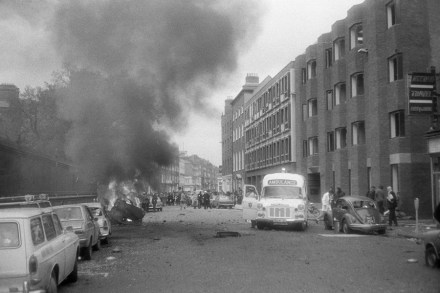
On 17 May 1974 — 37 years ago today — I was a 19-year-old student at Trinity College Dublin, celebrating the end of term in the Pavilion Bar near the sports fields. The summer exams were still to come, but we were carefree; the main subject of conversation was whether we could organise a disco party later on. Then, a little after 5.30 p.m., everything changed. First, all about us seemed to shiver, as if there were an earth tremor. Then, just as it occurred to me that Dublin did not generally suffer tectonic stress, there was a deafening bang that seemed to go on for an age. Somebody shouted: ‘It’s a fucking bomb!

Eight Hundred Years of Oppression and Now This?

From our UK edition

Pete is right to say there's a definite "resonance" to these pictures. Nevertheless, I suspect that British people's view of the "historic" significance of Her Majesty the Queen's visit to the Republic of Ireland is inversely proportionate to one's experience of Ireland. That is, the more time you have spent in Ireland and the better you know the country the less you are likely to swoon at the sight of a British monarch setting foot in southern Ireland.  Perhaps I'm extrapolating too much from my own experience and perhaps the over-40s think differently. But my impression strengthened, to be sure, by some of the breathless, hyperbolic BBC coverage is that many British people over-estimate how "controversial" this visit is.

An historic moment

From our UK edition

There is something incredibly resonant about the images of the Queen arriving in the Republic of Ireland this afternoon. You have probably heard the facts by now — that she is the first British monarch to do so for 100 years, and the first since Irish independence — but they are no less striking. Against a backdrop of terror threats and of Britain's participation in the country's bailout, Queen Elizabeth II is making some kind of history today. It is also, as Ed West says in a thoughtful post over at the Telegraph, a time for remembrance. He suggests that we remember the 300,000 Irishmen who fought in the Great War — and rightly so.

Imperfect working order

From our UK edition

The publication of Pakistan: A Hard Country could not be more timely. International attention has been focused on Pakistan since the Americans killed Osama bin Laden in Abbottabad. Being in the spotlight generally means trouble for this country that has been bedevilled by war and political drama for over three decades. Foreigners announce goodwill and arrive with generous aid, but Pakistanis are frequently left feeling bruised, as the outsiders become ever more bewildered by the workings of this beguiling and maddening place. Anatol Lieven originally planned to call his book ‘How Pakistan Works’. It would have been a good title, since this is exactly what he tries to explain.

Bin Laden strikes from beyond the grave

From our UK edition

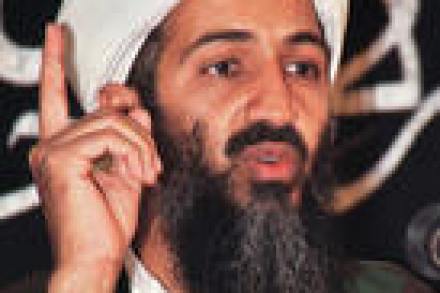
And so it starts. The news that suicide bombers have attacked the military base at Shabqadar, northern Pakistan, sounds a chilling note. The Pakistani Taliban has claimed responsibility for the attacks, committed in retaliation for the assassination of Osama bin Laden. Security experts and politicians warned that it would be so. It is, we are told, inevitable that similar atrocities will be attempted closer to home. There will also be concern that this may aggravate the already strained relations between the US and Pakistan, which would only strengthen the terrorists. Perhaps Bin Laden has become a more potent force since his death. The sight of a squalid man sitting in exile watching videos of his bygone glories was almost pitiful.

Setting the world to rights

From our UK edition

Wicked Company is the collective biography of a group of men with little in common, apart from a generalised dissatisfaction with the state of the world around them. Perhaps that is true of most intellectual coteries. The kings of the Parisian Enlightenment of the 18th century were the mathematician Jean d’Alembert and the playwright and journalist Denis Diderot, joint editors of the great Encyclopédie.

Captain courageous

From our UK edition

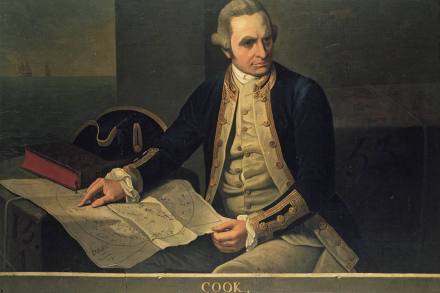
The sum of hard biographical facts about Captain Cook never increases, nor is it expected to. It is the same with Shakespeare. J. C. Beaglehole’s Life of Captain James Cook (1974), which Frank McLynn quotes often, contains most of what is known about Cook’s family life and origins. As the son of a Yorkshire farm labourer, he belonged to a class that was unlikely to leave any record of his childhood. He was clever, and went to live with a Quaker family in Whitby where he worked in the shop. He went to sea in the collier trade at the advanced age of 17, and transferred to the Royal Navy when he was 30. He married seven years later, in 1762, after the Admiralty’s attention was drawn by his successful charting of the Newfoundland coast.

One hap after another

From our UK edition

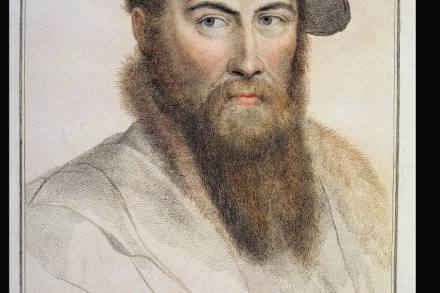
Nicola Shulman begins her rehabilitation of Thomas Wyatt by remarking that there is ‘an almost universal consensus that he can’t write’ — a consensus established within a generation of his death in 1542. Nicola Shulman begins her rehabilitation of Thomas Wyatt by remarking that there is ‘an almost universal consensus that he can’t write’ — a consensus established within a generation of his death in 1542. Even the Earl of Surrey, his friend and eulogist, acknowledged his verse to be ‘unparfited’, and by Shakespeare’s day he was a joke: Malvolio keeps a poem of Wyatt’s about him, proclaiming himself a nincompoop.

Lancelot of the lake

From our UK edition

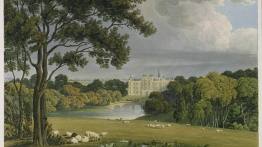
Tom Stoppard’s Arcadia offers two contrasting views on a ‘Capability’ Brown landscape at the imagined Sidley Park. Tom Stoppard’s Arcadia offers two contrasting views on a ‘Capability’ Brown landscape at the imagined Sidley Park. Lady Croom, the 19th-century owner, praises its harmonious natural style, even down to ‘the right amount of sheep tastefully arranged’. Two hundred years later, a garden historian laments the destruction of the ‘sublime geometry’ of 17th-century formal gardens: ‘paradise in the age of reason’, before being ‘ploughed under by Capability Brown’.

Jennie, Clemmie and Goosie too

From our UK edition

‘There never was a Churchill, from John of Marlborough down,’ wrote Gladstone, ‘that had either principles or morals.’ With the shining exception of Winston and his brother Jack, Churchill men have tended to be bad hats, but this makes them all the more interesting to read about. ‘There never was a Churchill, from John of Marlborough down,’ wrote Gladstone, ‘that had either principles or morals.’ With the shining exception of Winston and his brother Jack, Churchill men have tended to be bad hats, but this makes them all the more interesting to read about. Mary Lovell’s new book tells the story of the Churchills as a family over four generations, and it never ceases to amaze and entertain.

Go out and govern New South Wales

From our UK edition

‘In the mists and damp of the Scottish Highlands, 61-year-old Sir Bartle Frere was writing a letter. ‘In the mists and damp of the Scottish Highlands, 61-year-old Sir Bartle Frere was writing a letter. Straight-backed, grey-haired, he had the bright eye and bristled moustache of an ageing fox-terrier.’ Reading this, at the beginning of a chapter, we cannot be sure whether what follows will be Lytton Strachey or John Buchan. The tale might go either way. The letter might be either an invitation to shoot grouse or in answer to a summons to cope with a crisis threatening the British empire. The second guess would be right.

King of spin

From our UK edition

Draw two two-inch triangles, tip to tip, one on top of the other. A little way down the left flank of the upper triangle, take a perpendicular line out to an inch, then turn your pencil at a right angle and continue another inch. Repeat on the other side. Next, draw two short, splayed lines down from the base of the lower triangle. Finally, put an acute accent, an inch long, about two inches above the whole. What have you got? According to Dr David Starkey, who performs this trick at schools all over the country, Henry VIII in 13 lines. Apparently he is recognisable in this form as far afield as Japan, America, and even France. Each generation makes history in its own image and we, preoccupied with spin and profile-management, are impressed anew with Henry for his genius in this field.

From the archives – the Khmers Rouge’s debt to 1950s France

From our UK edition

It is 13 years to the day since Pol Pot died in mysterious circumstances while in exile on Cambodia’s remote western border with Thailand. Where did Pot and his maniacal fellow travellers acquire their politics. There are a number of candidates from the megalomania of the 20th Century, but Michael Sheridan, the Sunday Times’ former Asia Editor, notes that France, or more exactly aspects of French culture at the end of the colonial era, played its part. He explained why to the Spectator. Pol Pot and Chardonnay, Michael Sheridan, 21 September 1996 Not long ago, the Americans found in their archives in Washington a long-forgotten film about Cambodia, made by the United States Information Service at the beginning of the 1960s.

Ferguson’s triumph

From our UK edition

The last episode of Niall Ferguson’s documentary series, Civilization, has just been aired — and for those who missed it, it’s time to buy the DVD box set. Or, better still, read the book. Ferguson is, for my money, one of the most compelling, readable and original historians writing today. His books stand out for throwaway lines which can change the way you think about what’s happening now. Understanding of history shapes our politics, whether we admit it or not. And myths about history also fuel political myths. How often do we hear it said that the Great Depression came about because government didn’t borrow in the hard times? A myth — but if enough people believe it, it can justify a government embarking on ruinous debt binge now.

Great among the nations

From our UK edition

The King James Bible, while uniting the English-speaking world, gave birth to centuries of radicalism and Dissent. On its 400th anniversary, Philip Hensher examines the translation’s legacy Considered as a book, the Bible is far too long. Its characterisation is not all it should be: its hero, God, seems totally inconsistent, varying from a prankster with a bizarre sense of humour (Job) to a sensible dispenser of advice. You can’t help feeling that it is really rather patchy in quality: some of it is wonderfully entertaining, such as the Acts of the Apostles and the two Books of Kings, but some of it doesn’t seem to be interested in entertaining the reader one bit. (Look at the difference between the stonking first line of Kings and the droning way Chronicles kicks off.