History

Ghosts of the Teutonic Knights

From our UK edition

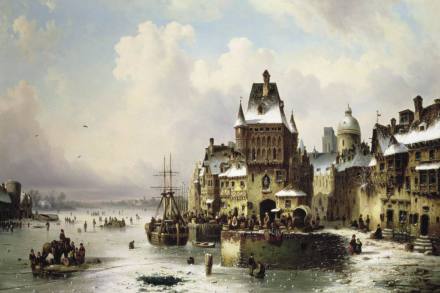
Do the trees of East Prussia still whisper in German when the wind blows in from the Baltic and across the featureless plain? The Russian poet Joseph Brodsky thought so when he visited in the 1960s. But keen ears, and a very long historical reach, are surely now needed in order to detect that particular susurration. A little over two million Germans lived here in 1940. Now there are just 10,000 ‘of German descent’. Eight centuries ago members of the Order of the Teutonic Knights, snobbish and aristocratic virgins almost to a man, arrived here from Acre to start that great Crusade of the North which was the counterpart to the adventure in Palestine. It took them some two generations to conquer the native Prusi, a Baltic and pagan people.

Stand up for freedom and freedom will stand up for you (eventually)

From our UK edition

It was hard to be a supporter of U.S. President Ronald Reagan in Western Europe. As a student living in West Germany at the time, I remember well the commonly held view of him: B-rate actor who read cue cards, a nuclear-weapons-obsessed warmonger, and not very bright to boot. Never mind that he had also been a popular two-term governor of the most populous state in the U.S. (California), because that did not fit with the bumbling cowboy narrative. When he called the Soviet Union “the evil empire” the chattering classes saw it as simplistic, unsophisticated and cringe-worthy. Not so the people caught behind the Iron Curtain who silently cheered someone who stood up for them and spoke the truth about the oppression under which they were living.

Sad, not mad

From our UK edition

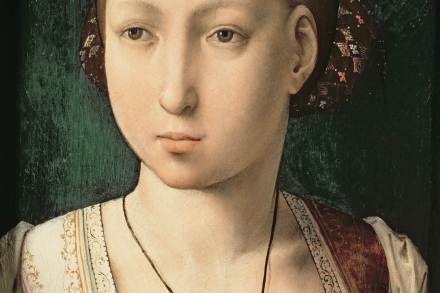
The Catholic Monarchs — Ferdinand II of Aragon and Isabella I of Castile — had five children together. The Catholic Monarchs — Ferdinand II of Aragon and Isabella I of Castile — had five children together. Each child was married off to a promising European neighbour, thereby acting as a diplomatic tool in the Monarchs’ reassertion of royal authority over Spain. Two of those children remain famous today, chiefly for their reputation as the 16th century’s most wretched doormats. Katherine of Aragon was the youngest child. As we know, her first marriage was to Henry VII of England’s eldest son, Prince Arthur. When he died, her second marriage was to the man who would become Henry VIII. The rest barely needs rehearsing.

From the archives: how The Spectator beat the strikes

From our UK edition

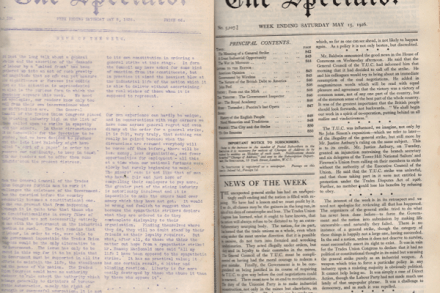
A change from the usual for this week's excavation into The Spectator archives — which is to say, we won't be digging out an article from the magazine's 183-year back-catalogue for CoffeeHousers' delectation. Instead, the images above, and a quick, little story. Given how nostalgic some people have recently been for the General Strike of 1926, my thinking was to present The Spectator's coverage from the time. (It is critical of both government and unions, as it happens). But it was the appearance of the issue dated 8th May 1926 that caught my eye, rather than its content. Its pages are thicker and rougher than the typical Spectators of that year. Its imprint looks straight off a typewriter, faded and blue. Its page-count is measlier.

All American Politics is Yokel?

From our UK edition

You shouldn't really go wrong asking Christopher Hitchens to write about Michelle Bachmann. Nevertheless this part of his most recent Slate column is, though reprising a familiar complaint, unusually unreflective: Where does it come from, this silly and feigned idea that it's good to be able to claim a small-town background? It was once said that rural America moved to the cities as fast as it could, and then from urban to suburban as fast as it could after that. Every census for decades has confirmed this trend. Overall demographic impulses to one side, there is nothing about a bucolic upbringing that breeds the skills necessary to govern a complex society in an age of globalization and violent unease.

City of miracles

From our UK edition

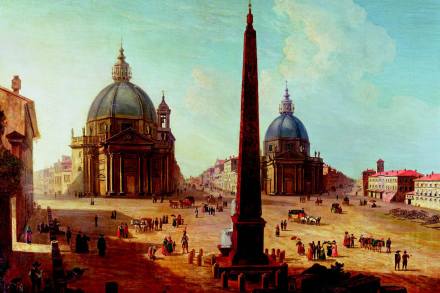
In the autumn of 1984, after an unexplained fall, I found myself in a hospital in Rome acutely head-injured and disorientated. I had been found sprawled on the floor of my flat on Via Salaria; the police suspected an intruder, yet nothing apparently was stolen. Bloody handprints covered the walls where I had tried to steady myself. I was 23 and newly arrived in Rome to work as a journalist and teach. Later, I regained consciousness outside a latrine on the sixth floor of San Giovanni hospital. A group of nuns with elaborate bird-like coifs swished past, each bearing a carafe of white wine. So I was in paradise — or perhaps a Fellini movie. (The carafes turned out to contain urine samples.) The nuns acted as paramedics, owing to a shortage of trained nurses.

Coolness under fire

From our UK edition

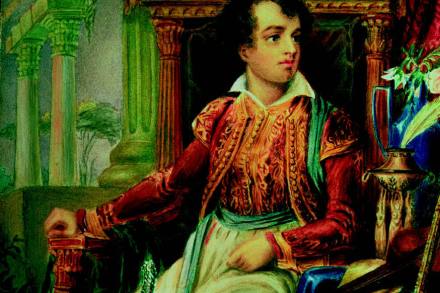
The early 19th century was the age of the dandy, and the essence of dandyism was cool self-control. The dandy shunned displays of feeling. There is feeling a-plenty in both these books; yet they may fairly be described as novels which bear the characteristics of dandyism. Though not short of action — something the dandies deprecated — they are cool, elegant and laconic. Stella Tillyard is known as a historian of 18th- and early 19th-century aristocratic and royal life. Tides of War is her first novel, and a very accomplished one. It moves easily between domestic and political scenes in London and Norfolk, and the Peninsula, where Wellington’s army, with the help of Spanish guerrillas, whom Wellington valued little, is gradually winning the war against the French.

Heroic long-suffering

From our UK edition

English patriotism was still a force in 1914. On the first day of the war, my mother’s three brothers, and my father and his two brothers, all joined up together, in the Artists’ Rifles. On the first day of the second world war, which I remember well, there were some similarities, but they were superficial. Again, my elder brother joined immediately. But the mood was resignation, not enthusiasm. There was no rejoicing, no talk of a new and better world: just a despairing attempt to preserve what was left of an unsatisfactory old one. The truth is, the Great War knocked the stuffing out of the British. They have never been the same since, collectively. Of the 722,000 killed, the vast majority were volunteers, overwhelmingly young: the eager elite.

1951 and all that

From our UK edition

The author of this book and I both visited the 1951 Festival of Britain on London’s South Bank as schoolboys. The author of this book and I both visited the 1951 Festival of Britain on London’s South Bank as schoolboys. He was 13, I was 11. We were both old enough to remember the war. We were both enduring the post-war austerity. Much was still rationed. Everywhere there were bombsites. From his generally commendable account, I know we both had a similar reaction to the Dome of Discovery, the Skylon and all the other attractions: there was a sense of renewal, lightness, colour, modernity and excess, in contrast to the drabness and penny-pinching we were used to.

Patience v. panache

From our UK edition

The square jaw and steely gaze are deceptive. In reality, next to a prima donna on the slide, no one is more vain and temperamental than a general on the climb. So much at least is clear from Peter Caddick-Adams’s intriguing study of generals Bernard Montgomery and Erwin Rommel. Each was assiduous in the celebrity skills of image-making and audience massage, and none more adept at stabbing rivals in the ribs and ascribing good luck to talent. Yet for all the froth, both succeeded in a trade whose yardstick of success, crushing an opponent to death or submission, cannot be faked.

Auld Selkirk: She’s Ancient But She’s Braw

From our UK edition

How do you measure a place? A community? A spirit? It is a media-driven cliche that all communities, especially when struck by disaster, must be deemed "close-knit". Politicians, meanwhile, give speeches suggesting that chaos is running amok and destroying these supposedly confident communities, leaving us with nothing better than an atomised society in which the ties that bind have been loosed with depressing consequences. This seems something Ed Miliband believes. He should be in Selkirk today. This is the first Friday after the second Monday in June and that means it is Selkirk Common Riding day. This is the most important, grandest day in the town's calendar and one reason why there'll be no more blogging here before Monday.

Abraham Lincoln: Tyrant! Unionist!

From our UK edition

Hendrik Hertzberg has some fun with Rick Perry's occasional suggestions* that Texas could secede from the United States of America. Doing so he quotes extensively from a message Abraham Lincoln sent to Congress on July 4th, 1861. It is, as you would imagine, good stuff. But that doesn't mean it solves everything and nor is it the case that Lincoln is an anti-Godwin whom you need only quote to prevail in any argument. In any case, you might also think that there's a difference between what was true in the Civil War and what must be true - legally or politically - now. Meanwhile, some of what Lincoln has to say is interesting to consider given Unionism's struggle to make a good case for itself in Britain too...

A nation of meddlers

From our UK edition

If you thought that bust of Lenin you had on your desk as a teenager was the ultimate in radical chic, think on. Infatuated with the French Revolution, Lord Stanhope proclaimed his solidarity at a banquet at White’s Club. Announcing that he was thenceforth to be known as Citizen Stanhope, he ordered the coronets to be removed from the iron gates of his estate, Chevening. Despite its title, David Pryce-Jones’s new book isn’t just, or even especially, about traitors. It’s a high-speed survey of prominent British citizens who have taken up foreign causes.

Neither Greek nor German

From our UK edition

Prince Philip’s childhood was such that he had every right to be emotionally repressed and psychologically disturbed. Prince Philip’s childhood was such that he had every right to be emotionally repressed and psychologically disturbed. Born sixth in line to the Greek throne, at the age of 18 months he was hounded from what, in name at least, was his homeland. His father came within an ace of being executed for high treason. When he was only eight his mother suffered a devastating nervous breakdown; in 1930 she was drugged into placidity, bundled into a car and consigned to a sanatorium-cum-prison. His father shrugged off his responsibilities towards his children, of whom Philip was by far the youngest, and installed himself with his mistress in the south of France.

The price of victory

From our UK edition

In the patriotic mythology of British arms 1759 may be the one true annus mirabilis, the ‘year of victories’, the year of Minden, Quebec and Quiberon Bay, but has there ever been a year comparable to 1918? In that year 20,000 British soldiers surrendered on a single day, 31 March, and yet within six months Britain and her allies had recaptured all the territory lost since 1914, destroyed Austrian and Bulgarian resistance in Italy and Macedonia, encircled a Turkish army in Palestine, mastered the submarine menace at sea, and fought the German army to the brink of disintegration and the German empire to the point of revolt.

Deep, dark mysteries

From our UK edition

For Peter Ackroyd, the subterranean world holds a potent allure. London Under, his brief account of the capital’s catacombs and other murky zones, manages to radiate a dark mystery and sulphur reek. ‘There is no darkness like the darkness under the ground’, Ackroyd announces, like a Victorian raree-show merchant. This is an entertaining if slightly daft book, that reveals what a weird world lies beneath our feet. Whether Ackroyd has actually been to all the places he describes is uncertain. Journalists have contorted themselves through narrow, stinking cave-galleries and risked leptospirosis from rat urine in their quest for London subterranea. But the stately Ackroyd? The London sewers are vividly described here.

A catastrophe waiting to happen

From our UK edition

Gillian Darley’s book has the pace, colour and deliberation of a Vesuvian eruption, which is fitting; for we must get used to the fact that sooner or later the volcano will erupt again with a devastating power. Gillian Darley’s book has the pace, colour and deliberation of a Vesuvian eruption, which is fitting; for we must get used to the fact that sooner or later the volcano will erupt again with a devastating power. The subtitle of the book is quite accurate. Vesuvius probably is the most famous volcano in the world, because unlike all others it has attracted for some 2,000 years multifarious extraordinary people to study it. Darley enumerates these in their legions, showing that Pliny the Younger, writing after the 79 AD eruption, was not the first.

The Lucifer Effect

From our UK edition

Today’s papers are full of comment on the brilliant Panorama exposé of care home abuse. But none have mentioned what jumped out at me: the parallels between this and the Stanford Prison Experiment. The way that the tattooed Wayne treated his mentally ill patients is sickening — but, to me, this is not just a story about human evil. It’s a story about how institutionalisation brings out the evil in people, and that this evil is far closer to the surface than we like to admit. Philip Zimbardo, a psychology professor at Stanford, randomly divided 25 volunteers to play the roles of prisoners and guards in a poorly-regulated, mock prison.

Goodbye to Berlin

From our UK edition

Peter Parker is beguiled by a novel approach to the lives of Europe’s intellectual elite in flight from Nazi Germany In his time, Heinrich Mann was considered one of Germany’s leading writers and intellectuals. Unlike his rivalrous younger brother Thomas, who always put his literary career before any other consideration, Heinrich was an early and outspoken critic of the Nazis, and so forced to leave Germany in February 1933. He was based for several years in the south of France, while travelling around the world to denounce the regime he had left behind, and he eventually emigrated to America in 1940, settling in Los Angeles. Unlike many European emigrants who thrived in the Californian sun, Mann did not adapt well to transplantation.

What did you do in the war, Mummy?

From our UK edition

By tradition, ‘What did you do in the war?’ is a question children address to Daddy, not to Mummy. By tradition, ‘What did you do in the war?’ is a question children address to Daddy, not to Mummy. In this ambitious, humane and absorbing book Virginia Nicholson moves Mummy firmly to the centre of the stage as she chronicles, largely in their own words, the lives of British women during the second world war. It is dedicated to one of them, her own mother, Anne Popham, later Anne Olivier Bell, who as a young woman suffered agonising wartime loss but went on to marry and become one of the great editors of her time through her work on the diaries of her husband’s aunt (and Nicholson’s great-aunt) Virginia Woolf. Nicholson sees her as typical.