History

Spiritual superhero

From our UK edition

When totting up the positives from the British Raj, people often put the railways first, followed by the Indian Civil Service or the Indian Army. The Empire was won by the sword and held by the sword. It was racially exclusive, its taxes were often predatory, and its punishments savage. But at least it left an institutional legacy that helped to make independent India a startling success against all the odds, after the bloody wound of Partition and despite the excruciating poverty of the second most populous nation on earth. But what the British bequeathed to India was not only a usable future but a usable past. This may sound paradoxical. In the millennia of India’s more or less recorded history, the years of British dominance were an eyeblink.

The making of the modern metropolis

From our UK edition

Why in 1737 did Dr Johnson choose to leave his home in Lichfield in the Midlands and travel to London to make a fresh start as a writer, asks Jerry White in his encyclopaedic portrait of the 18th-century capital. It’s a good question. London was dangerous, it was dirty, you could die of ague in a matter of hours, be robbed, crushed to death by the mob, thrown into jail for unpaid debts, and, no matter whether you were rich, poor or of the middling sort, suffer the scourge of bed bugs through every waking hour. To live comfortably (without domestic cares) you needed to earn enough money to employ at least three manservants and four women, reckons White, which would have set you back some 75 guineas a year.

If only …

From our UK edition

In the early summer of 1910, a naval officer, bound for the Antarctic, paid a visit to the office of Thomas Marlowe, the editor of the Daily Mail. He had come in search of some badly needed funds for his expedition, but just as he was leaving he paused to ask Marlowe when he thought war with Germany would break out. ‘I can only tell you,’ came the reply, ‘that there is a well-informed belief that Germany will be ready to strike in the summer of 1914 and it is thought that she may do so.’ The officer mulled this over, doing his calculations. ‘The summer of 1914 will suit me very well,’ he said, ‘By that time I shall be entitled to command a battle cruiser of the Invincible class.

Loves, hates and unfulfilled desires

From our UK edition

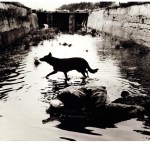
Montaigne, who more or less invented the discursive essay, had a method which was highly unmethodical: ‘All arguments are alike fertile to me. I take them upon any trifle . . . Let me begin with that likes me best, for all matters are linked one to another.’ Geoff Dyer could say very much the same thing, and it follows that Zona, though nominally a book about Tarkovsky’s maddening 1979 masterpiece Stalker, goes off in any number of directions. There are other ways of describing a circle than setting out to draw all its tangents, but that is Dyer’s preference. If the style of approach hasn’t changed, then the cultural context certainly has.

Real and imagined danger

From our UK edition

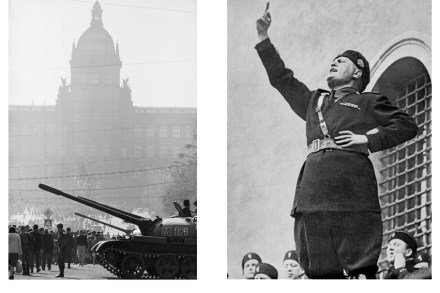
What was the Cold War? For Professor John Lewis Gaddes, it was a conflict between two incompatible systems, democracy and communism, each with a different vision of liberty and human purpose. The result was a potential third world war, in which we risked being crushed by dictators or destroyed by nuclear weapons. And the US saved us. ‘The world,’ he writes, ‘I am quite sure, is a better place for the conflict having been fought in the way that it was and won by the side that won it. For all its dangers, atrocities, costs, distraction and moral compromises, the Cold War was a necessary contest.’ Andrew Alexander disagrees. And Alexander — who has long exposed the myopia and self-deception of the establishment — should be taken seriously.

Storm in a wastepaper basket

From our UK edition

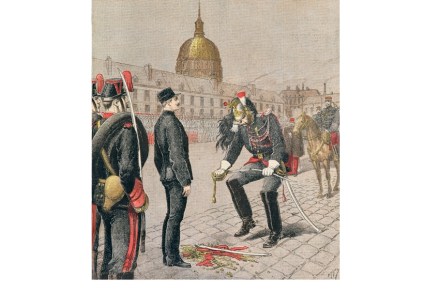
‘It’s the revenge of Dreyfus,’ came the cry from the dock. The speaker was the veteran right-wing ideologue, Charles Maurras, found guilty of treason in 1945 for his support of the collaborationist Vichy regime. It wasn’t of course that, and yet there is a sense in which Maurras spoke the truth. The Dreyfus case had divided France half a century before Maurras was put on trial in Lyon. The division between what Piers Paul Read, in this masterly and eminently balanced account of the Affair, calls ‘the France of St Louis and the France of Voltaire’ had never been closed. The end of the Third Republic and its replacement by Vichy’s ‘Etat Français’ in 1940 represented the victory of the anti-Dreyfusards.

JFK: The Nastiest President of the Twentieth Century?

From our UK edition

Who was the most reprehensible US President in the twentieth century? That's a tough question, though not one related to policy, political preferences or job performances. I mean instead: who was the nastiest piece of work to occupy the White House at any point during the last century. There are, I think, five contenders: Teddy Roosevelt, Woodrow Wilson, John F Kennedy, Lyndon Baines Johnson and Richard Nixon. Mimi Alford's new memoir, relating how she had an affair with JFK while working in a junior role at "Camelot" offers more form proving that the drug-wracked, priapic Kennedy is a leading contender in this grim contest.

Talking tough

From our UK edition

This thoughtful, challenging and deeply depressing book takes as its launch pad the Nuremberg Trials, in which the author’s father played so prominent a part. Churchill would have executed the Nazi leaders out of hand. Eisenhower wanted to exterminate all the German General Staff as well as all of the Gestapo and all Nazi Party members above the rank of Major. Wiser counsels prevailed. The Nazi leadership must be put on trial, it was agreed, and not in such a way as would rubber-stamp a verdict that had already been tacitly agreed. ‘You must put no man on trial under the forms of judicial proceeding,’ said the distinguished jurist Robert Jackson, ‘if you are not willing to see him freed if not proven guilty.

Gunboat diplomacy

From our UK edition

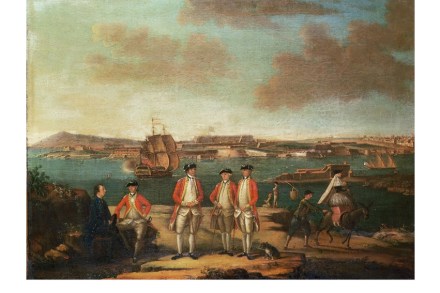
Britain’s links with the Continent were once  deeper and more extensive than those of any other European country. Paris, Rome and German universities played as vital a role in British culture as many native cities. Mediterranean connections were especially strong. Most cities on its shores contain an English church and cemetery. From Minorca to Cyprus, there are few Mediterranean islands that have not been occupied by British troops: the oldest company in Beirut is Heald and Co., the shipping agents (est.1837). Blue-Water Empire aims to tell the story of ‘the British in the Mediterranean since 1800’: 1800 is the year that Malta, soon to be the headquarters of the British Mediterranean fleet, was conquered from France, with Maltese help.

Age of ideas

From our UK edition

Sam Leith on Tony Judt’s rigorous, posthumously published examination of the great intellectual debates of the last century When the historian and essayist Tony Judt died in 2010 of motor neurone disease, among the books he had planned was an intellectual history of 20th-century social thought. As the disease robbed him of the ability to write, his friend Timothy Snyder proposed making this book — out of the edited transcripts of a long conversation they would conduct over several weeks in 2009. The book-as-conversation is, as Snyder points out in his foreword, a rather Eastern-European artefact. That’s apt to its content: Snyder is a historian of the region.

Stronger than fiction

From our UK edition

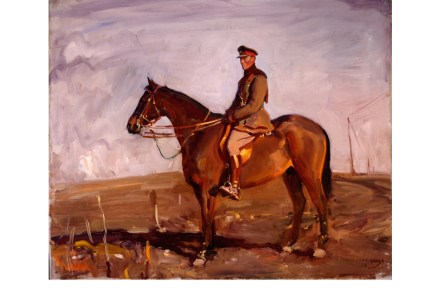
I think it was a Frenchman — it usually is — who observed that the English love their animals more than their children. At first glance, General Jack Seely’s Warrior: The Amazing Story of a Real War Horse — originally published as My Horse Warrior in 1934 — is striking proof of this. In an entire book devoted to the exploits of his horse, the author’s final mention of his son Frank is stunning in its brevity: We had a last gallop together along the sands, Warrior and [Frank’s charger] Akbar racing each other; then I drove him in a motor-car to rejoin his regiment .… He asked me to take care of Akbar, and I replied that Warrior would take care of that. He was killed not long afterwards while leading his company.

The past is another city

From our UK edition

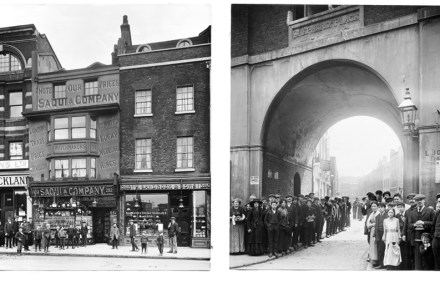
This absorbing book is — in both format and content — a much expanded follow-up to the same author’s very successful pictorial anthology Lost London of 2010. It replicates some of the photographs that appeared there and contains many new ones, all in captivating detail. The photographs are ones of record. There is little sense of artful composition or a striving for special effects. Many are of great beauty in their direct simplicity, as though the images were breathed onto the page with no human intervention.

When treason was the last resort

From our UK edition

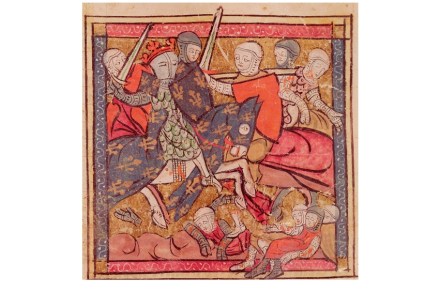
One hundred and fifty years after Anglo-Saxon England was invaded by the Normans, Anglo-Norman England was invaded by the French. On 21 May 1216 King Philip Augustus’ eldest son, Louis the Lion, landed at Stonor on the Isle of Thanet, kissed a crucifix, planted it in the ground and began an 18-month war for the English crown. He had been invited to England by a group of barons who wished to replace King John as punishment for repudiating the terms of Magna Carta. The war Louis waged, although ultimately unsuccessful, was a damned near thing. Sean McGlynn’s new book calls this England’s ‘forgotten invasion’, although in recent years Hollywood has been trying to remind people about it.

Ugly old Europe

From our UK edition

There are moments and places in history that one would have paid good money to avoid, and wartime Lisbon was one of them. For those rich enough to afford the Pan Am flying ‘Clipper’ to New York it at least offered a route of escape, but for those thousands of refugees from Nazi Europe left waiting for months or years before they could beg or borrow a passage to America or Palestine it was more likely to be just one last chance to savour old Europe at its unlovable, venal, extortionate and anti-Semitic best. Not that there was anything narrowly discriminatory in Lisbon’s attitude to its refugees — the Cidade da Luz was as happy to relieve an Austrian monarchist of his money as a Zionist Jew — and war delivered opportunities by the bucket-load.

Crusader on the attack

From our UK edition

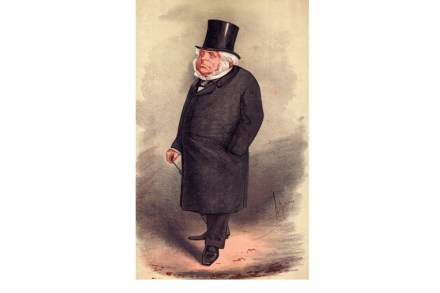
Why have we forgotten John Bright? In his day he was a massive political celebrity. He could command audiences of 150,000, delivering thrilling impromptu speeches night after night. Perhaps, as Bill Cash suggests, Bright’s eclipse has to do with the decline of conviction politics and public alienation from parliament. Or perhaps, as the novelist Anthony Trollope remarked, the trouble with Bright was that he didn’t actually create anything — he spent a lifetime attacking evils: ‘It was his work to cut down forest trees, and he had nothing to do with the subsequent cultivation of the land’. Bright was a Quaker, the son of a self-made businessman who established a successful cotton mill in Rochdale, Lancashire.

From the archives: The Christmas truce

From our UK edition

Christmas is but a day away, and with it a chance to remember when British and German troops clambered out of the trenches to declare impromptu ceasefires in December 1914. CoffeeHousers are no doubt familiar with the specifics: how the Germans started by singing carols, and finished off (according to some letters from the time) by beating our soldiers 3-2 in a game of football. But I thought you still might care to see how The Spectator wrote it up a week later.

Soaring splendour

From our UK edition

The glorious monuments built in India by the Mughal emperors, from Babur in the early 16th century to Bahadur Shah Zafar II in the mid-19th century, have long deserved a comprehensive illustrated survey in one volume. George Michell is the ideal author. He is both a great scholar and a fervent communicator on many aspect of India’s cultural history. He has worked as a hands-on archaeologist on major Indian sites and recently established a Deccan Foundation to protect the wonders of that little-known region. He has been extremely well served in this magnificent book by the photographs of Amit Pasricha, who describes himself as a ‘panoramic photographer’. His photographs are staggeringly beautiful and impossible to praise too highly.

Voyages of discovery

From our UK edition

Roger Louis is an American professor from the University of Texas at Austin who knows more about the history of the British Empire than any other two academics put together. When the Oxford University Press embarked on its mammoth history of the Empire the general editor they chose —to the chagrin of certain professors from the Commonwealth — was Roger Louis. Among his other responsibilities is the British Studies seminar, which was founded at Austin 36 years ago. But Professor Louis is not the university’s only attraction. The Harry Ransom Center houses one of the most, if not the most, important collection of modern literary manuscripts in the English-speaking world.

A beautiful bloody world

From our UK edition

The half-millennium or so that followed the division of the Carolingian empire in 843 AD was a time of profound social and political change in Europe. Kingdoms were established, new forms of law and theories of power were developed and military technology and tactics were revolutionised. Relations between church and state were transformed. The emerging European states developed new cultural identities, while western Christendom as a whole also began to define and assert itself against the Islamic states in the Middle East and north Africa, and the ailing remnants of the Byzantine empire to the east.

Wizard of the Baroque

From our UK edition

Not content with being the greatest sculptor of his age and one of its most gifted architects, Gian Lorenzo Bernini had some talent as a painter and draftsman. Surviving self-portraits reveal him as the possessor of a positively overstated physique du role. In its most youthful incarnation the face has an air of presumption and entitlement which adulthood will darken with a combativeness that is almost wolfish. Even in the chalk drawing made around his 80th birthday (now in the Royal Collection at Windsor) the glance, under bushy white eyebrows, still smoulders and the slightly parted lips seem poised to challenge or command.