History

American mythology

From our UK edition

Happy Fourth of July America! As you salute that Star-Spangled banner today, however, please remember that the war which spawned your anthem was a farrago wrapped in a fiasco inside a folly: 'If Canada was the winner in the War of 1812, there was no doubt who the losers were. The Federalist Party, sensibly skeptical about the war from the beginning, was nevertheless a victim of its prosecution. If their fate was irrelevance, though, much worse befell the Native American population. In the years after 1815, the United States turned its eyes westward. Even tribes such as the Cherokee who had fought with the Americans against the British discovered this service afforded them precisely no protection at all as the Indians endured their long, appalling trauma.

Racism and real estate

From our UK edition

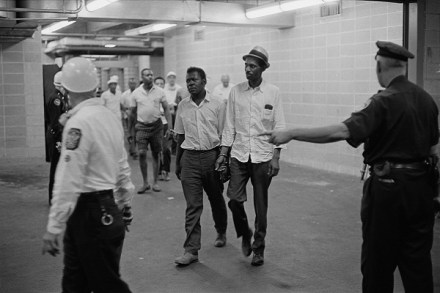
If racism presupposes that different ethnic groups cannot live harmoniously together, then segregation puts that theory into practice. Carl H. Nightingale’s Segregation: A Global History of Divided Cities, teaches us that separating cities along racial colour-lines, has always concerned one commodity: real estate. Cities, Nightingale observers, are places where people of several races are meant to come together. But this has not been the case. Instead, residential segregation and city-splitting politics — across the globe — has ensured that by putting a coerced colour-line in place, white-power has remained the definitive norm.

Discovering poetry: Charles Cotton’s rebellion

From our UK edition

Stanzas from ‘The Retirement’ Farewell thou busy world, and may We never meet again: Here I can eat, and sleep, and pray, And do more good in one short day, Than he who his whole age out-wears Upon thy most conspicuous theatres, Where nought but vice and vanity do reign. Good God! how sweet are all things here! How beautiful the fields appear! How cleanly do we feed and lie! Lord! what good hours do we keep! How quietly we sleep! What peace! what unanimity! How innocent from the lewd fashion, Is all our business, all our conversation! Oh my beloved rocks! that rise To awe the earth and brave the skies. From some aspiring mountain's crown How dearly do I love, Giddy with pleasure, to look down And from the vales to view the noble heights above! Lord!

Another voice: Casablanca state of mind

From our UK edition

‘I don’t buy and sell human beings,’ says Rick to the rival club owner hoping to get the pianist Sam. ‘Too bad,’ comes the reply, ‘that’s Casablanca’s leading commodity.’ Desperate men and women pay fortunes to people smugglers or have sex with them. Many are abandoned penniless, trapped and unable to return home, fearful of arrest. Police and cross border agencies monitor known people trafficking routes across the Mediterranean from North Africa. Passports are stolen and doctored, the price for the right papers is extortionate. There is no mercy if you cannot pay the price. Every so often the local police, under pressure from the powerful German authorities, smash a ring of traffickers.

War of the world

From our UK edition

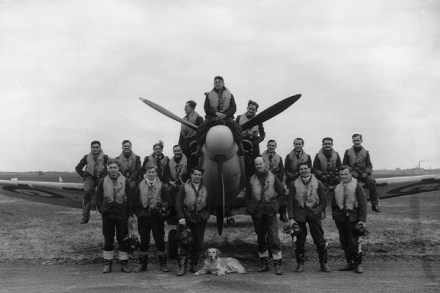
Of the writing of books on the Second World War, and the reading public's appetite for them, seemingly, there is no end. And the past few months have seen a particularly rich crop from some of our finest and most senior historians of the conflict; their books representing the considered summation of their thoughts on the worst disaster humankind has yet to experience.   Of the quartet under review, David Edgerton's Britain's War Machine offers the boldest revisionist argument that seeks to overturn some of our most treasured assumptions about Britain's role in the war.

An afternoon in Madrid

From our UK edition

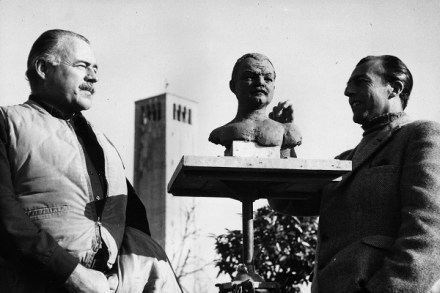
The most obvious — but far from the only — author to read when in Madrid must be Ernest Hemingway. For a man so fond of the laconic line, his rambling, enduring presence in the city is at once ironic and misplaced. It’s not only the guidebooks which are directing me to his erstwhile favourite watering-hole in the north, south, east or west of the city; it’s as if he left a tangible reminder of his presence — an extra shiny spot or cigarette burn burnished into the leather of an armchair — in each of the now rather shabby-chic establishments.

A conversation across the centuries

From our UK edition

E-books are going to win. Anyone who’s seen a bus or a train carriage or a café lately knows that: Kindles everywhere, as though they’re breeding. And that’s as it should be. Stand in the way of convenient technology which people want, and you’re in the same position as every refusenik from the Luddites to the newspaper unions of the 1980s. But before the printed book takes its final bow, and retreats to its status as endearing novelty, let’s take a look at the sort of experience we’re going to miss. A friend recently came across a single volume from an 18th century Spectator series, and knowing of my scribblings for said organ and its website, gave me the book as a present.

Missed history lessons

From our UK edition

It’s a slow news day in the political world, as we wait for the Spanish government to take its cap to Brussels. There are, however, some brilliant opinion pieces in the papers today to keep you entertained. First, Spanish author Carlos Luis Zafron has penned a visceral attack (£) on the self-appointed elites who have brought his country to the abyss. This passage might appeal most to CoffeeHousers: Peter Oborne made a similar case with regard to the whole EU in a devastating column on Thursday. Today, Charles Moore turns his epigrammatic attention to the subject. He concludes that the derided Cassandras have been vindicated. He writes: Missed history lessons is at the heart of Niall Ferguson and Nuriel Roubini’s joint enterprise in the FT.

Sadly, protest music is alive and well

From our UK edition

There is plenty of nostalgia around in this Jubilee Weekend. Any look back on 60 years brings temptation to think that the past was better than the present. This is what Woody Allen calls ‘golden age’ fallacy, which is defined (in his Midnight in Paris) as an age-old and ‘erroneous notion that a previous time period is better than the one one’s living in.’ This disorder was on show during BBC 2’s Review Show last night, where guests were bemoaning the death of protest music.   The panel (dominated by Kirsty Wark and music critic Paul Morley) were discussing BBC 4’s 3 part documentary, Punk Britannia. The first part of this series is available on i-Player and it is worth watching as a piece of cultural – and political – history.

The dirty dozen

From our UK edition

I have this fantasy in which I’m the Emperor Nero. I’m relaxing in my toga, and there are these slave girls dancing for me, and one of them has the most incredible … Like all the best fantasies, it’s a little unrealistic, let us say, but I didn’t know how unrealistic until I read this magnificent book by Matthew Dennison. For Nero’s life, as absolute ruler of the known world, was hell, haunted by twitching doubts and gibbering fears. He was bisexual, to begin with. That was OK in ancient Rome, but when it came to sleeping with men he received rather than gave, and that was definitely uncool. (During the act itself, the sources say, Nero would ‘imitate the cries and laments of a maiden being deflowered’.

And thereby hangs a tale

From our UK edition

The heart sinks when news breaks that an already distinguished novelist is trying his or her hand at the Irish revolution. The track record is uninspiring. Anthony Trollope lived many years in Ireland and knew senior nationalist leaders like Isaac Butt; even so, The Land Leaguers (1882) is very disappointing. Iris Murdoch had deep roots in the Northern Irish middle class; despite, or because, of this The Red and the Green (1965) is again a failure by the standards of middle-period Murdoch. Raymond Queneau’s sado-erotic satire on the Easter Rising, We Always Treat Women Too Well (1947), was perhaps unfairly excluded from the official Gallimard edition of Queneau’s oeuvre until 1962. George V.

Love conquers all

From our UK edition

Anyone who has ever written a history book will feel a twinge of envy on reading the preface to Just Send Me Word: We opened up the largest of the trunks. I had never seen anything like it: several thousand letters tightly stacked in bundles tied with string and rubber bands, notebooks, diaries, documents and photographs… It was a unique family archive, the property of Svetlana and Lev Mishchenko, and it contained, among other things, packets of their love letters.   The two had met as university students in Moscow in the 1930s, but their relationship was cut short by the outbreak of war. Lev joined the Red Army in 1940, fought near Moscow but then fell into German captivity.

What did he see in her?

From our UK edition

When King George I came over from Hanover in 1714 to claim the crown he had inherited from his distant cousin Queen Anne, he was accompanied by his mistress of more than 20 years, Melusine von der Schulenberg. George’s wife Sophia Dorothea was left behind in Germany. She had made the mistake of taking a lover of her own not long after George had embarked on his affair with Melusine, forgetting that by the double standard that then prevailed in courts, it was acceptable for a man to have mistresses, ‘but shameful indeed to be a cuckold’. Sophia Dorothea had flaunted her infatuation with the glamorous adventurer, Count Konigsmark, and wildly compromising letters between the pair were intercepted.

Obama’s Polish Blunder

From our UK edition

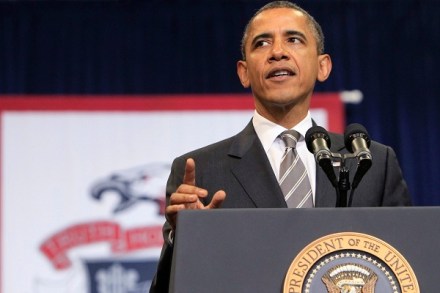
In Washington, as Andrew Sullivan reminds us, a gaffe is when a politician inadvertently blurts out what they actually believe. It is always occasion for equal measures of embarrassment and entertainment. So, no, Barack Obama's reference to a "Polish death camp" was not a gaffe. Worse than that, it was a blunder. Not of malice but of carelessness or ignorance but not much better for that. To recap: Obama was awarding the Medal of Freedom (posthumously) to Jan Karski when he said this: "Jan served as a courier for the Polish resistance during the darkest days of World War II. Before one trip across enemy lines, resistance fighters told him that Jews were being murdered on a massive scale and smuggled him in to the Warsaw Ghetto and a Polish death camp to see for himself.

Back to the Dreyfus Affair

From our UK edition

Not bad, this life. Now 95, Bernard Lewis, is recognised everywhere as a leading historian of the Middle East.He is the author of 32 books, translated into 29 languages, able in 15 languages, consulted by popes, kings, presidents and sheiks, on good or argumentative terms with many Western and Middle Eastern scholars and politicians, husband more than once, father, grandfather, and — true love at 80! — partner of the joint author of this book. He speaks with authority, although he is often disputed and occasionally sued, on so many different matters that his frequent name- and award-dropping somehow don’t exasperate. A non-observant English Jew, Lewis has visited most of the countries of the Middle East, even those that from time to time forbade Jews from entry.

Some legends flourish …

From our UK edition

Confronted by the dead Athenian heroes of the Peloponnesian War, Pericles gave voice in his funeral oration to an idea that explains better than any other why we are so obsessed by our military past. The freedom intrinsic to democracy, he said, made the unconstrained decision of its citizens to risk their lives in war more honourable than the choice forced on the soldiers of a militaristic system such as the Spartans’. ‘The man who can most truly be accounted brave,’ Pericles concluded, ‘is he who knows best the meaning of what is sweet in life and of what is terrible, and then goes out determined to meet what is to come.

… while others fade

From our UK edition

For Watergate junkies, another raking of the old coals is irresistible. For those underage younger persons who never understood what all the fuss was about, here is the chance to get with it. Just to remind: in June 1972, a bunch of nasties, some of whose day job was with the CIA but currently working for Richard Nixon the President of the USA, broke into the offices of the rival Democratic party in the Watergate building and got caught red-handed. Nixon’s White House tried to cover up this illegal entry. A junior reporter at the Washington Post, Bob Woodward, unearthed a five-star source known on the Post and round the world as ‘Deep Throat’.

Forever waging wars

From our UK edition

Death by buggery. Death by castration. Even death by being scared to death. Or so we are led to believe for the Plantagenets’ world. They had a lighter side, too: Henry II employed a professional flatulist with the trade-name of Roland the Farter. The longest reigning royal dynasty in English history (1154-1399), the Plantagenets offer the glaring contrast between their even balance of outstanding kings and outstandingly bad ones; this adds to the already exciting dynamics of a dramatic period, captured to great effect in Dan Jones’s big book on a big subject. The Plantagenets were established on the English throne by the ‘incessantly busy’ Henry II.

Gove’s historical conundrum

From our UK edition

Is it possible to set schools free while demanding a beefed up teaching of our nation's history? Both are topics close to the heart of the Education Secretary but eventually, he’s going to have to choose one over the other. Top-down orders on the History curriculum will undermine attempts to give schools and teachers more control over what they do. Tristram Hunt threw this curveball in this weeks magazine, where he states it is a example of the classic Tory struggle between liberalism and conservatism: 'The self-inflicted challenge comes with delivering this national narrative of Britishness. Because at the crux of Gove’s schools revolution is the dismantling of national provision.