History

Thus do empires end

From our UK edition

‘This book is a chronicle of one day in the history of one city.’ As first sentences go, that one is hard to beat — particularly given that the ‘one day’ is the last day of the Soviet Union, the city is Moscow and the author, an Irish journalist, was there and knew most of the principal actors. ‘This book is a chronicle of one day in the history of one city.’ As first sentences go, that one is hard to beat — particularly given that the ‘one day’ is the last day of the Soviet Union, the city is Moscow and the author, an Irish journalist, was there and knew most of the principal actors.

On His Majesty’s Silent Service

From our UK edition

Of all the Allied fighting service branches in which you wouldn’t have wanted to spend the second world war, probably the grimmest was submarines. Of all the Allied fighting service branches in which you wouldn’t have wanted to spend the second world war, probably the grimmest was submarines. Sure, their losses weren’t quite as bad as the German U-boat fleet, where your chances of being killed were four in five. But in the course of the war about one third of British submariners lost their lives; and in the earlier years your chances of coming back from a mission alive were no more than 50/50. Bomber crews, of course, had to face similarly grim odds. But at least they got back home to clean sheets, a hot shower, a beer and a fag or two.

From the archives: “The bugger’s bugle”

From our UK edition

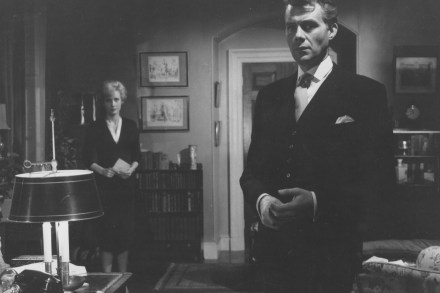
Today marks 50 years since the release of Victim, a ground-breaking film about homosexuality that was granted an X-certificate. Writing in the latest issue of the Spectator (subscribers click here), John Coldstream explains the significance of this frank and truthful film and its contribution to the national debate about decriminalising homosexuality. It was made four years after the publication of Sir John Wolfenden’s report into ‘Homosexual Offences and Prostitution’, which recommended that homosexual acts between consenting adults in private should be decriminalised. This contentious reform was not secured until 1967.

All in a night’s work

From our UK edition

This inter-war story of an Anglo-Irish family in crisis opens with a bang. Caroline Adair, recovering from measles at Butler’s Hill, her aunt and uncle’s lovely house in the South-west, wakes in the night to find  Sinn Feiners surrounding the place. This inter-war story of an Anglo-Irish family in crisis opens with a bang. Caroline Adair, recovering from measles at Butler’s Hill, her aunt and uncle’s lovely house in the South-west, wakes in the night to find  Sinn Feiners surrounding the place. The family are given ten minutes to clear out. ‘Don’t be frightened, darling’, says kind Aunt Moira, ‘they won’t do us any harm, they only want to burn the house.’It’s a big ‘only’.

Tallinn tales

From our UK edition

During the Twenties and Thirties, the Estonian capital of Tallinn was known to be a centre for espionage, infiltrated by White Russian intriguers bent on blocking Bolshevik access to north-west Europe. Graham Greene first visited in the spring of 1934  — ‘for no reason’, he writes in his memoir Ways of Escape, ‘except escape to somewhere new’. He spent many happy hours in Tallinn, he records, ‘when I was not vainly seeking a brothel’. (The brothel had been recommended to him by Baroness Budberg, a Russian-Estonian exile living in London and mistress of, among others, H. G.Wells.

The bigger picture

From our UK edition

Many among you, I know, have been fretting that thanks to a combination of political correctness, New Labour educational policy and the European Union’s usurpation of everything the free-born Englishman holds dear, big-picture narrative history is on the point of vanishing from the earth. All that our children’s children will know of British history, you worry, will be a vague sense of how beastly the Nazis were to Mary Seacole. Well, there is good news for you. Here are two new histories (of England, mind — not of Britain) by two of our best writers. Gosh, though. They could scarcely be more different. Peter Ackroyd’s is very long — or promises to be.

Our Revolting Youth (Have Always Been With Us)

From our UK edition

The problem with the Prime Minister's "Broken Society" meme is that it's not obvious society is more broken now than it always has been. Sure, there are serious problems and some of them are deep-rooted and, perhaps, the overall level of hopeless venality is higher than once it was but, tempting though it is to conclude this might be likely, the fact remains we are much more likely to be aware of contemporary problems and equally likely to gloss over the problems of past ages. This is especially obviously the case if we pause to consider aspects of modern Britain that, once unthinkable, have become so commonplace we sometimes forget how much better life is now in so many ways for so many people.

French with tears

From our UK edition

The civilised world has always needed a lingua franca, through which educated people of international outlook can communicate with each other. For centuries that language was Latin, first the language of theology, then of learning — Erasmus, Milton and Thomas More communicated with a wide community of scholars in Latin. Nowadays, the international language of commerce and culture is English, and from Peru to Shanghai the employees of multinationals talk in their barbarous English idiolects of blue-sky thinking and learning curves, just as their children chant along to the lyrics of West Coast rap. Between the age of Erasmus and that of Ricky Martin, there occurred the supremacy of the French language.

Malice in the Middle East

From our UK edition

What does it take to shock a writer? At the beginning of his study on the shaping of the modern Middle East, the academic James Barr describes his eyes bulging at the sight of new evidence relating to the depths to which the French stooped when trying to outdo their British rivals. The document revealed how, during World War II, with British forces fighting to liberate France, the French government was funding and helping to arm Jewish terrorist attacks on British troops in Palestine. The move was both supremely cynical and, as this book shows so clearly, entirely in keeping with the behaviour of these two allies: the British and French had been undermining each other in the region for more than half a century.

England from above

From our UK edition

It is a shame that Sir Roy Strong is subjected to the now-obligatory drivel about his being a ‘national treasure’, because this unthinking cliché diminishes his contribution, over more than 50 years, to our cultural life, whether as a curator or, in later times, as a gardener. Sir Roy has also written a number of books, and in his preface to this one describes his mission to bring the past of our country before a general readership. His last, A Little History of the English Country Church, certainly furthered that aim: it described how our shared past could be discovered by looking in these buildings.

The Myth of American Isolationism

From our UK edition

I like the Economist's Democracy in America blog very much and I like my friend Erica Grieder too. But her recent post on the debt-ceiling deal, the Pentagon's budget and the resurrected "threat" of American isolationism won't wash. Contemplating some conservatives' willingness to imagine cuts to the security budget she writes: There has always been an isolationist streak in the Republican Party. It's been suppressed in recent decades, particularly during the administration of George W. Bush. The wars in Iraq and Afghanistan were priorities for Mr Bush, and his presidency was polarising.

Mutiny, mayhem and murder

From our UK edition

Nothing more gladdens this reader’s heart than a book that opens up an interesting and underexplored historical byway. Well, perhaps one thing: a book that opens up a historical byway that turns out to be a complete catastrophe. On that count, A Merciless Place more than delivers. Here is one of the great colonial cock-ups. It all started with a question that resonates to this day. When your jails are overcrowded academies of crime, and the respectable public lives in fear of what it imagines to be a violent criminal underclass, what do you do with your surplus convicts? Ken Clarke not yet having been thought of, conventional opinion in the 18th century was: ship them overseas and let them be somebody else’s problem. Yes, it hurt. Yes, it worked.

Don’t blur the lines

From our UK edition

Did you know that on the Central Line’s maiden journey to Shepherd’s Bush, one of the passengers was Mark Twain? Or that The Picture of Dorian Gray and The Sign of Four were both commissioned by the same publisher at the same London dinner? Or that Harrods dropped the apostrophe from its name in 1921, a full 19 years before Selfridges followed suit? My guess is that you probably didn’t — which is where Walk the Lines comes in. Did you know that on the Central Line’s maiden journey to Shepherd’s Bush, one of the passengers was Mark Twain? Or that The Picture of Dorian Gray and The Sign of Four were both commissioned by the same publisher at the same London dinner?

What was it like at the time?

From our UK edition

At midday on Thursday, 8 June 1933 — Erik Larson is very keen on his times — the newly elected President Franklin D. Roosevelt had a call put through to the history department at the University of Chicago. At midday on Thursday, 8 June 1933 — Erik Larson is very keen on his times — the newly elected President Franklin D. Roosevelt had a call put through to the history department at the University of Chicago. Since taking office in early March Roosevelt had been trying to fill the post of ambassador to Berlin, and with none of the usual suspects prepared to take on the job and Congress on the point of adjourning for the summer recess, time was fast running out.

Strategies for survival

From our UK edition

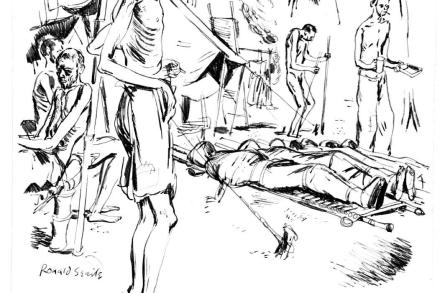
This is an account of the multiplicity of ways in which men ‘stole back time from their captors through creativity’ in the prisoner-of-war camps of Europe and the Far East. This is an account of the multiplicity of ways in which men ‘stole back time from their captors through creativity’ in the prisoner-of-war camps of Europe and the Far East.

The ne plus Ultra

From our UK edition

The story of Bletchley Park, MI6’s second world war code-breaking operation, has grown with the telling since the early 1970s accounts — although, as Briggs points out, Bletchley’s first public disclosure was in Time magazine in December 1945. The story of Bletchley Park, MI6’s second world war code-breaking operation, has grown with the telling since the early 1970s accounts — although, as Briggs points out, Bletchley’s first public disclosure was in Time magazine in December 1945. In recent years it has become the stuff of fiction, film and feature, and almost anyone who was there and is still alive is guaranteed a publisher.

Summer reading | 21 July 2011

From our UK edition

It’s a tradition of the British summer. A Tory MP produces a summer reading list of weighty and worthy tomes to co-incide with the summer recess. This year, Keith Simpson has compiled the list, and as you can see it's long as your arm. Spectator Book Blog contributor Nik Darlington has made a few selections from the list. And of course, we'd like CoffeeHousers' recommendations too. Diary: Alastair Campbell, Diaries Vol. II: Power and the People and Diaries Vol. III: Power & Responsibility. Peter Catterall (editor), The Macmillan Diaries Vol. II: Prime Minister and After, 1957-1966. Earl Ferrers, Whatever Next? Reminiscences of a journey through life.

Refighting the War of 1812

From our UK edition

I've been guest-blogging at Andrew Sullivan's place this week where, somewhat to my surprise, I ended up refighting the War of 1812 with Jonathan Rauch. I meant to post this here earlier but forgot, so here it is now. My word, that jackanape Jonathan Rauch does severely provoke me. First blogging, now the War of 1812. I surmise he aspires to nincompoop status. The War of 1812, upon which many American myths now seem to depend, was a foolish and futile enterprise from the start, rested on a policy of ignorance and needless aggression, and was founded on the erroneous assumption that Napoleon Bonaparte would prevail in the epic, global struggle of which the War of 1812 was but a minor sideshow.

Up the creek

From our UK edition

Philip Marsden is a romantic historian. This is the story of Falmouth from its early days until the end of the age of sail. He writes with great love of the town near which he has lived all his life, and keeps darting from its history into personal anecdotes about expeditions made in his old motor launch Liberty, sometimes in search of pirate treasure. It makes for an attractive book. Until the 17th century there was no town of Falmouth. Its present centre is still known as ‘the Moor’, a place where swampy land meets the tide; a bog, in fact. For this reason the original town was founded up creek at Penryn, and even when the Killigrews, the leading family of the region, first began to build round their house at Arwenack, the place was known as Smithwick.

Enterprising Scots

From our UK edition

If you wish to see how Scotland changed in the century after the Act of Union (1707), you might visit and compare the two houses in Edinburgh that belong to the National Trust for Scotland. Gladstone’s Land, built for a wealthy merchant in the 17th century, is a six-storey tenement in the old town, a place rich with period ambience but narrow, confined and in its heyday unhygienic. It could hardly contrast more vividly with The Georgian House in the new town’s Charlotte Square, which has space and elegance and the architecture of Robert Adam.