Philip Ziegler

No Rose without a thorn

From our UK edition

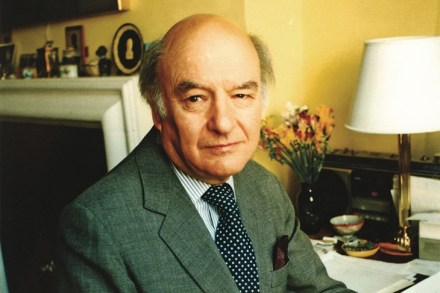
Kenneth Rose was gossip columnist by appointment to the aristocracy and gentry. He was, of course, a snob — nobody could write a social column in the Sunday Telegraph for more than 50 years without some snobbish instincts — but he was an intelligent one, singularly well-informed, and capable from time to time of administering a sharp bite to the noble hands that fed him his material. It might reasonably be said that his contribution to social history is limited in its parameters, but it is a real contribution for all that. It is also great fun to read. Certain themes recur constantly in the course of his narrative. One of these is Eton.
Saviour of the world

From our UK edition

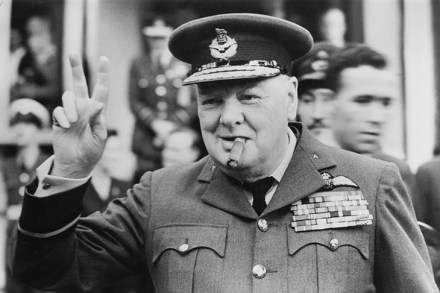
Churchill must be the most written-about figure in public life since Napoleon Bonaparte (a subject, incidentally, to which Andrew Roberts has already contributed a substantial and prize-winning biography). As the publisher obligingly warns us, there have been over 1,000 previous studies of Churchill’s life, including some dross, but many works of serious importance. To add anything worthwhile to this mountain requires that the author should be determined, courageous and have something new to say. No one has ever doubted Roberts’s determination and courage; the question remains whether he has anything new to say. Rather to my surprise, the answer has to be ‘yes’. Roberts has been assiduous in his research.

Lesley Blanch: a true original on the wilder shores of exoticism

From our UK edition

Lesley Blanch (1904–2007) will be remembered chiefly for her gloriously extravagant The Wilder Shores of Love, the story of four upper-class European ladies who abandoned their natural habitat to seek and find romance in the Middle East. If one had to pick only one of Blanch’s books to read there could be no better choice than this; but, as this exotic potpourri reminds one, she was incapable of writing boringly or badly. The most substantial part of Lesley Blanch: On the Wilder Shores of Love (a title which seems designed to deceive putative readers into thinking that they have read it all before) is Blanch’s record of her youth — the opening chapters of a book which she did not live to complete.

Daring? No. Well written? Yes

From our UK edition

This has all the appearance of a book invented by a publisher. Two years ago W. Sydney Robinson published an excellent biography of the Victorian newspaperman W.T. Stead. How best to follow this? No attractive subject for another full-scale biography suggested itself. Why not therefore fill in time by writing long essays on four worthies from the generation that followed Stead? And so we have: ‘A Daring Reassessment of Four Twentieth Century Eccentrics: Sir William Joynson-Hicks, Dean Inge, Lord Reith and Sir Arthur Bryant.’ The only trouble is that the reassessment is not particularly daring and the characters hardly at all eccentric.

The Thucydides of court gossip? Steady on…

From our UK edition

Sir Brian Unwin leads off with some decidedly questionable assertions. He wonders why the first of his two subjects, the Comtesse de Boigne, should have been ‘ignored or un-noticed by most historians’ — curious words to apply to a woman whose words are quoted in virtually every biography or history of her period. As to his second subject, Fanny Burney, he describes her as a ‘great novelist’. Evelina, Cecilia and Camilla make pleasant reading and were vastly successful in their time, but ‘great’ is surely pushing it a bit? In the vast gulf that separates Barbara Cartland from Virginia Woolf, Burney is nearer the latter than the former but a considerable way from both.

Was Roy Jenkins the greatest prime minister we never had?

From our UK edition

In any list of the-best-prime-ministers-we never-had, the name of Roy Jenkins is likely to be prominent. He was intelligent, moderate, courteous, thoughtful: he was exactly the sort of man whom any civil servant would wish to see installed in No.10. That, no doubt, is why he never got there. John Campbell makes no bones about the fact that he is a fan of Jenkins. He was, writes Campbell, ‘the first public figure I was aware of and always the one I most admired’. Campbell is far too sensible a man and good a biographer, however, to allow his book to degenerate into a paean of praise. Jenkins’s frailties are unsparingly exposed, his occasional failures recorded, his more extravagant pretensions ridiculed.

Clash of the titans

From our UK edition

This is an odd book: interesting, informative, intelligent, but still decidedly odd. It is a history of the Victorian era which almost entirely eschews wars and imperial adventures and concentrates instead on the social, political and intellectual climate of the times.  This is still a vast spectrum. Simon Heffer concludes that he must decide which facets deserve attention and picks out those which interest and entertain him most; hence the occasional oddity. Can the building of the Albert Memorial really be worth 30 pages? Or the conflict over the style of architecture to be adopted for the new government buildings in Whitehall be worth 20?

Henry Addington thought Robert Peel was bad. What would he have made of David Cameron?

From our UK edition

Henry Addington, first Viscount Sidmouth, was briefly and, on the whole, ingloriously Prime Minister at the beginning of the nineteenth century and then spent nearly ten years as Home Secretary at a time when Britain seemed as close as it had ever been to violent revolution. In both capacities he displayed an unwavering conservatism which seemed inexcusable to his political opponents and sometimes even caused disquiet among his supporters. He was a relic of the eighteenth century who signally failed to adjust to the realities of the nineteenth: when the Great Reform Bill was passed in 1832 it seemed to him bound to lead within a few years to the collapse of civilised society. 'I hope,' he told Lord Grey, 'God will forgive you on account of this Bill. I don't think I can.

Edwardian Requiem, by Michael Waterhouse – review

From our UK edition

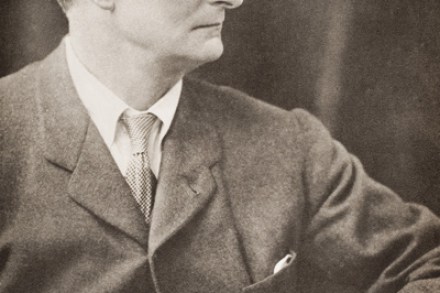
The photograph on the jacket, reproduced above, says it all — or at least all of what most of us think we know about Sir Edward Grey. Patrician, reflective, dignified, he stares into the future with the uncompromising honesty of one who has never even contemplated straying from the paths of rectitude. In fact, he was more interesting than that, but Michael Waterhouse’s thoughtful biography reveals that the image and the reality were not so very different. Grey’s private life was a little more chequered than might have been expected.  Though properly cautious about what can be no more than surmise, Waterhouse credits Grey with several extramarital affairs and at least two probable bastard children.

Margaret Thatcher: The Authorized Biography, by Charles Moore, and Not for Turning, by Robin Harris – review

From our UK edition

It is a measure of Lady Thatcher’s standing that her death has been followed not only by the mealy-mouthed compliments from political opponents which are normally forthcoming on such occasions but also by robust denunciations. Nobody would have sung ‘Ding, dong, the Wizard is dead!’ after the deaths of Jim Callaghan, John Major or Alec Douglas-Home. Even the more controversial Harold Wilson got a bland send-off in his obituaries. Ted Heath was asked by a journalist whether it was true that, when he heard of Margaret Thatcher’s eviction from the party leadership, he had exclaimed ‘Rejoice! Rejoice!’. No, he replied, after some deliberation. ‘What I said was “Rejoice! Rejoice! Rejoice!

‘The Undivided Past’, by David Cannadine – review

From our UK edition

David Cannadine detests generalisations and looks disapprovingly on any attempt to divide humanity into precise categories. The Undivided Past provides a resoundingly dusty answer to any historian rash enough to seek for certainties in this our life. It is highly intelligent, stimulating, occasionally provocative and enormous fun to read. Cannadine considers the six ways in which humanity is traditionally deemed to split into distinct and usually hostile groups — religion, nation, class, gender, race, and civilisation — and demonstrates that these groups are neither distinct nor hostile — indeed, can hardly be said to be groups at all. ‘When I was coming up,’ said President George W. Bush regretfully, ‘you knew exactly who they were.

More Lothario than Hamlet

From our UK edition

Ronald ‘Trader’ Faulkner is that relative rarity: an unassuming actor. In their memoirs most actors, after the obligatory two or three chapters describing the hardships at the outset of their careers, indulge in a paean of self-glorification — mentioning their failures, certainly, but only so as to highlight their far more considerable successes. Faulkner is different. At one point he refers to himself as ‘a struggling actor approaching middle age’. (His wife somewhat brutally agreed: ‘Let’s be honest, you’ve had your chance as an actor, and at 40 you still haven’t made it.

A painless lesson in political history

From our UK edition

This book is not a history, explains Ruth Winstone, who has edited this collection of excerpts from diaries published between 1921 and 2011. It is, she says, ‘an impressionist view of politically changing times’. It is, indeed, a patchwork quilt of a book, no two pieces precisely meshing with each other yet providing in total a remarkably clear and coherent portrait of 90 stressful years. It is ‘a political diary’, but Winstone admits that the definition of ‘political’ became more and more elastic as the book took shape. It is all the better for it.

Highbrows and eyebrows

From our UK edition

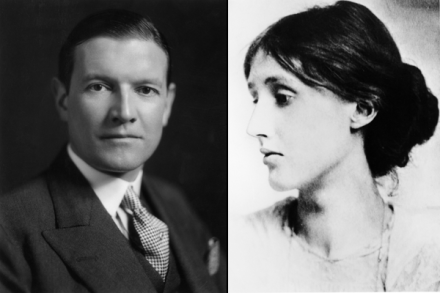
Juliet Nicolson is a member of a literary dynasty second in productivity only to the Pakenhams. She is herself the author of two distinguished volumes of social history describing Britain immediately before and immediately after the first world war. This is her first novel. The danger of letting a social historian write novels is that the social history is likely to lie rather heavily upon the narrative. Nicolson is not guiltless in this respect. The characters in her novel are strikingly well connected. Virginia Woolf, George Orwell, Vanessa Bell, Lord Reith, all have walk-on parts. Almost the only two literary figures of any social consequence who do not appear, indeed, are the author’s grandparents: Harold Nicolson and Vita Sackville-West.

Agreeing to differ

From our UK edition

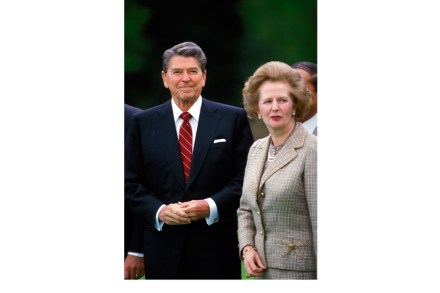
‘Frankie and Johnny were sweethearts; Lordie, how they could love.’ The ballad has many variant versions but the denouement is always the same; he was her man and he did her wrong. Rooty-toot-toot three times she shoot, and Johnny ended up in a coffin. Thatcher and Reagan were sweethearts; Lordie, how they could love. But Reagan did her wrong: over Grenada, over nuclear disarmament, as near as nothing over the Falklands. The relationship was to end in ostentatious affection, but if Mrs Thatcher had had a gun in that celebrated handbag, it might have been a case of rooty-toot-toot all over again.

Talking tough

From our UK edition

This thoughtful, challenging and deeply depressing book takes as its launch pad the Nuremberg Trials, in which the author’s father played so prominent a part. Churchill would have executed the Nazi leaders out of hand. Eisenhower wanted to exterminate all the German General Staff as well as all of the Gestapo and all Nazi Party members above the rank of Major. Wiser counsels prevailed. The Nazi leadership must be put on trial, it was agreed, and not in such a way as would rubber-stamp a verdict that had already been tacitly agreed. ‘You must put no man on trial under the forms of judicial proceeding,’ said the distinguished jurist Robert Jackson, ‘if you are not willing to see him freed if not proven guilty.

Philip Ziegler’s books of the year

From our UK edition

In her biography of William Morris Fiona MacCarthy opened a window onto the brilliantly talented yet curiously anaemic world of the Pre-Raphaelites and their associates. In The Last Pre-Raphaelite she switches her attention to Morris’s once great friend and later stern critic, Edward Burne-Jones. Her scholarship is exemplary; her style fluent; her judgment discriminating; above all, she makes her weird galère come vividly alive. Her book is fun to read. No one could say the same of Ian Kershaw’s The End.  Kershaw is not into fun: his cool yet remorselessly horrific account of the last days of Hitler’s Reich should be compulsory reading for any ruler contemplating taking his country into war.

Voyages of discovery

From our UK edition

Roger Louis is an American professor from the University of Texas at Austin who knows more about the history of the British Empire than any other two academics put together. When the Oxford University Press embarked on its mammoth history of the Empire the general editor they chose —to the chagrin of certain professors from the Commonwealth — was Roger Louis. Among his other responsibilities is the British Studies seminar, which was founded at Austin 36 years ago. But Professor Louis is not the university’s only attraction. The Harry Ransom Center houses one of the most, if not the most, important collection of modern literary manuscripts in the English-speaking world.

The Diamond Queen by Andrew Marr

From our UK edition

‘Of making many books there is no end’, particularly when the subject is Queen Elizabeth II. It is less than ten years since Ben Pimlott and Sarah Bradford independently produced authoritative and excellent biography-centred books on the Queen. Since then a fair number of minor studies have appeared. Can enough have happened in the meantime, can enough new information have been revealed, to justify two new books? The answer, rather surprisingly, is a cautious ‘yes’. Both Andrew Marr and Robert Hardman are serious students of their subject. Both write well and thoughtfully.

At home in the corridors of power

From our UK edition

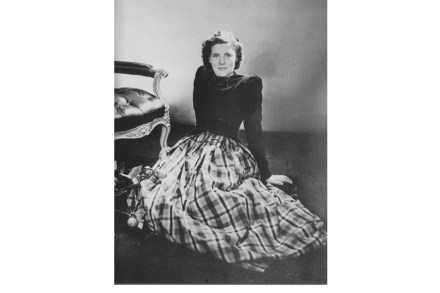
To be the daughter of an enormously powerful man must always be an enthralling if sometimes daunting experience. To be close to that father when, almost single-handed, he is shaping the destinies of the nation, if not the world, is to be uniquely privileged. Mary Soames took no part in the decision-making that was happening above her head, but she was singularly well placed to sense what was going on and to understand the man who was riding the storm with such courage and aplomb. She was much younger than her siblings, her father was absorbed in his Herculean task, her mother knew that her first responsibility must be to her husband.  Mary Soames was therefore a solitary child, but she never felt neglected and was incapable of self-pity.