Harriet Sergeant

Harriet Sergeant is a journalist and the author of Among the Hoods: My Years With a Teenage Gang.

The inconvenient truth about cannabis and mental illness

From our UK edition

Mash’s older brother was the same age as Anthony Williams when he slaughtered a stranger in a brutal and random attack. He was in the grip of a psychotic disorder caused by cannabis. We do not yet know what drove Williams, a 32-year-old African Caribbean man, to allegedly try to murder ten people during a 14-minute knife rampage on a train. But Mash is in no doubt cannabis often plays a part in attacks like these. ‘In my community smoking weed is normalised,’ he says. ‘We laugh and joke about hearing voices or having a “para” [a paranoid fit].’ He counts on his fingers: ‘Two brothers, two cousins and multiple friends’ who have experienced hallucinations and delusions. He shakes his head sadly. ‘Weed is killing my people.

How the culture war came for Kenwood Ladies’ Pond

From our UK edition

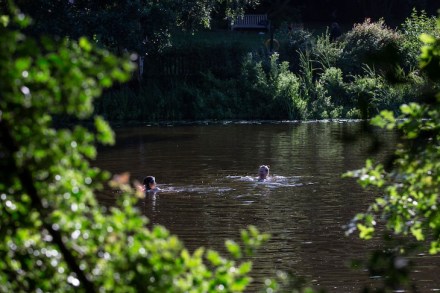
‘Not another step!’ The large women in an old T shirt stretched across her bulging shoulders glared at my father. We were standing under a canopy of trees on Hampstead Heath in north London. Sunshine dappled through the leaves onto my face. I was 12 years old and clutched a wet and muddy costume. Through the greenery was a glimpse of lake and naked limbs.  My childhood oasis of tranquillity is under threat My father had come to pick me up from swimming in the Kenwood Ladies’ Pond. He had started up the path only to be confronted by the lifeguard. ‘Women only.’ she growled and pointed to the board declaring ‘Men cannot go beyond this point,’ Then she took in our long-haired dachshund. ‘And he’s male too,’ she said with disgust.

Trump II: Back with a Vengeance

From our UK edition

47 min listen

On the podcast: what would Trump’s second term look like?  Vengeance is a lifelong theme of Donald Trump’s, writes Freddy Gray in this week’s cover story – and this year’s presidential election could provide his most delectable payback of all. Meanwhile, Kate Andrews writes that Nikki Haley’s campaign is over – and with it went the hopes of the Never Trump movement. Where did it all go wrong? They both join the podcast to discuss what to expect from Trump’s second coming. (03:11) Then: Will and Gus take us through some of their favourite pieces from the magazine, including Michael Hann’s Pop review and Cosmo Landesman’s City Life column. (16:38) Next: Flora Watkins writes in The Spectator about on private schools.

The criminal gangs behind the rise in shoplifting

From our UK edition

‘She was dressing half of Brixton at one time.’ A former plumber from south London is recalling the pretty, well-groomed shoplifter of his youth. Expensively dressed, her favourite place to target was Selfridges. ‘I don’t know how she did it but she got everything. You put in an order and she’d get it. Those days I had silk boxer shorts to give away,’ he sighs. ‘But then her son got murdered and she died shortly after of a broken heart.’ Shoplifting is no longer a one-woman show. Light-fingered mothers have been replaced by organised criminals, trafficking children and teenage girls from eastern Europe to steal from British shops. Children are a key part of their strategy because they are too young to be charged.

Ghost children: the pupils who never came back after lockdown

From our UK edition

33 min listen

This week:In her cover piece for The Spectator, Harriet Sergeant asks what's happened pupil absence which has increased since the pandemic. She is joined by The Spectator's data editor Michael Simmons to account for the staggering number of children who were failed by the government's Covid response (01:08). Also this week: Owen Matthews, The Spectator's Russia correspondent, looks at the opposition candidate who could usurp President Erdogan in Turkey. He joins the podcast alongside Turkish journalist Ece Temelkuran to discuss whether it really could be the end of Erdogan's two decade long hold over Turkish politics (14:48).

Ghost children: the pupils who never came back after lockdown

From our UK edition

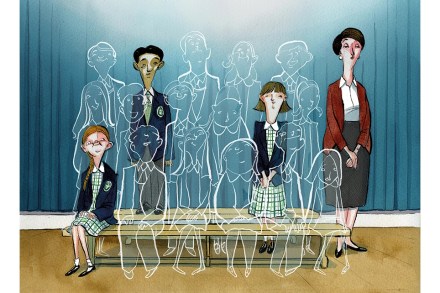
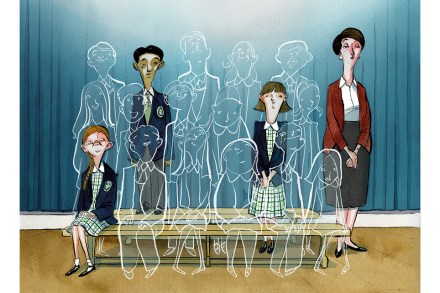
‘There was this guy in my year who never came back to school after lockdown,’ a 14-year-old girl at a comprehensive in the Midlands says. ‘Then one day my friends and I saw him by the shopping centre. He was, like, sitting on a piece of cardboard by the side of the road, looking a bit homeless. Other kids recognised him and bought him food and clothes. He’d always been popular. Then someone told a teacher and a couple of days later he came back to class. But he was so far behind, he grew frustrated and angry, and then one day he just upped and left for good.’ That boy is a ghost child – a victim of the disastrous policy of school closures during the Covid pandemic. On 8 March 2021, when schools reopened, everyone expected that it would be business as usual.

The red line: Biden and Xi’s secret Ukraine talks

From our UK edition

38 min listen

On this week's podcast: Could China be the key to peace in Ukraine? In his cover piece for the magazine this week Owen Matthews reveals the covert but decisive role China is playing in the Ukraine war. He is joined by The Spectator's Cindy Yu, to discuss what Xi's motivations are (00:53).  Also this week:  Harriet Sergeant writes that the Iran is at war with its own children as it cracks down on young protesters. She is joined by Ali Ansari, founding director if the Institute for Iranian Studies, to consider the fragility of the Iranian regime (14:32).  And finally:  Julie Bindel says in the magazine this week that after recent controversy the Society of Authors is no longer fit for purpose.

The Iranian regime is at war with its own children

From our UK edition

Twenty-two-year-old Hadis Najafi does not look like a foot soldier in a revolution. In the last film of Najafi alive, it is night and she’s walking down a road in Karaj, her home town, smiling and scrunching up her hair into a ponytail. She is young, blonde and on her way to a demonstration. Najafi reminds me of my own daughter, tying up her hair in the same casual, no-nonsense way. Thirty minutes later, she was dead, shot six times in the face, hand, neck and heart. Her crime? To go to a protest and not to wear a hijab. Iran is locked in a clash between its medieval Islamic theocracy and the TikTok generation.

Harriet Sergeant, Lionel Shriver, Martin Vander Weyer and Philip Patrick

From our UK edition

30 min listen

This week: Harriet Sergeant writes about why ethnicity matters in sexual abuse cases (0:30), Lionel Shriver takes aim at the American university students failing their exams, (8:06), Martin Vander Weyer looks at the latest forecasts for housing prices (17:01), and Philip Patrick thinks Japanese food is overrated (25:19).Produced and presented by Natasha Feroze.

Why we must accept ethnicity matters in child grooming cases

From our UK edition

A 24th man has just been charged with the rape of a 13-year-old girl more than ten years ago in Bradford. Twenty-four men. One 13-year-old girl. It takes some absorbing. The case will come to trial in due course, but it prompts reflection on other cases of historic sexual abuse against girls where the victims have been white, working-class, usually in care and very young. One girl admitted her first memory was of sexual abuse aged five. The perpetrators have often been men from the British Pakistani community living under a Labour-run council. It all happened a decade or more ago. Nothing to see here, we are told. Just some unsavoury historic sex crime. Let’s all move along. Harvey Weinstein’s abuse of women also went back years.

Music and murder

From our UK edition

A young man in a grey tracksuit and silver mask looks straight at the camera. He is flanked by others in black anoraks, heads jabbed sideways, moving to the beat. The young man raises his hand and curls it into the shape of a gun. ‘Bang, bang, I made the street messy. Bang, bang and I don’t feel sorry for his mum.’ Last year 80 people were stabbed to death in London, a quarter in their teens. Fifty have died already this year. The Met Commissioner, Cressida Dick, deployed 300 extra police at the weekend after six separate knife attacks last week, five of the victims being teenagers, one a 13-year-old boy. Welcome to the world of UK drill rap — the music behind the explosion of teenage deaths on London’s streets.

Does aid help?

From our UK edition

What a scandal for our times. Oxfam, that upholder of modern-day virtue, unassailable in its righteousness, buried for seven years that its aid workers exploited young girls. The men abused their power to have sex with desperate victims of the Haiti earthquake — the very people they were supposed to protect. Michelle Russell of the Charity Commission is clear about the deception. ‘We were categorically told by Oxfam; there were no allegations of abuse of beneficiaries. We are very angry and cross about this.’ Nor was this a one-off. Helen Evans, the charity’s global head of safeguarding, begged senior staff, ministers and the Department for International Development to act.

Not refugees, not children

From our UK edition

I was interviewing ten foster parents in west London for a report on children in care. Foster parents are in great demand, so I was startled to discover that only one of the sets of parents was looking after the sort of vulnerable children you imagine to be in the care system. The others were looking after unaccompanied asylum-seeker children. They made an alarming claim: three of these seemed to be adults passing themselves off as boys. ‘The first thing they ask for is a razor,’ said one foster parent, ‘They’ve got these big beards.’ A woman admitted she found it embarrassing having a grown man posing as a 17-year-old. But the authorities appeared uninterested. ‘Our concerns are just fobbed off,’ said another.

Home is where the art is

From our UK edition

The house in which I lived in Tokyo was built by my landlady, a former geisha. It stood on a plot of land given to her by her last lover. It was small, full of light and positioned to enjoy the large ginkgo tree in the garden next door. It was easily the best designed house I have ever lived in. Nostalgia for that house and my former life in Tokyo overwhelmed me as I wandered through the new exhibition at the Barbican — The Japanese House: Architecture and Life after 1945. Exhibitions on architecture are notoriously hard to pull off but this succeeds triumphantly. Japanese domestic architecture has consistently produced some of the most influential examples of modern design. By the end of the second world war B-29 bombing had destroyed a third of Japanese housing stock.

How to spot a charity snake

From our UK edition

How do we judge a charity? Very badly, it turns out. Until The Spectator revealed the full horror of Kids Company in July, not even the press had asked hard questions of the charity or its founder, Camila Batmanghelidjh. The subsequent political scrutiny showed our democratic process at its best. When Paul Flynn, a veteran Labour MP, told Batmanghelidjh at an electrifying House of Commons hearing to stop talking ‘psychobabble’ he stripped away in an instant the glitz that had allowed one small charity whose sole qualification was the charisma of its leader to fritter away £48 million of taxpayers’ money. ‘We do not live on the moon,’ Flynn told her. ‘We represent areas that have great problems. We know about them.

Mansion migrants

From our UK edition

This election will see me up all night until the last results are in. It will have me knocking on doors, handing out leaflets and driving old ladies to the polling stations. All this is a first for me — and for the many others I find myself doing it with. Why does this election galvanise like no other? One issue has made it up close and personal — Labour’s mansion tax. As one neighbour canvassing with me yesterday remarked, ‘It is landing us in the shit.’ We are all of a certain age. We range from the comfortably off to the quite poor. We have lived in our houses a long time and now we find our homes under threat. A new Labour government will hold a budget in June and send out mansion tax demands shortly after.

Banned – and booming: the strange world of Chinese golf

From our UK edition

I was in Shanghai interviewing a Chinese film director and an actor. We were discussing government censorship. How did anyone manage in China, I lamented. The two men burst out laughing. I had not understood at all. ‘Because everything is forbidden, everything is permitted. You are free to do anything,’ they assured me. Dan Washburn in his book The Forbidden Game: Golf and the Chinese Dream, uses golf and the business around it to pin down the paradox that is China today. Golf is his back door into understanding the last 20 years, as China has grappled with modernity and an unnerving speed of change.

Is there a way to live without economic growth? 

From our UK edition

During Japan’s lost decade in the 1990s I found myself handing out rice balls to Tokyo’s homeless on the banks of the Sumida river. The former salary men — it was always men — slept in cardboard boxes the size of coffins. I peered into one. Its owner had neatly arranged his last few possessions. Crockery, two wash rags and a blanket were all emblazoned with the designer logos I associated with Japan’s boom years when I had lived in Tokyo. They had washed up like artefacts from another age in this unlikely setting. They signalled more than anything else to me that Japan’s economic miracle was well and truly in the past. Financial Times Asia editor David Pilling lived in Japan for seven years.

Out on the town

From our UK edition

In the middle of last summer’s riots, Mash, a member of a South London gang I have befriended, phoned me. He was standing outside a shop that was being looted. ‘It’s the funniest thing, Harry man,’ he declared. ‘This day I can go anywhere in London and there is no beef.’ Mash is usually confined by gang rivalry to a few streets around his estate. More astonishing even than the opportunity to loot was mixing with other young men without fear of being stabbed or shot. For the majority of Londoners like me, the riots proved terrifying. For Mash, it was the first time he had felt safe in his city. In his new book, Clive Bloom describes last year’s riots as a carnival for the disinherited.

WEB EXCLUSIVE: These rioters are Tony Blair’s children

From our UK edition

Nihilism and disorder have been fostered by the state On the third day of the London riots I received a telephone call from Mash, a member of a Brixton gang who I befriended three years ago. He was standing outside an electronics shop in Clapham, watching the looting. I could hear shouts, glass breaking but never a police siren. I urged him to go home. ‘Harri man,’ he remonstrated, his voice hoarse with emotion, "You don’t get to do this every day. You do your thing, and you don’t get arrested. It’s wild and exciting. These few days, it’s our time." The riots engulfing areas of London and other cities this week are not about poverty or race.