History

What took Francis Mitterrand to the top?

From our UK edition

Of a dashing political rival, François Mitterrand once remarked: He was more intelligent than I was, he thought faster than I did, he was more seductive to women. In some ways, he gave me a complex. But he lacked perseverance. The man of whom Mitterrand spoke was a certain Félix Gaillard, whose claim to fame during the Fourth Republic was to become France’s youngest ever prime minister at the age of 38. He lasted barely five months in the job (1957–58) and was never heard of again. As Philip Short — who has previously written works on Mao and Pol Pot — makes mordantly clear in his well-rounded, albeit meandering biography, Mitterrand’s career path to the summit of French politics was an altogether more tortuous and drawn out affair.

A book that’s inspired by a movie (for a change)

From our UK edition

Books become films every day of the week; more rarely does someone feel inspired to write a book after seeing a film. Peter Conradi’s Hot Dogs And Cocktails tells the story of King George VI and Queen Elizabeth’s visit to North America in the summer of 1939 and specifically the couple of days they spent at President Roosevelt’s country retreat at Hyde Park on Hudson. In the film of that name, Bill Murray played FDR with a characteristic twinkle in his eye, and the story was fleshed out with a did-they-or-didn’t-they illicit romance with his distant cousin, played by Laura Linney. For reasons of professional integrity Conradi can’t play quite so fast and loose with events, but his is an entertaining tale even so.

The Last Knight, by Robert O’Byrne – review

From our UK edition

I have to declare an interest: for many years the Knight and I were the closest of friends until a sequence of his unpredictable and volcanic rages drove us apart. Robert O’Byrne explains how the Knight suffered for most of his life from the illness and strong medication of manic depression. It is a tribute to him that I never knew of this medical diagnosis until much later and that, despite it, he achieved so much in his life, drawing international acclaim to Irish pictures, architecture and furniture and producing so many learned books on their quality and beauty. In fact there is a photograph in this book of the Knight and I dancing a jig to the melodious tin-whistle music of Paddy Maloney. But in the caption I am described as someone else, albeit a cousin.

Old England died in 1963

From our UK edition

There is no better measure of the pivotal importance of 1963 than to recall what Britain was like in the early 1950s, as we slowly emerged from the shadows of the second world war. The great Labour experiment of 1945 had petered out in a grim slog through years of austerity and rationing. With Winston Churchill back in No. 10, life had begun to crawl back to ‘normality’. Conservative values ruled: respect for tradition, discipline and authority. The old class structure still stood. No extramarital sex or homosexuality. In the cinema we were entertained by cosy Ealing comedies and films portraying the ‘stiff upper lip’ spirit which had won the war. Pop music, hardly ever allowed on the BBC, centred on crooners such as Frankie Laine and adaptations of folk songs.

Profumo. Chatterley. The Beatles. 1963 was the year old England died

From our UK edition

Shortly before his death, David Frost rang to ask me to take part in a radio series he was making to mark the 50th anniversary of ‘the year, Chris, that I know is closest to your heart, 1963’. This was not because 1963 was the year when he and I worked together on the BBC satire show That Was The Week That Was (TW3), which overnight made Frost a television superstar. It was because he remembered the importance I had given to the events of that year in The Neophiliacs, a book I wrote long ago analysing the tidal wave of change which swept through British life in the 1950s and 1960s. By any measure the stream of scandals, shocks and sensations which poured through the headlines in 1963 made it as extraordinary a year in Britain as any since the second world war.

The men who demolished Victorian Britain

From our UK edition

Anyone with a passing interest in old British buildings must get angry at the horrors inflicted on our town centres over the last half-century or so. Gavin Stamp is wonderfully, amusingly, movingly angry. And he has been ever since the early 1960s when, as a boy at Dulwich College, he saw workmen hack off the stiff-leaf column capitals in the school cloisters. He reserves particular rage for that ‘cynical, philistine Whig’ Harold Macmillan for murdering the Euston Arch. Not that Stamp’s a ranting fogey, reserving his anger only for the demolition of Victorian buildings.

The wounded Kennedy – and the people who gave him strength

From our UK edition

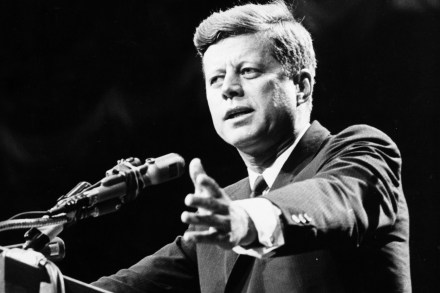
Ten years ago, a determined historian transformed our picture of John F. Kennedy. Robert Dallek had finally got his hands on the president’s medical records and discovered just how big a part JFK’s constant health problems played in his life. Instead of a young, fit, athletic leader, Dallek revealed a man racked with pain, suffering from Addison’s disease and excruciating spinal damage and swallowing a daily pharmacy of drugs and potions. During the Cuban Missile Crisis, for example, when his finger hovered over the nuclear button, he was pumped full of steroids and antibiotics, amphetamines and testosterone, ritalin and sleeping pills. He had been given the last rites on three occasions before he was 35.

John F Kennedy was one of the nastiest presidents in American history

From our UK edition

The fiftieth anniversary of John F Kennedy's assassination is, of course, an occasion for a fresh outbreak of the virulent hagiography that has corrupted the memory of his actual record. The New York Times, a paper that should know better by now, published an article this week that repeated the old lie that somehow right-wing hysterics in Texas were the people really responsible for Kennedy's murder. A theory inconvenienced only by the fact Lee Harvey Oswald was a pro-Castro leftist. But never mind that. Better to reframe the assassination as a part of America's culture wars. And we know who the guilty men are in those, don't we? American history is a quilt of many myths but few are so exasperating, perhaps even so pernicious, as the myth of Camelot.

A place of paranoia, secrecy, corruption, hypocrisy and guilt

From our UK edition

‘Is he a good writer? Is he pro-regime?’ an Iranian journalist in London once asked me of Hooman Majd. Majd is an Iranian-American journalist who was born in Tehran in 1957, but is better known in America. His father was a well-travelled Pahlavi-era diplomat, and his grandfather was an ayatollah. His cousin is married to the brother of Iran’s former president Mohammed Khatami. Majd is not religious, but his criticisms of the Islamic Republic have tended toward the procedural rather than the substantive. He is married to an American, Karri, with whom he has a young son. Family is the great theme of his books. His writings give the impression that Iranians are a big family in need of reconciliation, not another traumatic reckoning on the model of 1979.

Blonde, beautiful — and desperate to survive in Nazi France

From our UK edition

Around 200 Englishwomen lived through the German Occupation of Paris. Nicholas Shakespeare’s aunt Priscilla was one. Men in the street stopped to gaze at this blonde with the careless allure and raw beauty of Grace Kelly. Some fell instantly in love. Her second mother-in-law thought her face showed truth and sincerity, and the reader shares this impression of integrity under duress. She was a reckless driver, yet was also shy, gentle and biddable. She had a beguiling habit of stroking your arm to show affection. She was not vain. Born in 1916, hers was a rackety childhood. Her self-engrossed parents, imprisoned within a failed marriage, then in new partnerships, rejected her.

Why do the British love cryptic crosswords?

From our UK edition

Everyone loves an anniversary and the crossword world — if there is such a thing — has been waiting a long time for this one. December is the 100th anniversary of the publication of what is generally recognised as the first crossword — although back then it was called a ‘word cross’. It was set by Arthur Wynne and appeared in the New York World. The first solution to the first clue was ‘fun’ and it is perhaps no coincidence that Alan Connor begins his journey through the rich history of crosswords thus: ‘This is a book about having fun with words.’ It would take a stony-hearted reader to ignore such a siren’s call. But beware the rocky shores of crosswordland. All sorts of dangers await.

Look! Shakespeare! Wow! George Eliot! Criminy! Jane Austen!

From our UK edition

Among the precursors to this breezy little book are, in form, the likes of The Story of Art, Our Island Story and A Brief History of Time and, in content, Drabble’s Oxford Companion to English Literature and Johnson’s Lives of the Poets. Other notable precursors are How to Read a Novel by John Sutherland, How to be Well Read by John Sutherland, 50 Literature Ideas You Need To Know by John Sutherland, Lives of the Novelists by John Sutherland and more in that vein. The tireless and compendious Dr Johnson — ‘the first great critic of English literature’ — deserves and receives a chapter to himself here, and it’s no great surprise that the tireless and compendious Professor Sutherland entirely sees the point of him.

When 50,000 Irishmen gathered to commemorate the First World War

From our UK edition

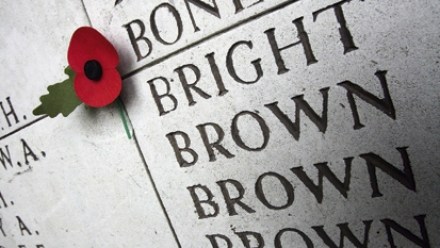
As I wrote last week, I had not thought commemorating the centenary of the First World War need be a matter of controversy. But one of the reasons why it is worth doing - and worth doing properly and on a large scale - is that the First World War is complicated. Consider the photograph at the top of this post. It was taken on Armistice Day in 1924. In Dublin. Yes, Dublin. The Union Flag is flown. The National Anthem - ie, God Save the King - is sung. A Celtic Cross is erected on College Green prior to its transportation to France where it would serve as a memorial to the 16th Irish Division. Some reports estimate as many as 50,000 Irishmen attended the commemoration. (There is British Pathe footage of it here).

Is Northamptonshire not scenic enough to visit?

From our UK edition

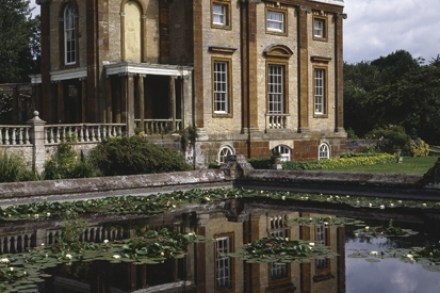
I don’t know whether Bruce Bailey, a proud Northamptonshire man, agrees with the late Sir Nikolaus Pevsner that no one would visit his county for its landscape. In the introduction to the first edition of this architectural guide, published in 1961, Pevsner wrote that although Northamptonshire bordered on more counties than any other in England (nine in all), it lacked ‘any of the memorable scenic qualities one may connect with some of them’. ‘Its beauty spots are few,’ he said. ‘There is no coast, nor a spectacular range of hills.’ Pevsner was, of course, German-born and therefore perhaps of the German romantic view that landscape without rocks and peaks and waterfalls is not really worth bothering with.

Can virgins have babies?

From our UK edition

Mrs Christabel Russell, the heroine of Bevis Hillier’s sparkling book, was a very modern young woman. She had short blonde hair which she wore in two large curls on the side of her head, she was wildly social and she was a fearless horsewoman. In 1920 she set up a fashionable dress shop, Christabel Russell Ltd, at 1 Curzon Street. At the end of the first world war she had married John Russell, known as ‘Stilts’ (he was 6’5” tall), the heir to Lord Ampthill, a cousin of the Duke of Bedford. His snobbish and crusty parents disapproved furiously of the marriage. The young couple spent little time together. Christabel, who adored dancing, went out night after night with one of her many admirers.

Bill Bryson’s ‘long extraordinary’ summer is too long

From our UK edition

Hands up Spectator readers who can remember the American celebrities Charles Lindbergh, Babe Ruth, Al Capone, Jack Dempsey, Zane Grey, Edgar Rice Burroughs and the  adulteress and husband-killer Ruth Snyder  who all, in 1927, lit up what Bill Bryson calls ‘one hell of a summer’. Born in America only five years later, I knew about most of these characters. Lindbergh, in particular, whose flight across the Atlantic from the east coast to Paris made him for some years the most famous man ‘on the planet’ (one of Bryson’s favourite phrases), attracted vast crowds; once, in a welcoming frenzy, they almost tore his plane apart — an easy feat considering that it was covered in fabric.

Roman baths didn’t make you clean — and other gems from Peter Jones’s Veni, Vedi, Vici

From our UK edition

Spectator readers need no introduction to Peter Jones. His Ancient and Modern column has instructed and delighted us for many years. Now he has written an equally delightful and instructive book with the alluring subtitle ‘Everything you ever wanted to know about the Romans but were afraid to ask.’ Well, it may not be quite everything, but it is a near as dammit. He captures you from the start: ‘Romans came up with two stories about how they were founded. One (bewilderingly, we might think) was pure Greek.’ Well, all nations are uncertain and sometimes confused about their origins. So it’s no surprise to be told that ‘any account of Rome up to 300 BC needs to be taken cum grano salis’ (with a grain of salt).

Why do we pounce on Wagner’s anti-Semitism, and ignore that of the Russian composers?

From our UK edition

Before ‘nationalism’ became a dirty word, it was the inspiration for all sorts of idealistic and reform-minded people. This was never more true than in the history of music. Clearly, subsequent events have discredited some of those 19th-century ideals. It is striking, however, that we have become uncomfortable with Wagner’s German nationalism while continuing to regard Smetana’s Czech nationalism as an admirable, even inspiring quality. At times one feels that some musical nationalists are given too easy a ride — as if what happened in the opera house couldn’t conceivably affect anything outside it.