History

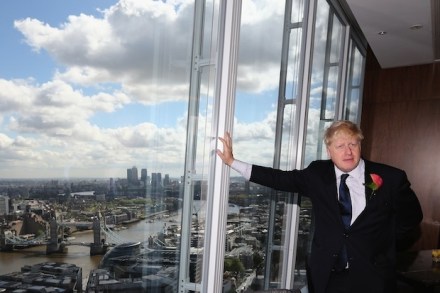
Paul Johnson’s diary: Boris would make a great PM – but he must strike now

From our UK edition

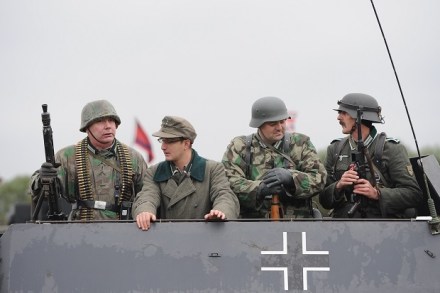
I feel an intense antipathy for Vladimir Putin. No one on the international scene has aroused in me such dislike since Stalin died. Though not a mass killer on the Stalin scale, he has the same indifference to human life. There is a Stalinist streak of gangsterism too: his ‘loyalists’ wear masks as well as carry guns. Putin also resembles Hitler in his use of belligerent minorities to spread his power. Am I becoming paranoid about Putin? I hope not. But I am painfully aware that he would not matter if there was a strong man in Washington. As it is, President Obama is a feeble and cowardly man who makes even Jimmy Carter seem bold by comparison. He is running down America’s strategic capabilities while giving anaemic moral lectures.

How to be a traitor

From our UK edition

No one is as hated as deeply as the apostate. Ordinary opponents are nothing in comparison. They are unbelievers, who know no better. It is not their fault if the light has not fallen on them. The apostate, by contrast, has known the truth and rejected it. There can be no excuses for his treachery, no defence of ignorance the law. The Devil must have seduced him, or to translate old superstitions into language of a secular age, he must have “sold out”. For all the apparent differences between left and right, they share a complacent assumption that only corruption can explain why a believer could reject them, when they are so obviously right and good. The Tea Party, Ukip and the Conservative right cannot have a polite argument with leaders who contradict their views.

Meeting George Osborne at Waterloo

From our UK edition

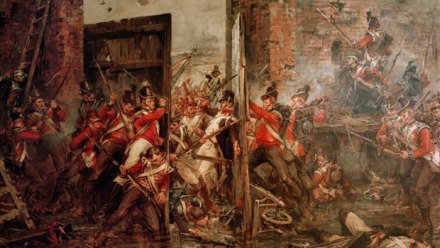
The defence of Hougoumont is one of the great British feats of arms. If the farmhouse had fallen to Bonaparte’s forces during the battle of Waterloo, Napoleon’s 100 days would have become a French 100 years. But history has not been kind to Hougoumont; it fell into disuse as a farm at the end of the last century and has become increasingly dilapidated. Now, however, Hougoumont has an unlikely champion: the Chancellor of the Exchequer. George Osborne first visited the site two years ago and was shocked by what he found. Souvenir hunters were simply removing bricks from the building. Osborne is a bit of a battlefield buff — he tries to visit a US Civil War site every time he goes to Washington for an International Monetary Fund meeting.

Did most women want the vote?

From our UK edition

One way or another, we’re going to be seeing quite a lot of Helena Bonham Carter and Carey Mulligan in ankle-length coats with pale faces this season. They’re in the film Suffragette, which has been shooting in the House of Commons in recent weeks. The suffrage campaign was not only successful, it was successful to the extent that any other course now seems a bit preposterous. But what’s rarely mentioned is that the bulk of the resistance to it was from other women. It’s quite easy to visualise the suffrage campaign in terms of men vs women and that’s obviously the focus of the film. But the fact is, lots of women campaigned against being given the vote on the basis that it was unwomanly.

When Aachen was the centre of Europe – and Charlemagne ruled the known world

From our UK edition

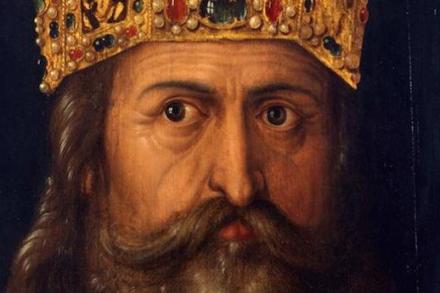
A UNESCO World Heritage Site since 1978, Aachen (Aix-la-Chapelle) will this summer become the focus of European attention. From June to September, the Aachen Palatinate, Europe’s best surviving Carolingian palace complex, plays host to three inter-related exhibitions commemorating the 1200th anniversary of the death of Charlemagne. The exhibition entitled Charlemagne. Power. Art. Treasures. occupies three separate parts of the former palace complex: the town hall, the Centre Charlemagne (a new visitor centre on the site of the original inner palace courtyard) and the Cathedral Treasury. Charlemagne, king of the Franks from 768-814, was crowned Holy Roman Emperor by the Pope in 800 and hailed the ‘father of Europe’ by a poet of his own day.

Christianity is not a prop for politics

From our UK edition

First the godly, then the godless, then the godly again. The public debate about whether Britain is indeed a Christian country, which the Prime Minister kicked off with his article in the Church Times saying that Britain should be evangelical about its Christianity, took legs when fifty-odd self-important atheists took issue with his remarks in a letter in the Telegraph and now the debate has a new spin after a group of academic philosophers wrote to the same paper (lucky letters editor) to contradict the atheists. “In important ways Britain remains a Christian country, as the Prime Minister has rightly claimed”, they wrote.

Red hair is having a renaissance

From our UK edition

Much like supporting Millwall or contracting Parkinson’s Disease, red hair has traditionally been seen by the prejudiced as an affliction worth avoiding. The biographies of Mary Magdalene, Van Gogh and Sylvia Plath will confirm this. Rod Liddle sticks it to the gingers in his column this week: ‘I took my youngest son to a football match on Easter Monday. It used to be something I wryly called a ‘treat’ when the kids were younger, but we usually lost in such depressing circumstances each time that I would then feel the need to give them another treat immediately afterwards, to alleviate the misery. Bowling or pizza or something. Not any more.

Sudan was always an invented country. Maybe we should invent it again

From our UK edition

Sudan — a country that ceased to exist in 2011 — is or was one of the last untouristed wildernesses on earth. And for good reason: while it still existed it was the biggest country in Africa, a mainly flat and uninhabitable wasteland, mostly brown, with barely a mountain or a bosky valley to its name, unbearably hot, unhealthy, poor, and full of every sort of trouble. And yet … The author of this new book on what are now the two Sudans — the country has voluntarily split into two lesser states — says that this is one of the world’s most interesting places. That is true. As anyone who has spent time there will tell you, the Sudans (as we must now call them) both north and south exert a fascination.

Churchill was as mad as a badger. We should all be thankful

From our UK edition

Land sakes! Another book about Winston Churchill? Really? Give us a break, the average reader may think. Actually though, as title and subtitle suggest, this isn’t just another biographical study. It’s at once odder and more conventional than that. More conventional because, in some ways, it is just another biographical study. Odder because — instead of being a straightforward discussion of Churchill’s literary work — it sees literature as the key to his biography. More than that, its author seems to think he has hit on a ‘new methodology’ in which ‘we can write political history as literary history’. Well, perhaps.

An extraordinary event in the history of Anglo-Irish relations

From our UK edition

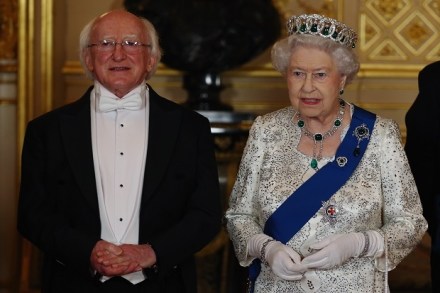
If there’s one thing a poet is good for, it’s memorable circumlocution, which is why Michael D Higgins (the D is crucial; people wouldn’t know who you were talking about if you mentioned Michael Higgins), the Irish president and ongoing poet, has been in his element during this state visit to Britain. ‘Ireland and Britain live in both the shadow and in the shelter of one another, and so it has been since the dawn of history’, he said during his speech at Windsor Castle. ‘The shadow of our past has become the shelter of our present’. That was good. The Queen was hardly to be outdone: the gag about it taking someone ‘of Irish descent’ to make her jump from a helicopter was lovely.

You sexist/racist/liberal/elitist bastard! How dare you?

From our UK edition

While he was dying of Lou Gehrig's disease, Tony Judt found the breath to educate those who believe they could ameliorate pain with soft words and bans on 'inappropriate' language. “You describe everyone as having the same chances when actually some people have more chances than others. And with this cheating language of equality deep inequality is allowed to happen much more easily.” Worry about whether you, or more pertinently anyone you wish to boss about, should say 'person with special needs' instead of 'disabled' or 'challenged' instead of 'mentally handicapped' and you will enjoy a righteous glow. You will not do anything, however, to provide health care and support to the mentally and physically handicapped, the old or the sick.

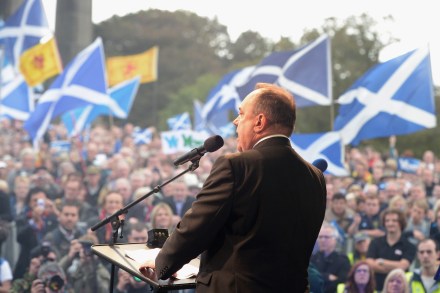
Alex Salmond is not a Nazi. He’s not even a Fascist.

From our UK edition

Every so often you come across an article so bizarre it forces you to re-examine long-held certainties on a subject about which you happen to be tolerably well-informed. This year that's Scotland and her independence referendum and this time the article in question is Simon Winder's epistle in the latest edition of Standpoint. Having duly re-examined everything I conclude that it is the maddest article I've read this year. So bonkers - really, not too strong a term - that you wonder what the magazine's editors were thinking when they agreed to publish it. They have every right to do so, of course, and publication does not equal endorsement. But still. No-one paused to say 'hang on, this is laughable'. I am getting ahead of myself.

When posters told us our place

From our UK edition

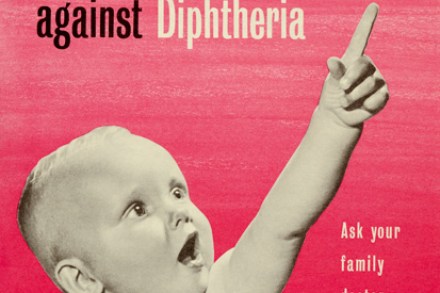
As a sign of the way things have changed, nothing could better this. Hester Vaizey, Cambridge history don and ‘publishing co-ordinator’ at the National Archives, has collated this splendid collection of posters issued by various government agencies in the 30 years or so after the second world war. This was, of course, the heyday and highwater mark of what furious red-faced men of my acquaintance now call ‘the nanny state’ — a phrase, incidentally, first used by an editor of The Spectator (Iain Macleod) in the pages of this magazine back in 1965. Although I never had a nanny myself, I know from repeated childhood viewings of Mary Poppins that Nanny Knows Best, and so these posters confirm.

Vladimir Putin’s Russia is jingoistic, angry and oppressive. But it’s nothing like Nazi Germany

From our UK edition

I'm conservative, so it's hard for me not to love Vladimir Putin. His ripped torso, the way the sweat glistens on his pecs, the steely gaze, the cheeky smile. How much does he bench press, I wonder? And of course the main reason why conservatives like me aren't desperately keen to get stuck into the Ruskis over their occupation of Crimea is because, deep down, we really love Putin's authoritarian style of nationalist chauvinism. Especially the beating up the gays part, because deep down we're all secretly gay; or have micropenises. Whichever one would be more embarrassing.

Remembering the decimation of Crimea’s Tatars

From our UK edition

Crimea’s Tatars are nervous after Russia’s annexation of the territory. The Tatars, Sunni Muslims who account for 12 per cent of Crimea’s population, boycotted Sunday’s referendum worried that the Russians would impose repressive and discriminatory laws on them. Reading Bohdan Nahaylo’s 1980 article, Murder of a Nation*, you can see why. First, Stalin deported the entire Crimean Tatar nation. ‘In the early hours of 19 May 1944, some 238,000 people were abruptly awoken by units of the Soviet security forces and within minutes herded into cattle trucks. Sealed in without food or water, they were transported several thousand miles eastwards and eventually dispersed in Soviet Central Asia.

Should we make Magna Carta Day our national holiday?

From our UK edition

I know there are probably more important things in the Budget, but I for one (and probably, literally, the only one) am won over by the government’s decision to spend £1 million to celebrate the Magna Carta anniversary next year. As I’ve written before, there’s a strong case for making Magna Carta day, June 15, our national holiday: the other choice, St George’s Day, is too close to Easter and May Day and in any case too meaningless; all we get on April 23 are a load of tortured essays in the press about what Englishness means and its invented traditions, which has sort of become a tradition in itself. Magna Carta does mean something, however.

We have to tell the truth about Tony Benn now. Who will hear it later?

From our UK edition

I could start by remarking that we should not speak ill of the dead, quoting the pertinent Latin phrase: de mortuis nil nisi bonum (‘of the dead, only good’). But this would be to miss a key qualification because the whole quote (from Diogenes Laertius, circa ad 300) adds ‘dicendum est’: ‘is to be said’. And that puts a different complexion on things. Commentators have preferred to describe the advice as an established social convention rather than necessarily their own opinion. Indeed it is often used as a sly way of indicating (without stating) the speaker’s disapproval of the deceased. But if the phrase has been thrown once at my head by my newspaper readers this week, it has been thrown a score of times.

Do wars always start in years ending ‘14’?

From our UK edition

Years of war Imaginative souls have tried to compared the situation in Ukraine with that which preceded the first world war 100 years ago. Are years ending in 14 especially violent? — 1414 saw the Polish-Teutonic war, one of a dozen skirmishes between Poland and Teutonic knights between the 14th and 16th centuries. The war was noted for the efforts to starve opposing armies by razing crops. — 1714 saw the outbreak of the seventh Ottoman-Venetian War, which like the first world war lasted four years. It ended with Venice losing control of the Peloponnese. — 1814 saw the Swedish-Norwegian War, which resulted in Norway entering a union with Sweden.

The Spectator: on popes and poverty since 1828

From our UK edition

A year ago, a relatively unknown Argentine cardinal, Jorge Mario Bergoglio was elected Pope. A few days later he announced he would take the name Francis, after Saint Francis of Assisi, because, he said, he had particular concern for the poor. In the 1880s, Pope Leo XIII also drew the attention of his clergy to St Francis’s teachings on poverty. The Spectator approved, and recommended it to Protestants as well as Catholics, but it took issue with the Pope’s argument that the spectacle of rich people joyfully embracing holy poverty would be enough to encourage the poor not to mind being poor.