Hezbollah

Iran attacks Israel: what does it mean and what happens next?

From our US edition

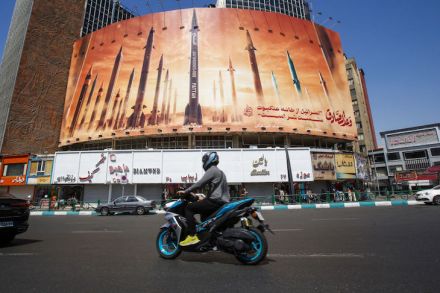
A few hours before Iran launched missiles at Israel, America’s spy satellite saw Iran moving the weapons onto their launching pads. They told Israel (and leaked to the media) that an attack was “imminent.” They were right. Within hours, several hundred Iranian missiles were flying toward the Jewish State, just as they had in April. The earlier attack caused little damage — most of the missiles were intercepted — and early reports are that the recent attack met the same fate. Israel’s success shooting down the missiles is crucial, not only because it saved lives but because it does not require Israel to launch a full-scale counter-attack. Safety from the missiles did not protect all Israelis, though.

With Israel, the US is caught in a world of contradictions

From our US edition

Ever since a 2,000-pound bomb demolished Hezbollah’s headquarters in Southern Beirut last Friday and killed Hassan Nasrallah, the leader of the organization since 1992, there was an expectation among the commentariat that Iran would retaliate. The scope of that response, however, was very much in dispute. The Iranian government was reportedly divided about whether to respond at all, with the newly-elected president, Masoud Pezeshkian, taking the position that an attack against Israel would likely ruin his foreign policy agenda — he offered the West the thinnest of olive branches during his time in New York for the UN General Assembly meetings — and give the Israeli government an excuse to strike inside Iranian borders.

Biden admin upended by chaotic weekend

From our US edition

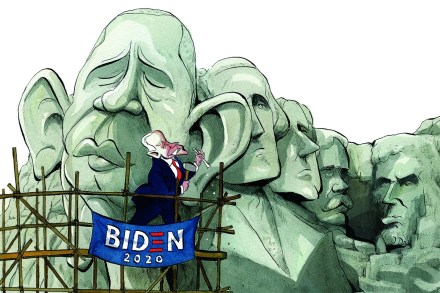
The Biden administration is struggling to find its footing amid a series of unfortunate events that are testing the oft-vacationing president and his vice president, who is currently auditioning for the top spot in American politics.Hurricane Helene decimated parts of North Carolina, leaving millions of Americans without power, at least thirty dead and many more missing. Entire towns are practically gone, and pictures of video of the storm’s aftermath show flooding enveloping homes and washing out highways. Local officials are begging for assistance and resources; state Representative Neal Collins, for example, tweeted, “I currently have two people on oxygen needing generators & 1 person on dialysis needing one.

Israel’s campaign to kill Nasrallah, Hezbollah and Hamas 

From our US edition

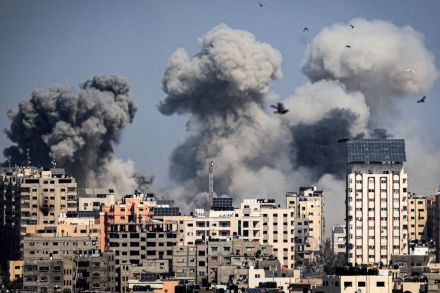
The killing of Hassan Nazrallah is the latest — and most impressive — stage in Israel’s campaign to wipe out Iran’s terrorist proxies on its doorstep. From the Egyptian border to Beirut, the campaign is the most dazzling demonstration of real-time intelligence, high technology and precise military action in the modern era. It will be recounted on screen and studied by military experts for decades to come. James Bond’s gadgets had nothing on the booby-trapped pagers. As the meme put it, “From the liver to the knee.”  The battle started a year ago, when Hamas terrorists in Gaza broke the ceasefire, raped and killed innocent Israelis and took hundreds of hostages for negotiating leverage. It was obvious from the outset that Israel would respond with full force.

israel gaza nasrallah

Rachel Johnson, James Heale, Paul Wood, Rowan Pelling and Graeme Thomson

34 min listen

On this week’s Spectator Out Loud: Rachel Johnson reads her diary for the week (1:19); James Heale analyses the true value of Labour peer Lord Alli (6:58); Paul Wood questions if Israel is trying to drag America into a war with Iran (11:59); Rowan Pelling reviews Want: Sexual Fantasies, collated by Gillian Anderson (19:47); and Graeme Thomson explores the ethics of the posthumous publication of new music (28:00).  Produced and presented by Patrick Gibbons.

How to evacuate a country

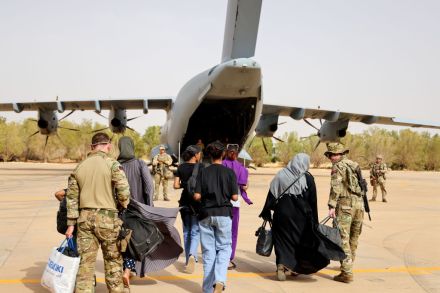
As fighting continues between Israel and Hezbollah, planning for a potential evacuation of British nationals from Lebanon has seen troops, ships and aircraft preparing in Cyprus and the wider region. Defence Secretary John Healey has chaired meetings in London to avoid the government being caught on the hop as happened before the evacuation from Kabul in 2021, following the unexpected collapse of the Afghan National Army. UK tabloids are already screaming about a ‘Dunkirk-style’ amphibious evacuation should an air extraction route become unavailable. This comparison is misleading. Naval planners had only seven days before launching the miraculous evacuation of 330,000 members of the British Expeditionary Force in 1940 under ferocious German attack.

Is Israel trying to drag America into a war with Iran?

The American general David Petraeus famously asked of the invasion of Iraq: ‘Tell me how this ends.’ That’s the question as Israeli bombs and missiles fall on Lebanon and the few missiles Hezbollah has sent in response are intercepted. Iran’s ‘axis of resistance’ seems paralysed with indecision. Does Benjamin Netanyahu take this as a win, the vindication of the enormous chance he took by opening a new northern front? Or, like a gambler intoxicated by success at the tables, does he press on? More airstrikes, followed by an invasion of Lebanon… and then the bombers fly on to Iran?  Some Israelis commentators are already calling this the Third Lebanon War (after the wars of 1982-2000 and 2006).

Sky News has lost its way

Occasionally I am told that I go too hard on the BBC. It is an understandable gripe which I sometimes hear from disgruntled journos from Broadcasting House. So let me start by saying that, as an equal-opportunities insulter, I would like to put on the record how completely rancid Sky News in the UK has become. To give an idea of where Sky UK has gone wrong since being sold, allow me to highlight one story as the channel reported it this week. After the targeted strikes on Hezbollah operatives via their pagers and walkie-talkies, Sky ran a story headlined: ‘Hezbollah has been provoked like never before by Israel and may be tempted to unleash its firepower.’ That is truly fascinating framing.

Is Israel ready for a ‘new phase’ of war?

The toll wreaked from the events of 17 and 18 September has been extensive. According to the best estimates, more than 3,500 people were injured and 37 were killed. The events I’m referring to, of course, were the sudden and surprise explosions of thousands of electronic devices, carried (in the majority) by members of Hezbollah in Lebanon. Among the injured were the Iranian ambassador to Lebanon, who reportedly lost an eye, and allegedly several personnel from the Iranian Revolutionary Guard Corp who sponsor and assist terrorist organisations across the world.

How Hezbollah was humiliated

From our US edition

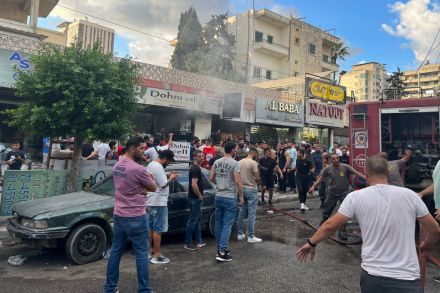
Explosions ripped across Lebanon Tuesday afternoon as hundreds of old-fashioned pagers stuffed with an ounce or two of explosives blew up, killing twelve and injuring approximately 3,000 more. On Wednesday, the low-tech carnage resumed, with exploding walkie-talkies killing at least another twenty people and wounding an additional 450.  The targets were militants and allies of Hezbollah, Lebanon’s Shiite Muslim political and military organization which, together with a coalition of political allies, holds a majority in the country’s parliament. Hezbollah and the allied Iranian government, which heavily supports its activities, have blamed Israel, which has been in localized near-daily hostilities with Hezbollah since Hamas’s October 7 attack.

hezbollah

Black Sunday: reckoning with October 7 a year later

From our US edition

October 7 was the bloodiest day in Jewish history since the Holocaust. Some refer to it as Israel’s 9/11, though proportionally it was like fifteen 9/11s. However, numbers rarely tell the full story and here they fall devastatingly short. I was awake when it started. I’ve always been a night owl but staying up until six in the morning is unusual for me. On that bright fall morning I heard sounds like a thunderstorm and went outside to see what was going on. I live on a hill overlooking Gush Dan, the informal megalopolis that’s home for almost half the population of this stamp-sized country. When something big happens I can often see it.

October 7

Iran and Hezbollah don’t want a war with Israel

Hezbollah’s response to the killing of senior official Fuad Shukr, when it finally came, was a more minor event than anticipated. For weeks, both the Lebanese Shia Islamist group and its Iranian patron have been threatening a terrible revenge for the recent assassinations in Beirut and Tehran. It is now clear, however, that neither Hezbollah or Iran wishes to risk a descent to all put war at the present time. Iran appears to have relegated its response to the killing of Hamas leader Ismail Haniyeh in Tehran to some point in the future. Hezbollah, meanwhile, sought to target two sites of high significance – the Mossad headquarters, and the HQ of the IDF’s signals intelligence unit, 8200. Both are located close to Herzliya, north of Tel Aviv, in central Israel.

Israel’s strikes on Lebanon bring Jerusalem one step closer to regional dominance

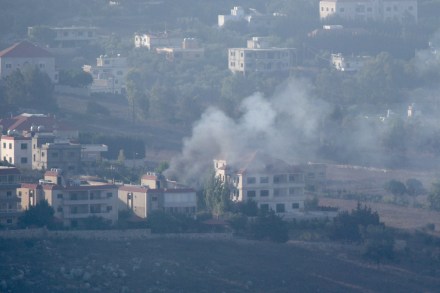
As the dust literally settles across southern Lebanon in the aftermath of the Israeli airstrikes, we are starting to see an answer to the question of whether this will be the escalation that leads to all-out war. Hezbollah has declared an end to the first phase of revenge for Israel’s assassination of its most senior military commander Fuad Shukr, who masterminded the killing of 241 marines and 58 French soldiers in 1983, in Beirut last month. Its planned attack on the headquarters of Mossad and Unit 8200, Israel’s fabled military intelligence directorate, has been averted. Casualties appear to have been very limited. Jerusalem’s spy chiefs have flown to Cairo to continue the hostage negotiations, which have not been derailed.

Can anything stop a full-scale conflict in the Middle East?

The fact that the Middle East stands on the brink of a catastrophic war can be explained by a scene from The Gentlemen, Guy Ritchie’s preposterous but entertaining series on Netflix about aristocrats and sarf London drug-dealers. The dim eldest son of a duke is in trouble with a vicious gangster, who makes him dress up as a chicken and cluck and dance while the whole excruciating spectacle is filmed. Eventually the humiliation is too much for the aristo: he gets the family Purdey and blasts the gangster in the face – even though he knows that there will be terrible consequences.

An end to Israel is the only ‘de-escalation’ the pro-Palestine crowd wants

From our US edition

Everywhere you turn in conversations about Israel, Gaza, Jews and antisemitism right now, the long-promised specter of expansion and escalation is... well... escalating. More than nine months into Israel’s war with Hamas, the rhetoric of conflict and activism has escalated into violent confrontations on the battlefields of war, politics and protest.   Across Israel’s northern flank, for instance, its months-long flare-up with Hezbollah is quickly escalating into an all-out war as the Iranian-backed militia killed a pair of Israeli civilians last week via rockets launched from Lebanon.

Israel says it’s ready for another war

According to my phone, I’m in Beirut-Rafic Hariri International Airport. Except I’m not. The Israel Defence Forces have scrambled the GPS of everyone within about an hour’s drive of the Israel-Lebanon border. The same navigation system that tells my iPhone its location is the same navigation system that Hezbollah could use to identify targets in northern Israel. They’ve been firing across the border since 7 October, and the Israelis are fed up. They’ve evacuated 80 kibbutzim, nine villages, three community centres and two Arab villages. The phrase that ministers use to describe the displaced is ‘refugees in their own country’. The offensive in Gaza is winding down, and after that – says an official – ‘we are ready to deal with Lebanon’.

Benjamin Netanyahu must decide what to do about Hezbollah

Tensions on Israel’s northern border are currently at their highest point since the outbreak of hostilities in October last year. On Friday, United Nations Secretary-General Antonio Guterres said: ‘One rash move – one miscalculation – could trigger a catastrophe that goes far beyond the border, and frankly, beyond imagination.’ The latest reports indicate that the US has declared it will give Israel its ‘full support’ in the event of war with Hezbollah. This appears to go hand in hand, however, with an American determination to prevent any Israeli action which might precipitate such a war. So what is the current situation? And where are things heading?

The fight among the olive trees

From our US edition

Rmeich, Lebanon On October 8, 2023, the day after the Hamas massacre further south, Hezbollah started firing rockets into northern Israel, reviving the world’s most dangerous game of chicken. What exactly has been accomplished? Hezbollah’s Shia supporters may be comfortable with their leader Hassan Nasrallah and his Iranian sponsor, head of state Ali Khameini, risking open war. But no one consulted the local Christians, who would never agree to spill Lebanese blood as a supportive gesture to Hamas. “The south [of the country] belongs to Lebanon, and Hezbollah cannot go to war on behalf of the Lebanese,” says Marc Saad, a spokesman for the Lebanese Forces, a Christian political party and Hezbollah opponent.

Hezbollah

Why Blue Line peace is proving elusive

From our US edition

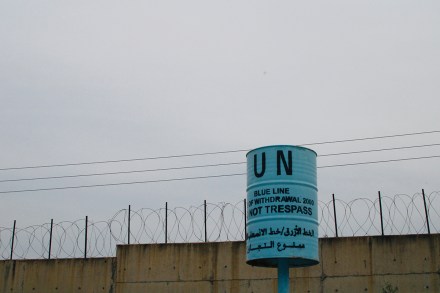
Naquora, Lebanon Tensions along the forty-nine-mile Blue Line that partitions Israel from Lebanon are as high as they’ve been in recent history. Given the stated objectives of Hezbollah, the powerful Shiite militia that controls Lebanon’s South and the IDF, which seeks to repel them beyond striking distance, that's saying a lot. Ten thousand sky-blue helmets stand between the warring sides, protecting a division of international troops from the raining debris of intercepted rockets. Nobody is targeting them, but collateral damage is inevitable in a region that sees fatal exchanges on a daily basis. The United Nations Interim Force in Lebanon was established in 1978 following the Israeli invasion of Lebanon.

unifil un blue line lebanon

Time for Biden to change course from Obama’s failed Middle East policies

From our US edition

When a long-silent former president finally speaks out, the public listens. So do foreign leaders, especially when the former president is closely tied to the current one. That’s why Barack Obama’s comments on the war in Gaza attracted attention.  Anyone who remembers President Obama’s foreign policy knew what to expect: criticism of Israel and a delicate dance around Iran’s malign behavior. In fact, he did not mention Iran at all. He totally ignored their role. His audience expected him to add a few words of moral self-righteousness, warning Israel about future civilian casualties, as if Israeli Defense Forces hadn’t taken enormous and costly steps to avoid them.

biden obama resize