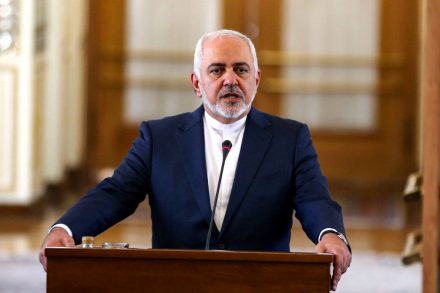
Hezbollah

An exposé of drug smuggling and terrorism reads like a first-rate thriller

The crucial moment in this vivid exposé of the murky world of transnational crime comes in 2015. Mustafa Badreddine, one of two Lebanese Shia cousins who for three decades had led the deadliest Iranian-linked terrorist network in the Middle East, was finally indicted by a UN special tribunal investigating the assassination of the Lebanese prime minister Rafic Hariri a decade earlier. After an extraordinary career of mayhem, Badreddine had spent the previous three years leading an elite Hezbollah militia shoring up President Bashar al-Assad’s regime. But the tide had turned, and in July 2015 Qasem Soleimani, the commander of the Iranian Quds force in Syria, secretly flew to Moscow to beg for Russian military support.

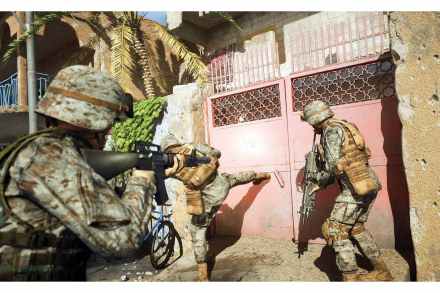
War games do something seriously unpleasant to our brains

Three years ago, I killed several thousand people over the course of a single weekend. Late into the night, I ran around butchering everyone I saw, until by the end I didn’t even feel anything any more. Just methodically powering through it all, through the wet sounds of splattering heads, bodies crumpling, shiny slicks of blood. I thought I was past caring. But when I finally went to bed, I couldn’t sleep, and in my dreams I was haunted by all the men I’d killed. I saw their brains exploding, again and again and again. In my defence, I’d had a bad week. It was December: a grotty English winter, not particularly cold but still utterly grim. The kind of winter that seems to stick to everything, like a layer of congealed grease. I was worried about money.

Why Israel won’t give lethal aid to Ukraine

From our US edition

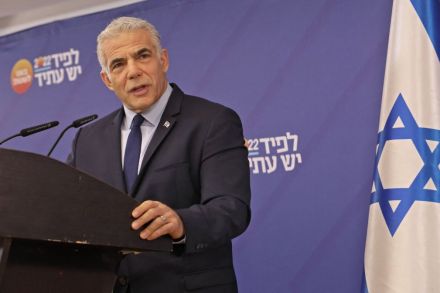
Israeli defense minister Benny Gantz announced this week that Israel would maintain its policy of not supplying weapons to Ukraine. This drew criticism, including charges that Israel has a moral obligation to help Ukraine and is instead foolishly prizing its relations with Russia. Critics also note that Israel’s archenemy Iran is providing weapons and advisors to Russia. They further point out that Israel’s Ukraine arms embargo puts it out of step with Israel’s most important partners in the West, especially the United States. Yet aiding Kyiv is a far riskier bet for Jerusalem than for most Western capitals. This is no easy call, and the one Israel made is probably the right one.

Don’t expect much from Biden’s Middle East trip

From our US edition

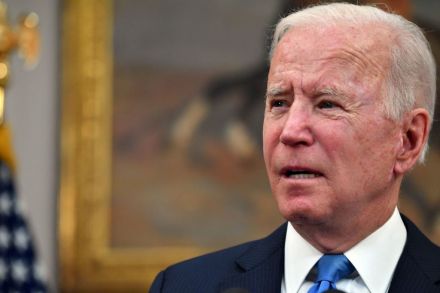
It took Barack Obama less than three months to fly to the Middle East for a visit, landing in Iraq to visit the tens of thousands of US troops stationed there at the time. Donald Trump’s first overseas trip as president was to the Kingdom of Saudi Arabia (also three months into his tenure), where he basked in the limelight, watched in awe as his face was plastered on buildings in Riyadh, and hovered over a glowing orb with King Salman. Now, eighteen months into his presidency, Joe Biden will be spending a few days this week in the region, making stops in Israel, the West Bank, and Jeddah, Saudi Arabia, for a summit of the Gulf Cooperation Council.

Priti Patel’s Hamas ban doesn’t go far enough

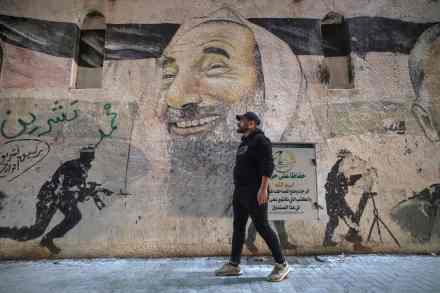
It’s been a rough old week for Hamas. The UK announced plans to proscribe the organisation, Justin Bieber ignored its call to cancel his 2022 concert in Tel Aviv, and even the recently friendly Labour party has vowed that it ‘does not and will not support BDS’. One minute, you’re going about your business, trying to drive the Jews into the sea, and the next you’re being treated like you’re the bad guy. Priti Patel’s decision to add Hamas to the Home Office list of terrorist organisations corrects a 20-year-old error which saw the Izz al-Din al-Qassem Brigades — Hamas’s paramilitary wing — outlawed in 2001 but the rest of the organisation unaffected.

Pompeo’s principles

From our US edition

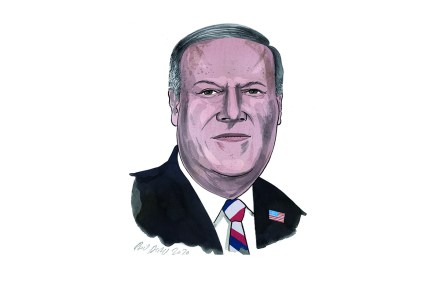
‘Come in.’ Burly, brisk and maskless, Mike Pompeo indicates a chair before the marble fireplace. ‘It’s all right if we’re six feet — or two meters — apart.’ We are meeting at the State Department the day after Pompeo’s return from Qatar, where US negotiators have opened discussions with the Taliban and other Afghan factions on an end to the war in Afghanistan. It’s also the day before the signing of the Abraham Accords between Israel and the UAE and Bahrain. Cheerful and perhaps a little tired, Pompeo exudes forceful confidence: a man who knows what needs to be done. As Secretary of State since 2018, Pompeo has been the strategist who has translated Trump’s generalities into the specifics of policy.

The mood in Lebanon is for revolution

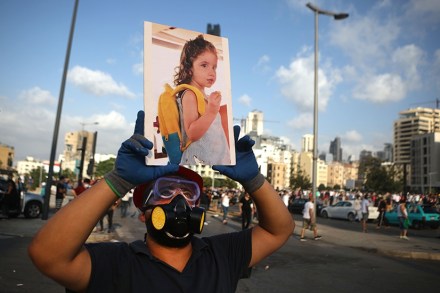
When 2,700 tonnes of ammonium nitrate left in Beirut’s port exploded last week, a three-year-old girl named Alexandra Najjar was torn from her mother’s arms as they ran inside from their balcony. In the same instant, every-thing in the apartment was flying through the air — doors, window frames, shards of glass, the air-conditioning unit, the family’s piano — and something hit the little girl. She died later from her wounds and on Lebanese social media she has become the ‘Angel of Beirut’, a symbol of the innocent people ‘murdered’ by their government’s negligence and incompetence, as her father, Paul, put it.

How Lebanon unravelled

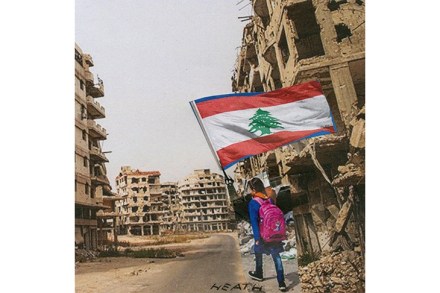
Lebanon will be 100 years old on 1 September. But the joke circulating in Beirut is that the country may not be around for the party. Eye-watering hyper-inflation, not helped by the Covid pandemic, has brought the country to its knees, just as famine and extreme poverty sparked its creation after the end of the Great War. Lebanon eventually won full independence from the French in 1943, and became an impossibly glamorous, multilingual entrepôt with a rare facility for doing business. According to Major General Sir Edward Spears, the British minister to Syria and Lebanon, the country ‘sprang from a far older and higher’ civilisation than the French. Even so, it has always had a tendency towards self-destruction.

Quassem Soleimani’s terror lives on for Israelis

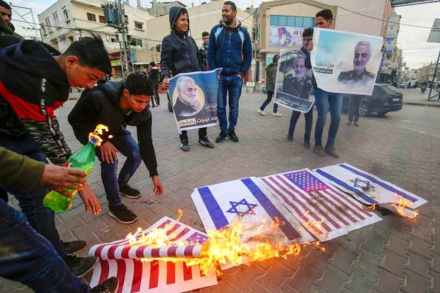
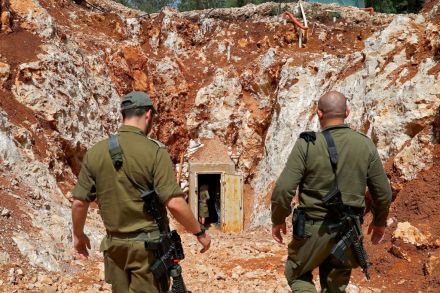
Quassem Soleimani is dead but in Israel fear of his warped legacy lives on. The Iranian general was key to his country’s strategy of developing networks of militant groups throughout the Middle East. These organisations are all held together by one thing: a common hatred of Israel. And a month after Soleimani was killed in an US drone strike, Israel is worried that its nemesis’s objective might soon become reality. Soleimani was the mastermind of Hezbollah’s programme in Lebanon aimed at adding a deadly new weapon to the group’s arsenal. The intention is simple: to take ‘stupid’ (unguided) missiles and add GPS technology to make them accurate.

Trump’s Iran gamble

From our US edition

Beirut It seems that American planes were actually on their way to bomb Iranian targets last night when they were called back. That’s what the New York Times was told by a senior official in the administration, speaking anonymously of course. ‘Planes were in the air and ships were in position, but no missiles had been fired when word came to stand down.’ Was this President Trump or the Pentagon? It’s possible that the US military suddenly learned of a vulnerability in some part of their forces spread around the Middle East, in Bahrain, in Iraq, or in Syria, but then again, they’ve had time to prepare. More likely, this was Trump.

iran israel lebanon

What would peace with Iran look like?

From our US edition

Heiko Maas, the German foreign minister, was in Tehran on Monday. The ‘Iran conflict’, Maas said, is ‘one of the biggest conflicts of our time’. No one wants war with Iran. But what would peace with Iran look like — and what exactly needs to be pacified? The degree to which Maas’s statement was at once accurate and not accurate suggests the tricky nature of the ‘Iran conflict’. Iran’s forces are minimally engaged in conflict, but Iran’s proxies, Hezbollah especially, are everywhere engaged: in Lebanon, in Syria, in Yemen, and across Europe. On Sunday, news from London showed how the Iranian regime uses its proxies to play a double game with the West.

peace iran