Hezbollah

Can Israel fend off Hezbollah without alienating America?

As the 60-day period of negotiations stipulated by the Memorandum of Understanding between Iran and the US gets under way, the issue of Lebanon is fast emerging as a central bone of contention. It is also revealing significant differences in the stances of America and Israel.   Israel has sought throughout to detach its battle with the Iranian proxy group Hezbollah in Lebanon from the negotiations – and from the larger effort to settle the conflict between the US and Iran. The logic is as follows: Hezbollah intends to continue its war against Israel.
israel lebanon

Trump can’t give up on diplomacy with Iran

The New York Knicks may have lost Game 3 of the NBA Finals, but President Trump was still in a somewhat buoyant mood. Negotiations with Iran were going swimmingly, Trump claimed to reporters as he was headed back to Washington, so much so that an agreement could be reached in two or three days.  Two days later, though, and a deal remains just as elusive today as it was last week and the week before that. In fact, not only is diplomacy apparently stuck, but the United States and Iran are increasingly taking shots at each other. The April 8 ceasefire is still in effect but resting on weaker foundations.

trump

Trump is clinging to a mirage in the Middle East

Well, well, well. For all the head-scratching that it initially occasioned, President Trump’s hasty abandonment of "Project Freedom" – his grandly titled plan to open the Strait of Hormuz – turns out not to be so mysterious after all. Trump’s reversal, NBC News revealed late yesterday, came at the behest of America’s Gulf allies, foremost among them Riyadh which told Washington that it would suspend the US military’s right to use its airspace. Now Trump, who has described his current exchanges with Iran as "very good," is breathing optimism about a one-page peace memorandum that he claims will be completed by the end of the week. Iran, by contrast, merely says that Trump’s proposal is “under review.

Israel won’t stop in Lebanon until Hezbollah is crushed

Direct US-brokered talks between Israeli and Lebanese representatives are set to take place in Washington this week. The Israeli delegation will be headed by Yehiel Leiter, Jerusalem’s ambassador to the US. Lebanon will be represented by Nada Hamadeh, the Lebanese ambassador to Washington. The State Department will host the negotiations. In his statement on Thursday announcing the talks, Israeli Prime Minister Benjamin Netanyahu framed their purpose as "disarming Hezbollah and establishing peaceful ‌relations between ⁠Israel and ⁠Lebanon." Lebanese Prime Minister Nawaf Salam, for his part, expressed his hope that Beirut should become a "demilitarized city.

lebanon

Why Israel is pushing further into Lebanon

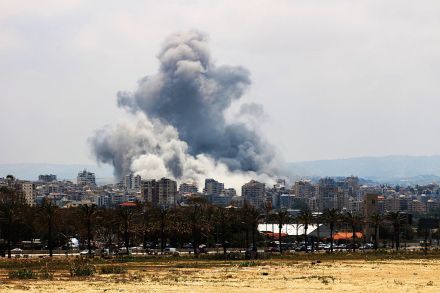
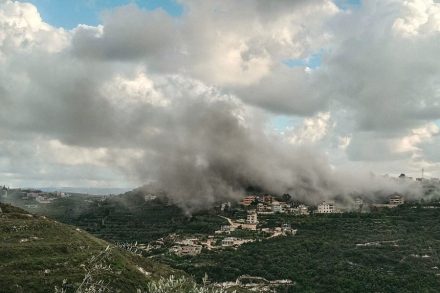
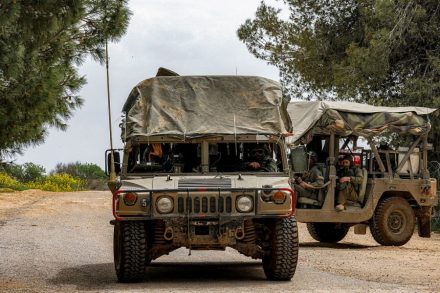
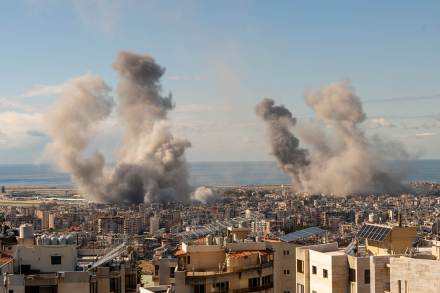
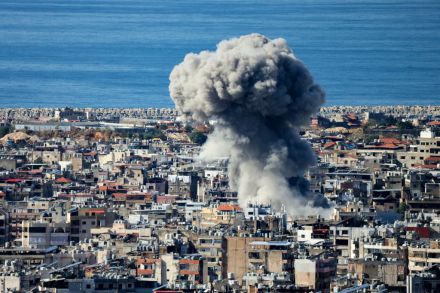
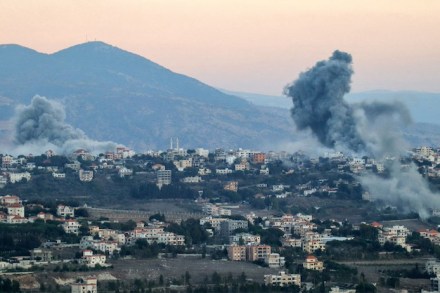
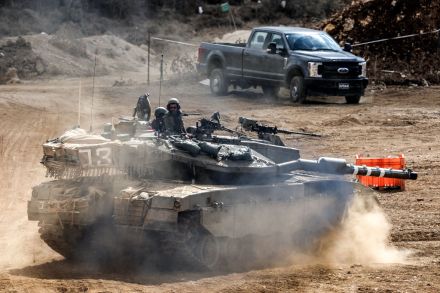
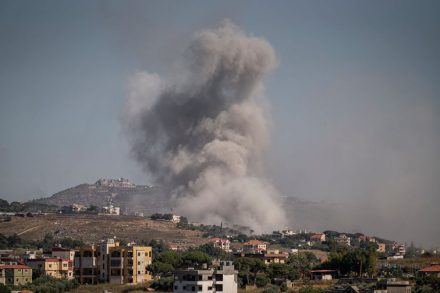
Israel launched a limited ground operation in southern Lebanon this week, intended to expand the de facto buffer zone which it has maintained along the border since the ceasefire of November 2024. At that time, Israel held control of five positions on the Lebanese side of the border. In response to Hezbollah’s decision to re-engage with Israel in the context of the current conflict between Jerusalem and Tehran, the IDF is pushing further into Lebanon.   Israel is now bombing Hezbollah targets throughout the country. Ground forces, meanwhile, are cautiously pushing forward. According to Israeli media reports, the IDF’s goal is to establish 13 additional positions north of the border.

Lebanon

Israel wants to destroy Hezbollah once and for all

At around 2:30 a.m. on March 2, Israel bombed Beirut’s mostly Shia southern suburbs in response to a Hezbollah rocket attack on northern Israel. The road heading into Beirut from South Lebanon and the city’s southern suburbs was jammed with cars filled with Lebanese fleeing further reprisals. Some 52 civilians were killed and 154 injured, a hefty butcher’s bill even in this part of the world. Most Lebanese are happy Hezbollah has been defanged, even if they wish it wasn’t thanks to Israel Hezbollah’s actions were a demonstration of their ongoing support for Iran, but goading Israel was a cataclysmic miscalculation.

Israel is turning the screws on Hezbollah

The killing of Lebanese Hezbollah military chief Haytham Ali Tababtabai by Israel this week reflects how much the balance of power between Jerusalem and the Iran-backed Shia Islamist group has shifted since the year-long war between the two in 2023 and 2024. Yet, paradoxically, Tabatabai’s killing also shows that nothing has been finally settled between the two enemies. While Hezbollah has now been shown to be much weaker than Israel, it nevertheless remains stronger than any internal faction in Lebanon, including the official Lebanese government.

hezbollah lebanon

Why Iran needs the Maduro regime

The aircraft carrier Gerald R. Ford and three warships have been sent to the Caribbean, where they are joining a dozen Navy warships already off the coast of Venezuela, in an unprecedented show of military force. President Trump and his administration are taking aim at the administration of Nicolas Maduro, over his alleged role in the drug trade which presents a national security threat to the United States. It’s clear that if the US succeeds in destabilizing and displacing President Maduro’s regime, it would be a blow to the region’s drug traffickers. What is less known is that it would also hit Iran. Venezuela has long served as a launchpad for Iranian operations to establish a foothold in South America.

The Israel-Lebanon ceasefire is in danger of shattering

It’s been almost a year since Israel and Hezbollah, the Lebanese militia that arguably held more power in Lebanon than the government itself, signed a ceasefire to end a ferocious two-month long war. The deal couldn’t have come at a better time; thousands of Israeli air and artillery strikes had pulverized southern Lebanon, Hezbollah’s traditional base of operations, leading to a displacement crisis and killing close to 4,000 Lebanese. Whole swaths of northern Israel had been vacated due to Hezbollah missile attacks, forcing the Israeli government of Prime Minister Benjamin Netanyahu to spend money on tens of thousands of civilians bunking in hotel rooms. But the agreement is wearing thin. The ceasefire is really a ceasefire in name only. Will it hold?

lebanon

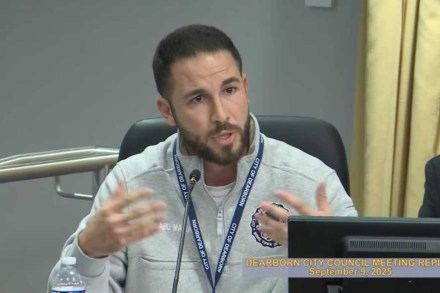
The mayor of Dearborn called me an ‘Islamophobe’

I didn’t remotely expect to go viral when I walked into the city council meeting here in Dearborn, Michigan, last week. But I’m glad I did. I say that not out of ill will towards the honorable mayor, Abdullah Hammoud, who called me an “islamophobe” for objecting to the name chosen for two intersections. I say it because the incident makes me think of much more serious experiences of prejudice against fellow Christians in so many Islamic countries around the world – and now also in western countries. This problem urgently needs to be counteracted with the type of peace (please, not hostility) and freedom that we have often enjoyed in Christian-influenced countries.

Abdullah Hammoud

Why Trump stopped calling on Iran to ‘surrender’

When Donald Trump called on Iran’s Ayatollah to “surrender” during Israel’s recent war the word struck many as jarring – almost antiquated. No major global leader has used that language publicly since the unconditional surrenders of Nazi Germany and Imperial Japan in 1945.But Trump’s invocation, intentional or not and soon abandoned by his call for a “ceasefire,” points to a deeper issue: Are the rules that governed mid-20th century warfare still relevant in the 21st century? Why has “surrender” disappeared from the language of modern warfare? And what, exactly, do today’s ever-growing humanitarian laws offer nation-states forced to operate under them, in a world that looks nothing like the one left smoldering in 1945?

Trump

The heterodox cabinet

As Inauguration Day approaches, the second Trump administration is staffing up. The president-elect’s picks are more or less what everyone expected, outside of a few curveballs. To be honest, the lack of outrage from Trump critics is the big surprise: apparently Trump Derangement Syndrome is a passing fever; even many who’ve argued against him seem to see some logic in the administration of outsiders he’s been signaling he’ll pick for years. In Washington, where almost nothing changes from administration to administration, these cabinet picks might actually be able to effect some meaningful disruption. In almost every role that matters, Trump has opted for a nominee who has been an extreme critic of the very body he or she is set to oversee.

cabinet
beirut

A shaky truce in Beirut

There was an Israeli drone buzzing over Beirut at 8 a.m. on November 27, four hours after a ceasefire was signed and the shooting stopped. It soon disappeared and a feeling of elation set in. It was the best day we had in months. The Christmas spirit was palpable in Gemmayzeh, a Christian neighborhood in central Beirut. Christmas decorations were going up and the bars were packed that night. Lebanese in the diaspora who’d canceled their holiday trips to Beirut rebooked that day. But the Lebanese also know how to manage their expectations — they always hedge good news with dread. The agreement lays out an initial sixty-day truce, during which Hezbollah is required to withdraw its forces north of the Litani river, and the Lebanese Army is to take its place.

Trump is already the diplomat-in-chief

The United States only has one president at a time. Until January 20, that’s Joe Biden. But President-elect Donald Trump and his skeleton foreign policy team are waiting in the wings, plotting policy behind the scenes on issues — Ukraine, Gaza, Iran, Middle East peace — that have stymied the Biden administration for the last year. In fact, Trump is already influencing the respective calculations of allies, partners and adversaries before he even steps foot in the Oval Office. And Biden’s advisors seem perfectly fine with it. Trump fancies himself as a master negotiator, somebody who’s inherently skilled at poking, pressuring and sweet-talking the opposite side of the table until he gets what he wants.

diplomat

A pause between wars

From our UK edition

‘What is to stop it happening again?’ was the pertinent question put to me by a Lebanese friend this week as we discussed over a mezze the announcement of a ceasefire between Israel and Hezbollah. Given what we know of the terms agreed between the combatants, the answer seems to be, ‘Not a lot.’ Generally, I am not one to pour cold water or see the glass half empty. But beyond welcoming a cessation in the brutal meeting out of death by bombardment on the civilians in both Lebanon and northern Israel, it is hard to see the ceasefire agreement as sustainable in the long term.

There may soon be peace in Lebanon

From our UK edition

If the leaks and briefings are to be believed, Israel is getting ready to end its war in Lebanon. With the US pushing hard, and after a successful military campaign, reports say that Israeli leaders are looking to make a deal. Lebanese Hezbollah joined Hama’s war against Israel on 8 October, 2023; around 100,000 Israeli civilians have evacuated the border area. Almost immediately after Israeli troops moved into the Gaza Strip, determined to oust Hamas and release the hostages captured on 7 October, there were negotiations, brokered by Qatar, Egypt and the USA, to try and reach some kind of deal that would free the hostages and end the war. Apart from a brief ceasefire in December, that deal is still being unsuccessfully negotiated today.

Where does Lebanon go from here?

From our UK edition

Israel’s overt ground intervention into Lebanon is now entering its third week.  So far, the Israel Defence Forces (IDF) have advanced just a few kilometers in and established control in a number of locations across the border.  The IDF itself has described its ground action on the border as consisting of ‘limited, localised and targeted raids.’  Standing at a border observation post a few days ago, my impression was that this description appears accurate, at least for now.  Looking across to the towns of Bint Jbeil, Maroun a Ras, Ain Ebel and Ait a Shaab, we heard the occasional sound of artillery cannons.  Twice, we saw interceptions of ordnance fired from the Lebanese side.

Where conflict in the Middle East goes from here

Anything written on the Middle East at this moment in history is almost instantly out of date. As Lenin said: “There are decades where nothing happens; and there are weeks where decades happen.” The Arab-Israeli war in 1967, the Iranian revolution in 1979, the invasion of Iraq in 2003...the region may once again be at one of those forks in the road that dictate the fate of nations for years to come. Journalists’ predictions age like milk out of the fridge. Nevertheless, here are some: Israel attacks Iran. This isn’t a hard one. The question is what form that attack will take. The prime minister, Benjamin Netanyahu, has wanted to bomb Iran’s nuclear facilities before, only to be stopped by the US.

Israel’s revenge, farewell Fraser & the demise of invitations

From our UK edition

37 min listen

This week: Israel’s revenge and Iran’s humiliation. As the anniversary of the October 7th attacks by Hamas approaches, the crisis in the Middle East has only widened. Israel has sent troops into southern Lebanon and there have been attempted missile strikes from the Houthi rebels in Yemen and from Iran. Is there any way the situation can de-escalate? And how could Israel respond to Iran? Former BBC foreign correspondent Paul Wood and defence and security research Dr Limor Simhony join the podcast (1:03). Next: it’s the end of an era for The Spectator. This issue is Fraser Nelson’s last as he hands over the reins to Michael Gove. Having spent 15 years as editor, with 784  issues to his name, what are his reflections on his time here at 22 Old Queen Street?

Israel was right to ignore the West

From our UK edition

There are sources in the Jewish tradition that warn against exultation at the downfall of one’s enemies. But I am not Jewish, and so I have exulted greatly these past two weeks. If you follow most of the British media, you may well think that the past year involves the following events: Israel attacked Hamas, Israel invaded Lebanon, Israel bombed Yemen. Oh and someone left a bomb in a room in Tehran that killed the peaceful Palestinian leader Ismail Haniyeh. Kamala Harris warned that the IDF shouldn’t go into Rafah. As she wisely said: ‘I’ve studied the maps’ Of course all this is an absolute inversion of the truth. Hamas invaded Israel, so Israel attacked Hamas.