Heroism

The lionising of Richard I over the centuries

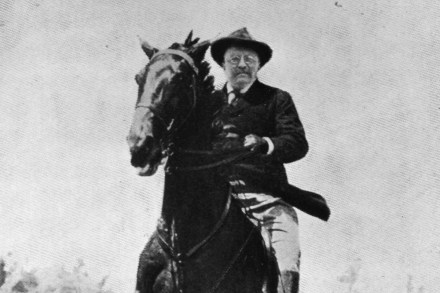
Today, a muscular Richard the Lionheart still sits manfully astride his warhorse, sword held aloft, outside the Houses of Parliament, courtesy of Carlo Marochetti’s 1856 statue of the Plantagenet king. Richard would have approved. As Heather Blurton points out in her livelybook, he was never shy of portraying himself as a valiant monarch – one who actively created his own legend. But first comes a potted history of the man. Incongruously, it is presented as an Introduction, though it accounts for about a fifth of this short book. It is no surprise that Richard achieved heroic status in his lifetime – much to his gratification. His life was packed with glamour, blood and brutality. But therein lies a problem: how to encapsulate this in a mere 30 pages? It’s a struggle.

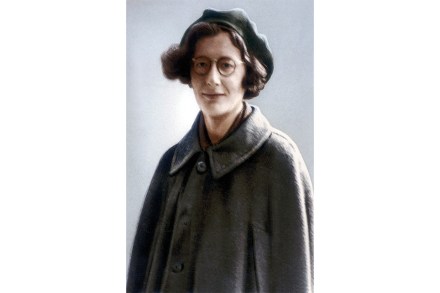
The troublesome idealism of Simone Weil

The French philosopher Simone Weil, who died of self-starvation and tuberculosis in a Kent sanitorium in 1943 at the age of 34, remains a conundrum. ‘Mais elle est folle!’ had been the spluttering response of Charles de Gaulle the previous year, during her short wartime period analysing reports for the Free French in London. Her simple brief was to précis the ideas coming in from the Resistance movement on how to reconstruct France after liberation. The result – which was posthumously published, as were most of her writings – turned out to be a major work of original philosophy, Enchainement (The Need for Roots), running to hundreds of pages, a testimony to Weil’s lifelong need to go further than anyone could ever have required into what she saw as the truth of things.

The faked passports which saved countless lives in the second world war

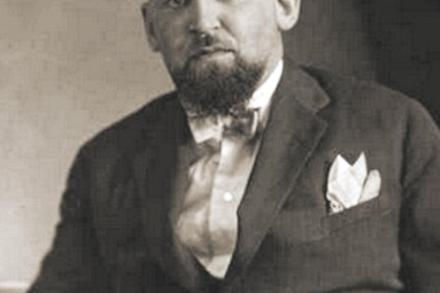
In the summer of 1942, the Polish poet Władysław Szlengel made a detour into light verse with ‘The Passports’: ‘I would like to have a Uruguayan passport/ Oh, what a beautiful land it is/ How nice it must feel to be the subject/ Of the land called Uruguay...’ Successive quatrains hymned the joys of Paraguayan, Costa Rican, Bolivian and Honduran citizenship before the final stanza declared that it was only with one of these citizenships that ‘one can live peacefully in Warsaw’.  The joke was serious. Szlengel was a Jewish man living in the Warsaw ghetto; and as Roger Moorhouse’s absorbing new book describes, Latin American passports were, or could be, a ticket to safety, or at least a hook on which the shreds of hope could be hung.

Operation Chariot succeeded because it was unthinkable

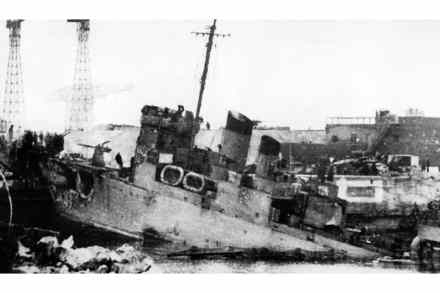
Eighty years ago, just after midnight on 28 March 1942, the British destroyer HMS Campbeltown crept up the estuary of the River Loire towards the heavily defended port of St Nazaire. Here lay an immense dry dock, the only facility on the west coast of France that German battleships such as the ferocious Tirpitz could use if they needed repair. Destroy the dock, and Tirpitz would be unable to sortie against the Atlantic convoys supplying Britain. The only way to do that, however, was to wreck the lock gate at the entrance. And that meant filling a ship with explosives, ramming it into the gate and blowing the whole lot up, while commandos jumped ashore to demolish the pumps, the winding gear and anything else they could.

Steve Austin and the age of the antihero

From our US edition

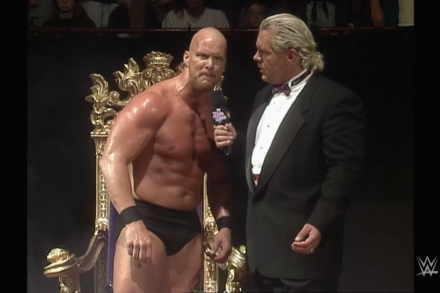
Having been fired from World Championship Wrestling, Steve Austin entered the World Wrestling Federation with the godawful gimmick of 'the Ringmaster’. He looked no more memorable than a Big Mac. Austin knew that something had to change. He wanted to adopt an edgier, more cold-blooded character. The WWF’s creative team, displaying the genius that had inspired 'Mantaur’, a wrestler who dressed up as a Minotaur, and 'the Gobbledy Gooker’, proposed such names as 'Otto Von Ruthless’ and 'Chilly McFreeze’. According to wrestling legend, Austin was at home when his wife told him to drink his tea before it turned 'stone cold’. Stone Cold Steve Austin was born. He quickly flourished.

stone cold steve austin

Whatever happened to the heroes?

From our US edition

Thomas Carlyle, in ‘Heroes, Hero-worship and the Heroic in History,’ divided heroes into six categories in order of human greatness as he conceived it: the hero as divinity, as prophet, as poet, as priest, as man of letters and as king, the heroic ruler of men who in Carlyle’s own description is the actual philosopher-king. In the modern world, kings have been replaced by prime ministers, presidents, strongmen and dictators; that is to say, by politicians of one sort or another. No one with the qualifying virtues of such a man would descend to the moral level of a tyrant, while no mere politician is endowed with the wisdom, gifts and virtues either of a kingly philosopher or a philosophic king, whom no democratic electorate would elevate to the office anyway.

heroes

The changing face of war and heroism

On War and Writing by Samuel Hynes is hardly about war at all. There is little about combat here, or the actual business of fighting and killing — what Shakespeare wryly called ‘the fire-eyed maid of smoky war/ All hot and bleeding’. Hynes is an august scholar of English literature and particularly the literature of 20th-century warfare. But he also served as a bomber pilot in the Pacific during the second world war, and has written an engaging, plain-spoken memoir of his service called Flights of Passage, published in 1988. His two vocations, he explains in the introduction to his new book, are ‘professor’ and ‘pilot’, and here the professor not the pilot is at the controls.