Hate crime

A rabbi stabbed, but no hate crime?

A mystery has occurred. In The Affluent People’s Republic of North London, a rabbi was stabbed on the street multiple times by a knifeman. Rabbi Alter Yaakov Schlesinger was rescued by two builders and a Deliveroo driver and is now in hospital, where hopefully he will recover. Apparently no robbery was attempted. The police, however, have said that this was not a terrorist incident, thus suggesting – by extension – it was also not a hate crime. A crime of love, or indifference, then? Who knows? All a mystery. A familiar mystery.

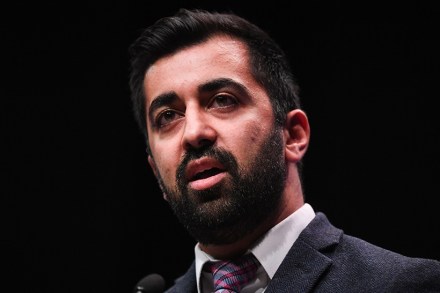
Scotland’s new ‘hate speech’ rules are a modern blasphemy law

It is 178 years since the last recorded charge of blasphemy in Scotland, against the Edinburgh bookseller Thomas Paterson for ‘exhibiting placards of a profane nature’ in his shop window in 1842. One of those placards announced that ‘Paterson & Co (of the Blasphemy Depot, London)… Beg to acquaint infidels in general and Christians in particular that… [we] will sell all kinds of printed works which are calculated to enlighten, without corrupting — to bring into contempt the demoralising trash our priests palm upon the credulous as divine revelation — and to expose the absurdity of, as well as the horrible effects springing from, the debasing god-idea.

Is Brexit a human rights emergency? The UN seems to think so

How easy it would be to be goaded by the visit of Tendayi Achiume, the UN’s “Special Rapporteur on Racism” to Britain. “My mission...will focus on explicit incidents of racism and related intolerance as well as attention to structural forms of discrimination and exclusion that have been exacerbated by Brexit,” she says, as well as “xenophobic discrimination and intolerance aimed at refugees, migrants and even British racial, religious and ethnic minorities”. How tempting it will be for some to tell her to bug off and deal with some real human rights abuses.

Is hate crime really on the rise?

The Guardian ran a story on its website today headlined: ‘Hate crimes doubled in England and Wales in five years.’ Alarming if true, but is it? The story is based on some data released by the Home Office today which, on the face of it, does appear to show the number of hate crimes increasing. The number of hate crimes recorded by the police in England and Wales in 2018-19 was 103,397, up from 94,121 in 2017-18, a rise of ten per cent. But drill down into the report, and the picture becomes more hazy. The word doing most of the work here is ‘recorded’. Yes, the number of recorded hate crimes has increased year-on-year, but how do we know that isn’t due to the police being more likely to record hate crimes?

The whitewashing of Jussie Smollett

From our US edition

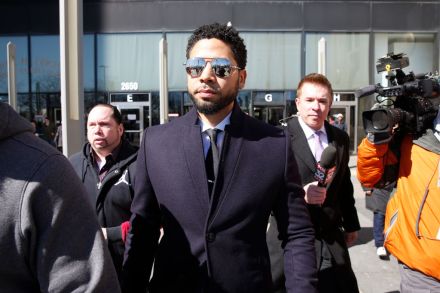
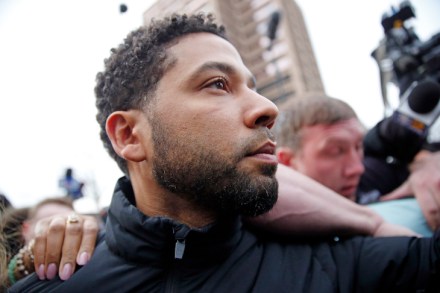
Justice is blind. But, as it turns out, she’s not unwilling to negotiate. If it buys her some silence, she’ll play ball.Yesterday, Jussie Smollett was exonerated by the District Attorney for the state of Chicago. Like Trump, the celebrity victim has been cleared of all charges, though not cleared of wrongdoing. Whatever that means. Dead or alive? It’s Schrödinger’s cat.No one knows what to say exactly because the truth may be too damaging. After all, who knows what happens when you jail a young black gay celebrity? How much abuse would he endure? And if they do kill him, what will happen to our prison system? How much will all of this cost? Oh Jesus, make it go away!Or that’s what I figure happened. Closed doors won’t answer.

jussie smollett

Jussie Smollett, and the strange alchemy of egalitarian despotism

From our US edition

One of my favorite observations made by F. A. Hayek concerns the semantic detonations of the word ‘social.’ Especially pernicious, he noted, was the conjunction of the word ‘social’ with the word ‘justice.’ ‘Much the worst use of the word “social,”’ he wrote, and ‘one that wholly destroys the meaning of the word it qualifies, is in the almost universally used phrase “social justice.”’ There are, Hayek continued, other instances of this sort of ‘semantic fraud.’ Consider the phrase ‘People’s Democracy.’ The one thing you can be sure of about states describing themselves thus is that they are totalitarian, not democratic.

jussie smollett

I am holding an open audition for my attackers

From our US edition

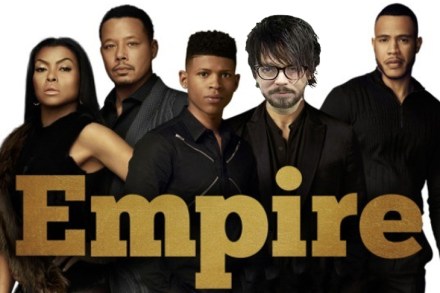
Jussie Smollett told authorities he was attacked on January 29 by two men who were ‘yelling out racial and homophobic slurs.’ He went on to claim that one attacker had put a noose around his neck and poured an unknown chemical substance on him. Since this was first reported, so-called ‘evidence’ has emerged to suggest that the attack was possibly staged, with Smollett knowing his ‘attackers’ before the event, and that he even went so far as to pay them. Now, the drama surrounding this seems a complex one, but it’s really very simple. Even if he did stage the attack himself, it’s still valid. Jussie Smollett is a busy man. He does not have time to wait around idly for genuine homophobic racists to jump him in the street.

godfrey elfwick empire jussie smollett attackers

The true cost of fake hate crimes | 20 February 2019

Some years ago I was introduced to one notion of how to tackle dishonest and insincere accusations of racism. It was not just that there should be a social cost to making a dishonest claim, but that the cost should equal that borne by somebody who is accurately and correctly identified as a racist. Without such a disincentive there is no reason (other than decency and honesty, which may sometimes be in short supply) for people not to level such accusations insincerely in order to beat away any and all critics. Since Monday night I have been wondering, amid much else, whether some similar aspiration could be encouraged regarding hate crimes. In recent days and weeks there has been much comment on the case of Jussie Smollett.

Will making jokes about vegans soon be a hate crime?

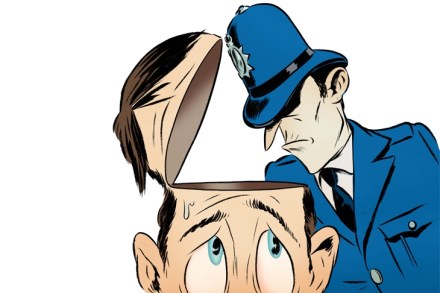
Well done to Sara Thornton, a senior police officer who has warned against extending the definition of a ‘hate crime’ to include misogyny, misandry and ageism. Yesterday, she told a conference of the National Police Chiefs’ Council and the Association of Police and Crime Commissioners that they should be allowed to focus on ‘core’ crimes like burglary, rather than being forced to increase the already ridiculous amount of time they spend investigating hate crimes. In 2016, British police detained and questioned 3,300 people for making ‘offensive’ comments on social media – roughly nine arrests per day.

The problem with hate crime | 16 October 2018

It always amazes me that people think it is normal and acceptable to have hate-crime legislation. To have laws which allow for the harsher punishment of people who entertain prejudiced thoughts while committing an offence. To have it written into the actual statute books that the man who punches a Buddhist because he hates Buddhism can be punished more severely than the man who punches a Buddhist because he hates that individual Buddhist for some reason. When are we going to twig that this represents the punishment of thought, of ideology, of belief (warped belief, but still)? I don’t like that Britain has become a country in which people, especially the political class, think it is okay for the state to punish individuals for what they think.

The police should chase down theft, not thought crime

West Yorkshire Police hit the headlines twice this week. First we learned that the fourth-largest force in England and Wales has decided to ‘screen out’ 46.5 per cent of cases a year, i.e. not investigate them. And these aren’t minor crimes, but things like theft, assault and burglary. Apparently, West Yorkshire Police’s 5,671 officers will spend their time on ‘more complex’ offences instead. What do they mean by that?

Let’s not pretend misogyny is a hate crime

Have you ever met a real misogynist? Probably not, because misogyny is a very strong word. Coming from the ancient Greek misos (hatred) and gyne (woman), it should only be used to define extreme behaviour: woman-hating to be exact.  And yet some people seem to think that British streets are full of woman-haters. Misogyny was made a hate crime in Nottingham two years ago, meaning that anyone caught wolfwhistling at women, being sexually explicit or generally mean to the fairer sex was liable to be investigated by the police as a woman-hater. This pilot scheme has been deemed to be a success; now some campaigners are calling for misogyny to be classed as a hate crime across the whole of the UK.

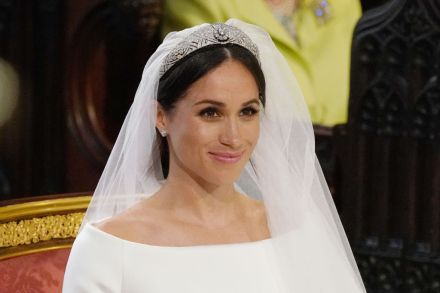
Meghan Markle and the myth of ‘racist’ Britain

In recent years the British public have been bombarded with allegations about our alleged bigotry. When we failed to follow the advice of the ‘Remain’ campaign in the EU referendum this ramped up several gears. Since then there has been a seemingly endless parade of pseudo-scientific claims that ‘hate crime has soared’ and the like. This has encouraged politicians and pundits to spend the last two years insisting that while the UK had long been a cauldron, it is now one whose lid is off and where racists are allowed to roam the land, attacking foreigners at will. Some of us – certainly a majority – knew all this to be nonsense.

Joking about vowels is a hate crime now

It took four days to actually see the pine marten in the flesh. We caught it on a trail cam on night two of our holiday as it scampered in an agreeably gamine manner for the food we’d left out. It ate better than us that week. By night three it had a choice of eggs (its favourite), peanut butter sandwiches and chopped-up frankfurters. All it needed was a nicely chilled Chablis. We sat in the dark for hours, waiting, until my wife said: ‘Fuck the malodorous little bastard, let’s watch TV.’ She is not much of one for wildlife really. And then it appeared, up on its hind legs crunching its way through the shell of an egg, tipping the yolk down its throat. Pale golden chest, long bushy tail, perky, impish face — we’d got our man.

Real life | 18 January 2018

A vet has accused me of a ‘hate crime’ for making a joke about vets. On the basis that everything is a hate crime, I am not getting too upset. But it does seem to be the case that jokes are becoming a liability. The sort of complaints I used to get were from lefty bloggers calling me subversive for daring to mock an organic café in Balham that purported to serve locally foraged ingredients. There were also some poor souls on Twitter who said I had worsened their gluten intolerance by making jokes about wheat. By and large, though, people have been wonderful and responded to my jokes by saying, ‘Oh ha ha, yes, very funny.

Letters | 26 October 2017

Meeting halfway Sir: If our Brexit negotiator David Davis has not read Robert Tombs’s wonderful article ‘Lost in translation’ (21 October) on how different the French and the British can be when it comes to the negotiating table, he really should, as it splendidly exemplifies how useful history can be. The trouble is, of course, that politicians are often too busy to read history, or that historians get round to writing something useful too late to exert practical influence. In this instance, however, there is still time: manufactured deadlines can be adjusted, and (given adequate cross-cultural empathy) accommodations can be reached. Brian Harrison Oxford The law in France Sir: Robert Tombs highlights the differences between the UK and France brilliantly.

What the papers say: Britain’s Brexit trump cards

The EU holds all the ‘trump cards’ in Brexit talks. Or at least that’s what some ‘Remainers’ would have you think, says the Sun in its editorial today. Don’t believe it, the paper insists, pointing out that the EU 27 ‘export a massive amount of goods to the UK’. In fact, as the government pointed out yesterday in its Brexit position paper on trade, our friends on the continent ‘sell more stuff here than to China, Russia, India and Brazil combined’. All this means that it is ‘massively in their interest to work with Britain’ - a realisation that is starting to sink in, the Sun suggests.

The Spectator’s Notes | 16 March 2017

The great achievement of the Scottish Nationalists is to persuade people outside the borders of their own nation — including the London-based media — to equate them with the Scottish people. Obviously, they are their chief elected representatives just now, but the result of the referendum on Scottish independence quite clearly showed that the equation is false. So when Nicola Sturgeon says there has to be another referendum because of Brexit, the equation should be much more firmly challenged. There is no moral reason why the result of a declaredly UK-wide referendum should require another vote in part of the kingdom (next, UDI for London?). Nor is there a constitutional right.

Brexit isn’t to blame for the Polish exodus

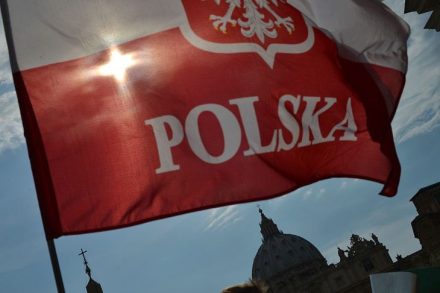
I guess the hate crime epidemic that gripped Britain after Brexit hasn't put that many people off, with new figures showing net migration of 273,000 in the three months to September 2016. That represents a decline of 49,000, of which 12,000 is due to an increase in eastern Europeans heading home (39,000, as opposed to 27,000 the previous year), which I imagine is less to do with any hostile atmosphere in Britain than the booming economy in Poland. No doubt that's the way it will be presented, though - 'Poles fleeing the Brexit terror'.

The truth behind the Brexit hate crime ‘spike’

Britain is in the grip of an epidemic, apparently. An epidemic of hate. New figures, compiled by the Press Association, suggest that hate crimes soared to 'record levels' in the three months following the EU referendum. Only four police forces around the country recorded a decrease in hate crimes; the others saw a spike. And in the case of three forces - the Metropolitan, Greater Manchester and West Yorkshire - the spike was significant: these forces recorded more than 1,000 hate crimes each post-referendum.  This is being held up as evidence that prejudices and madness were unleashed by Brexit. In truth, the hate-crime spike looks more like a classic crime panic, a constructed 'crisis'.