Grayson perry

AI could never replace me

There are two main schools of thought on AI in the Delingpole household. I, as the resident batshit-crazy reactionary tinfoil-hat loon, think that it is evil, indeed quite possibly satanic, and that everything would be much better if only we went back to horse transport, herbal salves and abacuses. And Boy Delingpole, representing technologically literate youth, thinks I’m an idiot, that AI is the future and quite mind-blowing in its potential to change everything. Probably we’re both right. Personally, I don’t feel quite as threatened by AI as perhaps I should. More by accident than design, I seem to have ended up in one of the very few jobs that AI isn’t going to steal.
The joy of hanging out with artists

Lynn Barber is known as a distinguished journalist, but what she always wanted to do was hang out with artists. This book feels like a marvellous cocktail party, packed with the painters and sculptors Barber has interviewed over the years: Howard Hodgkin, Phyllida Barlow, Grayson Perry, Maggi Hambling. Sarah Lucas and Tracey Emin eye one another warily from opposite sides of the room; Salvador Dali’s ocelot weaves between the guests; everyone, naturally, is smoking. Lucian Freud is a no-show – though having refused Barber’s many interview requests, he did send a scrawled note explaining he had no wish to ‘be shat upon by a stranger’. Feuds and gossip are the making of any gathering, and A Little Art Education is not a book of art criticism.

The lives of others | 14 May 2015

‘I call Zelma Cacik who may be living in London,’ says the announcer, in the clipped RP accent of the BBC in the 1940s. ‘I call her on behalf of her 16-year-old cousin...’ The voice betrays no emotion, no feeling, it’s so matter-of-fact, but the script spares no punches as it tells the cousin’s story in blunt statements of fact. She was born in Poland, separated from her family when she was 12 and made to work in a munitions factory while her parents, her sisters and brother were sent to Treblinka extermination camp.

A narcissistic bore — portrait of the artist today

Two ambitious volumes of interviews with artists have just been published. They are similar, but different. The first is by Richard Cork, a veteran with a Cambridge education who enjoyed a distinguished stint as art critic at the Times. He is nicely old school: chatty and avuncular. The second is by Hans Ulrich Obrist of London’s Serpentine Gallery, ageing Swiss boy wonder of the art fair circuit with a head like a pink dome-nut. I have heard Obrist speak and could not detect any meaning in what he said, although he certainly said a lot. In classic Q&A template, Cork and Obrist tell us what it is to be an artist today. Artists once served, in turn, the religions of God, of beauty, of sex and political or social subversion.

The greatest artist chronicler of our times: Grayson Perry, at the Edinburgh Art Festival, reviewed

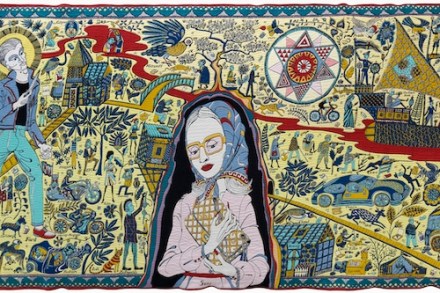
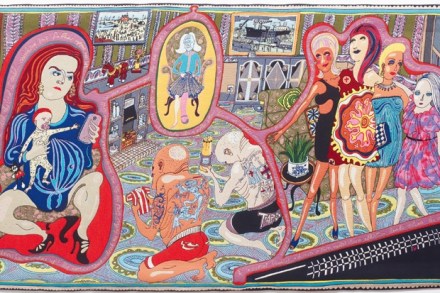
The busiest show in Edinburgh must be Grayson Perry: Smash Hits which, a month into its run, still has people queuing at 10 a.m. His original title, National Treasure, was rejected because ‘national’ is a politically loaded term in Scotland. But Perry’s lens is resolutely fixed on England and Englishness. Seen from a Scottish perspective, this riot of rococo folkishness is familiar and exotic. Grayson Perry is the greatest artist chronicler of our times, with an omnificent style that’s all substance The exuberant exhibition, which is curated by the National Galleries of Scotland but showing at the Royal Scottish Academy and ends on 12 November, slaps the viewer around the face with its huge narrative tapestries, prints and pots.

What did the Russians make of Francis Bacon?

The KGB might not have known much about modern art, but they knew what they liked. For instance, at what came to be called the ‘Bulldozer show’ of 15 September 1974, the Soviet secret service instructed a small militia of off-duty policemen to besiege an unofficial exhibition being staged by a group of underground artists in a field on the outskirts of Moscow. As James Birch recalls, KGB goons ‘attacked the show, using bulldozers and water cannons. Artists and onlookers were beaten up, some paintings were set on fire, other works were thrown into tipper lorries where mud was piled on top by diggers’. Surviving artworks were ‘driven off to be buried’ in an unknown location.

Sick, puerile, inappropriate and delicious: Amazon Prime’s The Boys reviewed

There’s a delicious scene in the new season of Amazon’s superheroes-gone-bad series The Boys. The chief superhero Homelander (Antony Starr) is introduced by a minion to a potential new member of his elite superhero group, the Seven. Homelander watches this bright new talent performing wonders in a gym-style training zone: the young man is agile, eager, skilled with weaponry; but perhaps his most valuable features, the minion suggests, are that he is disabled and belongs to an ethnic minority. This could play really well with the youth demographic, who are into that kind of woke stuff, the aide suggests. The potential recruit approaches Homelander, sweet, modest and starstruck.

What have you changed your mind about? A Spectator Christmas survey

Grayson Perry In 1992 I created a graphic novel called Cycle of Violence. Reading it now, the initially striking thing is that it predicts the rise of cycling culture in the UK and a working-class boy called Bradley winning the Tour de France. But it mainly reflected the state of my mind at the time — it contained a lot of perverted sex, dysfunctional parenting and mercilessly mocked the process of psychotherapy. In 1992 our daughter Flo had just been born and my wife Philippa seemed to have read every parenting book under the sun. Our house was full of the jargon and ideas associated with psychotherapy.

Back in the USSR

For much of 1517 Michelangelo Buonarroti was busy quarrying marble in the mountains near Carrara. From time to time, however, he received letters relating how his affairs were going in Rome. These contained updates on — among other matters — how his friend and collaborator Sebastiano del Piombo was getting on with a big altarpiece which he hoped, with Michelangelo’s help, would vanquish their joint rival, Raphael. This picture, ‘The Raising of Lazarus’, has been in the National Gallery for almost 200 years now (it is No. 1 in the inventory of the collection). Next March it will be one of the centrepieces in an ambitious exhibition that inaugurates the new North Galleries, Michelangelo & Sebastiano: A Meeting of Minds (15 March–25 June).

Enigma variations | 3 November 2016

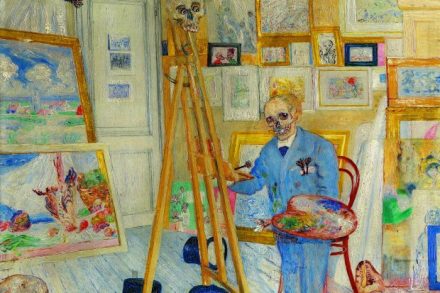
On 2 August 1933 one of the more improbable meetings of the 20th century took place when Albert Einstein had lunch with James Ensor. Apparently, Einstein attempted to explain his theory of relativity to Ensor, who doesn’t seem to have understood it. That evening the painter gave a speech, entitled ‘Ensor to Einstein’, ending with a sort of apology. Painters, he exclaimed — ‘alas and alack!’ — were slaves to vision and resistant to ‘positive reason, to calculations, to probabilities’. However, Intrigue: James Ensor by Luc Tuymans at the Royal Academy is an exhibition that is subject to the principle of relativity.

These foolish things | 9 June 2016

No reliable statistics exist — it’s not the sort of thing you can audit — but England is surely the most haunted country on earth. And haunted not just by white ladies, ghosts, headless highwaymen, spooks and phantoms, but by a recurrent dream of Eden and other more recently lost pre-industrial worlds. Thus follies and summer houses, Eden’s buildings, are among the nation’s most distinctive contributions to world architecture. They might be ‘fragile and neglected trivia’, according to Clough Williams-Ellis, but their ghosts remain and every garden centre pays tribute to a collective yearning for open-air theatricality, so that dreams dreamt in Shugborough might be replicated in Solihull.

That’s entertainment | 5 May 2016

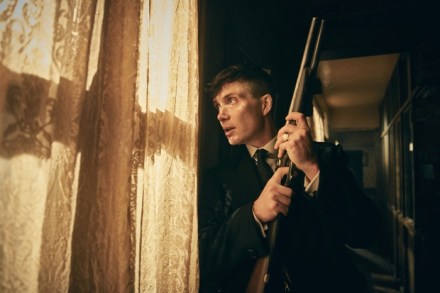
The big returning show of the week began with servants laying out the silverware at a large country house in 1924. But rather than a shock comeback for Downton Abbey, this was — perhaps even more unexpectedly — Tommy Shelby’s new home in Peaky Blinders (BBC2, Thursday). Which explains why so many of the guests were carrying guns, and why the family matriarch was using the word ‘fuck’ a lot more than Lady Grantham ever did. When we last saw gang-leader Tommy (Cillian Murphy), he was still based in the Birmingham backstreets. He was also having a fairly tough time — what with juggling two women, trying not to get murdered and being required by the government to start the Irish Civil War. Two years on, however, things are clearly looking up.

Grayson Perry declares war on macho men: ‘Bear Grylls celebrates a masculinity that is useless’

As more and more people identify as 'gender-fluid', there is growing hostility in some quarters towards traditional gender stereotypes. In fact, for some the term 'masculinity' has become a dirty word. Grayson Perry -- the cross-dressing Turner prize-winning artist -- is one such person. Perry has recently spent his time creating a whole television programme for Channel 4 dedicated to highlighting the problems that stem from 'masculinity and manly men'. Top of his no-no list? Bear Grylls. Yes, Perry says that the Old Etonian adventurer is a 'hangover' who represents a 'masculinity that is useless': 'Try going into an estate agent in Finsbury Park and come out with an affordable flat. I want to see Bear Grylls looking for a decent state school for his child!

The only art is Essex

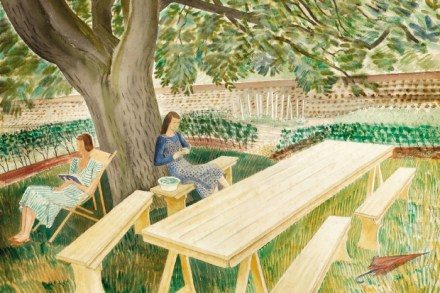
When I went to visit Edward Bawden he vigorously denied that there were any modern painters in Essex. That may not have been true then — this was in the 1980s — or even now. What is indisputable, however, is that there have been plenty of artists in the county. They are the subject of two small but delightfully jam-packed exhibitions at the Fry Art Gallery, Saffron Walden. Bawden (1903–1989) is at the heart of both of them, even if the second point he made to me — equally emphatically — was that he called himself a designer rather than an artist (‘out of self-defence, mainly’). That distinction, and the quirky humour, are both relevant to the question of Essex art, especially the variety that is the focus of attention at the Fry.

This is England

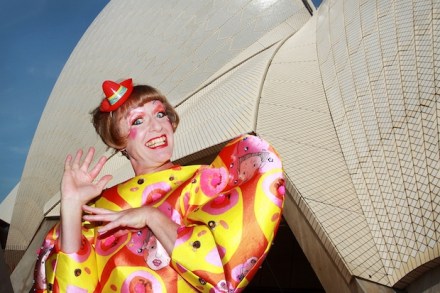
At the Turner Prize dinner of 2003, as the winner, Grayson Perry, took a photo call with his family wearing a girlish dress and huge bow in his hair, a German contemporary artist who was sitting at the same table leant over and hissed in my ear, ‘Only in England!’ He got it right in more than one way. As time goes on it becomes ever more apparent that — in his combination of grittiness, eloquence and wackiness — Perry is very much in the national grain. He even manages to look like a sort of Identikit British archetype, resembling, in different images he presents of himself, Margaret Thatcher, Alice in Wonderland and Richard III. No doubt, at some point in the future there will be a grand-scale overview of Perry’s work at the Tate or RA.

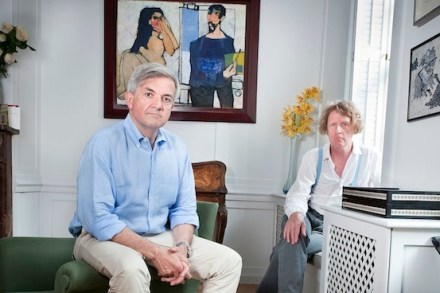
James Delingpole falls in love with Grayson Perry – and almost comes round to Chris Huhne

I love Grayson Perry. You might almost call him the anti-Russell Brand: a genuinely talented artist who also has some very interesting stuff to say — as he’s demonstrating yet again in his highly entertaining new series Who Are You? (C4, Wednesdays). It ought to be ghastly and it ought to be pretentious: a trendy ceramicist known at least as much for his transvestism as for his wackily decorated, hugely fashionable pots meets up with people from diverse backgrounds so that he can explore the theme of identity and then exhibit creations inspired by them at the National Portrait Gallery.

Frieze Art Fair: where great refinement meets harrowing vulgarity

If you wanted to find a middle-aged man in a bright orange suit, matching tie and sneakers, Frieze is a good place to start looking. I found one. Or maybe he was a limited edition existing in several reproductions. Certainly, he was frequently spotted: conspiratorial of aspect, he was stooped and crouched over a mobile with body language saying ‘serious business’. I overheard: ‘Ah, Corinna. Va bene? How are prices in Zurigo?’ Long before you reach Frieze’s vast tented sites in Regent’s Park there are signs of danger. Extraordinary shoes and statement hair and rucked-up skinny trousers start appearing in a fall-out zone about half a mile away from the BMW VIP drop-off area and the Mercedes-Benz shuttle buses.

Grayson Perry has a pitiably phalloscopic perspective

Calm down, dears: the strange coughing noise that was heard across Britain at around 8.30 yesterday morning was not the last gasp of an exhausted Mother Earth, nor was it the harbinger of a country-wide Ebola outbreak. No, it was simply the sound of nation’s middle-aged, middle-class men choking on their cornflakes while listening to Grayson Perry being rude about them on the Today programme. Perry was appearing to promote his guest edition of the New Statesman, proudly entitled the 'Great White Male Issue'.

Is there anything worse than kids’ parties? Actually yes – the shops that sell kids’ presents

It has been a bad fortnight. Not only am I off the sauce for a few weeks to help my liver grow back, last weekend saw me preparing for a children’s birthday party. This was one I had to attend, seeing as the children are my godchildren (or whatever the secular version is). This meant shopping for children’s presents. Now I could have done as I do for adult friends and relatives on birthdays, which is arrange to take them out for a brace of Martinis followed by a Jo Allen burger. I rejected this for the kids, however, as Jo Allen is not that suitable for the under 5s. There are some advantages of living in Crouch End. One is that the only riot you are in danger of being caught up in is if Harris and Hoole run out of soya milk.

Has the rake progressed?

Hogarth’s A Rake’s Progress has been a rich resource for artists. Film-makers recognise his modern moral subjects as an ancestor to the storyboard. But in this age of mass media can the format still hold its own and tell us something about ourselves? A new exhibition at the Foundling Museum (until 7 September) suggests so. The show is titled Progress — but don’t come expecting happy endings. Only Yinka Shonibare gives us a relatively light ending, in that the protagonist does not end up mad, bad or lying in a drain. His photographic series, Diary of a Victorian Dandy, refuses to moralise and instead toys theatrically with race, colonialism and aristocracy.