Government

The case for John Hutton as a New Labour hero

Ok, so identifying the heroes of the New Labour era may not sit well with CoffeeHousers - but I'd still recommend you read through the latest Bagehot column in the Economist, which does just that.  It identifies five figures from the past 12 years who have "done the state and country some serious and lasting service," and whose "virtues [are] not be clouded or cancelled by grave mistakes or misdemeanours".  They are: Lord Adonis, Donald Dewar, Lord Mandelson, Sir William Macpherson and Robin Cook.  James Purnell, Alistair Darling and, strikingly, Bill Clinton finish in the runners-up list. You can debate the merits and demerits of those names all day long, but I'd rather suggest another person for the list: John Hutton.

The spectre at the climate change feast

Today the TaxPayers' Alliance is releasing a new report which sets out the huge and excessive burden that green taxes impose on families and business across the UK. At the moment, 14 percent of domestic bill costs are the result of climate change policies.  Increasing the price of energy hits the poor and elderly hardest - which, in turn, increases poverty and benefit dependency.  At the same time, 21 percent of industrial electricity bills are the result of climate change policies.  If we want to make our economy less dependent on financial services, driving up a major part of many manufacturing firms' costs isn't the way to do it. Despite these costs, the current approach doesn't appear to be achieving the desired cuts in emissions.

A parting shot

I need a new radio for Christmas. Whilst listening to Dr. Sir Liam Donaldson tell the Today programme that parents should not offer their fifteen year old offspring alcohol, my pocket-radio had an altercation with a wall. The soon to be retiring chief medical officer said: “The more they get a taste for it, the more likely they are to be heavy drinking adults or binge drinkers later in childhood.” This latest soothsaying counts among Sir Liam’s other alcohol-related triumphs; he also gave us the inscrutable phenomenon of “passive drinking” - I don’t know about you but this guy makes me drink actively.

Should an opposition sell itself as a responsible government?

One of the Tories’ favoured lines recently has been that they are acting like a responsible government while Labour is behaving like an irresponsible opposition. But I wonder if this attitude is entirely healthy for an opposition, or whether it ends up blunting its campaigning edge. For example, the Tories’ refusal to say for definite that they will repeal Labour’s planned increase in national insurance stems from their view that they aren’t certain where they would find the £8 billion from. But given the number of black holes and blanks in the PBR and that the deficit is over £170 billion this seems slightly absurd.

Balls beats the drum for investment

Oh, look, Ed Balls is talking about "investment" again.  This time it's an address on the Government's Children's Plan, and, judging by the preview in today's Independent, it's all going to be about how much more money his department is spending.  I doubt Alistair Darling will be impresssed - especially as much of that money was strong-armed out of the Treasury in the early hours of Wednesday morning last week.  And I doubt that some of Balls's other colleagues will be too amused either.  Their departments will be subject to even deeper cuts thanks to his brinksmanship. But you suspect that Balls isn't just hoping to rile his fellow ministers - he'll probably want to divert some attention away from the important u-turn which he outlined on Marr yesterday.

Labour fell between two stools this week

There were two possible strategic approaches Labour could have taken to the PBR. One option was to surprise everyone by actually making cuts. They then could have said, "we've made all the cuts we can. Anything else would really hurt frontline services". This would have put them in position to challenge the Tories as to what they would cut to reduce the deficit faster. The other was to be really populist. They could have carried on spending, bashed the bankers, soaked the rich, and hope that they could get away without a crisis in the markets until the election. Instead, they’ve fallen between two stools.

Why not just scrap ID cards, then?

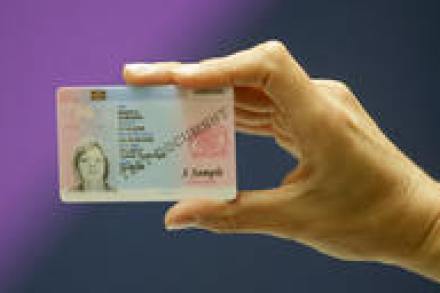
So the protracted, wheezing death of ID cards continues, with Alistair Darling admitting in today's Telegraph that: "Most of the expenditure is on biometric passports which you and I are going to require shortly to get into the US. Do we need to go further than that? Well, probably not." The government are letting it be known that this doesn't contradict their existing policy, but their shifting rhetoric remains striking.  Last year, we had the then Home Secretary, Jacqui Smith, proposing that British citizens should be able to choose between a card and a biometric passport.  Earlier this year, Alan Johnson said that ID cards wouldn't be compulsory for British nationals, after all.

Why class wars don’t work

Well, it seems like Paul Richards – a former aide to Hazel Blears – wants to corner the market in quietly persuasive demolitions of his own party's strategy.  If you remember, he wrote a perceptive piece on Labour's shortcomings in the aftermath of the Norwich North by-election, which we highlighted here on Coffee House.  And, today, he's at it again, with a very readable article in PR Week on why the class war won't work.  His three reasons why are worth noting down: "First, it is hypocritical. The Labour Party has a disproportionately far higher number of former public schoolboys and schoolgirls in parliament and in the government than a random sample of the public they serve.

Gordon Brown’s one and only legacy

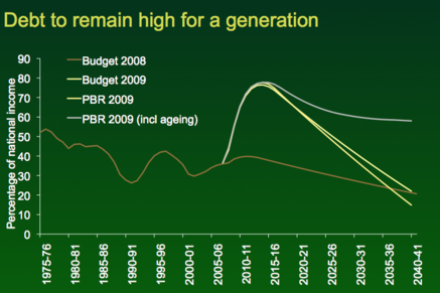
I will sign off tonight with this sickening graph from the earlier IFS presentation – showing the extent to which Gordon Brown’s economic incompetence has transformed the public finances for a generation. Servicing this debt will absorb money that would otherwise be spent creating jobs, lifting people out of poverty, advancing education, promoting prosperity. The leading article in the magazine this week finishes with these words, which came to mind when I saw the above graph: “It will be no surprise if UK public debt has been downgraded by the election; if so, a gilt buyers’ strike will become more than a theoretical possibility. The new government will face a Sisyphian financial task, so formidable as to make almost every other issue of the day look trivial.

The cuts unveiled

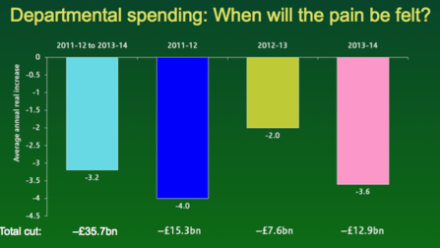
Well, as expected, the IFS have put the lie to Darling's claim that the budgets of non-ringfenced departments would be "pretty much flat".  Here's how Nick Robinson reports it: "The Institute for Fiscal Studies says that government plans imply £36bn of cuts in departmental spending ie over 19% from 2011-2014 in order to protect schools, hospitals and increase overseas aid. They say the police pledge is meaningless. They also say that defence, higher education, transport and housing are most likely to be hit.   The cost of paying back the debt over the next eight years is equivalent to £2,400 per family in taxes or cuts over that period." UPDATE: The relevant IFS presentation has now been uploaded on their website – you can read it here.

An expensive piece of spin

Labour briefed out its plan to tax banks that pay bonuses so extensively that everyone in the City knew it was coming. The result is that a slew of banks paid their bonuses out early. Small, private banks that aren’t encumbered by bureaucracy moved to award their bonuses early as soon as these stories started appearing in the papers. The legislation says that the moment when the tax is awarded is when the tax applies, so if a bank awarded its bonuses as late as Monday — when the details of this plan were all over the papers — they avoided the charge. As one City accountant who works with these banks told me, ‘If anyone didn’t do it, they’re a bit silly.

Behind the expenses curve

And so the expenses scandal rumbles inevitably on.  If you want the latest on all the dubious claims our, erm, honourable representatives made in 2008-09, then I'd recommend Andrew Sparrow's live blog over at the Guardian - and Guido's got a good round-up here.  But, behind all that, there's a u-turn which is almost as embarrassing for the government as all those dodgy, dodgy receipts. Remember when Gordon Brown neglected to mention MP's expenses, or the Kelly reforms, as part of his legislative agenda in the Queen's Speech?  The decision was immediately launched on by Sir Christopher Kelly himself, and set up some juicy attacks for the Tories.

The Darling deception

Alistair Darling normally strikes us as an honest man dropped into an impossible situation. But whether he misspoke, or whether he set out to mislead, he told a lie on the Today Programme this morning which needs to be highlighted. So what was it?  That non-ringfenced departmental budgets would remain "pretty much flat" rather than receiving significant, if not sufficient, cuts.  As Fraser demonstrated yesterday, there were spending cuts hidden in the Budget   and we'll see the full extent of those as soon as the IFS processes the numbers later today.  Last time around, after April's Budget, they calculated cuts of 7 percent across three years.  Thanks to a few more ringfenced budgets here and there, those cuts could even be deeper this time around.

Darling carves up the spending pie

It’s the eve of the Pre-Budget Report, and the lunacy has already begun. Tomorrow's FT says that Darling will copy the Tories’ plans to protect the NHS budget – and throw police and schools in to the protected status as well. This is introduced as "the biggest squeeze in pubic spending for a generation," with the headline figure of 14 percent cuts. How to make sense of that? My guide: 1. Any sentence that starts “A Labour government would...” can be ignored. Darling can promise to fund free beer for everyone after 2011 – he won't be in office. These are decoys for the media: the wilder his claims, the worse he expects to lose. 2.

Ringfence-a-rama

Just watching Newsnight, and the show's economics editor, Paul Mason, has said we can expect several budgets to be ringfenced from spending cuts in tomorrow's PBR – hospitals, schools and perhaps even the social security budget.  If so, it's another sign of how political the document is set to be.  Ringfenced budgets are the other side of the soak-the-rich coin: sending out the twin message that Labour will batter the "City fat cats," while also "investing" in public services "for the many".  Just a shame that it's all insufficient to the scale of the debt crisis.

Luck shines on the brave

Nevermind the bankers, the UK Border Agency should have been awarded £295,000 in performance bonuses. Phil Woolas’s defence that “brave” border workers deserved remuneration beyond their basic salaries is imaginative, though unremittingly egregious. The agency is plainly maladroit. Keith Vaz’s Home Affairs Select Committee has found: 'There is still a huge backlog of unresolved cases and UKBA simply must get through them faster than they have promised.

Darling contra Brown, Part 573

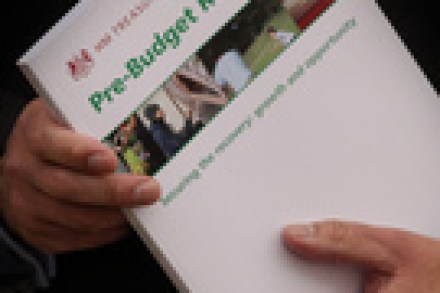
Ok, so tomorrow's Pre-Budget Report is shaping up to be a horrendously political affair.  But, rest assured, it could have been so much worse.  In what is, by now, a familiar Budget-time story, Alistair Darling is fighting the good fight against some of Brown's most inharmonious fiscal brainwaves.  According to Rachel Sylvester's column today, here are just some of the measures that the Chancellor has resisted: -- A long-term windfall tax on bankers' bonuses (Darling favours a temporary, one-year tax). -- A call to lower the 50p tax threshold from £150,000 to £100,000. -- A reversal of the plan to make it easier for couples to pool their inheritance tax allowances. -- A, ahem, "more optimistic picture of the British economy".

When did the Tories become an “alternative government”?

There are a couple of noteworthy snippets in today's FT interview with George Osborne: the claim that the Tories may not take corporation tax as low as it is in Ireland; the outline of a "five-year road map" on business tax policy, etc.  But, I must admit, it's this passage which jumped out at me:    "[Osborne] says his Tory conference speech in October, which included plans for a public sector pay freeze and an increase in the state retirement age, 'was an important moment' that showed a mental leap to being 'an alternative government, not just an opposition'." These self-bestowed titles – "alternative government," and the like – are silly, really.  The only thing that actually matters is whom the public regards as governing material.

Balls: ‘I have resisted moving’

Ed Balls has given an interview to The Times Educational Supplement which contains a comically audacious attempt to rewrite history. When asked about whether he really wants to be in his current job, Balls tells the interviewer, “I have resisted moving”. Now, I suspect this will come as a bit of a shock to Alistair Darling who fought off an effort by Balls to take his job.