Government

The Tory right strikes back

Sam Coates reports that the Tory right want Cameron to renege on the commitment to a referendum on AV. You can see why they want to do this but it’s ill-advised. The Lib Dems have destroyed their credibility by indulging blatant self-interest and the Tories should avoid making a similar mistake. The need for unity is absolute. It’s time to put-up and shut-up in the national interest. Right now, that means reaching an accommodation, either in coalition or in a minority government with Lib Dem backing or abstention. If that requires a referendum on voting reform then so be it. Besides, facilitating a referendum is not to endorse reform. The Tories have everything to gain - power and the moral high-ground.
Suspended animation | 10 May 2010

Weirdness reigns in Westminster at the moment, as the entire political establishment sits drooling and waiting for insights into the Lib-Con talks. The latest negotiator to break cover was the Lib Dem's David Laws who managed, very artfully, to give very little away.  And so we were told that the Lib Dems are speaking with Labour, and that they are seeking "clarification" from the Tories over every issue from eduction to tax and electoral reform.  In other words: all the parties concerned are still negotiating. There is a growing sense - fuelled by reports that Nick Clegg is meeting his MPs later this evening - that we may not get a deal quite as quickly as expected.  It may be tonight, it may be tomorrow morning, it could even be later this week.

The return of David Davis

The shadow Cabinet were gathering before their meeting at 2pm. One member told me ‘it is looking less like formal coalition now.’ But coalition remains the leadership’s preferred option. Talking to Tory MPs—old and new—this morning, there’s a sense that they would slightly prefer minority government. Though, no-one is planning to blow themselves up if the country does end up with a Tory-Lib Dem coalition. One other interesting development today is that there is a growing expectation that David Davis will be recalled to the colours. Certainly, his return would make Cameron’s top team more accurately reflect the ideological balance of the party.

Do the Lib-Lab talks alter the landscape?

Isn't it all very cosy?  Turns out the Lib Dem negotiating team secretly met with a Labour delegation over the weekend: Ed Balls, Peter Mandelson, Ed Miliband and Andrew Adonis.  And it's thought that Nick Clegg has had more conversations with Gordon Brown, both on the phone and in person.  So the Tories aren't the only ones enjoying some quality LibTime. It doesn't really alter the cut of the situation, though.  Most folk around Westminster seem to expect a Lib-Con deal, of sorts, at some point today.  But Clegg and his team would weaken their hand if they didn't at least explore every option.  The Tory leadership will appreciate this – and, I'm sure, won't be all that perturbed by these latest developments.

Who should get what?

In February I pontificated about the composition of Cameron-Clegg government - to general ridicule. The blogpost looks increasingly prescient now that David Cameron seems to be favouring a formal deal with the Lib Dems. Assuming that Lib Dem MPs will sit around the Cabinet table, what ministries should they get? The assumption is that the Lib Dems want six Cabinet post and will probably end with no more than four. The Conservatives cannot give up the Chancellorship, Education or the FCO - departments that are important for the leadership, its worldview and its reform agenda . Nor is it easy to see a Lib Dem in Defence or someone like Liam Fox passed over (even if it was for Paddy Ashdown).

Time for a National Government? (Revisited)

If there is one lesson to be drawn from the television debates, it is that people have grown tired of politicians slagging each other off. David Cameron promised an end to "yah-boo" politics, but the institution of parliament makes this near-impossible in practice. However, while parliament is out of action, there just might be the possibility of creating something genuinely ground-breaking: a government of national unity. I first suggested this idea in the New Statesman during the 2008 Labour Party conference: "If the financial crisis is as serious as many in the government suggest, then extraordinary times require bold solutions.

The nation’s Cabinet

Just to flag up an eyecatching poll from PoliticsHome, asking the public to pick the members of their ideal coalition government. Methodology and details here, and the results pasted below.  Two things strike me: i) Alistair Darling once again proves he's popular, which you wouldn't necessarily expect of a Chancellor who has presided over a recession, and ii) Hilary Benn's presence may well show that, so far as Brown's government is concerned, keeping a low profile is a good way to get noticed.

Time for a National Government?

Gordon Brown should have done it at the beginning of the recession. He and David Cameron should be thinking very seriously about it now. Perhaps national government is an idea whose time has come. Again. With the prospect of a very close election, in which people are clearly sick of the conventional two-party system, there is every reason to imagine a genuine government of all the talents after the election, with ministerial posts given to senior figures from all three parties. Is there any reason that Nick Clegg shouldn't be prime minister in a national government? It would seem he is the people's choice.  The obvious objection is that a national government would be anti-democratic.

Curbing the state

This morning, David Cameron and a large chunk of the Shadow Cabinet were talking in some detail about how the Conservatives will enable a Big Society. To do that, they are going to have to stop state-run organisation crushing community initiatives.   Take the case of MyPolice. This website was set up to let people offer tips on how policing in there area could be improved. Earlier this month, they were contacted by Her Majesty’s Inspector of Constabulary (HMIC) who told them that they were launching a site called MyPolice. The original MyPolice objected.But HMIC went ahead anyway, using the url mypolice.org.uk. This better funded website now comes top when you Google MyPolice.

Cameron’s winning optimism

Last week, it was all doom, gloom, debt, the deficit and austerity from the Tories – and rightly so.  But, this week, they've returned to the sunny uplands.  First, we had George Osborne's tax cut for seven out of every ten people.  And, today, we had David Cameron's closing speech at the Tory Big Society event.  I lost count of how many times he dropped words like "hope" and "change".  And, yes, he even namechecked Barack Obama.  But don't give up just yet  – there was more to it than that.

In defence of Alistair Darling

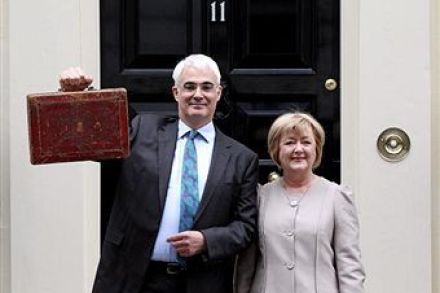
It's unusual for Chancellors to stand with their wives on the steps of the Treasury on budget day, and to see the Darlings together this morning gives an indication of what they have been through. Brown doubtless thought him an automaton when he appointed him to the job - but I was wrong to say that he would be "no more a Chancellor than Captain Scarlett was an actor". He has defied Brown, bringing moderation and much-needed dullness to the worst fiscal crisis in Britain's peacetime history. In James's political column last week he suggested that Darling calls his autobiography "the forces of hell" - that he would defy Brown like that takes some guts. It felt strange to praise Darling in the editorial of tomorrow's magazine, given that he has presided over this fiscal collapse.

How much does the public need to know about Jon Venables?

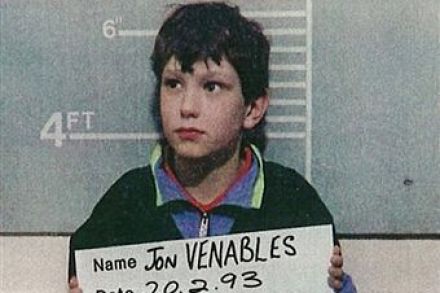
There are many arguments, and many perspectives, when it comes to how much we need to know about Jon Venables' return to prison.  Yes, too much information – and too much publicity – could forfeit his anonymity.  But too little, and there's the risk that some serious questions about the probation service could remain unanswered.  The boundaries of transparency need to be set and maintained – if only so similar mistakes and tragedies cannot happen in future.   To be honest, I'm not sure where those boundaries should be set.  But, then again, it seems that the government isn't either.

Future foreign policy

If the Tories win power (still a big “if” these days), William Hague will walk into King Charles Street, be greeted by the FCO’s Permanent Secretary Peter Ricketts, meet his new staff and be briefed on the Office he will lead and the foreign challenges Britain faces. There will be plenty on his plate. Calls from foreign dignitaries, preparations for forthcoming summits, a discussion of key priorities, and suggestions for how to reorganise the machinery of government. There will also be a need to prepare the FCO’s contribution to a cost-cutting exercise.      But there ought to be an early discussion about how the world is changing and the new context of Britain’s foreign policy.

Back with a vengeance | 25 February 2010

All of a sudden, the Big Banks are Big Politics again.  And who'd have it any other way, on the day that the 84 percent taxpayer-owned RBS announced losses for 2009 of £3.6 billion?  And that's alongside a bonus pool for its staff of £1.3 billion.  Yep - however hard they try, the exorcists of Westminster just can't shift the ghost of Fred the Shred. In which case, there'll be plenty about bankers' pay, and about getting taxpayers what's owed to them, over the next few days.  And rightly so.  But I often feel that these issues detract from even bigger ones, such as how to ensure that there aren't similar shocks in future.  After all, the financial furniture is arranged pretty much identically to how it was a couple off years ago.

Darling throws one hell of a spanner into No.10’s election works

So what's Alistair Darling up to?  When I first heard his "forces of Hell" comment last night – his description of those briefing against him from inside No.10 – I half suspected it was all part of Downing Street's grand plan.  You know, trying to defuse the bullying story by being honest – up to a point – about Brown's premiership, and then claiming that everything's alright really.  A bit like Peter Mandelson saying he took his "medicine like a man" – only with greater poetic license. Now, though, I'm convinced that this wasn't part of No.10's script.  The clue is in the hurried, and ridiculous, denials that have been issued since.

A Cameron-Clegg government

With even Michael Portillo predicting a hung parliament, what would Britain’s post-election government actually look like if the Tories did not secure an over-all majority.   The Tories could form a minority government, hoping to persuade enough MPs from other parties, but principally the Liberal Democrats, to vote with them on the key issues. Such a government would be inherently unstable, lurching from vote to vote and dependent on the relationship between a Prime Minister Cameron and Nick Clegg, the Liberal Democrat leader, as well as between George Osborne, the would-be Chancellor, and Vince Cable, who many think is a more qualified potential occupant of No 11.

Sunny side up?

Earlier this week I asked what Obama's experience could teach a Cameron government. At the same time, there has been a well-argued debate in The Times about whether the Tories should go negative or not. There is one point where the two issues converge - and that is in how a newly-elected government should deal with the country's economic legacy. Once in power, a Tory government will be tempted to be optimistic, to point to the sunny uplands. General Colin Powell said "positive thinking is a force multiplier" and the Cameron team come across as natural adherents to this viewpoint. There is also the fact that the modern Tory agenda - of decentralisation and trust in people - is at heart a positive philosophy of government, not a mistrustful statist one.

What can Cameron learn from Obama’s situation?

President Obama was going to be different. He was going to learn from Jimmy Carter's failures. He was going to avoid Bill Clinton’s fate. Like his well-run campaign, Obama's tenure in the White House was going to be cool, calm and effective. If Clinton failed by sending an over-cooked healthcare reform to Congress, Obama would succeed by leaving the details to lawmakers. If McCain's campaign was psychodrama, Obama's administration was going to be all collegiality.    It did not work out that way and now the knives are out for Obama's team. First there was Ed Luce's piece in the Financial Times. Now Leslie H. Gelb, a veteran DC insider, comes out and says it: the President must change key personnel now.

A ceasefire in the VAT war?

Has another dividing line faded into the sand?  It sure looks like it, going off this Times report on how both Labour and the Tories are considering hiking VAT to 20 percent.  If you recall, it was thought that Brown blocked Alistair Darling's plan to introduce the rise in last year's Pre-Budget Report - and all so he could attack the Tories over reports that they would do similar.  The PM will find it a lot harder to stage that attack after this morning. A few weeks ago, the rumour was that Labour would make keeping VAT at 17.5 percent a "main election pledge".  Whether that pledge now appears, or not, will say a lot about the shifting balance of power between Brown and his Chancellor.