Quote of the day | 14 September 2009
...comes courtesy of one Gordon Brown, in interview with Robert Peston: "Well, I've never been someone who myself has been interested in running up personal debts or borrowing huge amounts of money." Ahem.
...comes courtesy of one Gordon Brown, in interview with Robert Peston: "Well, I've never been someone who myself has been interested in running up personal debts or borrowing huge amounts of money." Ahem.
Scoopmeister Paul Waugh has a cracking developing story over at his blog. He revealed earlier that Harriet Harman's people have been canvassing Labour party members with questions like: "Who do you think is the best person to sell the Labour party?" "On a scale of 0 to 5, how do you rate Harriet Harman?" But, now, it turns out that there was another question on the list: "On a scale of 0 to 5, how do you rate Gordon Brown?" Smells fishy, doesn't it? Team Harman are claiming that she's just trying to keep in touch with the Labour grassroots, but it's very difficult not to see this as leadership positioning on her part.
How worried should we be about national debt? I just had a rather enjoyable spat with Will Hutton on Simon Mayo's Five Live programme. The situation is atrocious, I said. And that set him off: why did I use such a word? I replied that we are spending more in debt interest than educating our children or defending the realm. That is a dismal state of affairs, and will soon become even worse. Forget about the economics, it is a moral failure to blithly keep spending now and knowingly saddle the next generation with billions upon billions of our debt to pay off. Hutton said all this was hysterical, that an 80 percent debt ratio has been managed before and will be managed again. But last time, I said, the debt was the price of winning a war.
Derek Simpson’s complaint that Labour has failed to keep in touch with its core vote and his half-threat to withdraw Unite’s support over cuts feature prominently across the papers this morning. Simpson’s observation concurs with the consensus that Labour’s disastrous showing in June’s local and European elections and the Norwich by-election was the consequence of its core vote abstaining or defecting to fringe parties; the party’s continued poll freefall is also explained in these terms. So, how to woo the working class and the unions whilst selling divisive public service cuts?
Perhaps Lord Myners hasn’t seen the cuts memo because he appeared on Sky News this morning trying to convince the world that Britain can and must maintain its current spending levels. Despite concerns over the budget deficit, a reality that even the Prime Minister acknowledges, Lord Myners said: "We're keeping people in their jobs we're keeping people in their houses we're being sensitive to the needs of the community. That programme must not stop until the recovery is firmly rooted. "We can afford to do it and it's quite evident from the fact that we are able to raise money in international bond market. The willingness to support us is there.

With the TUC conference coming up, Derek Simpson, leader of Unite, flexes his muscles in an interview with The Independent. He tells Jane Merrick that Labour couldn’t fight a proper election campaign without Unite’s financial backing: "What are the consequences of us not giving Labour money? That will really impair, fatally damage, any chance of Labour winning a general election. We give money to allow the Labour Party to function." Considering that the unions gave Labour £11.4 million between the first quarters of 2008 and 2009, Simpson is probably right. (Worryingly for the party one of Simpson’s most likely successors is standing on a platform of ending the union’s donations to Labour).
The question of Gordon Brown’s leadership won’t go away, but there’s a feeling that nothing will happen for a while yet. Andrew Grice writes in The Independent today that the coup might come in December: “Labour's hard left and the trade unions are the dogs that have not barked. The assumption is that they stick with him for fear of something worse, and calculate that their best hope would be to exploit a backlash against New Labour after an election defeat. I am told that their mood is now changing. Some left-wing MPs and union bosses are coming round to the view that they would have an overriding duty to avoid a massacre that could keep the party out of power for a generation.
"What did he mean by that?" is the question one is left with after reading Derek Simpson’s interview with the Mirror. Simpson tells the paper that New Labour is dead and that "if you could convince me there is somebody who could take over and go down the Old Labour route without hesitation I'd share the view that if Gordon is not prepared to do it he should stand aside and let that person do it. That could save the Labour government.” This is, to put it mildly, rather off message and Unite have rushed out a statement this morning saying that Brown has Simpson’s “full support” and is the “only choice” to lead Labour into the election. But it doesn’t deny what Simpson said.
I had the pleasure of chairing the Editorial Intelligence/Policy Exchange/Policy Review/Cass Busines School (Phewee!) debate on the future of the quangocracy last night. I was expecting little common ground between Douglas Carswell, the Tory hammer of the quangos and an audience I thought would be packed with his ideological enemies. But it wasn't like that at all. Carswell was a very entertaining turn, describing the House of Commons as "monumentally spineless and useless". His view was that select committees should be given the job of holding quangos to account, including making them justify their budgets on an annual basis. This, he said, would at least give give MPs something worthwhile to do and maybe shake them out of their "self-seeking indolence".

Charles Clarke has sounded off so often during the Brown premiership that it is tempting not to pay too much attention when he does. But his latest broadside is interesting in that Clarke is having a go at Brown as much from the left as from the right. He again attacks the abolition of the 10p rate and calls for Trident not to be renewed, two things that please the left. But he follows up with two new criticisms of Brown that will play well with the left. He says that Brown’s “toleration of UK tax havens has been a disgrace” and calls for "genuinely fair" corporate taxation. The plot to oust Brown failed because it did not attract enough support from the soft left of the party.
So the Daily Mail has another anti-Brown plot rumour for the collection; this one based around the idea that a "Gordon must go" candidate could run for a seat on the PLP's Parliamentary Committee: "Rebels are planning to put up a candidate for the Parliamentary Committee, a panel of senior backbenchers which meets once a week with the Prime Minister, when MPs return to Westminster next month. The 'coup candidate' will run on a single platform - a call for Mr Brown to stand aside and let someone else lead Labour into the General Election... ...MPs will then be able to vote in secret for Mr Brown to stand down, without needing to go public with their views.
Over at his essential blog, Benedict Brogan says that Dave 'n' George deserve some praise for Moody's decision to retain the UK's AAA credit-rating. His thinking: that because Messrs Cameron and Osborne have been going on about debt and the need to cut spending, investors - anticipating a Tory government - are more confident about Things to Come. A similar point is made by Edmund Conway in a comment piece for the Telegraph today: "Part of the reason the debt markets have remained relatively sanguine in the face of a staggering collapse in tax revenues and increase in the deficit is that they are assuming a Conservative victory: when the prospect of an Alan Johnson leadership challenge briefly made a hung parliament more likely, they panicked.
Kevin Maguire, who is keyed into Team Brown more than most journalists, writes that it's looking more and more likely the PM will participate in a televised party leader debate: "Talking to people in and around Downing Street I reckon the odds are shortening (if you can get odds) on Brown agreeing to a TV election debate. It's a no-brainer for a Prime Minister well behind in the polls. There's a touch of the stunt about the Sky News empty chair threat but the channel deserves credit for helping focus minds. Brown's view, I'm told, is now isn't the moment to decide or announce what he'll do in the campaign and, from where he sits, he's probably right. To say Yes would risk triggering another dose of election fever while to say No would look chicken.
Jon Cruddas’s speech tonight poses a question that cuts right to the heart of Gordon Brown’s leadership, ‘what does Labour stand for any more?’ There is no clear answer to this question, which explains why Labour has no clear domestic policy message. The retreat into ‘the philosophical framework of the right’, Cruddas argues, means that Labour has lost its language, empathy and generosity. Considering Cruddas’s decision to stay on sidelines during the most recent leadership plot played a key part in saving Brown, this is a pretty devastating assessment (it also suggests that Cruddas made the wrong call in not intervening then).
Rachel Sylvester's column today provides more than the usual share of insight and high-level gossip -- what more do you want from a political columnist? The following paragraph is devastating about the Prime Minister's handling of the Megrahi affair: "Even members of the Cabinet who remain publicly loyal are privately scathing about Mr Brown’s performance in recent days. “We can’t go on like this,” says one minister. “It’s beyond difficult — it’s farcical. We’re going from one fiasco to another and Government by fiasco doesn’t work. I’ve never been a plotter but I feel total exasperation." Rachel is right to say that this is the Labour Party's Groundhog Day.
Yesterday, the Guardian told us that the health and overseas aid budgets wouldn't be spared from Labour cuts. But, today, Steve Richards suggests that may not be the case: "The preliminary manoeuvring begins today when the Chancellor delivers a lecture on the principles that will guide the Government's approach, in effect arguing that while the Tories 'wallow' in the prospect of spending cuts he will take a more expedient approach, in terms of timing, pace, depth and in his view that the Government can still play a creative role as an enabler in the delivery of public services. But even this early message is hazy.
Jackie Ashley complains in her column today about Labour misters going on ‘mic-strike’ saying that it will lead to Labour being beaten so badly that it might not be able to come back. Ashley is speaking for a lot of people in the Labour party, one hears frequent complaints these days about Minister who are prepared to pick up the cheque each month but not to put in the hard yards. The consequences of ‘mic-strike’ were evident this morning. William Hague was on the Today Programme talking about the latest revelations concerning the government’s relations with the Gaddafi regime but no Foreign Office minister was prepared to do a response. So, Ed Balls—who was on to do an interview about academies—had to answer the questions on Libya.


If you want some insights into where Labour are going next, then do read this story in today's Guardian. The main points are that Brown and Darling have agreed not to spare the health and international development budgets from cuts; that Labour's public spending cuts will be set out over the next couple of months, beginning with a couple of speeches this week; and that Labour wants to frame its cuts as a return to the public service reform agenda. As one "cabinet source" tells the paper: "The new economic context is a challenge for us, but New Labour in its original form never saw spending more money as the only solution. We need to revisit the original New Labour approach of public service reform.
The al-Megrahi story has rolled on for two weeks, and CoffeeHousers have probably had more than their fill; but every morning brings new revelations that undermine the government’s position further. Today, the Sunday Times reports that Gordon Brown, having been in favour of such a deal initially, vetoed the proposal that Libya pay compensation to IRA victims who were killed with arms supplied by Gadaffi. In a letter to the victims’ lawyer, dated 7 October 2008 (around the time Alex Salmond urged Jack Straw to take advantage of the fact that the PTA had stalled by renegotiating the agreement to exclude the Lockerbie bomber), Brown wrote: “The UK government does not consider it appropriate to enter into bilateral discussion with Libya on this matter.

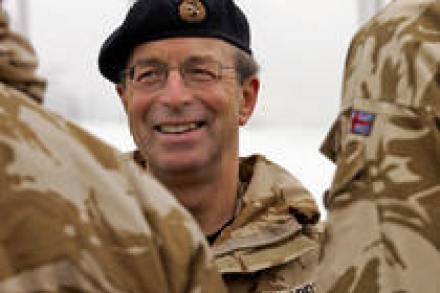
After the abortive plot to smear Richard Dannatt, you'd have thought Labour would have learnt their lesson: that it's often politically foolish, not to mention indecent, to pick petty fights with the military top brass. But - what's this? - today's Mail on Sunday reports that certain Labour figures may have been priming another smear campaign against Dannatt's successor, General Sir David Richards: "The threat to target the General, who took up his new job just nine days ago, was one of the real reasons that Labour MP Eric Joyce resigned as an aide to Defence Secretary Bob Ainsworth last week.